Water at Home
How to Check Your Home Water Quality, Source by Source
Your water report, a yearly well test, the label on your filter and the date on your stored jugs, one by one.
 By the Glubbo Editorial Team · Updated Oct 19, 2026 · 10 min read
Short answer
Start from where your water comes from.
- City water: read the yearly report your utility must send by July 1.
- Private well: test it at a state-certified lab at least once a year.
- Filter or stored jugs: check the NSF number and the 6-month date.
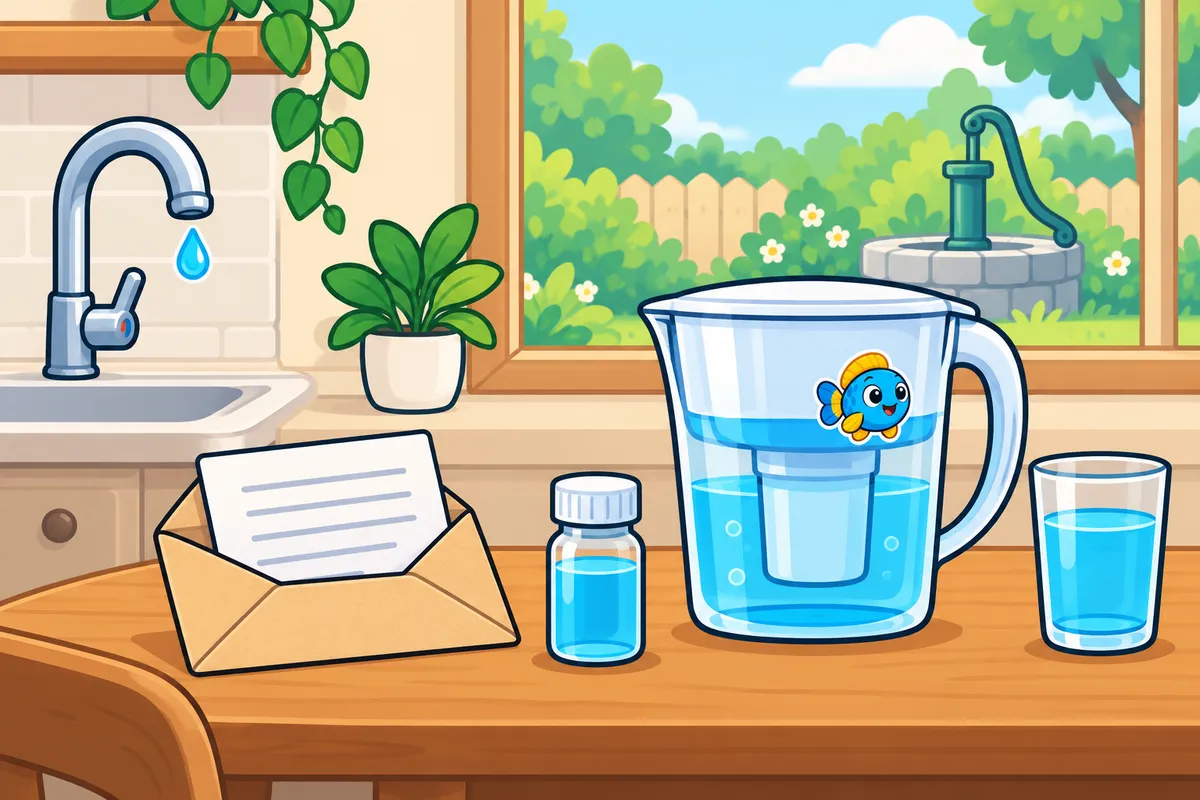
Check your home water by its source: read the yearly report if a utility supplies it, test a private well at a state-certified lab every year, read the NSF number on a filter, and date any jugs you store. A city supply comes with a report you can read in ten minutes, while a private well has nobody testing it but you.
Most homes have more than one source anyway. The kitchen tap, the pitcher in the fridge and the jugs in the garage each need their own small check.
- 9 in 10
- people in the US drink from a public water system
- 43 million
- people, about 15 %, rely on a private well
- 23 %
- of private wells USGS sampled had a contaminant above a health benchmark
That last figure comes from USGS samples of as many as 2,167 private wells, and apart from nitrate and bacteria most exceedances were natural. It is the reason well owners cannot skip testing. The EPA says private wells are not regulated under the Safe Drinking Water Act, and most states do not regulate them either, so the owner carries the whole job.
Which Water Do You Have at Home?
Look at who sends you a water bill. A bill from a city or utility means a public system that tests your water for you; no bill and a pump in the yard means a private well you test yourself. Then add whatever you do to the water at home: a filter, a softener or stored jugs.
Your Source, Your First Check
- You pay a water bill to a city or utilityRead this year's water quality report
- Your water comes from your own wellBook a yearly test at a state-certified lab
- You rent and the landlord pays for waterAsk the landlord or manager for the report
- You drink from a pitcher or under-sink filterFind the NSF standard on its box or listing
- You keep jugs of water for emergenciesCheck the fill date and swap after 6 months
How Do I Check the Quality of My Tap Water?
Read your Consumer Confidence Report, the yearly water quality report. The EPA requires every community water system to send one by July 1 each year, and it lists what the utility found in your water and any limit it broke. If yours never arrived, call the utility or use EPA's online search.
Ten Minutes With Your Water Report
- Find the report: mailed, on your utility's site, or through EPA's search
- Go to the results table and read the violations column
- For any violation, read what the utility did about it
- Ask the utility whether a lead pipe serves your address
What the Report Covers
The report names your water's source, such as a lake, river or aquifer, and a summary of the risk to it. It also carries:
- The regulated contaminants found.
- The health effects of any found above an EPA limit, and the steps taken to fix it.
- A note on Cryptosporidium for people with weak immune systems.
- Lines on nitrate, arsenic or lead where they matter locally.

What It Cannot Tell You About Your Own Pipes
The report describes water as it leaves the treatment plant and the utility's samples. It says nothing about the pipe from the street to your house or the faucet in your kitchen. Lead gets into water inside your own plumbing, after the utility has done its part.
Whether public tap water is safe overall has a full answer for the city tap.
How to Read the Results Table
The detected-contaminants table is the part that matters. EPA's reporting guide says it must show the level found beside the legal limit and the health goal for each contaminant, with the known source and the health effects.
- MCL: the highest level the rules allow. A level above it is a violation.
- MCLG: the health goal. For lead it is zero, so a reading under the lead action level is not the same as no lead.
- Action level: for lead and copper, the level that forces the utility to take steps such as corrosion control; it is a trigger, not a health goal.
- ppm and ppb: milligrams and micrograms per liter. Compare your number with the limit in the same unit.
How Do I Check Well Water Quality?
Test it at least once a year at a state-certified laboratory. The CDC's well testing guidelines name four yearly tests: total coliform bacteria, nitrates, total dissolved solids and pH. Your local health department can add tests for what is common where you live.
| Yearly test | What a bad result points to |
|---|---|
| Total coliform bacteria | Germs from outside may be reaching your water, so stop drinking it untreated |
| Nitrates | Levels that can make people ill, with babies at the most risk; every well owner runs this one |
| Total dissolved solids | Calcium, sodium and other matter that changes the taste and leaves scale |
| pH | Water acidic or basic enough to eat at pipes and let metals such as lead leach out |
Check the well itself every spring for mechanical problems, even in a year you skip the test.
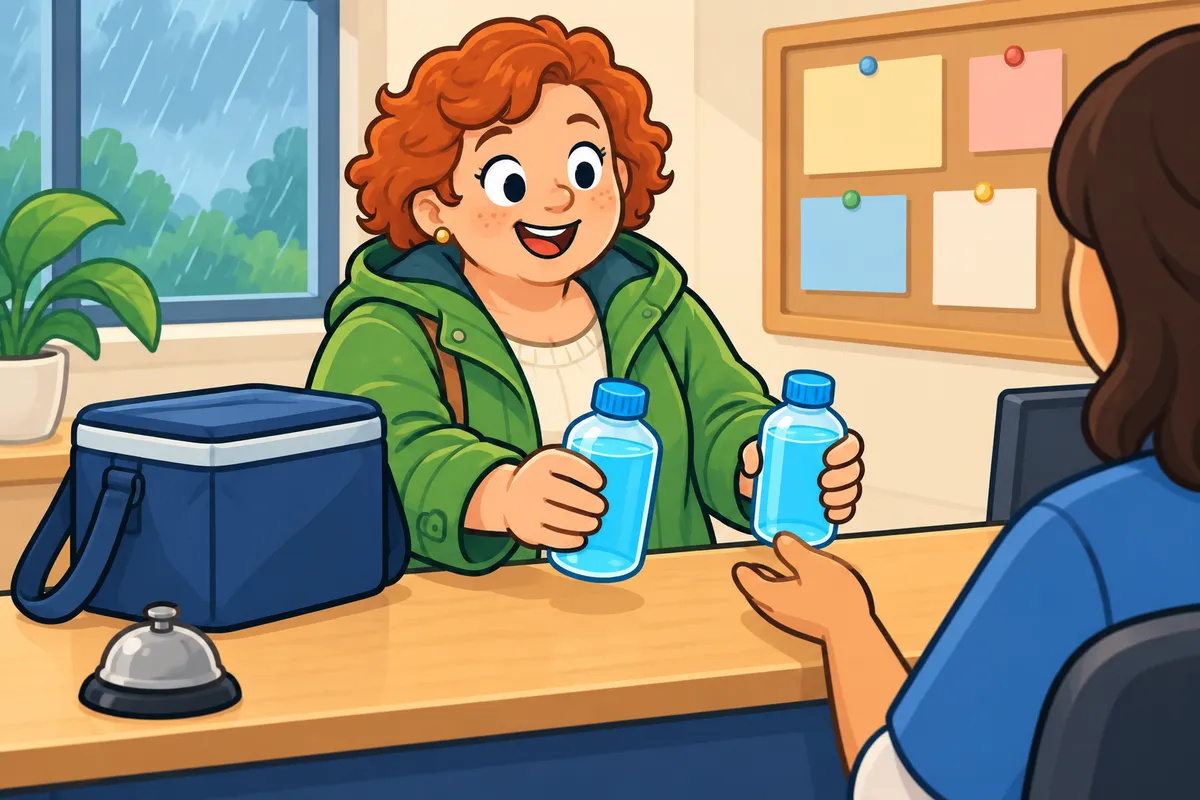
How to Find a State-Certified Lab
Start with your state's drinking water laboratory certification program: EPA links each state's list and says it cannot test residential water on request. Your county or state health department can also point you to a lab, and EPA's Safe Drinking Water Hotline at 1-800-426-4791 can direct you to the right office.
Ask the lab for its sample kit before you collect anything. It sets the bottle, the faucet to use and how fast the sample must be back.
When to Test More Than Once a Year
Some events change what is in a well quickly. The CDC lists when to test again, even if the yearly test was clean:
Test Your Well Again When
6 items- You hear of well water problems in your area
- Something nearby changes, such as a flood, digging or a waste site
- You replace or repair any part of the well system
- The water's taste, color or smell changes
- Someone in your home becomes pregnant
- A child comes to live with you
If a result comes back bad, switch to bottled water or another safe source until the problem is fixed. A positive bacteria test sets off a second sample, a disinfected well and three retests, and your health department can explain the numbers.
A high nitrate result is the one case where the kettle makes things worse, because boiling concentrates nitrate; the fix is reverse osmosis, anion exchange or distillation, with bottled water for babies meanwhile.
Can You Test Water Quality at Home Yourself?
You can screen it, but a certified lab gives the answer you can act on. Test strips and meters show hardness, pH or chlorine in minutes; they cannot confirm lead or germs to the standard a lab can. For lead, the EPA says testing is the only way to know, and certified lab tests typically cost $20 to $100.
Home Strips and Meters
- Results in minutes, at your sink
- Good for hardness, pH and chlorine
- Not proof of lead, germs or nitrates
State-Certified Lab
- Sample bottle, then results in days
- Lead tests about $20 to $100, per EPA
- The result your health department uses
Call your utility before you pay anyone: the EPA's first step for a lead worry is to contact it. On a well, your county or state health department often runs coliform and nitrate tests itself.
Does Your Water Need a Filter?
Only if a test or report names something to remove. The CDC's advice on home filters is to test first: if your water is free of harmful germs and chemicals, you may not need a filter at all. When you do buy one, the NSF number on its label tells you what it was certified to do.
Hard water is a separate job. White scale and soap that will not lather call for a softener, a machine that swaps minerals instead of catching contaminants.
Four NSF Standards on Filter Labels
NSF 42
Taste and smell
- Cuts chlorine taste and odor
- Not a health claim
Suits you if Your water is safe but tastes of chlorine
NSF 53
Health contaminants
- Covers certain contaminants such as lead
- Also covers cyst reduction
Suits you if Your report or test names lead
Reverse osmosis
- Removes lead, copper, sodium and more
- May reduce arsenic and fluoride
Suits you if You need many chemicals removed at one tap
Distillation
- Boils water and collects the steam
- Certified for the substances listed
Suits you if A lab result calls for distillation
What Most Pitchers Do Not Do
Most pitcher and fridge filters are not designed to remove germs. They use activated carbon for taste, smell or metals like lead. If your worry is bacteria, a pitcher is the wrong tool; a boil notice still means boiling, filter or not.
A filter also needs care. Change cartridges on the maker's schedule, run water through each new one before you drink from it, and wear gloves when you do, because a neglected cartridge holds what it trapped.
What Do Changes in Color, Taste or Smell Mean?
Usually a nuisance, sometimes a warning. The EPA sets secondary standards for taste, color and odor and says the substances behind them are not a health risk at those levels. Harmful germs and chemicals, though, often change nothing you can see or taste.
| What you notice | Common cause | EPA secondary level |
|---|---|---|
| Rusty color, reddish stains, metallic taste | Iron | 0.3 mg/L |
| Black or brown color, black stains | Manganese | 0.05 mg/L |
| Blue-green stains, metallic taste | Copper | 1.0 mg/L |
| Rotten-egg, musty or chemical smell | Odor compounds | 3 TON (odor units) |
| Salty taste, scale and deposits | Total dissolved solids | 500 mg/L |
| Bitter metallic taste, corrosion | Low pH | 6.5 to 8.5 range |
So a sudden change deserves a call to the utility or health department, even when it turns out to be harmless. Tap water that runs brown after street work usually clears from a cold tap within a few hours, while a pool smell is the disinfectant your utility adds, far under its 4 mg/L cap.
When Your Utility Sends a Notice
Follow the notice to the letter. It comes in three kinds: boil water, do not drink, and the rare do not use.
Only the first one is fixed by boiling. During a notice, ice makers, toothbrushing and baby formula all need boiled or bottled water too.
Lead Is a Problem of Your Own Pipes
Lead comes from plumbing, not from the river or aquifer. The EPA names lead service lines as the biggest source where they exist, and homes built before 1986 are the most likely to have them. Because you cannot see, taste or smell lead, ask your utility about your service line and read what lowers lead at your own tap while you wait.
Water You Store Needs Its Own Check
Stored water goes stale on a calendar. The CDC asks you to:
- Replace water you filled yourself every 6 months.
- Store it at 50 to 70 °F away from sunlight.
- Label each container with its date.
How many gallons your household should keep is worked out in the emergency supply plan per person.
Your Water Calendar for the Year
Each check has its own date, so put them on a calendar once.
| When | Check | Who it applies to |
|---|---|---|
| By July 1 | Your water report arrives; read the violations column | Anyone on a public water system |
| Early spring | Well inspection, then a lab test; Wisconsin DNR says wells are most likely unsafe after heavy snowmelt | Private well owners |
| Late summer or early fall | A second look at the well; the same guidance names the hot, stagnant weather of late summer and early fall | Private well owners |
| At least once a year | The four-part well test | Private well owners |
| Every 6 months | Replace water you stored in your own jugs | Anyone with an emergency supply |
| The date on the cartridge | Swap the filter on the maker's schedule | Anyone with a pitcher, fridge or tap filter |
| After a flood, a repair or a pregnancy | An extra well test | Private well owners |
Pick the lines that match your source and ignore the rest: a renter on city water needs two of them, and a farmhouse on a well needs five.
General information for healthy adults, not medical advice. If a doctor has set your fluid amount, follow that.
All Guides in Water at Home
Every guide, A to ZTap Water 8 guides
Start with the supply that serves your address, then match the question to the right evidence. These guides show how to find the report, understand treatment, and investigate common changes at the tap.
Tap Water page What to Do During a Boil Water Advisory, From Ice to Showers
 Why Is My Tap Water Brown? Causes and What to Do Right Now
 Is Boiled Water Safe for a Neti Pot? The Four Waters That Are
 Tap Water Quality by ZIP Code: Find the Right Report
 How Is Tap Water Treated? From Source to Faucet
 Do Home Water Test Kits Work? Know Their Limits
 Is Hard Water Safe to Drink? What Hardness Means
 Why Is My Tap Water Cloudy? Try the Glass Test
Filters and Treatment 11 guides
A filter is only as good as the claim it is certified for. These guides match each kind of filter to what it removes, using the EPA, CDC and NSF standards.
Filters and Treatment page Does a Water Filter Remove Lead? Which Ones Do and How to Check
 Spring Water vs Purified Water: What Each Label Promises
 How to Distill Water at Home With a Pot, a Lid and a Cup
 Is Filtered Water Safe to Drink? When a Filter Helps or Hurts
 Reverse Osmosis Water System: What It Removes, Costs and Wastes
 Water Filter vs Water Softener: Which One Your Water Needs
 How Much Water to Run Through a New Water Filter, by Type
 Do You Need a Water Filter? Check Your Water First
 Reverse Osmosis vs Carbon Filter: Which Fits Your Water?
 NSF 42 vs NSF 53: What Each Filter Standard Means
 Do Water Filters Remove PFAS? What Claims to Verify
Wells, Storage and Emergencies 5 guides
When your water does not come from a city plant, keeping it safe is your job. These guides follow the CDC and EPA steps for wells, roof water and the water you store.
Wells, Storage and Emergencies page
What Can Be in Water 5 guides
Each contaminant has its own source, limit and fix. These guides take them one at a time, with the EPA limit, who is most at risk and the treatment that works.
What Can Be in Water page Lead in Drinking Water, Where It Comes From and How to Cut It
 Is Chlorine in Tap Water Safe? Limits, Smell and Chloramine
 Does Boiling Water Remove Lead? What Boiling Leaves Behind
 How to Remove Nitrates From Water, and the Fixes That Fail
 Microplastics in Water: What Is in Your Glass and What Removes It

Sources
- CDC. About Drinking Water, 2025.
- US Environmental Protection Agency. Private Drinking Water Wells, 2026.
- US Environmental Protection Agency. CCR Information for Consumers, 2025.
- CDC. Guidelines for Testing Well Water, 2024.
- CDC. About Choosing Home Water Filters, 2024.
- US Environmental Protection Agency. Secondary Drinking Water Standards: Guidance for Nuisance Chemicals, 2026.
- US Environmental Protection Agency. Basic Information about Lead in Drinking Water, 2026.
- CDC. How to Create an Emergency Water Supply, 2025.
- Wisconsin Department of Natural Resources. Bacteriological Contamination of Drinking Water Wells (PUB-DG-003), 2017.
- US Geological Survey. Quality of Water from Domestic Wells in Principal Aquifers of the United States, 1991-2004 (SIR 2008-5227), 2008.
- US Environmental Protection Agency. Consumer Confidence Report Rule: A Quick Reference Guide, 2022.
- US Environmental Protection Agency. Contact Information for Certification Programs and Certified Laboratories for Drinking Water, 2026.
Sources checked by the Glubbo Editorial Team on Oct 19, 2026. General information, not medical advice. How we write and check our guides.

