What to Do During a Boil Water Advisory, From Ice to Showers
How to boil, what still runs from the tap, and the steps that clear your pipes once the notice ends.
 By the Glubbo Editorial Team · Updated Oct 19, 2026 · 10 min read
On This Page
- Why Do Utilities Issue a Boil Water Notice?
- What Is the Difference Between Boil Water and Do Not Drink Notices?
- How Do You Keep Safe Water on Hand During the Notice?
- What Still Comes From the Tap
- Can You Wash Fruits and Vegetables During a Boil Advisory?
- Can You Brush Your Teeth During a Boil Water Advisory?
- Can You Shower During a Boil Water Advisory?
- Is It Safe to Run the Dishwasher During a Boil Water Advisory?
- What if You Drank the Water Before the Notice?
- Babies, Formula and Pets
- Mistakes That Undo a Boil Notice
- What Should You Do When a Boil Water Advisory Is Lifted?
- Get Ready Before the Next Notice
- Sources
Short answer
Boil it for 1 minute before it goes in your mouth.
- A full rolling boil for 1 minute, or 3 minutes above 6,500 feet, per CDC.
- No fridge ice or dispenser water; brush teeth with boiled or bottled water.
- Laundry runs as usual; dishwashers only with a 150 °F (66 °C) final rinse.
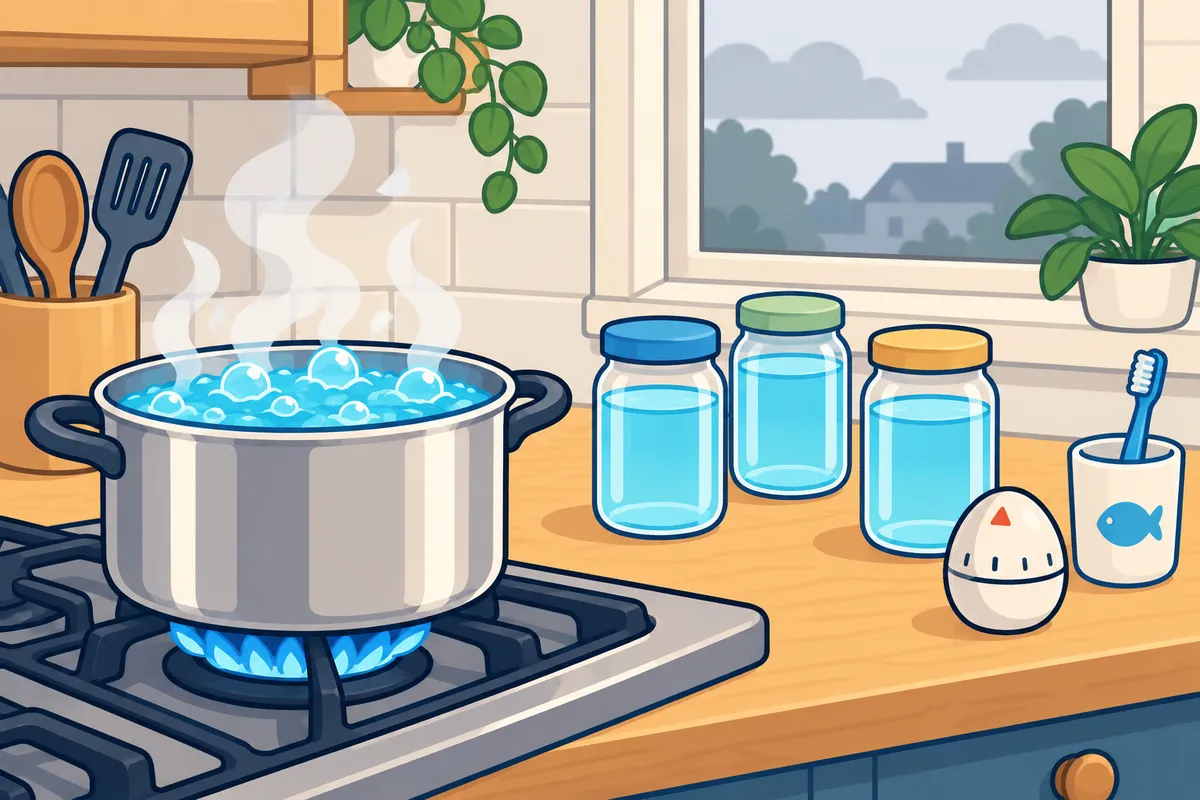
A boil notice means germs may be in your tap water. Boiling kills them, so the whole day turns on one question: will this water go in someone's mouth?
Drinking, cooking, ice, toothbrushes and baby bottles all get boiled or bottled water. Laundry, houseplants and most hand-washing can stay on the tap.
Why Do Utilities Issue a Boil Water Notice?
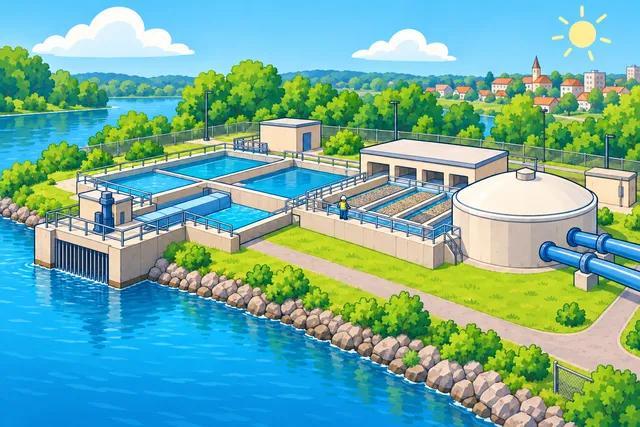
Because germs may have gotten into the pipes. The Minnesota Department of Health lists the usual triggers, and most are about pressure or treatment failing for a while, not about germs found in a test. Many notices are a precaution until samples come back clean.
- A water main break
- Low or negative pressure in the pipes
- A treatment failure, such as a pump that adds too little disinfectant
- Flooding, or a non-drinking source getting into the system
- A flaw or a security breach that opens a path for contamination
When a test does find bacteria, the system must disinfect its water and issue a boil notice. A suspected chemical problem gets a do-not-drink or do-not-use notice instead.
How Long Does a Boil Water Advisory Last?
Until your utility says it is over; no national rule sets a length. The notice ends when samples taken after the repair test clean. If a system that does not normally use chlorine has to chlorinate in an emergency, Minnesota says that step alone can last two to five days, and the water may turn reddish-brown for a while.
Plan for at least a few days of boiled water, and watch for the all-clear from the utility, not from neighbors.
What Is the Difference Between Boil Water and Do Not Drink Notices?
The cause. A boil notice is about germs, and boiling kills germs.
A do-not-drink notice is about chemicals or toxins, and boiling does nothing to those, so you switch to bottled water for everything you swallow. A do-not-use notice, which is rare, keeps tap water off your skin too.
Three Notices, Three Rules
Boil Water
Germs
- Boil for 1 minute, then cool
- Laundry and plants stay on the tap
Suits you if Your notice tells you to boil the water
Do Not Drink
Chemicals or toxins
- Boiling does not help
- Bottled water for food, ice and pets
Suits you if The notice names a chemical or a spill
Do Not Use
Rare
- No tap water on skin, eyes or lungs
- Bottled water for every purpose
Suits you if Officials say not to bathe or wash either
Read the words on your notice, not the headline. If it says do not drink, a boiling pot makes the water no safer.
How Do You Keep Safe Water on Hand During the Notice?
Boil one big pot a day and store it covered. The CDC asks for a full rolling boil for 1 minute, or 3 minutes above 6,500 feet, and what counts as a rolling boil at your altitude has its own page. Boil water even if it already went through a filter or a pitcher, because most kitchen filters do not stop germs; a pitcher certified to NSF/ANSI 53 is built to cut lead, not bacteria.
Boil, Cool and Store a Day's Water
- Heat until bubbles rise from the bottom, then boil hard for 1 minute (3 above 6,500 feet)
- Cool it in the covered pot
- Sanitize the jars: 1 teaspoon of unscented bleach in 1 quart of water, shake, 30 seconds, pour out, air-dry
- Pour in the cooled water, cover and keep it in the fridge
A large pot saves work: one boil in the evening covers the next morning. If your notice gives its own boil time, follow the notice; the EPA's emergency page draws its altitude line lower, at 5,000 feet.
When You Cannot Boil
Plain, unscented household bleach makes tap water safe when the power or gas is out. For 6 % bleach the EPA gives 8 drops per gallon, then a 30-minute wait; use it only for a boil notice, never for a do-not-drink notice.
Two details change the dose:
- Stronger 8.25 % bleach takes 6 drops per gallon.
- Cloudy, colored or very cold water takes double.
If the water is cloudy, let it settle and pour it through a clean cloth, paper towel or coffee filter first, because disinfection works less well in cloudy water. After the 30 minutes the water should smell faintly of chlorine; if it does not, repeat the dose and wait 15 more minutes.
What Still Comes From the Tap
More than you might think. Laundry, houseplants and gardens stay on tap water, vegetable gardens included, and hand-washing with tap water and soap is often fine during a boil notice, unless your local officials say otherwise.
Turn off the fridge's ice maker on day one. Dispenser water and ice are off limits during any advisory, and a full ice bin is easy to forget. Throw out ice made before the notice too.
Can You Wash Fruits and Vegetables During a Boil Advisory?
No, not with tap water. Wash produce in boiled water that has cooled, or in bottled water, say the Oklahoma and Minnesota health guides. Minnesota adds that pre-washed salad and vegetables from the store are an easy way round it, and that frozen food should thaw in the fridge, not under a running tap.
The kitchen is where the small tasks pile up. Task by task, the two notices differ like this:
| Task | During a boil notice | During a do-not-drink notice |
|---|---|---|
| Drinking, coffee, tea, lemonade | Boiled or bottled water | Bottled water only |
| Washing fruit and vegetables | Boiled and cooled, or bottled | Bottled water only |
| Cooking pasta, rice or soup | Bring water to a rolling boil for 1 minute before adding food | Bottled water only |
| Wiping food-prep surfaces | Boiled water | Bottled water |
| Coffee machine plumbed into the water line | Do not use until the lines are flushed | Do not use |
| Toilet | Flush as usual | Follow the notice |
| Laundry | As usual, unless the water is cloudy | Allowed, but heavily chlorinated water may stain |
Throw away any drink or food you already made with unboiled tap water, Minnesota says. That includes the jug of iced tea or the batch of lemonade in the fridge from the morning the notice went out.
Can You Brush Your Teeth During a Boil Water Advisory?
Yes, with boiled or bottled water only. Keep a cup of cooled boiled water by the sink and leave the tap off while you brush. Children rinse with the cup too.
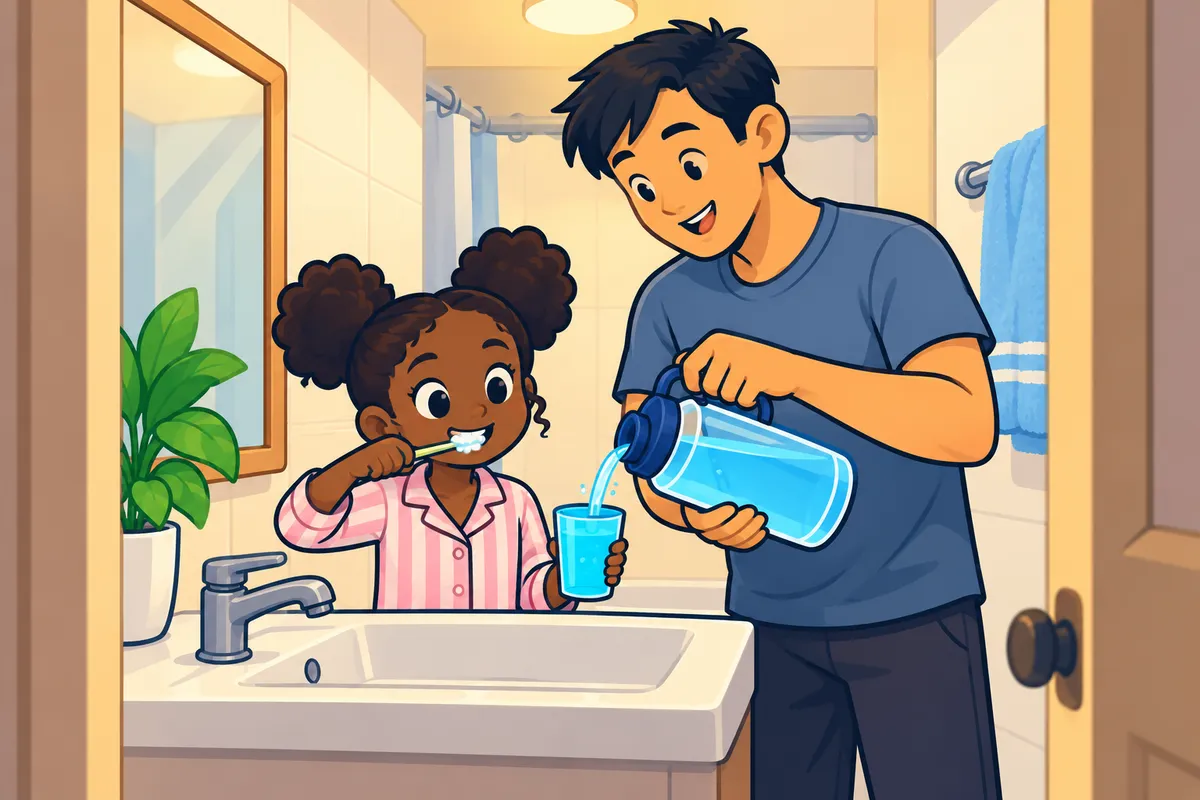
The slip happens on autopilot, first thing in the morning and last thing at night. You know the rule and still rinse the toothbrush under the tap.
A bottle on the sink, or a strip of tape over the tap handle, stops the hand before it turns. Leave both in place for as long as the notice lasts, and take them away the day it lifts, so the bathroom tells you which rule applies.
Can You Shower During a Boil Water Advisory?
Yes, if you do not swallow the water. Keep your mouth closed in the shower, and the CDC suggests sponge baths for babies and young children, who tend to drink bath water.
Is It Safe to Run the Dishwasher During a Boil Water Advisory?
Yes, if it has a sanitizing cycle or a final rinse of at least 150 °F (66 °C), the CDC says. Disposable plates are simplest. To wash by hand, follow its four steps:
- Wash and rinse the dishes in hot tap water as usual.
- Mix 1 teaspoon of unscented bleach into each gallon of warm water.
- Soak the rinsed dishes in it for at least 1 minute.
- Let them air-dry completely before you use them.
Not Every Health Department Agrees on Home Dishwashers
Minnesota's guide is stricter than the CDC's: it says home dishwashers typically do not reach temperatures that kill bacteria and should not be used, and allows only commercial machines. If your dishwasher has no sanitize setting and you cannot check its rinse temperature, wash by hand with the bleach soak instead.
What if You Drank the Water Before the Notice?
Most people feel nothing, and the effects are usually short. Minnesota's guide lists the effects of germs in water as acute stomach illness with diarrhea, abdominal discomfort, nausea, vomiting and jaundice, and says the risk is greater for infants, young children, people over 65 and people with weak immune systems.
If symptoms persist, or you are in one of those groups, ask your health care provider.
Cleaning Toys, Counters and Surfaces
Use boiled or bottled water for anything that touches food or a child's mouth. The CDC allows bottled water, boiled water or bleach-disinfected water for cleaning, and Oklahoma's sheet gives the mix: 8 drops of unscented bleach to 1 gallon of water, or 16 drops if the water is cloudy.
Wipe toys, high chairs and food-prep surfaces with that water, then let them air-dry.
Babies, Formula and Pets
Breastfeeding needs no change, and the CDC calls it the best option during an advisory. For formula, ready-to-use formula is easiest; otherwise mix powder with bottled water or water you boiled and cooled. Sanitize every bottle first.
Pets drink what you drink: bottled water, or boiled water that has cooled. Fill the bowl from a jug, not the tap.
How Much Bottled Water to Keep in the Fridge
Count the people and their usual drinks, then add coffee, cooking and the dog's bowl.
For your own goal and bottle size, count the bottles that cover one day, then multiply by the days on the notice.
Mistakes That Undo a Boil Notice
Most slips come from water that does not look like tap water. These are the ones the state guides single out:
| Mistake | Do this instead |
|---|---|
| Rinsing salad under the tap | Wash it in cooled boiled water, or buy pre-washed |
| Thawing a chicken under running water | Thaw it in the fridge |
| Filling the kettle through a pitcher filter and skipping the boil | Boil it anyway; most household filters do not remove bacteria or viruses |
| Using the fridge's water and ice dispenser | Switch it off; use jugs of boiled water |
| Mixing a neti pot rinse with tap water | Use distilled, sterile or boiled and cooled water, never plain tap |
| Topping up a fish tank during emergency chlorination | Keep that tap water out of the tank; chlorine harms fish even at tap-water levels |
If no soap and water are at hand, Oklahoma suggests an alcohol-based hand sanitizer with at least 60 % alcohol. With soap, scrub for at least 20 seconds and rinse as usual.
Home Dialysis and Other Medical Uses
Do not use tap water in a home dialysis machine during any advisory, boil notices included, Minnesota warns: the cause may be a chemical nobody has named yet, and chlorine levels can rise. Call your dialysis team before the next treatment. Drinking the chlorinated water is still safe for dialysis patients.
What Should You Do When a Boil Water Advisory Is Lifted?
Flush the water that sat in your pipes during the notice. Vermont's drinking water office gives a clear list: run each cold tap on full for at least 5 minutes, dump the ice, and replace disposable filters. Your own utility's notice may give different times, and it comes first; each new cartridge then needs the flush its own maker asks for.
After the Notice Ends
5 items- Run each cold-water faucet on full for at least 5 minutes
- Dump the ice, then make and throw away 3 batches (5 if the feed line is over 20 feet)
- Wipe the ice bin with a disinfectant before making new ice
- Run enough water to replace the full volume of the water heater and other tanks
- Replace fridge, pitcher and other disposable filters
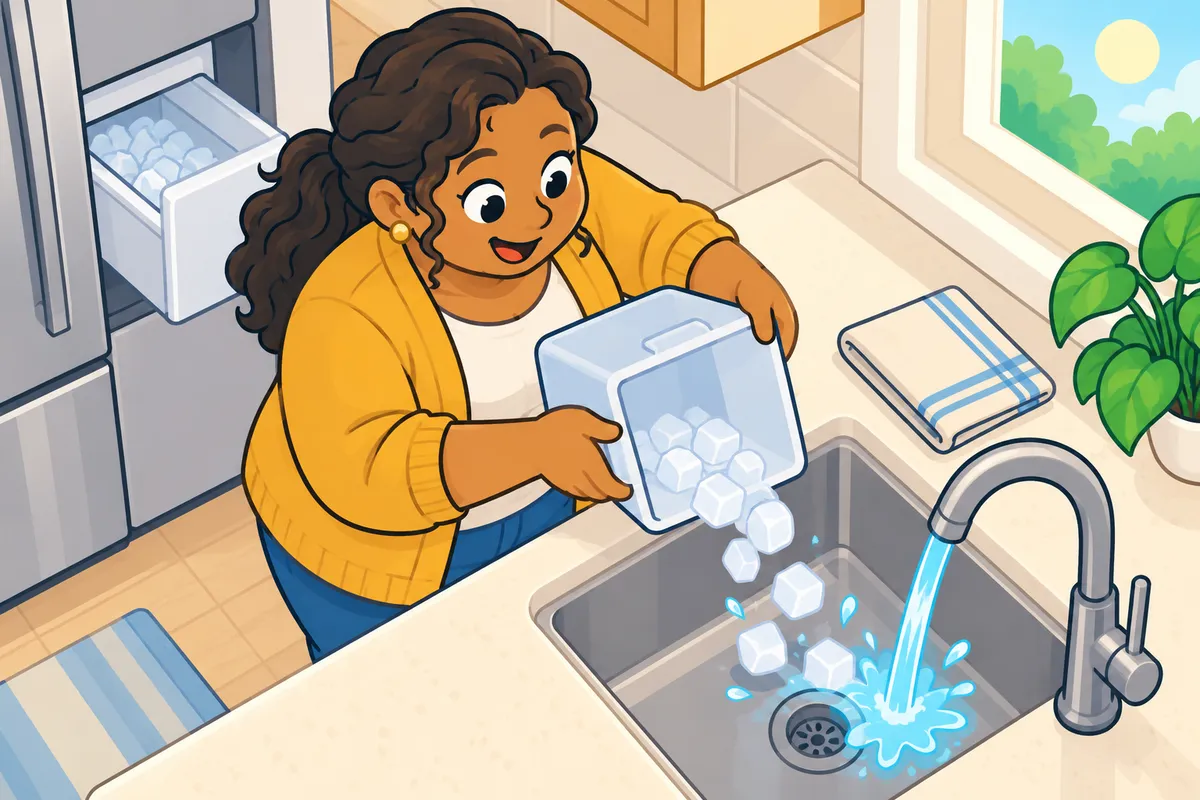
In an apartment building, the pipes are longer. Vermont's guide asks you to check with the superintendent or landlord for longer flushing times.
Get Ready Before the Next Notice
A boil notice can start the same day it is announced, so a few things belong in the cupboard before it does:
- A bottle of plain, unscented household bleach. The EPA says not to use scented, color-safe or cleaner-added bleach.
- Two clean jars with lids that fit in the fridge.
- The phone number of your water supplier. Minnesota's guide says to call it with questions, not 911, and the EPA Safe Drinking Water Hotline, 1-800-426-4791, answers general questions about drinking water emergencies.
General information for healthy adults, not medical advice. If a doctor has set your fluid amount, follow that.
More in Water at Home
Sources
- CDC. Drinking Water Advisories: An Overview, 2024.
- US Environmental Protection Agency. Emergency Disinfection of Drinking Water, 2026.
- Vermont Department of Environmental Conservation. What to do after a Boil Water or Do Not Drink Notice is lifted, 2026.
- Minnesota Department of Health. Community Drinking Water Advisory Guidance, 2018.
- Oklahoma Department of Environmental Quality. What To Do During A Boil Advisory, 2024.
Sources checked by the Glubbo Editorial Team on Oct 19, 2026. General information, not medical advice. How we write and check our guides.

