Water at Home · What Can Be in Water
Is Chlorine in Tap Water Safe? Limits, Smell and Chloramine
How much chlorine your tap holds, why it smells, how chloramine differs, and the few cases where you take it out.
 By the Glubbo Editorial Team · Updated Oct 19, 2026 · 8 min read
On This Page
- Is Chlorine in Tap Water Safe to Drink?
- How Much Chlorine Is in Tap Water?
- Does All Tap Water Contain Chlorine?
- Why Does My Tap Water Smell Like Chlorine?
- What Is the Difference Between Chlorine and Chloramine?
- Are Disinfection Byproducts in Tap Water Harmful?
- How Do You Remove Chlorine From Tap Water?
- Is Chlorinated Tap Water Safe for Fish and Pets?
- Which Fix Fits Your Water
- Sources
Short answer
Yes, at the levels in tap water.
- EPA caps chlorine and chloramine at 4 mg/L; most tap water holds 0.2 to 1 mg/L.
- The smell is the disinfectant at work, not a sign of danger.
- Remove it only for fish tanks, dialysis or taste; chloramine needs more than standing.
Yes. The CDC says chlorine or chloramine up to 4 milligrams per liter (4 ppm) is safe in drinking water, and WHO reports that most disinfected water holds only 0.2 to 1 mg/L. The pool smell in a glass of tap water means the disinfectant is still doing its job.
Your utility added a small dose at the plant, and some of it is still working when the water reaches your kitchen.
Is Chlorine in Tap Water Safe to Drink?
Yes. The CDC adds that "the low levels of disinfectants allowed in tap water do not make people sick." Those levels kill germs that come from the water source or slip into pipes, and the dose exists because those germs make people sick.
At these levels the disinfectant leaves you, at most, with a taste you notice.
Utilities mainly use chlorine or chloramine, and less often chlorine dioxide. Some switch between them with the season or the work being done in the pipes.
What Happens Above the Limit
The EPA sets the 4.0 mg/L cap as a maximum residual disinfectant level. Its table of drinking water limits lists what long-term exposure above that cap can bring: eye and nose irritation and stomach discomfort for chlorine, plus anemia for chloramine.
Your yearly water report lists the disinfectant among the regulated substances, with the level your system actually measured beside the cap.
How Much Chlorine Is in Tap Water?
Usually 0.2 to 1 mg/L. WHO's fact sheet gives that range for most disinfected drinking water, and notes that utilities leave a small residual in the pipes to stop germs from growing on the way.
WHO calls its own guideline conservative, because the key study found no level at which chlorine caused harm. It adds that most people can taste chlorine at that guideline, which means water near the limit announces itself.
Where the 5 mg/L Guideline Comes From
WHO works from a tolerable daily intake of 150 micrograms per kilogram of body weight, a level with no toxicity in rats that drank chlorinated water for two years. For a 60 kg adult drinking 2 liters a day, that is 150 × 60 ÷ 2 = 4,500 micrograms per liter, rounded to 5 mg/L.
Turn it around for your glass. A 250 ml (8 oz) glass at 1 mg/L holds a quarter of a milligram of chlorine, and 2 liters at that level hold 2 mg against the 9 mg a day WHO's intake allows that 60 kg adult.
Does All Tap Water Contain Chlorine?
Most city water does; not all. Some utilities drawing on groundwater add no disinfectant at all, because their testing shows the water does not hold enough germs to make people sick.
A private well is the other exception. No utility treats it, so its water carries no chlorine unless you add a treatment system yourself or shock the well with strong chlorine after a positive bacteria test. If you are unsure which kind of system serves your home, the name on your water bill and your yearly report settle it, and a well and a city tap then need different checks through the year.
Why Does My Tap Water Smell Like Chlorine?
Because the disinfectant is still in it. Chlorinated water can taste and smell different from untreated water or water with chloramine, and the problems grow with higher chlorine levels or more dirt and particles in the water.
A stronger smell than usual can mean a change at the plant. Some utilities that use chloramine switch to chlorine for a while to clear biofilm, the slimy layer of germs inside pipes.
A chlorine smell tells you the water still carries its protection; a sudden change in smell is worth a call to your utility.
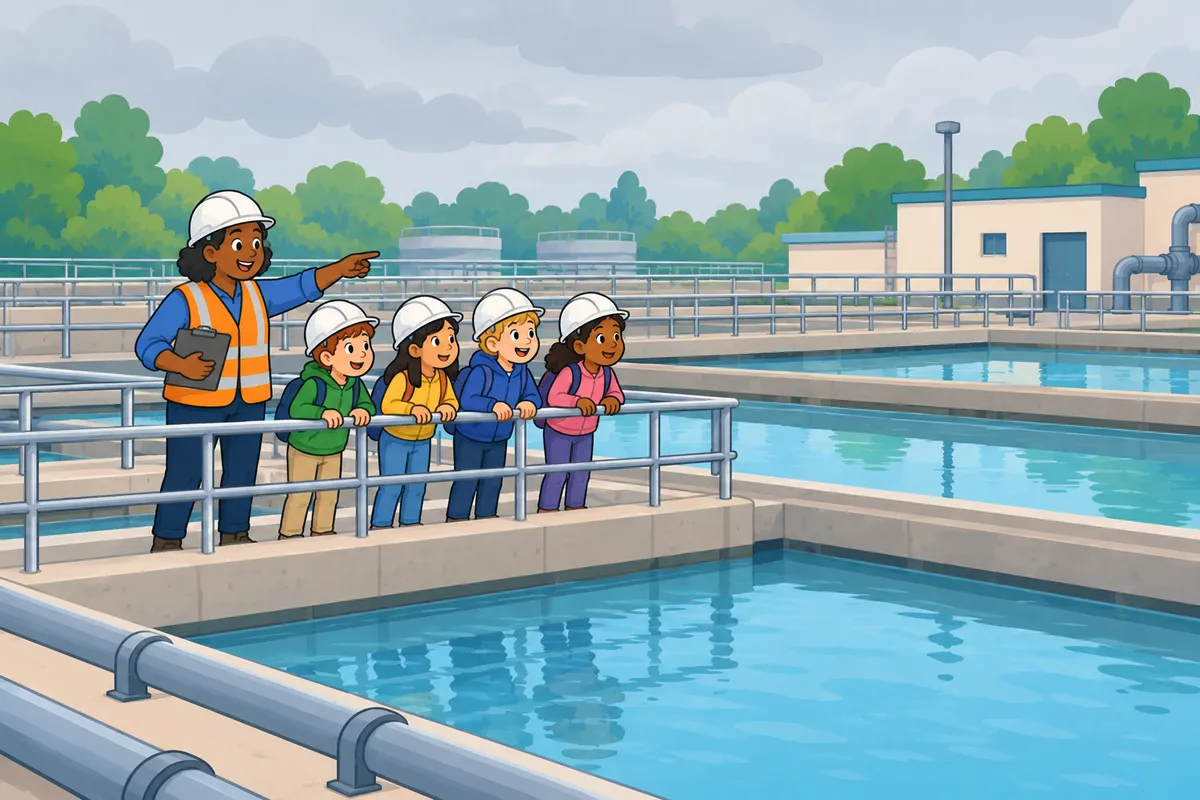
What Is the Difference Between Chlorine and Chloramine?
Chloramine lasts longer in the pipes. Chlorine gets used up quickly, so little may be left by the far end of a long pipe network; chloramine keeps killing germs in the pipes longer and makes fewer disinfection byproducts. Chloramine is a compound of chlorine and ammonia, and the kind used in drinking water is monochloramine.
Chlorine
- First used on US tap water in 1908
- Gets used up quickly in pipes
- Leaves water left standing for a few days
Chloramine
- First used in 1929
- Keeps working in pipes longer, fewer byproducts
- Does not leave water by standing
Both share the same EPA cap of 4.0 mg/L. Which one you get is your utility's choice, and the way to find out is its water quality report.
How to Find Out Which One Your Water Has
The yearly report answers it, and you can ask the utility directly if the report is vague. For the disinfectant, look for four things:
- whether your water contains a disinfectant at all
- which type it is, chlorine or chloramine
- the level measured, next to the 4 mg/L cap
- whether levels were over a safe range in the past year
Chloramine and Older Pipes
Chloramine can change the water's chemistry in ways that affect lead and copper pipes. A city switching disinfectants is one reason a home with older plumbing should know whether lead can reach its tap, and the cold-water habits that cut lead apply whichever disinfectant flows through it.
Questions on lead and copper go to the EPA's Safe Drinking Water Hotline, 800-426-4791.
Chlorine Dioxide and Chlorite
A few utilities use chlorine dioxide instead. It leaves a byproduct, chlorite, which the EPA limits to 1.0 mg/L in the byproduct table; WHO sets a provisional guideline of 0.7 mg/L for chlorite and for chlorate.
Are Disinfection Byproducts in Tap Water Harmful?
At high levels over many years, they can be. Byproducts form when chlorine or chloramine meets dirt or other material in the water, and the EPA limits the main groups. Its table lists the health effects of long-term exposure above each limit.
| Byproduct | EPA limit (mg/L) | Effects above the limit |
|---|---|---|
| Total trihalomethanes (TTHMs) | 0.080 | Liver, kidney or nervous system problems; increased risk of cancer |
| Haloacetic acids (HAA5) | 0.060 | Increased risk of cancer |
| Bromate | 0.010 | Increased risk of cancer |
| Chlorite | 1.0 | Anemia; nervous system effects in infants and young children |
Source: EPA, National Primary Drinking Water Regulations.
Your utility tests for these and lists them in its yearly report. Chloramine makes fewer of them than chlorine, which is one reason many cities use it; your utility's yearly report shows each result next to its legal limit.
How Do You Remove Chlorine From Tap Water?
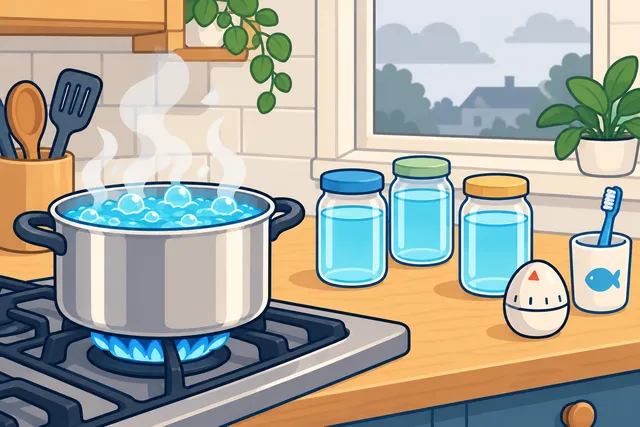
Let it stand, or filter it. Chlorine leaves water left out for a few days, but chloramine does not leave that way; pet stores sell products that remove both. For taste, a filter certified to NSF/ANSI Standard 42 targets taste and odor.
Chloramine is the harder case. The EPA says it is more difficult to remove than chlorine, and three common methods fail:
- Boiling does not remove it.
- Standing at room temperature does not remove it.
- A reverse osmosis filter does not remove it.
Some home filters may, and the EPA points to the NSF listing for Standard 42, where a "chloramines reduction" claim is the one to look for.
| Method | Chlorine | Chloramine |
|---|---|---|
| Standing a few days | Removes it | Does not |
| Boiling | Not a listed method | EPA: does not |
| Reverse osmosis filter | — | EPA: does not |
| Carbon filter certified to NSF/ANSI 42 | Improves taste and odor | Only if the NSF listing shows chloramine reduction |
| Pet-store conditioner | Removes it | Removes it, if the label names chloramine |
Does a Pitcher Filter Remove Chlorine?
For taste, yes. Pitcher and refrigerator filters often use carbon, the CDC says, and their main job is taste and smell rather than safety. Change the cartridge on the maker's schedule, because a spent cartridge can grow germs.
Does Boiling Remove Chlorine?
Not by the agencies' guidance. Standing is the listed method for chlorine, and the EPA says boiling does not remove chloramine, so boiling is not the fix for the taste and it concentrates anything else in the water.
Filter at the Glass, Not the Whole House
The CDC warns that when a whole-home filter strips out chlorine or other disinfectants, more germs may grow in your plumbing. A pitcher or faucet filter removes the taste only from the water you drink.
Is Chlorinated Tap Water Safe for Fish and Pets?
Safe for dogs, cats and birds; not for fish, turtles or frogs. Animals that live in water take it straight into their blood, so even low levels can make them sick, while dogs, cats and birds are not affected by the small amounts added.
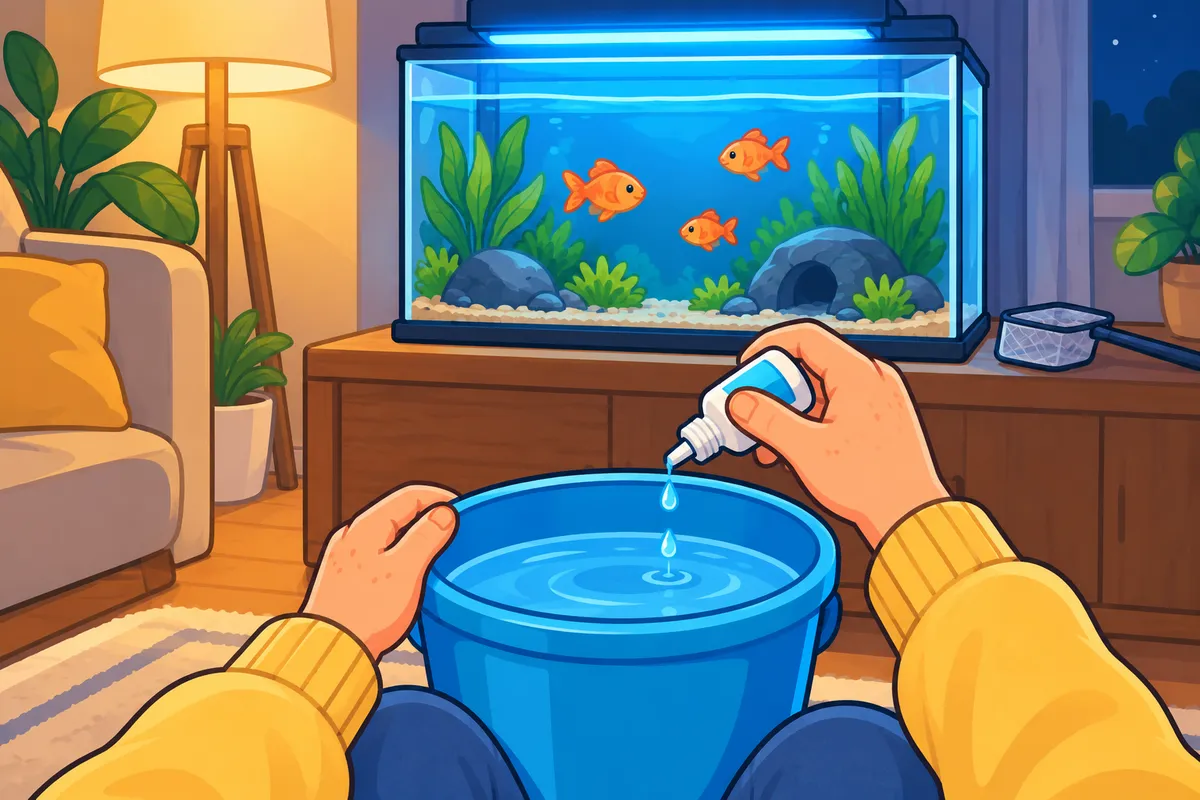
Treat aquarium and terrarium water before every change, and check which disinfectant your city uses before you rely on standing the bucket.
Which Fix Fits Your Water
Most people never need one. The EPA says water that meets its standards is safe to use and does not need the disinfectant removed, so match the fix to the reason:
Take It Out Only for a Reason
- Fish, reptiles or amphibiansA pet-store conditioner that names chloramine if your city uses it
- Home dialysisThe machine's own instructions; dialysis water must have every disinfectant removed
- Chlorine taste, chlorine cityAn open jug left out for a few days, or a filter certified to NSF/ANSI 42
- Taste, chloramine cityA filter whose NSF listing shows chloramine reduction
- Nothing but a glass of waterDrink it as it comes, up to the EPA's 4 mg/L cap
General information for healthy adults, not medical advice. If a doctor has set your fluid amount, follow that.

More in Water at Home
Sources
- CDC. About Water Disinfection with Chlorine and Chloramine, 2024.
- US Environmental Protection Agency. National Primary Drinking Water Regulations, 2026.
- World Health Organization. Guidelines for Drinking-water Quality, fourth edition incorporating the first and second addenda: chemical fact sheet, Chlorine, 2022.
- CDC. About Choosing Home Water Filters, 2024.
- US Environmental Protection Agency. Common Health Questions Related to Monochloramine, question 29: How can I remove monochloramine from my drinking water?, 2009.
Sources checked by the Glubbo Editorial Team on Oct 19, 2026. General information, not medical advice. How we write and check our guides.

