Sleep and Recovery · Sleep Basics
How Long Should a Nap Be? 10 to 20 Minutes, and When to Take It
What a lab test of 5, 10, 20 and 30-minute naps found, the NIH's 20-minute limit, and the best time of day.
 By the Glubbo Editorial Team · Updated Oct 19, 2026 · 11 min read
On This Page
- How Long Should a Nap Be?
- What Did the Lab Study of Nap Lengths Find?
- Does a Nap Make Up for a Short Night?
- Why Do I Feel Worse After a Long Nap?
- How Long Should a Nap Be Before Driving?
- Is a 90-Minute Nap Good?
- How Long Should a Power Nap Be?
- What Is the Best Time of Day to Take a Nap?
- How to Nap Without a Bed
- Naps for Children
- Your 15-Minute Nap, Step by Step
- Sources
Short answer
Nap for 10 to 20 minutes, in the early afternoon.
- The NIH says adults should nap for no more than 20 minutes.
- In a lab test, 10 minutes lifted alertness at once; 30 minutes left people groggy first.
- Nap earlier in the afternoon if you have trouble falling asleep at night.
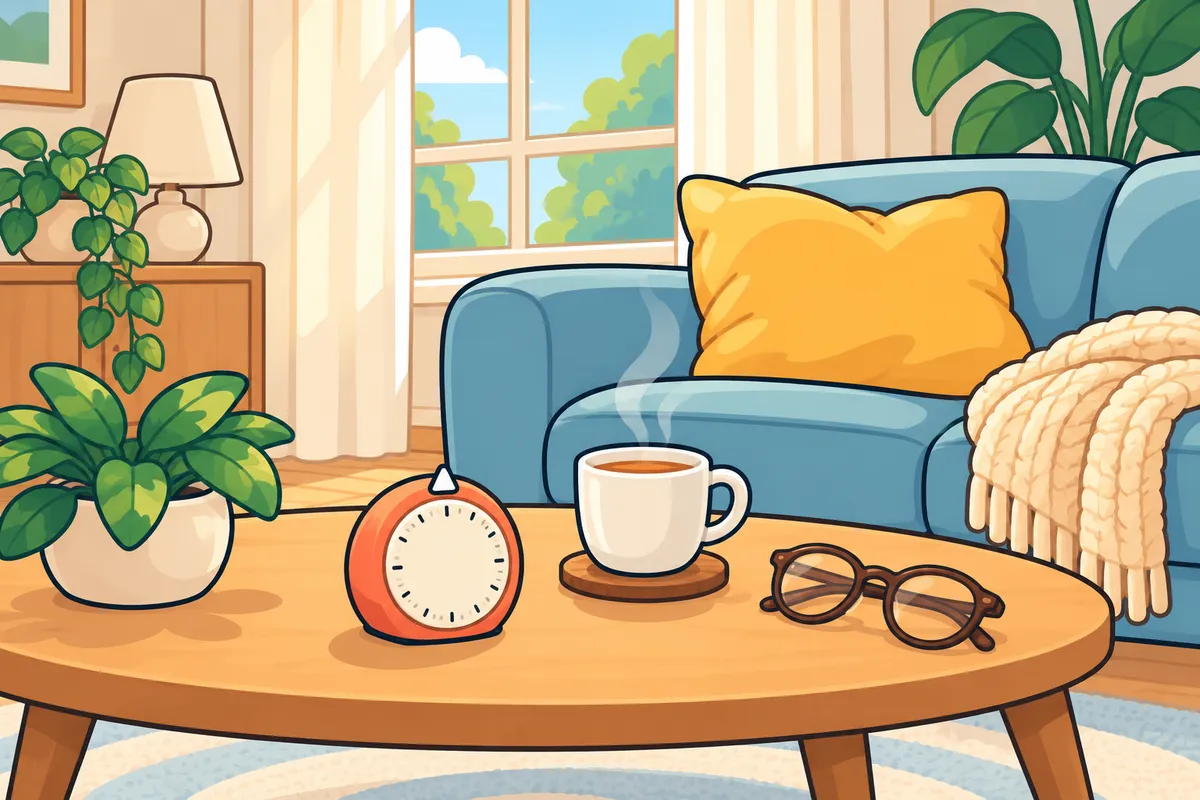
Nap for 10 to 20 minutes, in the early afternoon. The NHLBI, the sleep and heart institute of the US National Institutes of Health, says adults should nap for no more than 20 minutes, and a lab test of different lengths found the quickest lift at 10.
The best nap is shorter than most people think. Half an hour often gives you a foggy head first, and the answers that follow cover what each length does, when to lie down and when a nap is the wrong answer.
How Long Should a Nap Be?
For an adult, 10 to 20 minutes. The lab test below compared four lengths against no nap at all.
Four nap lengths, side by side
5 minutes
Too short
- Few benefits over no nap at all
Suits you if You only have the length of a coffee break; rest your eyes, but do not expect a lift
10 minutes
Fastest lift
- Alertness better straight away
- Some benefits lasted 155 minutes
Suits you if You need to be sharp the moment you get up
20 minutes
The NIH's upper limit
- Benefits began 35 minutes later
- They lasted up to 125 minutes
Suits you if You have a quiet half hour before you need to perform
30 minutes
Groggy first
- Slower and less alert just after
- Then benefits lasting 155 minutes
Suits you if You can afford a slow first quarter of an hour after waking
The minutes in that test count sleep, not time on the sofa. Each nap ran for exactly that many minutes after falling asleep, so if you take 5 minutes to drop off, set a 15-minute timer for a 10-minute nap.
What Did the Lab Study of Nap Lengths Find?
The clearest test is an Australian study published in Sleep in 2006. Twenty-four healthy young adults, good sleepers who did not usually nap, slept about 5 hours at home and then came to the lab for a 3:00 PM nap of a set length. On another day they had no nap, so each person was compared with themselves.
| Nap length | Right after waking | How long the benefits lasted |
|---|---|---|
| No nap | the comparison | none |
| 5 minutes | few benefits | few benefits |
| 10 minutes | better at once on every measure | up to 155 minutes |
| 20 minutes | benefits from 35 minutes on | up to 125 minutes |
| 30 minutes | worse at first (sleep inertia) | up to 155 minutes |
The authors measured:
- How fast people fell asleep again
- How sleepy and tired they felt
- Their vigor
- Their speed on mental tasks
They concluded that the 10-minute nap was the most effective length they tested.
What This Study Cannot Tell You
It tested 24 young adults after a short night, at one time of day. It did not test naps longer than 30 minutes, older adults or people who nap every day, so treat the exact minutes as a guide, not a rule.
What Happens in Your Brain at Each Length
The difference between nap lengths comes down to how deep your sleep gets. NIOSH's sleep inertia module explains that sleep moves through lighter stages into deeper ones as the minutes pass, and waking from deeper sleep is what produces grogginess.
How the lengths compare:
- At 10 minutes you stay in light sleep and wake cleanly.
- At 20 minutes you are near the edge of deeper sleep, so the benefit arrives a little later.
- By 30 minutes you may have entered slow-wave sleep, and the resulting inertia, NIOSH says, "can last from minutes to hours."
Time of day changes the depth too. NIOSH maps the strongest drive to sleep between 2 and 5 AM, so a 20-minute nap at 3 AM pulls you deeper than the same nap at 3 PM, and the grogginess afterward lasts longer. Night-shift workers should add more buffer time before a critical task than day-shift nappers do.
Does a Nap Make Up for a Short Night?
Only for a few hours. In the lab, the benefits of a 10-minute nap lasted up to 155 minutes, so a 3 PM nap carried people to about 5:35 PM, and the testing stopped there.
A nap that long does not repay a night that was 2 hours short of the CDC's 7-hour adult line. The 6-hours-of-sleep guide shows how those missing hours add up night after night, and the nap only bridges the afternoon.
Why Do I Feel Worse After a Long Nap?
Sleep researchers call that foggy, heavy feeling sleep inertia. In the lab study, the 30-minute nap "produced a period of impaired alertness and performance immediately after napping, indicative of sleep inertia". The longer you sleep, the more of that slow start you buy before the benefit arrives.
A long nap has a second cost. The CDC's travel health guide says naps of 20 to 30 minutes can keep you alert, while longer naps can interfere with nighttime sleep. A nap that steals from tonight is a loan you pay back tomorrow afternoon.
How Long Does Grogginess Last, and How Do You Shake It?
Usually half an hour to an hour. NIOSH, the CDC's workplace safety institute, describes sleep inertia in its course for shift-working nurses as "a temporary disorientation and decline in performance and/or mood after awakening from sleep".
- 30 to 60 min
- how long sleep inertia typically lasts
- Up to 2 h
- the longest NIOSH reports
- About 30 min
- for caffeine to take full effect
It lasts longer when you are short on sleep. NIOSH also found that night workers who took a one-hour nap around 4 to 5 AM had longer grogginess, because the strong drive to sleep at that hour pulls them into deeper sleep.
Bright light and washing your face helped people wake up faster in the studies NIOSH cites. The other lesson is timing: "Allow time for sleep inertia to dissipate before performing critical tasks," so do not nap right before you drive, operate machines or walk into a hard meeting.
How Long Should a Nap Be Before Driving?
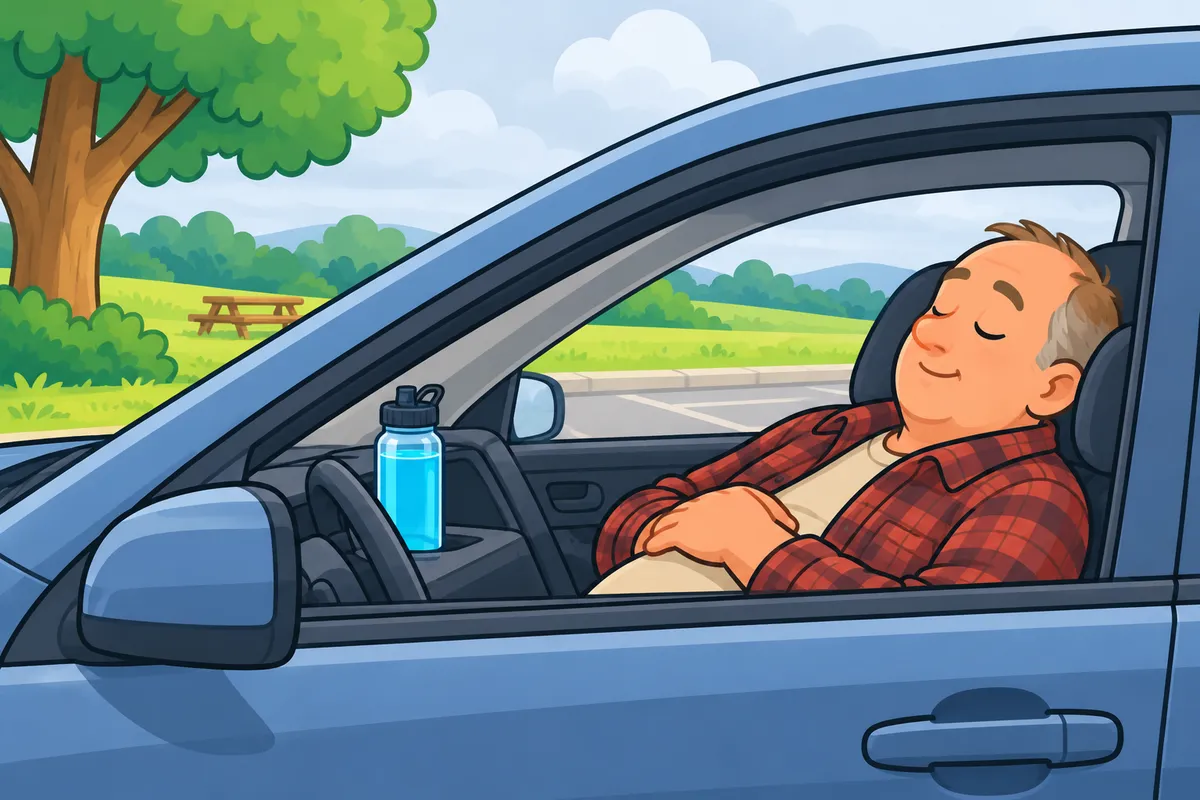
Short, and then wait. A 20-minute nap is the longest the NHLBI suggests, and NIOSH says sleep inertia typically lasts 30 to 60 minutes, so budget about 50 minutes from lying down to a clear head.
The CDC's drowsy-driving report gives the order of events: if you feel tired at the wheel, get off the road and rest until you are no longer drowsy. Park first, nap, then use bright light and a face wash to wake up before you drive on.
Is a 90-Minute Nap Good?
It can be, when you have the time and badly need sleep. NIOSH says waking at about 20 minutes or about 90 minutes, which it calls "predicted to be the end of a sleep cycle", may leave you less groggy. The catch is the night: the CDC warns that longer naps can interfere with your nighttime sleep.
So a 90-minute nap suits a short night before a long evening, or a night shift ahead. On an ordinary day, the NHLBI's 20-minute limit keeps your bedtime where it is.
How Long Should a Power Nap Be?
A power nap is simply a short nap taken to get your energy back, so the answer is the same: 10 to 20 minutes. For day workers, NIOSH recommends a brief nap of under 20 minutes and an alarm set for 15 to 30 minutes. Past 20 minutes you start trading the quick lift for grogginess.
NIOSH says both short and long naps can raise alertness, so the choice is a price:
- 15 to 30 minutes buys a quick lift with little grogginess.
- A nap near 90 minutes covers a full sleep cycle and costs you more of your evening hours.
What Is the Best Time of Day to Take a Nap?
Early afternoon. The NHLBI says that if you have trouble falling asleep at night, you should "limit naps or take them earlier in the afternoon". The naps in the lab study all started at 3:00 PM, and that was enough to help people who had slept about 5 hours.
A nap late in the day pushes your bedtime later, because you are less tired when the evening comes. The later and longer the nap, the bigger that cost to the night.
Your body clock explains why early afternoon works. NIOSH's page on nap times maps when sleep comes easily and when it does not.
| Time of day | Drive to sleep (NIOSH) | What it means for a nap |
|---|---|---|
| 2 to 5 AM | the strongest of the day | a night worker's hardest hours |
| Midnight to 2 AM | a secondary peak | a nap on a night shift comes easily here |
| 11 AM to noon | hard to fall asleep | a late-morning nap often fails |
| 2 to 4 PM | a secondary peak | the best slot for a day worker's nap |
| 1 to 3 hours before bedtime | hard to fall asleep | too late; you lie awake, then sleep later |
Does a Coffee Nap Work?
It can help you wake up sharper, and it is cheap to try. NIOSH lists caffeine just before a short nap as one way to cut grogginess: it takes about 30 minutes to take full effect, so it starts working as you wake from a 15 to 20-minute nap.
Keep it early in the day. A coffee nap at 4 PM puts caffeine in your system into the evening, and the NHS asks you to have no tea or coffee in the 6 hours before bed.
Naps Before a Night Shift
Night workers are the exception to the 20-minute rule. NIOSH calls a nap before a night shift a prophylactic nap, and these are usually long, a few hours, so the brain reaches deeper sleep and the 3 AM slump hits less hard. Over the years those shifts carry heart risks that build after about five years.
The studies it describes, on its page about naps before nights:
- Nurses and nursing aides who napped 1.5 hours, 3:30 to 5:00 PM, felt more alert in the second half of their first night shift.
- A 2.5-hour nap, 7:30 to 10:00 PM, improved alertness on a simulated night shift.
- A 3-hour nap, 2 to 5 PM, gave higher alertness on the night shift that followed.
When Not to Nap
One clear case is trouble sleeping at night. The NHS's insomnia advice lists "do not nap during the day" for people who cannot sleep at night, because a nap takes the edge off the tiredness that should carry you to bed.
The other case is the road. The advice there is "do not drive when you feel sleepy": a nap is the safe choice only once the car is parked and the engine is off. Frequent yawning and drifting from your lane are the CDC's signs to leave the road.
How to Nap Without a Bed
Not every break gives you a sofa. NIOSH studied naps taken by nurses on shift in whatever furniture the staff room had, and a seated nap still improved alertness. A few adjustments help:
- Rest your head on your arms at a desk or against a wall, and keep your feet flat.
- Set a phone timer and put the phone face down so the screen does not delay sleep.
- A folded jacket over your eyes blocks enough light to fall asleep faster in a bright room. Earplugs help in a shared space.
- After the alarm, stand, wash your face and spend a minute near a window. NIOSH says to "allow time for sleep inertia to dissipate before performing critical tasks", so walk before you drive or make a decision.
An airline pilot naps in the jump seat. A truck driver naps at a rest stop. The studies show the sleep matters more than the surface you lie on.
Naps for Children
Young children need theirs. The NHLBI says "sleep experts consider naps to be appropriate for children under age 7", and the daily sleep hours for babies, toddlers and preschoolers count their naps. The adult limit of 20 minutes does not apply to them.
Your 15-Minute Nap, Step by Step
Four moves turn the lab result into a plan for this afternoon. If you still need a nap every day after a week of 7-hour nights, take that to your doctor.
A 15-minute power nap
- Pick a slot after lunch, well before the evening
- Set a timer for 15 minutes: about 10 asleep
- Lie back somewhere dim and quiet; shoes can stay on
- On waking, stand up, wash your face and get some light
General information for healthy adults, not medical advice. If a doctor has set your fluid amount, follow that.
More in Sleep and Recovery



Sources
- CDC, National Institute for Occupational Safety and Health. NIOSH Training for Nurses on Shift Work and Long Work Hours, Module 7: Sleep Inertia, 2015.
- CDC, National Institute for Occupational Safety and Health. NIOSH Training for Nurses, Module 7: Nap Times, 2015.
- CDC, National Institute for Occupational Safety and Health. NIOSH Training for Nurses, Module 7: Nap Duration, 2015.
- CDC, National Institute for Occupational Safety and Health. NIOSH Training for Nurses, Module 7: Naps Before Nights, 2015.
- National Heart, Lung, and Blood Institute (NIH). Healthy Sleep Habits, 2022.
- Sleep (Brooks and Lack). A brief afternoon nap following nocturnal sleep restriction: which nap duration is most recuperative?, 2006.
- CDC Yellow Book 2026 (Riedy and Williams). Jet Lag Disorder, 2025.
- NHS. Insomnia, 2024.
- National Heart, Lung, and Blood Institute (NIH). How Much Sleep Is Enough?, 2022.
Sources checked by the Glubbo Editorial Team on Oct 19, 2026. General information, not medical advice. How we write and check our guides.

