Sleep and Recovery · Sleeping Better
Is Night Shift Bad for You? What Studies Link to Working Nights
The risks researchers link to working nights, how strong each finding is, and the parts of your health you can steer.
 By the Glubbo Editorial Team · Updated Oct 19, 2026 · 9 min read
On This Page
- Is Night Shift Bad for You?
- Why Is Night Shift Bad for You?
- What Health Problems Are Linked to Night Shift Work?
- Does Night Shift Work Cause Cancer?
- How Strong Is the Evidence Against Night Shifts?
- How Many People Work Night Shifts?
- What Should You Eat on a Night Shift?
- How Can You Stay Healthy Working Night Shifts?
- What to Ask Before You Take a Night Post
- Common Questions
- Sources
Short answer
Years of night work carry real, modest health risks.
- Shift workers had a 17 % higher risk of heart and blood vessel events in a 2018 review.
- The WHO cancer agency rates night shift work as probably carcinogenic (Group 2A).
- Protect a 7-hour daytime sleep, nap before shifts and keep regular health checks.
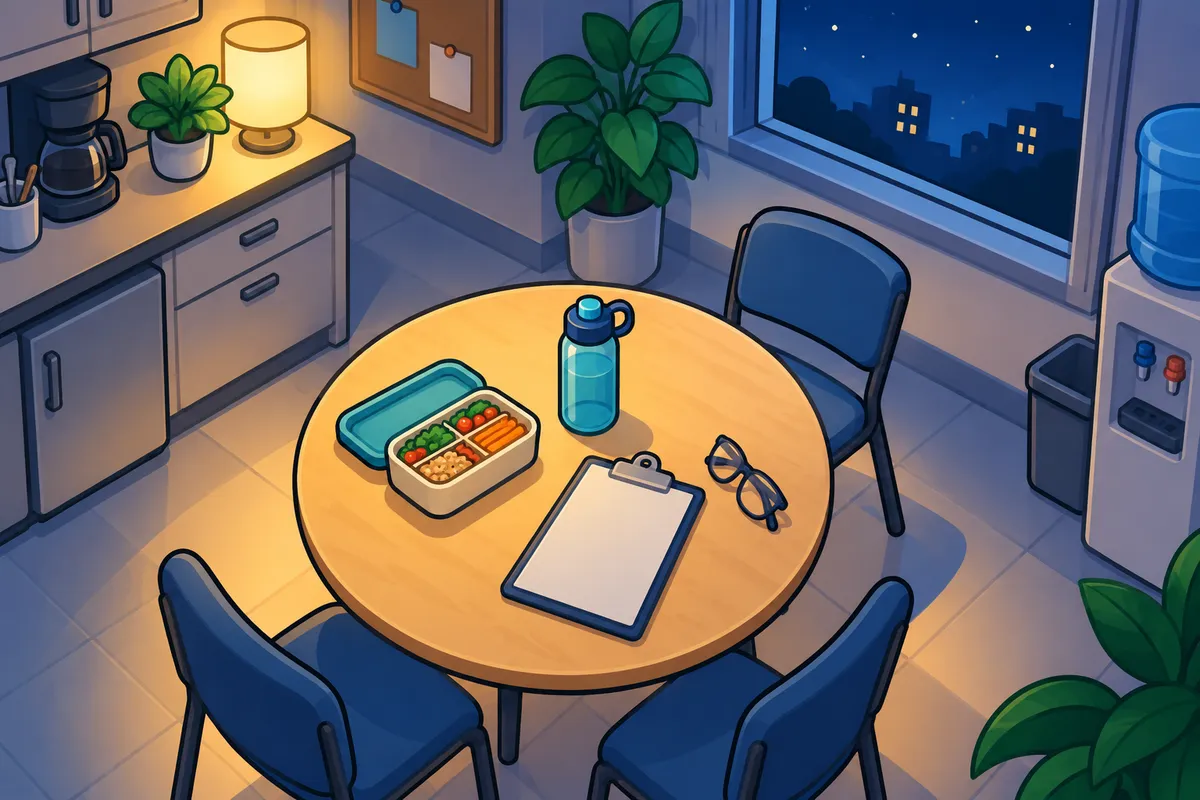
Over years, yes, to a modest degree. A 2018 review of 21 studies found shift workers had a 17 % higher risk of any cardiovascular event than day workers, and the WHO's cancer agency classifies night shift work as "probably carcinogenic to humans." The risks are smaller than the headlines suggest and larger than zero.
Hospitals, warehouses, power plants and police stations all need someone awake at 3 AM. If that someone is you, most of the risks run through one thing you can partly control, which is sleep.
Is Night Shift Bad for You?
Over years of nights, the heart risk is the best-measured one, and it shows only after a while. The same review found the risk "seems to appear only after the first five years of exposure," then grows with each further five years.
One year of nights to pay for a degree is a different exposure from twenty years on a permanent night roster.
The cancer ruling is weaker evidence. An IARC working group placed night shift work in Group 2A in June 2020, citing limited human evidence.
Why Is Night Shift Bad for You?
Because it puts you awake when your body clock expects sleep and asleep when it expects daylight. Your circadian rhythm makes you sleepy at night, the NINDS sleep page explains, so night workers fight sleepiness at work and struggle to fall asleep when they finally get to bed.
Light is the main signal your clock reads, so the drive home in morning sun tells your body the day has started just as you try to sleep.
The second cost is plain lost sleep: NIOSH reports that about 32 % of US healthcare workers sleep 6 hours or less a day, while most adults need about 7 to 8 hours of good-quality sleep.

What Health Problems Are Linked to Night Shift Work?
Heart disease, diabetes, gut and mood problems, some cancers and pregnancy problems. NIOSH lists these for shift workers in its training for nurses:
Risks NIOSH links to shift work
7 items- Cardiovascular disease
- Gastrointestinal disorders
- Psychological disorders
- Cancer (breast cancer has been most researched)
- Diabetes mellitus
- Adverse reproductive outcomes
- Difficulty managing chronic diseases
The last item often gets missed. Someone who already lives with diabetes or high blood pressure has to time meals and medicines around a body clock that keeps moving.
Heart and Blood Vessels
This is the best-measured risk. The 2018 review pooled 21 studies with 173,010 people and found these differences between shift workers and day workers:
| Outcome | Shift workers vs day workers |
|---|---|
| Any cardiovascular event | 17 % higher risk |
| Coronary heart disease | 26 % higher risk |
| Death from cardiovascular or coronary heart disease | almost 20 % higher risk |
| Each further 5 years of shift work, after the first 5 | 7.1 % higher risk of a cardiovascular event |
Source: Torquati and colleagues, 2018.
A 17 % higher risk is a relative number. For a 30-year-old whose chance of a heart event in the next decade is small, 17 % more of a small number stays small; for someone with high blood pressure, smoking or diabetes it adds to risks already there.
Does Night Shift Work Cause Cancer?
Possibly, though the human evidence is limited. IARC placed night shift work in Group 2A, "probably carcinogenic to humans," citing limited evidence of cancer in humans for cancers of the breast, prostate, colon and rectum. It also cites sufficient evidence in experimental animals and strong mechanistic evidence in animals.
IARC calls the human evidence "limited," which is why the label says "probably." It is also why no one can put a personal number on the risk.
If you work nights, the practical step is the one your doctor would suggest anyway. Keep up the cancer screening offered for your age, such as breast, bowel or prostate checks, and mention your years of night work when you go. Screening finds problems early, whatever caused them.
How Strong Is the Evidence Against Night Shifts?
Moderate, and NIOSH thinks it may understate the harm. The risks come from studies that follow workers over time, not from trials, so other differences between night and day workers, such as smoking, diet and job demands, are hard to separate out.
NIOSH lists three problems with this research in the same training module, and they pull in different directions. Two blur the picture; the third hides some of the harm.
Blurs the Picture
- Smoking, diet and job stress travel with night work
- They are hard for researchers to account for
- Chronic disease takes years to appear
Hides Some Harm
- Workers who cannot cope with nights leave them
- NIOSH calls it the healthy worker effect
- It "tends to underestimate" the harm (NIOSH)
So the 17 % is a best estimate with a margin around it. The direction of the finding, more risk with more years, is the part researchers trust most.
How Many People Work Night Shifts?
About 3 % of US workers usually work a night shift, the Bureau of Labor Statistics reported for 2024–2025. In all, 15 % usually work outside the daytime.
- 85 %
- of wage and salary workers usually work a regular daytime schedule
- 5 %
- usually work evenings
- 3 %
- usually work nights
- 15 %
- usually work outside the daytime
What Should You Eat on a Night Shift?
Eat your main meals in the daytime pattern, keep the shift food light, and avoid eating between midnight and 6 AM when you can. NIOSH's diet suggestions for night-shift nurses divide eating into three meals per 24 hours, and say to eat more often when you need a boost.
On the shift
- Vegetables, salads and vegetable soups
- Fruit and wholegrain sandwiches
- Yogurt, cheese, eggs, nuts and green tea
Best avoided
- Eating or snacking from midnight to 6 AM
- Sugar-rich products
- Low-fiber carbohydrate foods
NIOSH explains that sugar-rich and low-fiber foods can increase sleepiness, which is the last thing you want at 3 AM. It also suggests eating with colleagues in a pleasant place away from the work site.
How Can You Stay Healthy Working Night Shifts?
Guard your sleep first, then plan naps, light and health checks around it. Most of the risks above run through short, mistimed sleep, so a daytime sleep that is as long as you can manage does the most work. NIOSH's own advice is:
- Sleep as long as possible.
- Go straight to bed after the shift.
- Take a nap before the next shift if you can.
Night shift health tips, matched to the problem
- You sleep 5 hours after a shiftProtect a longer block: phone off, a sign on the door, straight to bed
- The 4 AM slump at workA planned nap on your break, with an alarm (NIOSH)
- Coffee keeps you up after the shiftNo caffeine late in the shift, the night version of the CDC advice to skip it in the afternoon
- Ten years or more on nightsAsk your doctor for blood pressure, sugar and cholesterol checks
- Nodding off on the drive homeNap before you leave, or get a ride
A dark bedroom is the core of it. NIOSH asks you to block all light from the bedroom and bathroom windows, including light under doorways, and to use a dim red nightlight if you have to get up briefly. That matters more at 9 AM, with sun on the curtains, than at midnight.
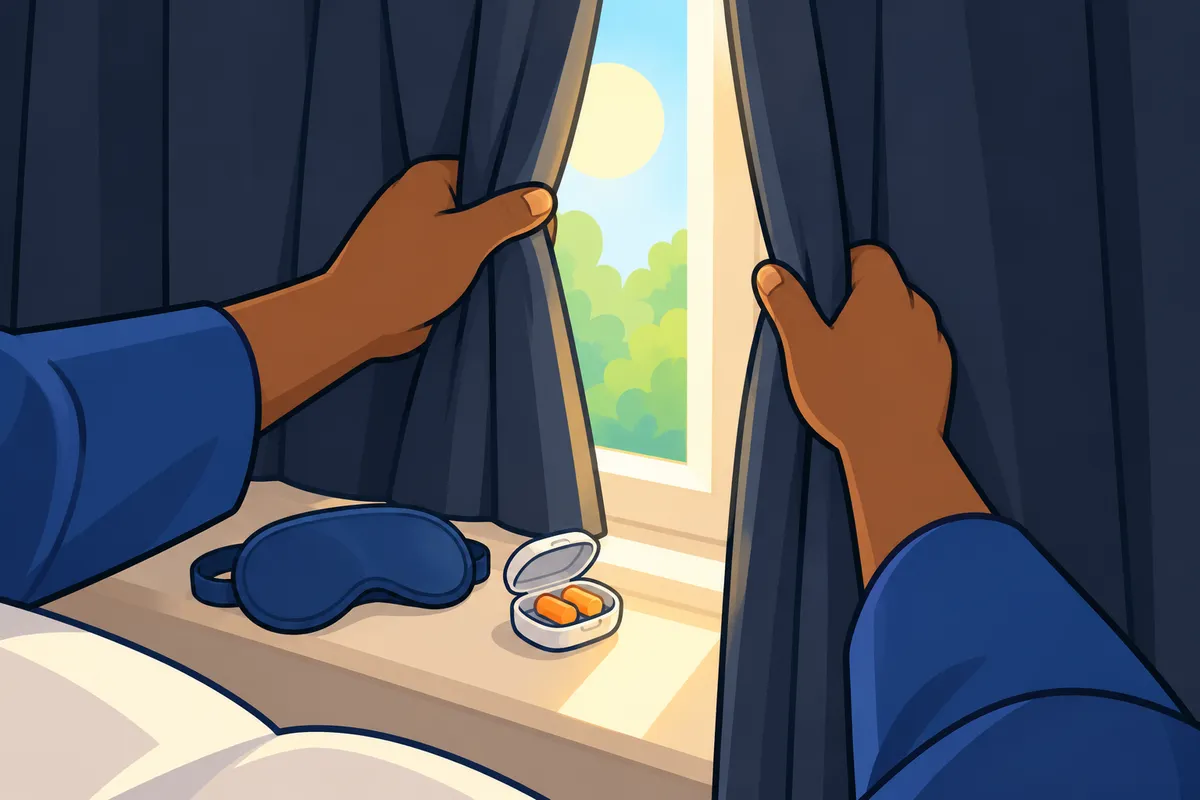
Naps help on the shift itself. NIOSH says that "judicious use of naps inside and outside the workplace can help increase your alertness," and suggests an alarm and a colleague who checks on anyone who has not come back.
Melatonin is often sold to night workers, but the evidence is thin: in reviews summarized by the NCCIH, people taking it slept about 24 minutes longer in the daytime, with low-quality evidence. And nobody has studied years of nightly use well enough to call it safe.
Water and food follow their own pattern too, since when to drink from waking to your daytime sleep works differently from a day job, and short daytime sleep tips the hunger hormones toward snacking.
How the Years on Nights Change the Picture
What to Ask Before You Take a Night Post
A night post is easier to judge with a few facts in hand.
Questions to answer first
5 items- How many years do I plan to work nights? The heart risk shows after about five.
- Is the roster fixed nights or rotating between days and nights?
- Is there a safe place to nap on breaks?
- Can I get home without a long drive after a shift?
- Do I already have high blood pressure, diabetes or another condition to manage?
Common Questions
Can working nights affect a pregnancy?
Possibly. NIOSH says working at night or long hours might be related to miscarriage and preterm birth, advises avoiding work during normal sleep time in pregnancy if possible, and suggests talking to your doctor if concerned.
Are rotating shifts easier than permanent nights?
Neither wins outright. NIOSH advises using fixed nights with caution, since most people switch back to days on days off, and says forward rotations (day, evening, night) are easier to adjust to than backward ones.
Do employers have to pay extra for night shifts?
Not under US federal law. The Department of Labor says extra night pay is a matter of agreement with your employer; the FLSA only requires time and a half for covered, nonexempt workers past 40 hours a week.
General information for healthy adults, not medical advice. If a doctor has set your fluid amount, follow that.
More in Sleep and Recovery

Sources
- Scandinavian Journal of Work, Environment and Health (Torquati and colleagues). Shift work and the risk of cardiovascular disease: a systematic review and meta-analysis including dose–response relationship, 2018.
- International Agency for Research on Cancer (WHO). IARC Monographs Volume 124: Night Shift Work, 2020.
- CDC, National Institute for Occupational Safety and Health. NIOSH Training for Nurses on Shift Work and Long Work Hours, Module 3: Health Effects, 2020.
- CDC, National Institute for Occupational Safety and Health. NIOSH Training for Nurses, Module 2: How Much Sleep Do You Need?, 2020.
- CDC, National Institute for Occupational Safety and Health. NIOSH Training for Nurses, Module 7: Naps, 2020.
- CDC, National Institute for Occupational Safety and Health. NIOSH Training for Nurses, Module 9: Diet Suggestions for Night-Shift Nurses, 2020.
- US Bureau of Labor Statistics. Job Flexibilities and Work Schedules, 2024–2025, 2026.
- National Institute of Neurological Disorders and Stroke (NIH). Brain Basics: Understanding Sleep, 2025.
- National Center for Complementary and Integrative Health (NIH). Melatonin: What You Need To Know, 2024.
- Centers for Disease Control and Prevention. About Sleep, 2024.
- CDC, National Institute for Occupational Safety and Health. About Work Schedules and Reproductive Health, 2024.
- CDC, National Institute for Occupational Safety and Health. NIOSH Training for Nurses, Module 5: Guidelines for Designing Work Schedules, 2020.
- CDC, National Institute for Occupational Safety and Health. NIOSH Training for Nurses, Module 5: Guidelines for Designing Work Schedules (Continued), 2020.
- US Department of Labor. Night Work and Shift Work, 2026.
Sources checked by the Glubbo Editorial Team on Oct 19, 2026. General information, not medical advice. How we write and check our guides.

