Exercise and Heat · Workouts
When Do You Need Electrolytes, and When Is Plain Water Enough?
 By the Glubbo team · Updated Oct 16, 2026 · 7 min read
On This Page
- When Do You Need Electrolytes?
- Are Sports or Electrolyte Drinks More Hydrating Than Water?
- What Should a Sports Drink Contain?
- Do You Need Electrolytes Every Day?
- Do You Need Electrolytes If You Drink a Lot of Water?
- Is Electrolyte Water Better Than Regular Water?
- Two Days, Two Answers
- What to Do Today
- Sources
Only for long, sweaty sessions
water is enough for under an hour
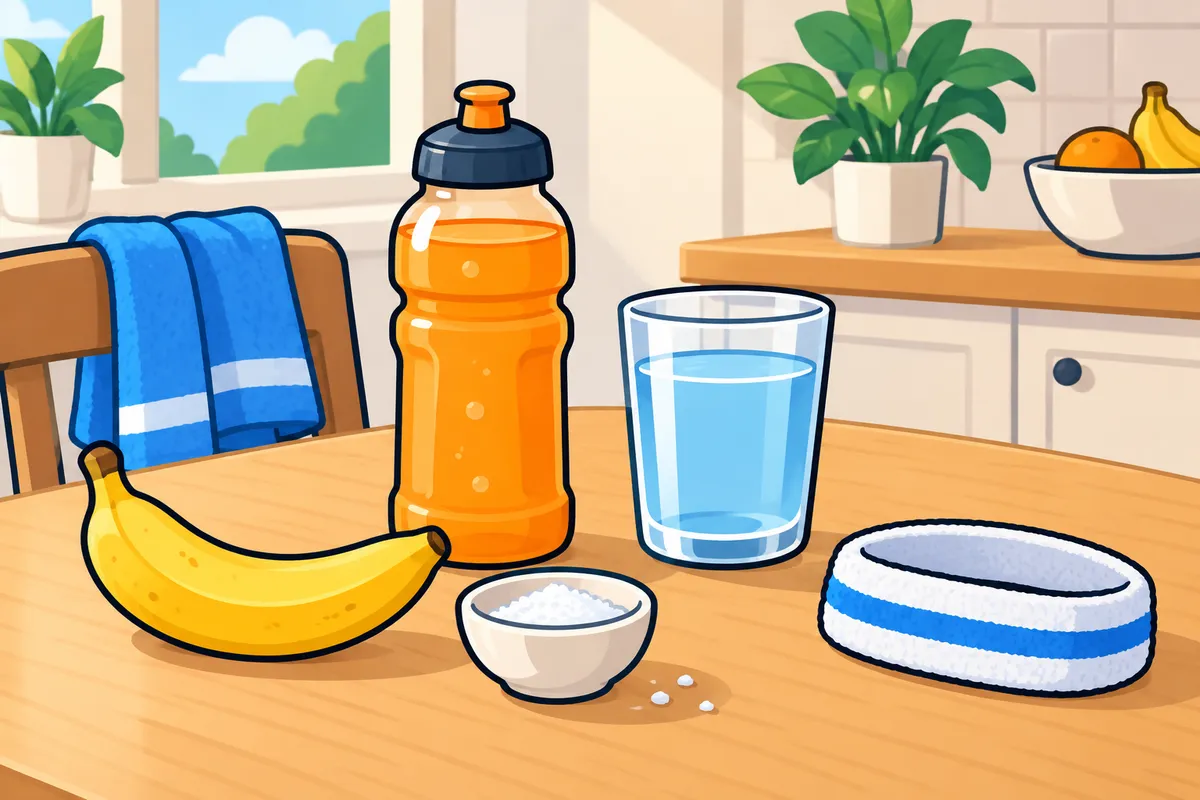
Electrolytes earn their place when you sweat a lot for a long time. For a 45-minute workout, a day at a desk or an evening walk, plain water does the job, and our guide on how much water to drink before, during and after a workout gives the amounts.
This page covers who needs a sports drink, what it should contain and where the advice stops. The numbers come from the National Athletic Trainers' Association (NATA), the Korey Stringer Institute and NIOSH, the US workplace safety institute.
When Do You Need Electrolytes?
When you exercise for more than about an hour, train with hard intervals, or sweat for several hours in the heat. NATA says those sessions "may benefit" from drinks with carbohydrate and electrolytes, and NIOSH says: "If sweating lasts for several hours, drink sports drinks containing balanced electrolytes." Under an hour, water is enough.
Who Needs Them and Who Does Not
| Your situation | What to drink | Who says so |
|---|---|---|
| Gym session, run or class under an hour | Water | NATA: "no substances other than water" |
| Session over an hour, or with intense intervals | Water, and a carbohydrate-electrolyte drink can help | NATA |
| Outdoor work or play with sweating that lasts several hours | A sports drink with balanced electrolytes | NIOSH |
| Very salty sweat, above 60 mEq/L when tested, and more than 2.5 L of sweat an hour | Sodium in your drinks may help | NATA |
| Less than 4 hours before your next session | Up to 150 % of the loss, with sodium in food or drink | NATA, Korey Stringer Institute |
| An ordinary day at home or at work | Water, coffee, tea or milk | No source we read advises electrolyte drinks |
Most people sit in the first or last row most days. The middle rows describe long runs, rides, matches, hikes and shifts in the heat.
Are Sports or Electrolyte Drinks More Hydrating Than Water?
Not over a normal few hours. In a 2016 trial of 13 drinks, a sports drink kept fluid in the body no better than still water. Only an oral rehydration solution and milk held more, and the trial tested fasting men at rest, not people in the middle of a workout.
Each of the 72 men drank 1 L of still water and 1 L of three other drinks, one drink per visit and each within 30 minutes, and the researchers collected his urine for the next 4 hours. Cola, diet cola, hot tea, iced tea, coffee, lager, orange juice, sparkling water and the sports drink all matched water.
Oral rehydration solution scored about 1.5 times water at the two-hour mark, and full-fat and skimmed milk scored the same. Limits: 72 fasting men aged 18 to 35, about 17 of them per drink, funded by a grant from the European Hydration Institute. The protocol included no exercise.
So the case for a sports drink rests on what else it carries in a long effort. That is carbohydrate for fuel and sodium for the salt you sweat out, and NATA says endurance athletes "may be aided by fluids containing carbohydrates and electrolytes".
What Should a Sports Drink Contain?
Some carbohydrate, some sodium, and not too much of either. Here is what the sources give, and where they stop.
Carbohydrate
NATA puts the best concentration for fluid absorption between 3 % and 8 % carbohydrate, and warns that above 5 % to 8 % absorption may slow. The Korey Stringer Institute suggests about 1 L of a 6 % drink per hour of exercise and advises against anything over 8 %.
To check a bottle, turn its label into a percentage:
Read a Sports Drink Label
- Find the carbohydrate: 30 g in a 500 ml bottle
- Divide by the ml, times 100: 6 %
- 3 % to 8 % sits in NATA's range
- 60 g in 500 ml is 12 %: too strong
A 6 % drink holds 6 g of carbohydrate per 100 ml. A 500 ml (17 oz) bottle with 40 g is 8 %, the top of NATA's range, and 12 % is above what both sources advise during exercise.
Sodium
Sweat varies a lot: NATA gives sweat sodium of 10 to 100 mEq per litre. It says people with "much greater than average sweat sodium concentrations (greater than 60 mEq/L)" may benefit from sodium in their drinks, and that your diet and drinks should hold "enough to replace losses but not an excessive amount".
NATA adds that "no evidence indicates that athletes are helped by sodium supplementation beyond individual losses".
The American College of Sports Medicine points out the same spread: "considerable variability in sweating rates and sweat electrolyte content between individuals".
Neither body gives a sodium dose for the general public. So this page does not either, and NATA's advice is to set it "based on specific losses and needs", which means a sweat test with an athletic trainer or sports dietitian if you sweat heavily for hours.
Do You Need Electrolytes Every Day?
Not on an ordinary day. NATA ties electrolyte drinks to long or intense exercise and heavy sweating, and for activity under an hour it says water is enough. On normal days, water, coffee, tea or milk covers your fluid, and your meals bring their own electrolytes.
NATA notes that "the electrolyte and water contents of meals contribute to fluid replacement and can enhance fluid retention". That is why a normal dinner after a short workout does the job a sachet would.
If a doctor has told you to limit salt, ask before you add an electrolyte product at all. No source we read recommends one for a day without long, sweaty exercise or heat.
Do You Need Electrolytes If You Drink a Lot of Water?
Drinking far more than you sweat is the problem, and an electrolyte drink does not solve it. NATA says exercise-associated hyponatremia, low blood sodium, comes from "excessive consumption of hypotonic fluids (including sports drinks)". Match what you drink to what you sweat, and never finish a session heavier than you started.
NATA reports that low blood sodium shows up more often in women and after activity longer than 4 hours. A long hike, an ultra or a slow marathon with a drink at every stop fits that picture.
Our page on whether you can drink too much water explains the risk and the symptoms in full.
Is Electrolyte Water Better Than Regular Water?
For everyday drinking, no evidence we read says so. Electrolyte water is water with small amounts of minerals added, and in the 2016 trial still water, sparkling water and a sports drink all left the same amount of fluid in the body over four hours. Pay for it only if you like the taste.
The minerals matter after heavy sweating. The Korey Stringer Institute says that "consuming sodium during the recovery period will help retain ingested fluids and help stimulate thirst", and NATA says meals help retain fluid as well; our page on how to rehydrate fast turns that into steps.
Two Days, Two Answers
The same person can need water one day and a sports drink the next. What decides it is how long you sweat and how much.
Dev's sweat rate decides the rest, and our guide on how to calculate your sweat rate gets it from two weigh-ins. For summer rides, drinking in hot weather adds the heat rules.
Runners who carry every sip can read how much water runners should drink. If your tub of powder is creatine rather than electrolytes, its water questions sit on water with creatine.
What to Do Today
- Look at your week. Count the sessions that last longer than an hour or run several hours in the heat.
- For everything else, keep water in your bottle.
- For the long ones, check the label: 3 % to 8 % carbohydrate, which is 15 to 40 g in a 500 ml bottle.
- After a long, sweaty session, eat a normal salty meal with your refill drinks.
Your everyday goal comes first, and sports drinks count toward it like any other drink. Find that goal with the water intake calculator, and read how much water you need in a day for the official numbers behind it.
General information for healthy adults, not medical advice. If a doctor has set your fluid amount, follow that.

More in Exercise and Heat

Sources
- National Athletic Trainers' Association (Journal of Athletic Training). National Athletic Trainers' Association Position Statement: Fluid Replacement for the Physically Active, 2017.
- CDC NIOSH. Heat Stress Workplace Recommendations, 2026.
- Korey Stringer Institute, University of Connecticut. Hydration, 2026.
- American College of Sports Medicine (Medicine and Science in Sports and Exercise). American College of Sports Medicine position stand. Exercise and fluid replacement (abstract), 2007.
- American Journal of Clinical Nutrition (Maughan and colleagues). A randomized trial to assess the potential of different beverages to affect hydration status: development of a beverage hydration index, 2016.
Sources checked by the Glubbo team on Oct 16, 2026. General information, not medical advice.