Exercise and Heat · Cold and Altitude
Can You Get Dehydrated in Cold Weather? Why Winter Thirst Fades
 By the Glubbo team · Updated Oct 16, 2026 · 7 min read
On This Page
Yes, and you feel it less.
cold blunts thirst and makes you pee more
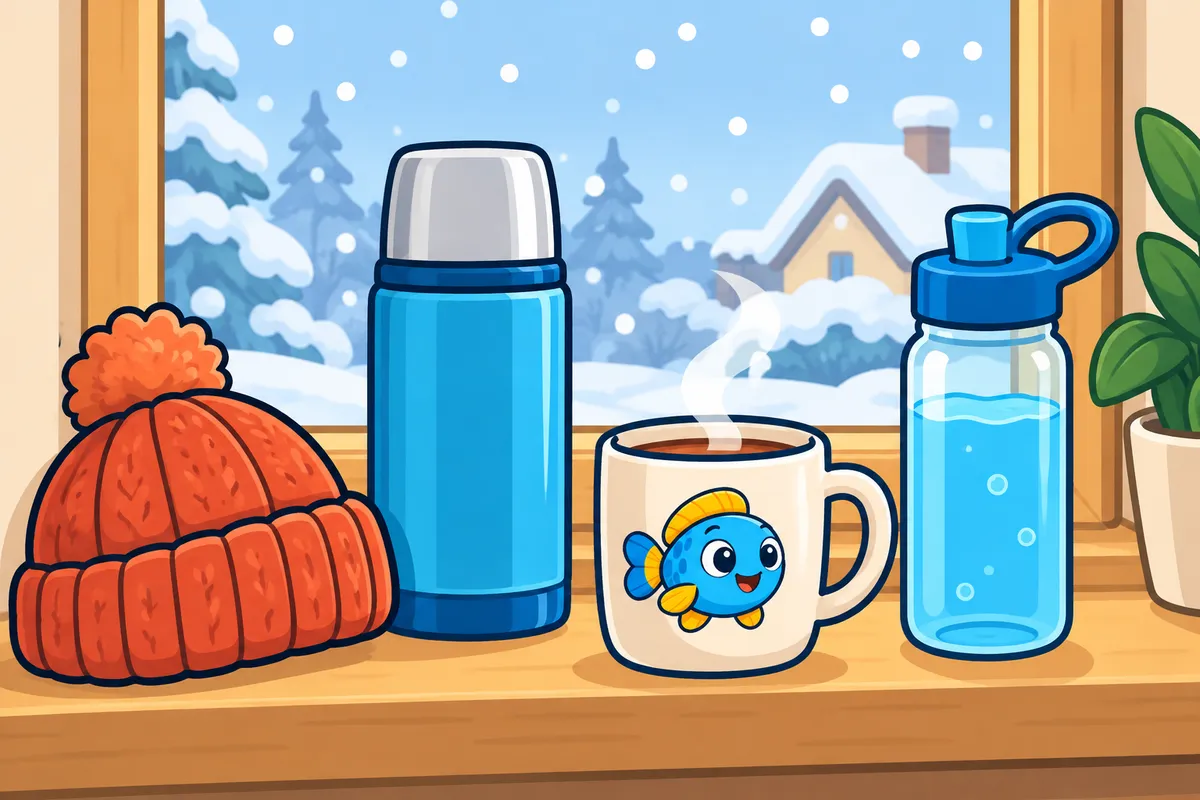
Yes. Cold weather dulls your thirst and makes you pee a little more, and warm layers hide the sweat you lose when you work or play outside. You keep losing water while the urge to drink goes quiet.
That makes winter the season when a drinking routine matters most. This page covers the cold; for how much to drink around any workout, see the exercise and heat guide, and for summer, how much water to drink in hot weather.
Can You Get Dehydrated in Cold Weather?
Yes. The National Athletic Trainers' Association (NATA) says that in cold weather "the drive for thirst is blunted" and people drink less, while cold air "induces a slight diuretic effect". The US National Academies add that fluid losses in cold climates can be as high as in hot ones.
That last point surprises people. The National Academies put it down to "high rates of energy expenditure and use of heavy clothing": hard work in a thick jacket makes you sweat, even at freezing temperatures.
In summer you see and feel the sweat. Under winter layers you often do not, and a cold afternoon does not make you crave a drink the way a hot one does. Two numbers from the research show the size of it:
- Up to 40 %
- less thirst at 4 °C (39 °F) than at 27 °C (81 °F)
- 340 ml
- more water breathed out over a modelled day of rest and work at −20 °C (−4 °F)
Why Am I Less Thirsty in Winter?
The likely reason: cold narrows the blood vessels in your skin and pushes more blood toward your core, which your body may read as having plenty of water. In a 2004 lab study, air at 4 °C (39 °F) cut thirst by up to 40 % compared with 27 °C (81 °F), at rest and while walking.
What the 2004 Study Measured
The researchers ran two small trials. In the first, eight men walked for an hour at a moderate pace in T-shirts and shorts, once in the cold and once in warm air, both when well hydrated and when short of water; they felt less thirsty throughout every cold walk.
In the second, nine men stood and then exercised on a treadmill in the same two temperatures. When they were short of water and cold, both their thirst and vasopressin, the hormone that tells your kidneys to hold on to water, dropped. That happened even though their blood had grown more concentrated, the very signal that should make you thirsty.
Who Feels It Most
If thirst is already weak, cold weakens it further. The National Academies report that "thirst and fluid intake are impaired in the elderly", so an older adult in a cold house gets both effects at once.
For them, and for anyone who forgets to drink once the weather turns, a routine works better than waiting for the signal. Whether thirst is reliable the rest of the year is a separate question, answered in is thirst a good guide.
Does Cold Weather Make You Pee More?
A little, yes. NATA says cold air "induces a slight diuretic effect", and the National Academies write that cold and low oxygen "will increase urine output". This is cold-induced diuresis, a normal response to cooling down, and the extra pee is water you need to drink back later.
The National Academies call the water lost this way "probably of no concern as long as the body remains cool". The catch comes next: if you then exercise and build up heat in warm, insulating clothing, the report says you will meet heat stress with less water on board.
So the person shovelling snow after a morning outdoors faces two losses in a row: the extra pee while cold, then the sweat under a heavy coat.
Where Your Water Goes in Cold Weather
Three routes, each small on its own. Together they explain how a cold day leaves you short.
| Route | What cold does | What the research measured |
|---|---|---|
| Breath | Cold, dry air takes more water out with each breath | About 5 ml more an hour at rest, 15 to 45 ml more an hour during hard exercise |
| Pee | Cooling triggers a slight diuresis | NATA calls it slight; no fixed amount |
| Sweat under layers | Hard work in heavy clothing | Total losses in the cold can match those in hot climates |
Breath, in Numbers
On an ordinary day, breathing costs a sedentary person about 250 to 350 ml (8 to 12 oz) of water, the National Academies report, and 500 to 600 ml for an active one. Cold air adds to that.
For a modelled 24-hour military day (8 hours of rest, 16 of work) at −20 °C (−4 °F), against the same day at 25 °C (77 °F), breathing alone cost about 340 ml (11 oz) more. That is a glass and a half of water, gone in the white puffs you see on a frosty morning.
Sweat You Do Not See
A winter run, a ski day or an hour of snow clearing all make you sweat, and a base layer soaks it up before you notice. The National Academies list heavy clothing as one reason cold-climate losses can rival hot ones.
The only way to know your number is to weigh yourself before and after one cold session; how to calculate your sweat rate turns the difference into litres.
How Do You Stay Hydrated in Winter?
Drink on a routine instead of waiting for thirst, and make some of those drinks warm. NIOSH tells employers to "provide warm liquids" to cold-weather workers, and the CDC says warm drinks can help raise body temperature. Keep your pee a pale colour, as the NHS advises.
What that looks like on a winter day:
- Fix your drinks to the clock: on waking, with each meal, mid-morning and mid-afternoon, so thirst does not have to remind you.
- Keep a thermos of tea, warm water or broth at your desk or in your bag; a hot drink is easier to want on a cold day than iced water.
- Count soup. The water in food adds to your day, as explained in total water vs drinking water.
- Skip alcohol to warm up. The CDC says not to give alcoholic drinks to someone you are warming up after the cold, and lists drinking alcohol as a risk factor for hypothermia.
- Take an insulated bottle on winter runs and hikes, so your water stays drinkable.
Exercising in the Cold
Cold forgives a small water deficit better than heat does. NATA notes that in cool conditions aerobic performance held up in studies despite some water loss, while in temperate and hot weather it fell once losses passed 2 % of body weight.
That buys you margin on a winter run. It does not cancel the drink afterwards, and the runner's plan uses the same weigh-in for any season.
Your Glubbo Goal in Winter
Glubbo's habit formula lowers your goal by 100 ml on the Cool climate setting, because you sweat less sitting in the cold. In winter, the risk sits in the gap between that goal and what you actually drink once thirst goes quiet.
Your own number comes from the water intake calculator. The water drinking schedule then gives you set times to drink, which is the routine cold weather needs.
When Cold and Dehydration Need a Doctor
Most winter dehydration is mild and fixed with a few warm drinks. Some signs need help quickly.
Cold adds its own emergency. The CDC lists these warning signs of hypothermia in adults, and says a temperature below 95 °F (35 °C) needs medical attention at once:
Signs of Hypothermia
- Shivering
- Exhaustion or feeling very tired
- Confusion
- Fumbling hands
- Memory loss
- Slurred speech
- Drowsiness
The milder signs, from a dry mouth to a headache, are listed in the signs of dehydration in adults.
What to Do This Week
Pick two fixed times a day to drink something warm, such as a mug of tea at 10 and 3. Check your pee colour in the afternoon. If it is dark, add a third.
General information for healthy adults, not medical advice. If a doctor has set your fluid amount, follow that.
More in Exercise and Heat
Sources
- Journal of Athletic Training (National Athletic Trainers' Association). National Athletic Trainers' Association Position Statement: Fluid Replacement for the Physically Active, 2017.
- Medicine and Science in Sports and Exercise (Kenefick, Hazzard, Mahood and Castellani). Thirst sensations and AVP responses at rest and during exercise-cold exposure, 2004.
- National Academies of Sciences. Dietary Reference Intakes, Chapter 4: Water, 2005.
- CDC, National Institute for Occupational Safety and Health. Cold and Work: Types, Causes, Preparation, 2026.
- CDC. Preventing Hypothermia, 2026.
- NHS. Dehydration, 2026.
Sources checked by the Glubbo team on Oct 16, 2026. General information, not medical advice.