Too Little, Too Much
How to Tell if You Are Drinking Enough Water: 4 Checks at Home
Check three signs
pale pee, normal trips, little thirst
 By the Glubbo team · Updated Oct 16, 2026 · 9 min read
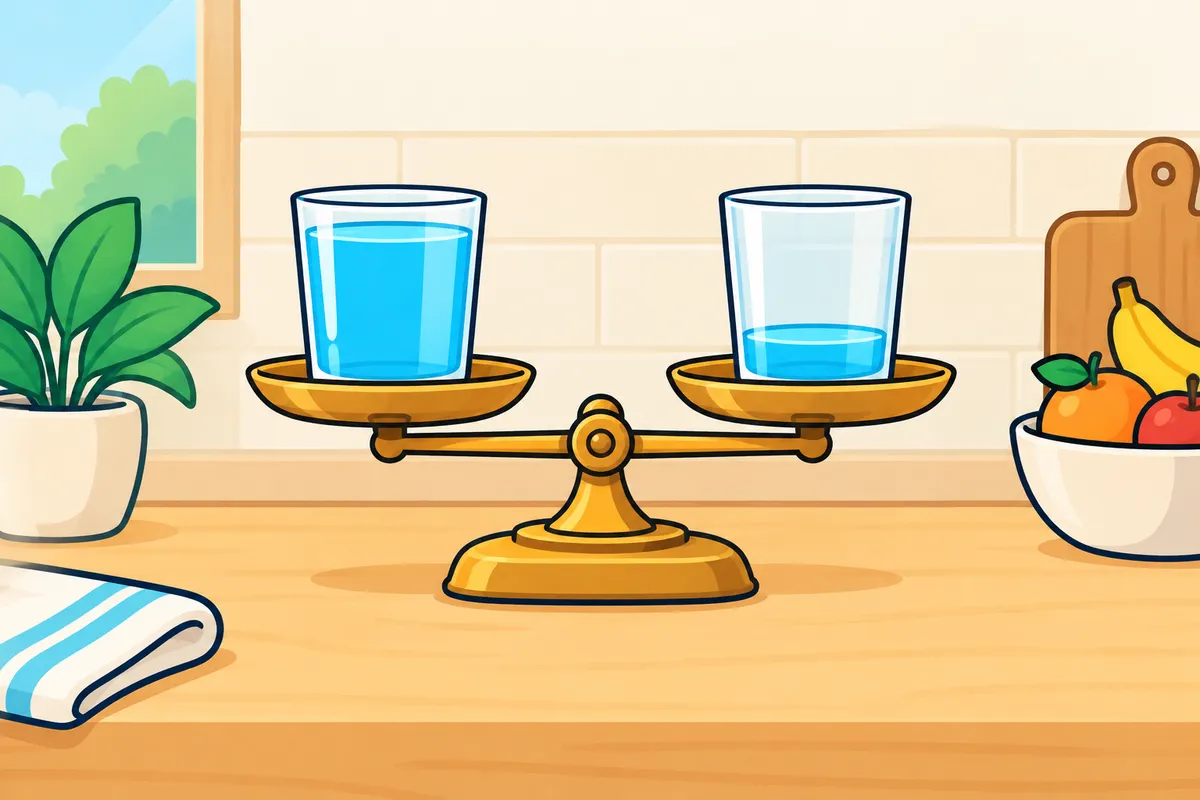
You are drinking enough water when your pee is pale, you go a normal number of times, and thirst does not nag you all day. Four checks at home tell you this in about a minute each morning, with nothing more than a clear cup and a bathroom scale.
This guide walks through each check, what it can and cannot tell you, and where to go next. If you would rather start from a daily number, our guide on how much water you should drink a day sets out the official figures.
How Do You Know You Are Drinking Enough Water?
Look at your pee and listen to your thirst. The NHS says most people should drink enough that their pee is "a clear pale yellow colour". For most healthy adults, drinking when thirsty and having drinks with meals keeps that balance on an ordinary day, with no counting needed.
The US National Academies said as much in their 2004 water report: most healthy people meet their daily needs "by letting thirst be their guide". Their water chapter adds that from day to day, "fluid intake, driven by the combination of thirst and the consumption of beverages at meals, allows maintenance of hydration status".
So why check at all? Because thirst and meals slip on certain days.
A 12-hour shift with no break, a heat wave, a stomach bug or a two-hour hike can leave you short by evening. On those days the signs show up in the bathroom before you feel them. The CDC gives the quickest test: "When it's light yellow or clear, it usually means you are drinking enough water."
How Can You Check for Dehydration at Home?
Use four checks together: the color of your first pee of the day, how many times you pee, how thirsty you feel, and your weight first thing in the morning. Any one of them can mislead you. When two or three point the same way, you can trust the answer.
The mix comes from sports medicine. For the best estimate, the National Athletic Trainers' Association (NATA) recommends three measures at once: "first morning urine color (or USG), thirst sensation, and body mass". USG is a lab test of urine strength, so at home the color stands in for it.
The Color of Your Pee
Pale yellow means you are fine. Dark yellow, strong-smelling pee is on the NHS list of dehydration symptoms, and your first pee of the morning shows it best because it has had all night to concentrate.
How you look matters. NATA advises catching the sample in a clear container and judging it in good light, because "assessing color in the toilet bowl after urination is not reliable, as the sample is diluted with water". A clear plastic cup kept by the sink does the job.
Color has limits, and the US panel spells them out: "no precise relationship between urine color and hydration level exists", and "diet, medications, and vitamin use can affect urine color". A B-vitamin tablet can turn your pee bright yellow on a day you drank plenty, so read color beside the other checks.
How Often You Pee
Most healthy adults pass urine 4 to 7 times in 24 hours, according to the NHS page on diabetes insipidus. Going less often is a warning sign: the NHS excessive thirst page lists "peeing little and less than 4 times a day" among the symptoms of dehydration.
Count on an ordinary weekday, not a travel day or a sick day. Peeing far more than 7 times can simply mean you drink a lot, but together with constant thirst it needs a doctor, as our guide on why you might be always thirsty explains.
How Thirsty You Feel
For most adults thirst works, but it runs late. The US panel found that even when people drink as much as they like, they "tend to under-replace their fluid needs over the short term", and thirst makes up the gap over the next day.
Thirst also fades with age. Whether you should wait for it at all is its own question, answered in our guide on whether thirst is a good guide.
Can Your Weight Tell You if You Are Dehydrated?
Yes, if you weigh yourself the same way each morning and compare one day with the next. A quick drop of about 2 % of your body weight is mostly water. NATA says body mass "is best measured at the same time each morning for valid comparisons".
NATA ties the first signs of dehydration, thirst and "general discomfort or complaints", to a small loss of body mass, and the line is easy to work out for your own weight.
- 2 %
- of body weight lost brings the first signs
- 1.4 kg
- (3.1 lb) is that 2 % for a 70 kg (154 lb) adult
- 1.4 L
- (47 oz) of water, since a liter weighs about a kilogram
Weight moves for other reasons too.
A salty dinner or a big pasta night can add weight, because "muscle glycogen will osmotically hold water", as the US panel puts it. The same report adds that weight changes track body water well only "if other factors influencing body weight are carefully controlled", so we suggest weighing after your first pee, before breakfast, in the same clothes.
How You Feel
Headaches, dizziness, tiredness and a dry mouth can all come from too little water. They also come from poor sleep, hunger and a dozen other things, so treat them as a prompt to run the checks above. The full list, with what each sign means and which ones are urgent, is in signs of dehydration in adults.
The Four Checks Side by Side
| Check | Looks fine | Looks low | Source | What can fool it |
|---|---|---|---|---|
| First-morning pee color | Pale yellow or clear | Dark yellow, strong smell | NHS, CDC | Vitamins, food and medicines |
| Times you pee in 24 hours | 4 to 7 | Fewer than 4, small amounts | NHS | Travel, illness, a day of big drinks |
| Thirst | Comes and goes | Constant, or a dry mouth by noon | NHS, US panel | Age, heat, hard exercise |
| Morning weight | About the same as yesterday | Down about 2 % | NATA | Salt, carbs, a late meal |
A Week of Checks, Worked Through
Here is how the four checks read in a real week. Priya weighs 62 kg (137 lb) and works in a hospital pharmacy, where Wednesdays are 12-hour shifts.
| Morning | First pee | Trips the day before | Weight | Thirst |
|---|---|---|---|---|
| Monday | Pale yellow | 6 | 62.0 kg | Normal |
| Tuesday | Pale yellow | 5 | 61.9 kg | Normal |
| Wednesday | Pale yellow | 6 | 62.0 kg | Normal |
| Thursday, after the long shift | Dark yellow | 3 | 60.9 kg | Dry mouth on waking |
| Friday | Pale yellow | 5 | 61.8 kg | Normal |
One short morning a week is easy to fix. If Thursday's numbers showed up most mornings, she would need a daily habit instead of a one-off catch-up.
What Should You Do if the Checks Say You Are Low?
Drink more, a little at a time, and check again the next morning. After a big sweat, the US panel notes that thirst normally drives you to replace the lost water "over the ensuing 24 hours". If you feel sick, start with small sips, as the NHS advises.
When you are losing fluid fast through vomiting or diarrhea, the NHS points you to a pharmacist for oral rehydration solutions, which put back salts as well as water. How fast to drink, how much and which drinks work best are covered in how to rehydrate fast.
If you come up short most mornings, you need a daily target more than a rescue. The water intake calculator gives you one, and the water drinking schedule spreads it across your waking hours so the afternoon does not slip.
The official averages behind targets like this, and why food covers part of your water, are in our guide to total water vs drinking water.
What About Drinking Too Much?
Over-drinking is rare in healthy people, but it happens. The US panel links the exercise kind mostly to "greater than 6 hours of prolonged stressful exercise".
The tricky part is that early over-drinking feels like dehydration. NATA lists headache, dizziness, physical exhaustion, muscle twitching and nausea as early signs of low blood sodium, "all of which are also symptoms of hypohydration". If your checks say you are well watered and you still feel this way after drinking a lot, read can you drink too much water before reaching for another glass.
Chasing a huge daily number on purpose has its own risks, which our guide on whether a gallon of water a day is too much works through.
Who Should Read These Checks Differently?
The checks above fit healthy adults. These groups need a different approach, and some need a doctor's number instead of a home check.
- Older adults. The US panel says "thirst and fluid intake are impaired in the elderly", and in hot weather the CDC tells adults over 65 to "drink more water than usual and don't wait until you're thirsty to drink."
- Anyone whose doctor limits fluids or prescribes water pills. The CDC says to ask that doctor "how much you should drink during hot weather", and that amount replaces every number here.
- Babies and children. The NHS says they are more at risk of dehydration, and babies show different signs, such as fewer wet nappies. Ask a doctor, a pharmacist or a nurse line, and never use adult numbers or Glubbo's formula for a child.
- Pregnancy. The NHS lists pregnancy as a normal reason to feel thirstier, and says to see a GP if your thirst is excessive while pregnant.
- People with diabetes. The NHS lists diabetes first among the things that make dehydration more likely.
What to Do Tomorrow Morning
Three mornings of checks give you a baseline, and after that you only need them on unusual days.
Three Mornings of Checks
- Leave a clear cup by the bathroom sink tonight, and look at your first pee in daylight
- Step on the scale after that first pee, before breakfast, and write the number down
- Count your trips to the toilet through the day; a tally on your phone is enough
- Note whether thirst bothered you, and when
- On the third evening, compare: if two checks say low on the same day, drink more the next day and check again
If your numbers are fine but you are thirsty all the time, the cause is usually not your water at all, and the always thirsty guide lists what a GP will look for.
General information for healthy adults, not medical advice. If a doctor has set your fluid amount, follow that.
Sources
- NHS. Water, drinks and hydration, 2023.
- NHS. Dehydration, 2026.
- NHS. Excessive thirst, 2023.
- NHS. Diabetes insipidus, 2022.
- CDC. About Heat and Your Health, 2026.
- CDC. Heat and Older Adults (Aged 65+), 2024.
- National Academies of Sciences. Report sets dietary intake levels for water, salt, and potassium (press release), 2004.
- National Academies of Sciences. Dietary Reference Intakes, Chapter 4: Water, 2005.
- Journal of Athletic Training (NATA). National Athletic Trainers' Association Position Statement: Fluid Replacement for the Physically Active, 2017.
Sources checked by the Glubbo team on Oct 16, 2026. General information, not medical advice.