Too Little, Too Much · Signs and Checks
Signs of Dehydration in Adults: Mild, Serious and When to Get Help
 By the Glubbo team · Updated Oct 16, 2026 · 8 min read
On This Page
Thirst, dark pee, fewer trips
then headache, dizziness, tiredness
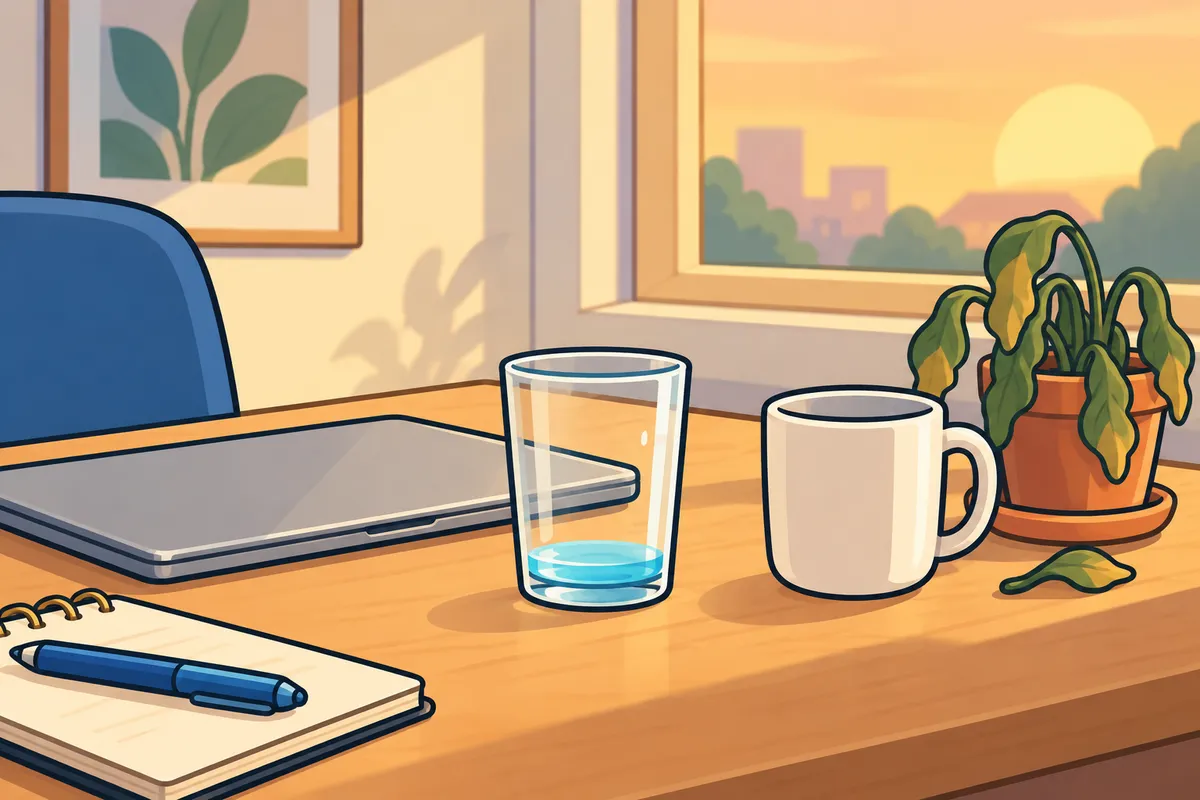
The first signs of dehydration are thirst and dark yellow pee, and most adults notice one of them hours before anything else. A headache, dizziness and tiredness follow if you keep losing more water than you drink.
This page lists every sign the NHS names, shows how they build as you lose water, and marks the ones that need help today. To test yourself at home instead of waiting for symptoms, start with our guide on how to tell if you are drinking enough water.
What Are the Signs of Dehydration?
Thirst, dark yellow strong-smelling pee and peeing less often than usual are the signs most adults notice first. The NHS also lists a headache, feeling dizzy or lightheaded, tiredness, a dry mouth and sunken eyes. Several together, after a hot day or a stomach bug, point clearly to dehydration.
The NHS dehydration page gives this list for adults and children, word for word:
Signs of Dehydration
- feeling thirsty
- headache and feeling light-headed
- dark yellow, strong-smelling pee
- peeing less often than usual
- feeling dizzy or lightheaded
- feeling tired
- a dry mouth, lips and tongue
- sunken eyes
Its excessive thirst page puts a number on "less often": "peeing little and less than 4 times a day". Most of these signs have other causes too, which is why no single one proves you are dehydrated.
Babies show it differently. The NHS lists a sunken soft spot on the head, few or no tears and fewer wet nappies than usual, and a baby with these signs needs a doctor or a nurse line, not a home check.
What Are the Symptoms of Mild Dehydration?
Mild dehydration usually shows as thirst and a vague sense that something is off, with darker pee than usual. Sports medicine puts these first signs at about a 2 % loss of body weight. Tiredness, flushed skin and cramps can follow, and dizziness and headache tend to arrive once the loss goes past 2 %.
That ladder comes from the National Athletic Trainers' Association (NATA), which studies people who sweat hard. It describes the early signs as "thirst and general discomfort or complaints (approximately 2% body mass deficit)", followed by "flushed skin, weariness, cramps, and apathy".
How the Signs Build With Water Loss
The table puts NATA's stages beside what they mean for an adult who weighs 70 kg (154 lb). The weights are our arithmetic: a liter of water weighs about a kilogram, so a 1.4 kg drop is close to 1.4 liters of water.
| Stage | Water lost | For a 70 kg adult | Signs NATA lists |
|---|---|---|---|
| First signs | About 2 % of body weight | About 1.4 kg (3.1 lb), roughly 1.4 L (47 oz) | Thirst, general discomfort or complaints |
| Next | Still close to 2 % | About 1.4 kg | Flushed skin, weariness, cramps, apathy |
| Larger loss | More than 2 % | More than 1.4 kg | Dizziness, headache, vomiting, nausea, heat on the head or neck, chills, shortness of breath |
NATA wrote these stages for exercise, where you lose water fast through sweat. On a slow day of not drinking enough, the order is similar but the signs creep in more gently.
What Mild Dehydration Does to Your Head
Your thinking slows before your body does. The US National Academies reviewed the studies and found "a threshold level of 2 percent dehydration is required for deterioration of mental functions", in their water chapter.
So if a dull head and slow reading hit you at 3 pm and your pee is dark, try a glass of water before a second coffee. If your pee is pale, look for another cause, such as a short night or a missed lunch.
A Worked Example After Yard Work
Our home checks guide shows the scale trick, and why you weigh at the same time each day.
Can Dehydration Make You Dizzy?
Yes. The NHS lists feeling dizzy or lightheaded among the main symptoms of dehydration, and NATA places dizziness with headache once you have lost more than 2 % of your body weight. Dizziness when you stand up that does not go away is an NHS reason to get urgent advice.
Dizziness from dehydration often comes with dark pee, thirst and a dry mouth. If you feel dizzy with pale pee after drinking a great deal, think the other way round: NATA notes that the early signs of low blood sodium, including "headache, dizziness, physical exhaustion, muscular twitching, and nausea", are "also symptoms of hypohydration". Our guide on whether you can drink too much water covers that side.
Sit or lie down, sip water, and stand up slowly. If the dizziness stays after you rest and drink, use the urgent list below.
What Are the Symptoms of Chronic Dehydration?
The NHS dehydration page does not describe chronic dehydration as a separate condition. What people usually mean is being a little short of water most days, and the signs are the same mild ones, repeated: dark pee most mornings, few trips to the toilet, a dry mouth by the afternoon, and tiredness that a glass of water lifts.
Constipation can belong in the pattern: the NHS constipation page names "not drinking enough fluids" among the most common causes, beside low fiber and not moving enough.
For most people the cause is a habit, not an illness. The US panel found that thirst and drinks at meals keep a healthy adult in balance from day to day, so being short every day usually means those cues get missed: no drink at your desk, a commute with nothing to sip, or meals eaten on the go.
What to Change if You Are Short Most Days
- Put a full bottle where you work and refill it at lunch; Bottles per Day tells you how many refills your goal takes.
- Tie drinks to fixed points in your day with the water drinking schedule.
- Get a daily target from the water intake calculator, or read how much water you should drink a day for the official ranges.
- If you drink plenty and still feel thirsty all the time, the problem is not your intake, and our guide on being always thirsty lists the causes a GP checks.
Who Gets Dehydrated More Easily?
Some situations drain water faster than your thirst can keep up. The NHS says dehydration "can happen more easily if you":
- have diabetes
- have been sick or have diarrhoea
- have been in the sun, or a hot environment, too long (heatstroke)
- have drunk too much alcohol
- sweat a lot after exercising
- have a high temperature
- take medicines that make you pee more (diuretics)
- rely on other people to get you drinks
On those days, drink before the signs appear. The CDC says that "drinking water on hot days can help keep you hydrated, regardless of how active you are."
The NHS also warns that "babies, children and older adults are more at risk of dehydration." Older adults often feel less thirsty, so the signs above can arrive before the thirst does, a gap our guide on whether thirst is a good guide explains.
When Is Dehydration an Emergency?
It is an emergency when dehydration comes with signs of shock: cold or blotchy skin, trouble breathing, confusion, or being very hard to wake. The NHS says to call 999 or go to A&E then. Dizziness that does not go away or very little pee needs urgent advice the same day.
What to Do When You Notice the Signs
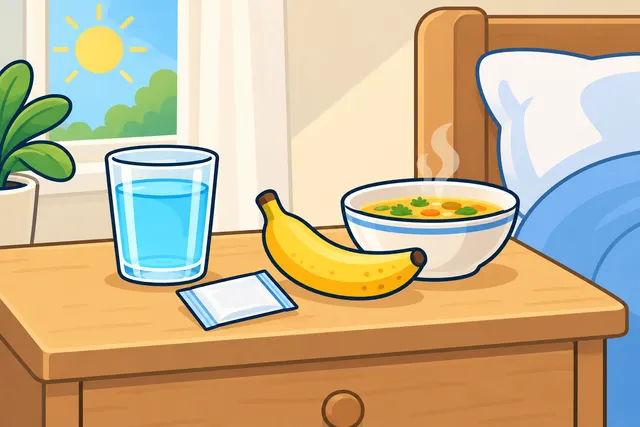
Drink fluids, starting with small sips if you feel sick. The NHS advises exactly that, and suggests a pharmacist's oral rehydration solution when vomiting or diarrhea is draining salts as well as water.
After a big sweat, the US panel found that thirst normally drives you to replace the loss over the following day. Our guide on how to rehydrate fast covers how much to drink, how quickly, and when plain water is not enough.
If you lost the water through a heavy sweat, our guide to total water vs drinking water shows how food helps refill you too: a meal with soup or fruit counts toward the water you put back.
General information for healthy adults, not medical advice. If a doctor has set your fluid amount, follow that.
More in Too Little, Too Much
Sources
- NHS. Dehydration, 2026.
- NHS. Excessive thirst, 2023.
- NHS. Constipation, checked 2026.
- Journal of Athletic Training (NATA). National Athletic Trainers' Association Position Statement: Fluid Replacement for the Physically Active, 2017.
- National Academies of Sciences. Dietary Reference Intakes, Chapter 4: Water, 2005.
- CDC. About Heat and Your Health, 2026.
Sources checked by the Glubbo team on Oct 16, 2026. General information, not medical advice.