Too Little, Too Much · Signs and Checks
Why Am I Always Thirsty? Common Causes and When to See a Doctor
 By the Glubbo team · Updated Oct 16, 2026 · 8 min read
On This Page
Usually sweat, salt or not enough fluid
see a GP if it lasts for days
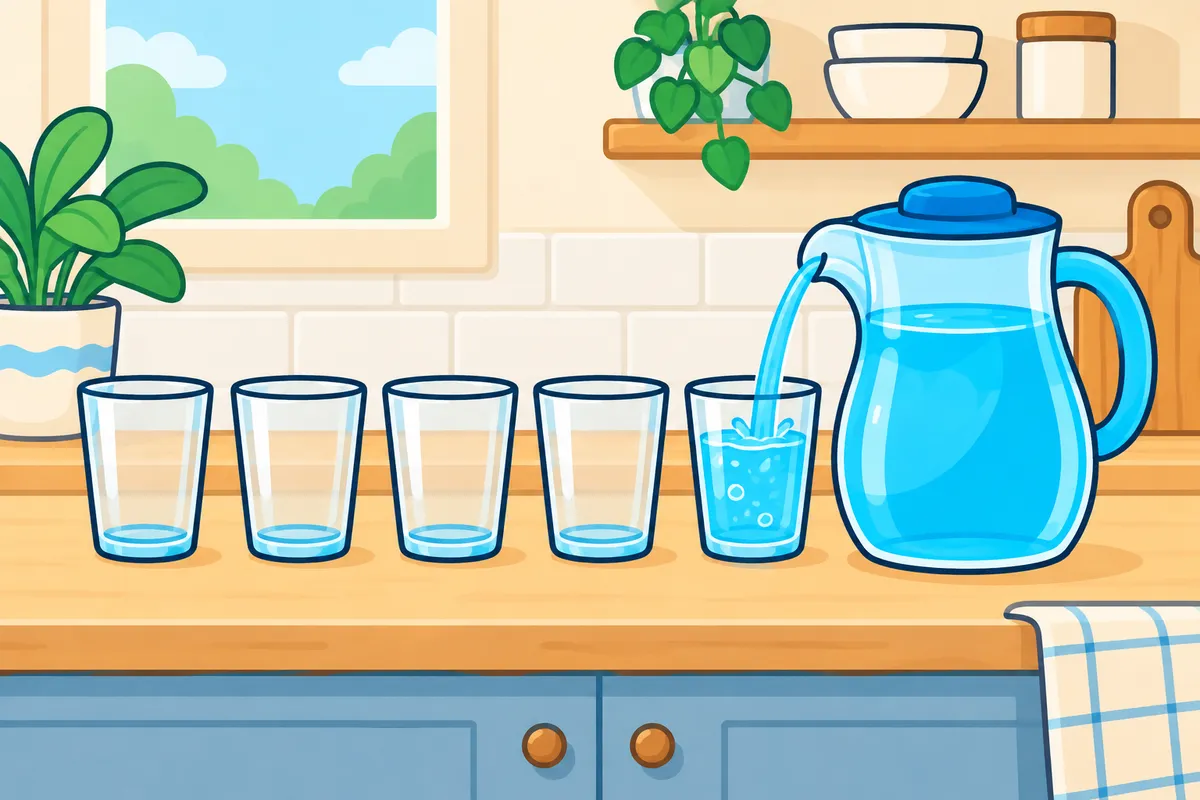
Most of the time you feel thirsty because your body needs more fluid than you gave it: you sweated, ate something salty, had a few drinks or ran a temperature. Thirst that will not go away even when you drink a lot is different, and the NHS says it needs a GP.
This guide sorts the everyday causes from the medical ones and tells you what to try first. If you want to know whether your thirst means you are short of water right now, start with our home checks for drinking enough.
Why Am I Always Thirsty?
Usually because you lose more fluid than you drink. The NHS lists sweating after exercise, sickness and diarrhoea, not drinking enough, too much alcohol or caffeine, salty or spicy food, a high temperature and pregnancy. Drink more for a few days and skip alcohol and caffeine; if the thirst stays, see a GP.
The NHS excessive thirst page says thirst can happen if you:
Everyday Causes of Thirst
- sweat a lot after doing exercise
- are unwell with sickness and diarrhoea
- do not drink enough fluids
- drink too much alcohol or caffeine
- eat salty or spicy food
- have a high temperature
- are pregnant
Its advice for these is simple: "Drink more fluids and avoid alcohol or caffeine to see if it helps." If you ignore the thirst, the same page warns you "may be at risk of becoming dehydrated."
The Everyday Causes and What to Try
Each cause on that list has a fix you can test for yourself within a few days.
| Cause | What is going on | What to try first |
|---|---|---|
| Exercise and heat | Sweat takes water out faster than you replace it | Drink before, during and after; carry a bottle on hot days |
| Not drinking enough | Thirst is the first sign you are behind | Get a daily target and spread it across the day |
| Salty or spicy food | The NHS lists it as a cause of thirst | Have water with salty meals; notice which dinners leave you thirsty |
| Alcohol and caffeine | Both appear on the NHS thirst list | Swap the evening drink or the third coffee for water for a week |
| A fever or a stomach bug | You lose water through sweat, vomiting or diarrhoea | Small, frequent sips; a pharmacist's rehydration solution |
| Pregnancy | The NHS lists pregnancy as a normal cause | Drink more, and see a GP if the thirst is excessive |
The table is a starting point, not a diagnosis. The NHS dehydration page lists more situations that dry you out faster, including taking "medicines that make you pee more (diuretics)", and our guide to the signs of dehydration in adults covers them.
How Much Is Enough to Rule Out the Simple Causes?
Give it a fair test before you worry. Work out a daily target with the water intake calculator, drink it for three or four days, and keep alcohol and caffeine low while you do.
The water drinking schedule turns a target like Leo's into set times, so you are testing the amount and not your memory. Bottles per Day shows the same 2,800 ml as refills: just under six 500 ml bottles.
Why Am I Still Thirsty After Drinking Water?
If you have drunk plenty and still feel thirsty, two things are likely: your mouth is dry rather than your body, or something is making you lose water. The NHS says it is not normal to constantly feel thirsty even when you're drinking a lot, and that you should see a GP to find out why.
A dry mouth can feel just like thirst. The NHS excessive thirst page says a dry mouth may come with "a burning sensation or soreness in your mouth", "changes in your sense of taste" or "difficulty speaking, eating or swallowing". The NHS dry mouth page names medicines, breathing through your mouth at night and anxiety among the main causes.
The other pattern is thirst together with peeing a lot. That pairing is what doctors look for with diabetes and with a rarer condition, diabetes insipidus, both covered below.
If you drink huge amounts because you feel you should, rather than because you are thirsty, that is a separate question. Our guide on whether you can drink too much water explains where that becomes risky.
Why Do I Wake Up Thirsty?
Waking with a dry mouth is often about how you slept, not how much you drank. The NHS names breathing through your mouth at night, from a blocked nose or sleeping with your mouth open, as a main cause of dry mouth. Alcohol and a salty dinner, both on the NHS thirst list, can add to it.
Try a few changes for a week: a glass of water by the bed, no alcohol in the evening, and a lighter-salted dinner. The NHS dry mouth page also suggests regular sips of cold water through the day and keeping water by your bed at night.
Waking up to pee several times and being thirsty is a different signal. The NHS lists "peeing a lot, even at night" as one of the two main symptoms of diabetes insipidus, and peeing more than usual is on its list for type 2 diabetes.
Is Constant Thirst a Sign of Diabetes?
It can be. Feeling very thirsty and peeing more than usual are two of the most common diabetes symptoms in NIDDK, CDC and NHS lists. Many people have other causes, so thirst alone does not mean diabetes, but thirst with frequent peeing, tiredness or weight loss needs a blood test.
The US National Institute of Diabetes and Digestive and Kidney Diseases (NIDDK) lists these common symptoms:
- increased urination
- feeling very thirsty
- feeling very hungry, even after you have eaten
- blurred vision
- fatigue
- sores that do not heal
- frequent infections, such as urinary tract infections, skin infections, or yeast infections
How Type 1 and Type 2 Differ
Speed is the main clue. NIDDK says type 1 symptoms "usually develop quickly, over a few days or weeks", while the CDC says "type 2 diabetes symptoms often take several years to develop." NIDDK adds that many people with type 2 have no symptoms at all.
The NHS type 2 page gives four main symptoms: "feeling very tired", "peeing more than usual", "feeling thirsty all the time" and "losing weight without trying to". It says a blood test that checks your blood sugar confirms type 2.
In pregnancy, NIDDK notes that gestational diabetes usually has no symptoms, and when it does they may be mild, "such as being thirstier than usual or having to urinate more often."
Diabetes Insipidus
This is a different and rare condition. The NHS says it "is not related to type 1 diabetes or type 2 diabetes".
- 1 in 25,000
- people have diabetes insipidus
- 4 to 7
- trips to pee in 24 hours is normal for most healthy adults
- 20 L
- a day: the most a person may pee in very severe cases
Its two main symptoms are "extreme thirst (polydipsia)" and "peeing a lot, even at night (polyuria)". It comes from problems with a hormone that tells your kidneys to hold on to water, so you pass too much and feel thirsty as your body tries to make it up.
Medicines and Other Causes
When thirst does not settle, the NHS says a GP will look for a cause such as "diabetes, anaemia or medicines you're taking". Medicines can dry your mouth, and some, such as lithium, can cause a form of diabetes insipidus, according to the NHS.
Do not stop a prescribed medicine on your own. The NHS dry mouth page is clear on this: get medical advice first, even if you think the medicine is causing your symptoms.
When Should I See a Doctor About Thirst?
See a GP if you have excessive thirst and drinking more for several days has not helped, you need to pee often, or you are pregnant. The NHS adds that you should always see your GP if you feel thirsty all the time. Thirst with signs of serious dehydration or very high blood sugar needs help the same day.
The full NHS list of urgent dehydration signs, including the ones that need 999 or A&E, is in our guide on when dehydration is an emergency.
What to Bring to the Appointment
A GP can work faster with a short record than with "I'm always thirsty". Keep one for three days before you go.
| Write down | Example entry | Why it helps |
|---|---|---|
| Each drink and its size | 7:30 coffee 250 ml; 10:00 water 500 ml | Shows if you drink too little in the first place |
| Each trip to pee, day and night | 9 by day, 3 at night | The NHS uses 4 to 7 in 24 hours as normal |
| When the thirst is worst | Always, even right after drinking | Separates dry mouth from real thirst |
| Other changes | Tired, lost 3 kg without trying | Points to causes a blood test can check |
| Every medicine you take | Name and dose | Some medicines cause thirst or a dry mouth |
Bring the list of medicines and your three-day record. If the GP rules out a medical cause, the drinking side is easier to fix: a daily target and a steady routine, as set out in our guide on how much water you should drink a day and in how to rehydrate fast for the days you fall behind.
Thirst you can trust is useful, and most of the time it is. Whether you should wait for it before drinking is the question our guide on is thirst a good guide answers.
General information for healthy adults, not medical advice. If a doctor has set your fluid amount, follow that.
More in Too Little, Too Much
Sources
- NHS. Excessive thirst, 2023.
- NHS. Dry mouth, 2023.
- NHS. Diabetes insipidus, 2022.
- NHS. Symptoms of type 2 diabetes and how it's diagnosed, checked 2026.
- NIDDK. Symptoms and Causes of Diabetes, 2024.
- CDC. Symptoms of Diabetes, 2024.
- NHS. Dehydration, 2026.
Sources checked by the Glubbo team on Oct 16, 2026. General information, not medical advice.