Too Little, Too Much · Too Much Water
Can You Drink Too Much Water? Symptoms and Safe Limits per Hour
 By the Glubbo team · Updated Oct 16, 2026 · 7 min read
On This Page
- Can You Drink Too Much Water?
- How Much Water Is Too Much in a Day?
- What Are the Symptoms of Drinking Too Much Water?
- What Is the Difference Between Dehydration and Overhydration?
- What Did the Boston Marathon Study Find?
- Which Situations Lead to Water Intoxication?
- How to Drink Plenty Without Overdoing It
- Sources
Yes, but it is rare.
kidneys clear 0.7–1.0 L an hour
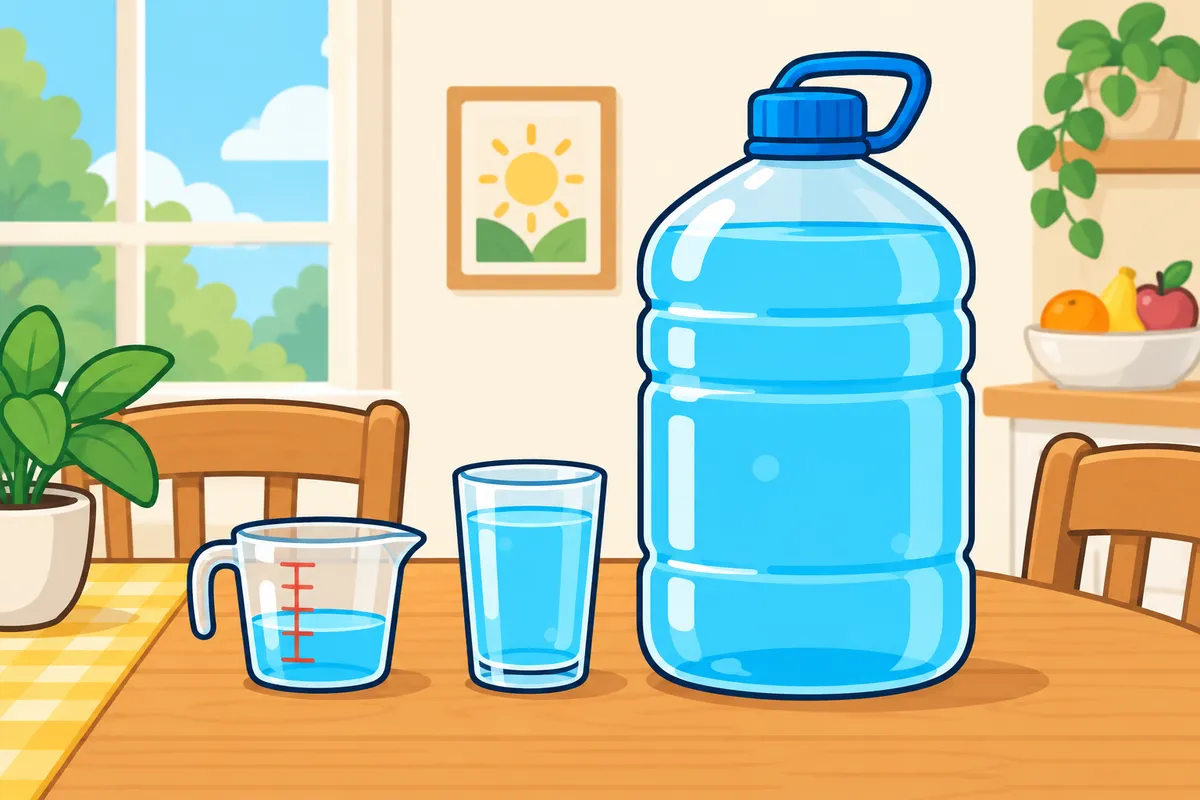
Most people worry about drinking too little. A smaller group, often the most careful drinkers, slips the other way: a gallon jug emptied by bedtime, a cup grabbed at every mile of a marathon.
This page covers the hourly limit, the symptoms and the people who get into trouble. It is part of our guide on how to tell if you are drinking enough water, and the gallon challenge itself has its own page: is a gallon of water a day too much.
Can You Drink Too Much Water?
Yes, though it seldom happens to healthy people. When you drink much faster than your kidneys can pass water, the extra water dilutes the sodium in your blood. The US National Academies write that water intoxication "can lead to hyponatremia, which can be life threatening", and that it is rare in healthy people eating a normal diet.
Hyponatremia means low blood sodium. The US panel's water chapter defines it as a level under 135 mmol/L, and says symptoms usually do not appear until it falls below 130.
Speed matters as much as amount. The same chapter says the signs depend on how quickly sodium falls, which is why a big drink in a short time is the classic route in.
How Much Water Is Too Much in a Day?
No daily total is too much for healthy kidneys if you spread it out; the limit is per hour. Healthy kidneys clear at most about 0.7 to 1.0 L (24 to 34 oz) an hour, and NIOSH tells workers in the heat to keep fluid under 6 cups (48 oz, about 1.4 L) an hour.
The panel left out a daily cap for a reason: healthy people can "self-regulate excessive consumption of water", and it found no data on harm from habitually high intakes. The danger comes from bursts.
Your Drinking Pace Against Your Kidneys
The chart puts common drinking patterns next to what healthy kidneys clear. The first row is a large Glubbo goal: a 90 kg (198 lb) man with high activity in a hot climate gets 90 × 30 = 2,700 ml, plus 300 for activity, 250 for heat and 150 for the male setting, which makes 3,400 ml (115 oz).
The last row is the one that gets people into trouble. If you are a liter behind at 9 pm, let it go; the water drinking schedule spreads tomorrow's goal so the evening never has to make up for the morning.
Why the Work Limit Sits Higher
NIOSH allows up to 6 cups an hour for workers in the heat, who sweat some of that water out again. Its everyday pace for moderate work under 2 hours is lower: 1 cup (8 oz) every 15 to 20 minutes.
Athletes get a rule rather than a number. NATA says you should not drink more than your exercise weight loss, and should never finish a session heavier than you started.
What Are the Symptoms of Drinking Too Much Water?
Low blood sodium can cause muscle cramps or weakness, nausea and vomiting, extreme low energy, a headache, confusion and, in severe cases, seizures, Cleveland Clinic lists. In athletes, NATA names headache, dizziness, exhaustion, muscle twitching and nausea as early signs. If these follow a lot of drinking, stop drinking and get help.
Cleveland Clinic lists six symptoms of hyponatremia:
Symptoms of Low Blood Sodium
- Muscle cramps or weakness
- Nausea and vomiting
- Lethargy, or extreme low energy
- Headache
- Confusion or other mental changes
- Seizures
NATA adds the later, severe signs seen in athletes: disorientation, confusion, seizures and coma. When low sodium builds up slowly, Cleveland Clinic notes, it can show as tiredness or difficulty thinking.
What Is the Difference Between Dehydration and Overhydration?
Dehydration means your body is short of water. Overhydration means you hold more water than your sodium can balance. They share headache, dizziness and nausea, so your story tells them apart better than the feeling: how much you drank, how fast, and whether you weigh less or more than before.
NATA says it outright: the early signs of low sodium in athletes are "all of which are also symptoms of hypohydration", its word for being short of water. The table puts the two sources side by side.
| Dehydration | Too much water (low sodium) | |
|---|---|---|
| The usual story | Too little to drink, heat, sweating or illness | A lot drunk fast, or hours of drinking past what you sweat |
| Signs both can share | Headache, feeling dizzy or light-headed, tiredness | Headache, dizziness, low energy, nausea |
| Other signs listed | Thirst, dry mouth, lips and tongue, sunken eyes, dark yellow pee, peeing less | Vomiting, muscle cramps or twitching, confusion, seizures |
| Body weight after exercise | Lower than before | The same or higher than before |
| What helps | Fluids in small sips, building up | Stop drinking and get your sodium checked |
| Source | NHS | Cleveland Clinic, NATA |
If the story points to too little, our guide on how to rehydrate fast gives the amounts, and the signs of dehydration in adults covers the full list. If it points to too much, more water makes it worse.
What Did the Boston Marathon Study Find?
About one finisher in eight had low blood sodium, when researchers took blood from runners at the finish of the 2002 Boston Marathon.
- 488
- runners gave blood at the finish
- 13 %
- had hyponatremia, at 135 mmol/L or less
- 0.6 %
- had the critical form, at 120 or less: about three runners
The study in the New England Journal of Medicine looked for what those runners had in common.
- Weight gain during the race. Runners who finished heavier than they started had about 4 times the odds of hyponatremia.
- A finishing time over 4 hours, compared with under 3 hours 30.
- A body-mass index at either extreme, very low or very high.
- In the first, simpler analysis, drinking more than 3 liters during the race and drinking at every mile.
Two things made no difference: whether the runner was a man or a woman, and what they drank. Choosing sports drinks over water did not lower the risk.
The lesson fits the US panel's own finding that symptomatic hyponatremia from exercise usually comes after more than 6 hours of hard effort. A slow runner spends longer on the course and passes more drink stations.
Which Situations Lead to Water Intoxication?
Long endurance events lead the list, followed by some mental health conditions, some medicines and drugs, and babies given too much water. The US panel's press release names "some athletes who engage in strenuous activity and some individuals with certain psychiatric disorders", and adds that such cases are "highly unusual."
The water chapter and Cleveland Clinic fill in the rest:
- Long endurance events and military training, where people drink for hours.
- Psychogenic polydipsia, in which some people with long-term psychiatric illness drink very large amounts of water.
- Infants, the group the US panel says this is most often seen in. Ask your doctor or health visitor before giving a baby water.
- Some medicines, such as diuretics (water pills) and SSRI antidepressants, and the drug MDMA (ecstasy).
- Heart failure, kidney failure and liver cirrhosis. If you have one of these, follow the fluid amount your doctor gives you.
Size plays a part too. The US panel notes that smaller people, such as women and children, are more susceptible.
Cleveland Clinic also lists excessive thirst among the causes. If you feel thirsty all the time however much you drink, read why you might always be thirsty and talk to your doctor.
How to Drink Plenty Without Overdoing It
You can drink a generous amount every day and stay far from the limit. The rules are about pace:
- Spread your goal across the day. Most people need a lot less than a gallon; our guide on how many ounces of water to drink a day turns the usual amounts into cups and bottles.
- Let thirst lead on ordinary days. It also stops you before you overdo it, as our guide on whether thirst is a good guide explains.
- In long events, weigh yourself before and after training runs, and plan to finish no heavier than you started.
- Never catch up on a whole day's water in one sitting.
Your own starting number comes from how much water you should drink a day. If a doctor has set a fluid limit for you, that limit comes first.
General information for healthy adults, not medical advice. If a doctor has set your fluid amount, follow that.