Too Little, Too Much · Signs and Checks
Is Thirst a Good Indicator of Hydration? When to Trust It
 By the Glubbo team · Updated Oct 16, 2026 · 7 min read
On This Page
Yes, for most adults at rest.
it runs late after 65 and in the heat
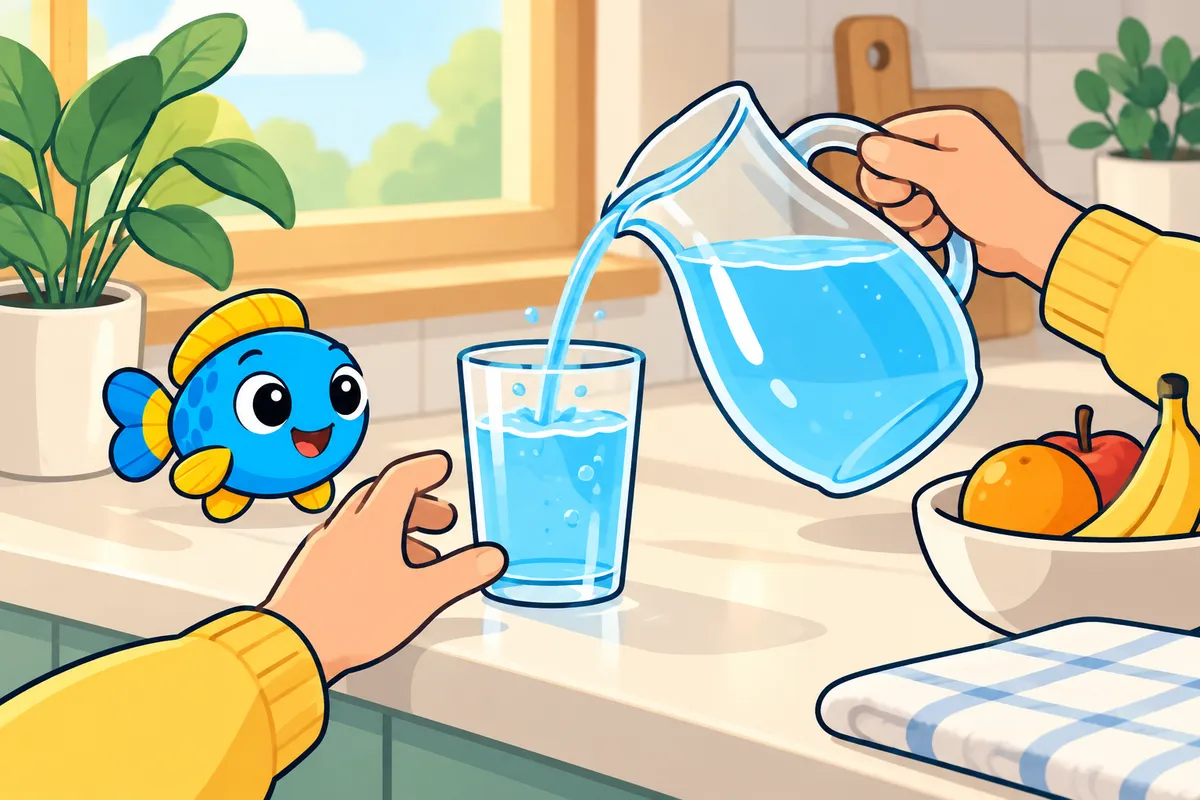
Thirst is the oldest water tracker you own, and on an ordinary day at a desk it works well. It gets slower in three places: hard exercise, long hours in the heat, and later life.
This page shows when to trust it and when a plan does better. It is part of our guide on how to tell if you are drinking enough water, which puts thirst next to the other checks you can do at home.
Should You Wait Until You’re Thirsty to Drink?
For most healthy adults on a normal day, yes. The US National Academies found that drinking when thirsty, together with the drinks you have at meals, keeps the average person hydrated. Drink on a plan instead if you are over 65, work for hours in the heat, or race in long events, because thirst can lag there.
The panel put it plainly: the vast majority of healthy people meet their needs "by letting thirst be their guide", as the US National Academies press release says. Your morning coffee and the glass at dinner are part of that, so you do not need to count them separately.
Waiting has one real cost. Thirst can ping at 11 am during a meeting, and you can ignore it until 3 pm.
The signal worked; you just did not answer it.
Are You Already Dehydrated When You Feel Thirsty?
Not when you are at rest. Thirst switches on once your blood is less than 2 % more concentrated than usual, while most experts say dehydration starts at a rise of 5 % or more, Dartmouth kidney physiologist Heinz Valtin wrote in 2002. In hard exercise the gap shrinks, because you can lose water faster than thirst keeps up.
Valtin's review, published by Dartmouth Medical School, took on the line that "by the time people are thirsty, they are already dehydrated." The same review questioned the 8 glasses a day rule, which you have probably heard in the same breath.
Sports scientists measure the same moment a different way, by how much body weight you have sweated off. The two views fit together once you see what each one measures.
At rest
- Heinz Valtin, Dartmouth, 2002
- Measures how concentrated your blood is
- Thirst starts at a rise of under 2 %, well before the 5 % where dehydration begins
- Verdict: thirst comes early enough
During exercise
- Korey Stringer Institute
- Measures body weight lost as sweat
- Thirst starts at about 1 to 2 % of body weight lost
- Verdict: thirst "works well only at rest"
The Korey Stringer Institute at the University of Connecticut says thirst works best at rest, or in lower-intensity exercise of under an hour in cool conditions. For a 70 kg (154 lb) person, 2 % of body weight is 1.4 kg (3.1 lb), the most that athletic trainers want you to lose in a session.
Who Should Drink on a Plan Instead of Thirst?
Four groups do better with fixed drinking times: adults over 65, people working for hours in the heat, athletes in long or competitive events, and anyone whose day leaves no room to notice thirst. Thirst still works for them, but it arrives late or gets ignored.
Adults Over 65
Thirst weakens with age. The US panel's water chapter says studies confirm that "thirst and fluid intake are impaired in the elderly", with many healthy older people reporting no thirst even when their blood had clearly concentrated.
A small 1984 study in the New England Journal of Medicine kept seven healthy men aged 67 to 75 and seven aged 20 to 31 without water for 24 hours. Afterwards the older men felt less thirsty and drank less. That is 14 men in total, so it shows the direction clearly but gives no rate you can apply to yourself.
The athletic trainers' NATA position statement puts the turning point earlier: beyond age 50, it says, thirst sensitivity drops when you are short of water. In hot weather the CDC tells adults over 65 to "drink more water than usual and don't wait until you're thirsty to drink."
People Who Work Long Hours in the Heat
Sweat outruns thirst on a long shift. For moderate work in the heat lasting under 2 hours, NIOSH tells workers to drink 1 cup (8 oz) of water every 15 to 20 minutes. Past several hours of sweating, it adds sports drinks with balanced electrolytes.
A cup every 15 minutes is 4 cups an hour, about 950 ml (32 oz). That stays under the NIOSH ceiling of 6 cups an hour, which protects you from the opposite problem.
Athletes in Long or Competitive Events
NATA warns that thirst can lag behind for competitive athletes, so drinking only when thirsty can cost them performance. These athletes do better with a plan built from their own sweat losses, measured by weighing before and after training.
The plan has a ceiling as well as a floor. NATA tells athletes never to finish a session heavier than they started, the main guard against drinking too much water.
Anyone With No Gaps in the Day
A 12-hour hospital shift, back-to-back calls or a long drive all leave thirst unanswered. Your body sends the signal; the day does not let you act on it.
For all four groups, the fix is the same: tie drinks to fixed moments you never skip, then drink extra whenever thirst does show up.
The water drinking schedule turns any goal, wake time and bedtime into a list of times like Ruth's.
Is Thirst a Good Guide During Exercise?
For most everyday exercise, yes. NATA's 2017 position statement says most people avoid fluid problems by drinking when thirsty during and after exercise, and that drinking to thirst is a safe way to avoid drinking too much when you do not know your sweat rate. Competitive athletes chasing a result are the exception.
NATA's own worked case makes this concrete: for a recreational tennis player, its advice is "drink when thirsty." The picture changes as sessions get longer, hotter and harder.
| Your session | What to drink by | Why |
|---|---|---|
| A 30-minute walk, easy swim or gym class | Thirst | Short and light, the setting where thirst works best |
| An hour of hard training in summer heat | Thirst, checked by weighing before and after | You can pass the 2 % line before thirst catches up |
| A race lasting several hours | A plan from your measured sweat loss | Thirst lags, and over-drinking is a risk too |
| A long shift of outdoor work | NIOSH's cup every 15 to 20 minutes | Sweat losses outrun thirst on long days |
After the session, thirst guides refilling well enough on most days. If you weighed yourself and know what you lost, our guide on how to rehydrate fast turns that number into an amount to drink.
Does Thirst Catch Up Later?
Mostly, yes. The US panel's water chapter notes that even with free access to drinks, people often replace less than they lost in the short term, and that thirst triggers the rest over the following 24 hours. So a dry afternoon rarely turns into a dry week for a healthy adult who eats and drinks normally.
That catch-up is why a one-off day matters less than a pattern. If you end most days with dark pee, a headache or a dry mouth, look at the signs of dehydration in adults rather than trusting thirst to sort it out.
When Thirst Itself Is the Problem
Thirst that keeps coming back however much you drink is a different question from this one. Its possible causes, and when to see a doctor about it, are on our page about why you might always be thirsty.
What to Do Today
- Drink when you feel thirsty, and have a drink with each meal.
- If you are over 65, work in the heat or train long, pick four or five fixed drinking times and keep them.
- Look at your pee once in the afternoon. The NHS says to aim for a clear, pale yellow colour.
If you want a number to plan around, start with how much water you should drink a day. Food covers part of it, which our guide to total water vs drinking water explains.
General information for healthy adults, not medical advice. If a doctor has set your fluid amount, follow that.
More in Too Little, Too Much

Sources
- National Academies of Sciences. Report sets dietary intake levels for water, salt, and potassium (press release), 2004.
- National Academies of Sciences. Dietary Reference Intakes for Water, Potassium, Sodium, Chloride, and Sulfate: Chapter 4, Water, 2005.
- Dartmouth Medical School. "Drink at Least 8 Glasses of Water a Day" - Really?, 2002.
- Korey Stringer Institute, University of Connecticut. Hydration, checked 2026.
- National Athletic Trainers' Association. Position Statement: Fluid Replacement for the Physically Active, 2017.
- New England Journal of Medicine (Phillips and colleagues). Reduced thirst after water deprivation in healthy elderly men, 1984.
- CDC. Heat and Older Adults (Aged 65+), 2024.
- CDC NIOSH. Heat Stress, Workplace Recommendations, 2026.
- NHS. Water, drinks and hydration, 2023.
- NHS. Dehydration, 2026.
Sources checked by the Glubbo team on Oct 16, 2026. General information, not medical advice.