Water Intake · Rules and Myths
Is 8 Glasses of Water a Day Enough? Where the Rule Came From
 By the Glubbo team · Updated Oct 16, 2026 · 5 min read
On This Page
Close for many women, short for most men.
Eight 8 oz glasses make 64 oz (about 1.9 L). Healthy US women drink about 74 oz of fluids a day and men about 101 oz, and food adds more water on top.
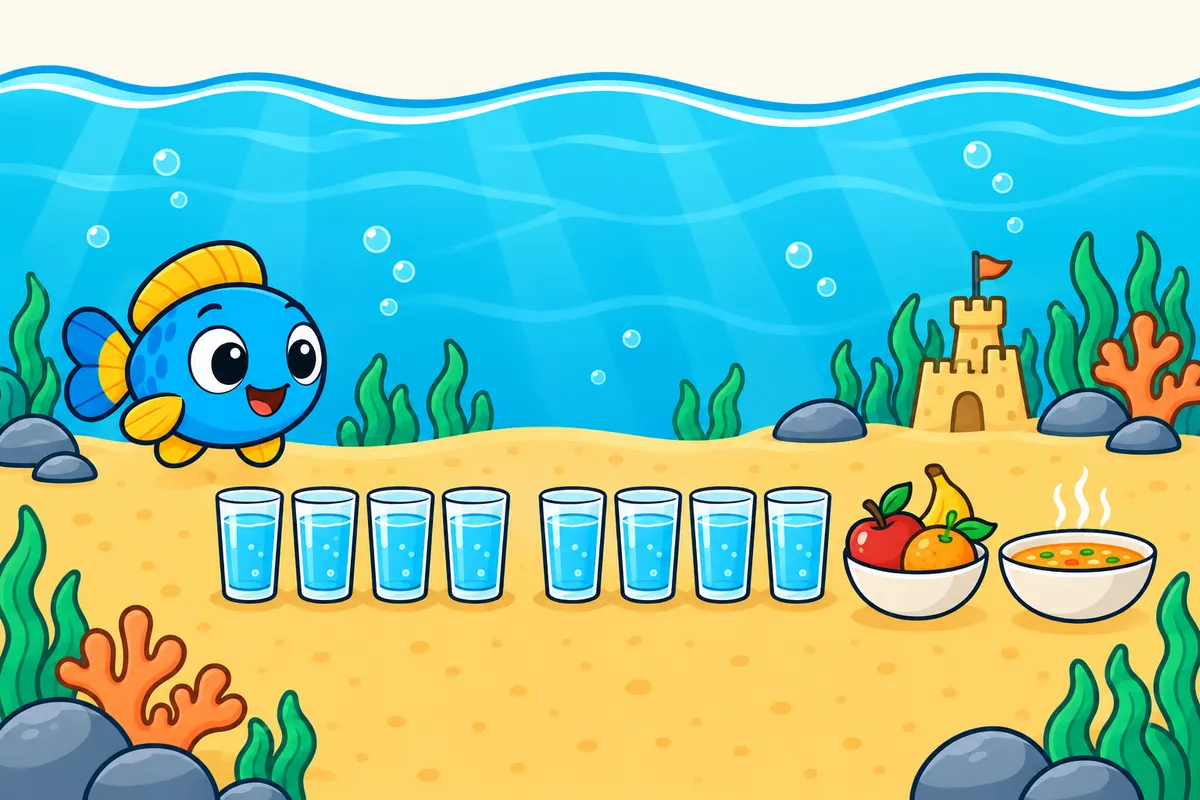
Eight glasses a day is the best-known water rule there is, and it sticks because it is easy to count. For a small adult with a desk job it lands close to a sensible amount. For a tall man who trains, it falls short.
Our main guide on how much water you should drink a day covers every official figure. This page tests the rule itself: where it came from, what the evidence says, and the days when eight glasses will not do.
Is 8 Glasses of Water a Day Enough?
For many women it comes close; for most men it falls short. Eight 8 oz glasses make 64 oz, about 1.9 liters. The US National Academies found that healthy women drink about 74 oz (2.2 L) of fluids a day and men about 101 oz (3.0 L), and food adds more water on top.
| Fluids a day | Next to eight 8 oz glasses | |
|---|---|---|
| The 8 x 8 rule | 64 oz (1.9 L) | |
| Average US woman | 74 oz (2.2 L) | 10 oz more, about one extra glass |
| Average US man | 101 oz (3.0 L) | 37 oz more, four to five extra glasses |
Glass size changes everything. Eight 12 oz glasses hold 96 oz (2.8 L), which already passes the average woman's intake.
Is Drinking 64 Ounces of Water a Day Enough?
It can be. 64 oz is about 1.9 liters, the top end of the NHS advice of 6 to 8 cups or glasses of fluid a day. For a small adult who sits most of the day, drinks tea or milk and eats fruit, that is often plenty; a large or active person usually needs more.
Every ounce figure on this site sits in one place in our guide to how many ounces of water to drink a day.
Where Did the 8 Glasses Rule Come From?
It most likely grew out of 1945 advice from the US Food and Nutrition Board: about 1 ml of water for each calorie of food. Scientific American traces the rule there, and adds that much of that daily water could be met by the water already in food.
Run the numbers on a 2,000-calorie day and you get 2,000 ml, about 68 oz. Dartmouth's summary of the 1945 figure is "two to two-and-a-half quarts per day (64 to 80 ounces)", and eight 8 oz glasses make exactly the low end of that range.
Then comes the sentence that got lost. The same 1945 advice went on: "most of this quantity is contained in prepared foods," as Dartmouth's 2002 release quotes it.
| Year | Who | What they said |
|---|---|---|
| 1945 | US Food and Nutrition Board | About 1 ml of water per calorie of food, most of it already in prepared foods |
| 2002 | Heinz Valtin, Dartmouth | No scientific studies support "8 x 8" |
| 2004 | US National Academies | No rule of thumb in glasses; thirst guides most healthy people |
| 2023 | NHS (latest review) | 6 to 8 cups or glasses of fluid a day, tea and coffee included |
Is There Any Science Behind 8 Glasses a Day?
No study backs it. In 2002, Dartmouth physiologist Heinz Valtin reviewed the evidence and wrote that "No scientific studies were found in support of 8 x 8" in his paper in the American Journal of Physiology. Surveys of healthy adults, he added, suggest most of them do not need that much plain water.
Valtin had no quarrel with water itself. He questioned the claim that every healthy adult must drink eight glasses of plain water on top of coffee, tea, milk and food.
He also pointed out how early your body speaks up: thirst begins when the concentration of your blood has risen by less than 2 %.
How Many Glasses of Water Do Health Bodies Recommend?
The US panel gives no glass count at all. "We don't offer any rule of thumb based on how many glasses of water people should drink each day," the US National Academies said in 2004, because drinks and food both supply water. The UK's NHS is the exception, with 6 to 8 cups or glasses of fluid a day.
The NHS count includes tea, coffee and lower-fat milk. Read that way, eight glasses means eight drinks, and your morning coffee is one of them.
When Do You Need More Than 8 Glasses?
During hard work or exercise, especially in the heat. Valtin wrote that large intakes "are called for under special circumstances, such as vigorous work and exercise, especially in hot climates." For moderate outdoor work in the heat, NIOSH says to drink 1 cup (8 oz) every 15 to 20 minutes.
There is a ceiling too. NIOSH caps drinking at 6 cups (48 oz) in any one hour, and our guide on whether a gallon of water a day is too much explains why speed matters more than the total. For spacing drinks through a long, hot day, see how often to drink water.
A Better Number Than Eight
Use a number built from your own body and your own day. The water intake calculator works it out from your weight, activity and climate, then shows it in glasses of your size.
If eight glasses suits you, tie each one to something you already do:
- One when you wake up, before coffee.
- One with breakfast.
- One at your first break.
- One with lunch.
- One mid-afternoon, when energy dips.
- One on the way home or before a workout.
- One with dinner.
- A small one in the evening, at least an hour before bed.
Most people slip between lunch and dinner, where two of those glasses sit. Your goal counts drinks only; our guide on total water vs drinking water shows how much your food adds.
General information for healthy adults, not medical advice. If a doctor has set your fluid amount, follow that.
More in Water Intake
Sources
- Dartmouth Medical School. Professor finds no scientific support for 8 x 8 (press release on Valtin, American Journal of Physiology), 2002.
- American Journal of Physiology (Valtin). "Drink at least eight glasses of water a day." Really? Is there scientific evidence for "8 x 8"?, 2002.
- Scientific American. Fact or Fiction?: You Must Drink 8 Glasses of Water Daily, 2009.
- National Academies of Sciences. Dietary Reference Intakes for Water, Potassium, Sodium, Chloride, and Sulfate: Summary, 2005.
- National Academies of Sciences. Report sets dietary intake levels for water, salt, and potassium (press release), 2004.
- NHS. Water, drinks and hydration, 2023.
- CDC NIOSH. Heat Stress, Workplace Recommendations, 2024.
Sources checked by the Glubbo team on Oct 16, 2026. General information, not medical advice.