Water Intake · Your Daily Number
How Many Ounces of Water Should You Drink a Day? Oz, Cups and Bottles
 By the Glubbo team · Updated Oct 16, 2026 · 5 min read
On This Page
- How Many Ounces of Water Should You Drink a Day?
- How Many Ounces of Water Should a Woman Drink a Day?
- How Many Ounces of Water Should a Man Drink a Day?
- Is It Safe to Drink 100 Ounces of Water a Day?
- What Happens If You Only Drink 32 Ounces of Water a Day?
- How Many ml Are in an Ounce, and How Many Ounces Are in a Liter?
- How Many Ounces Are in a Cup or a Glass of Water?
- Sources
74 oz for women, 101 oz for men
That is what healthy US adults drink in fluids a day, per the US National Academies. Counting the water in food, the totals are about 91 oz and 125 oz.
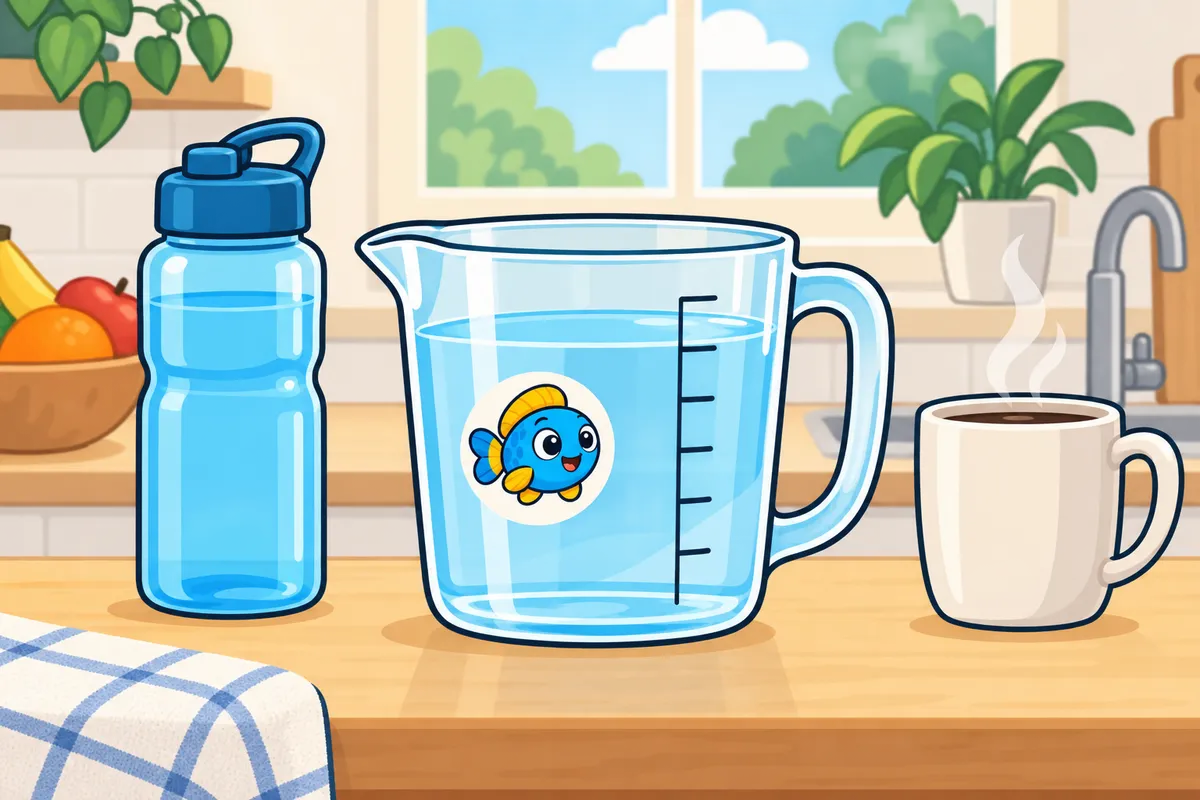
US bottles, cups and labels speak in ounces, while health reports speak in liters. This page puts every number you need in ounces, so you can check your day against the bottle in your hand.
For the bigger picture behind these figures, start with our main guide on how much water you should drink a day.
How Many Ounces of Water Should You Drink a Day?
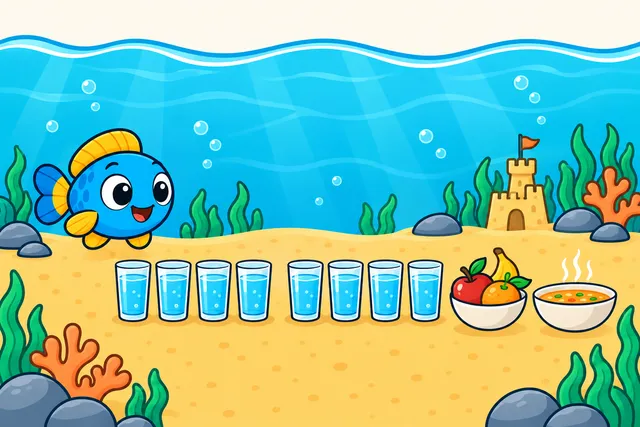
Healthy US women drink about 74 oz of fluids a day and men about 101 oz, the US National Academies found. Counting the water in food, the totals are about 91 oz and 125 oz, per the panel's 2004 report. Your own number moves with your size, your activity and the weather.
The Daily Numbers in Ounces
| Who | Drinks a day | Total, food included | 8 oz cups | 16.9 oz bottles |
|---|---|---|---|---|
| Adult women | 74 oz (2.2 L) | 91 oz (2.7 L) | about 9 | about 4.4 |
| Adult men | 101 oz (3.0 L) | 125 oz (3.7 L) | about 13 | about 6 |
| Pregnancy | about 78 oz (2.3 L) | about 101 oz (3.0 L) | about 10 | about 4.6 |
| Breastfeeding | about 105 oz (3.1 L) | about 128 oz (3.8 L) | about 13 | about 6.2 |
The pregnancy and breastfeeding rows come from the panel's water chapter. If either applies to you, ask your midwife or doctor for your own amount.
Your Own Number in Ounces
The official rows are averages. Glubbo's habit formula builds a drinks goal from your weight, activity, climate and sex, and the water intake calculator shows it in ounces as well as milliliters.
How Many Ounces of Water Should a Woman Drink a Day?
About 74 oz of fluids, or 91 oz counting the water in food. That is roughly 9 cups of 8 oz, or 4 to 5 bottles of 16.9 oz. Pregnancy raises the drinks figure to about 78 oz and breastfeeding to about 105 oz.
How Many Ounces of Water Should a Man Drink a Day?
About 101 oz of fluids, or 125 oz counting food: about 13 cups of 8 oz, or 6 bottles of 16.9 oz. Heat and hard work push it higher. On a hot job, NIOSH has workers drink 8 oz every 15 to 20 minutes, which is 24 to 32 oz an hour.
Is It Safe to Drink 100 Ounces of Water a Day?
For a healthy adult, yes. 100 oz is about 3.0 liters, close to what the average US man drinks. Spread it over the day: your kidneys clear at most about 0.7 to 1.0 liters an hour, the US panel found, and 100 oz over 16 waking hours is only about 6 oz (185 ml) an hour.
Here is one way 100 oz fits into a day from 7 am to 11 pm:
- 7 am, on waking: 12 oz
- 9 am, at your desk: 12 oz
- 11 am, at a break: 12 oz
- 12:30 pm, with lunch: 16 oz
- 3 pm, at the afternoon dip: 16 oz
- 5 pm, on the way home: 12 oz
- 7 pm, with dinner: 12 oz
- 9 pm, a small last glass: 8 oz
For more on spacing, read how often to drink water. A full gallon is 128 oz, and whether a gallon of water a day is too much shows where the risk starts.
What Happens If You Only Drink 32 Ounces of Water a Day?
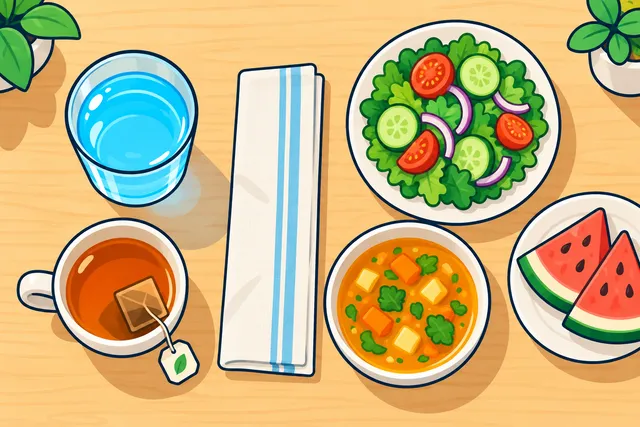
It depends on what else you drink and eat. 32 oz is about 0.95 liters, less than half of the 74 oz the average US woman drinks. Coffee, tea, milk and food add water too, so check your pee: the NHS says to drink enough during the day that it stays a pale color.
Dark yellow, strong-smelling pee and peeing less often than usual are two of the dehydration signs the NHS lists. If you see them on a 32 oz day, add drinks before you add anything else.
Your morning coffee counts toward those ounces, and does coffee count as water explains why.
How Many ml Are in an Ounce, and How Many Ounces Are in a Liter?
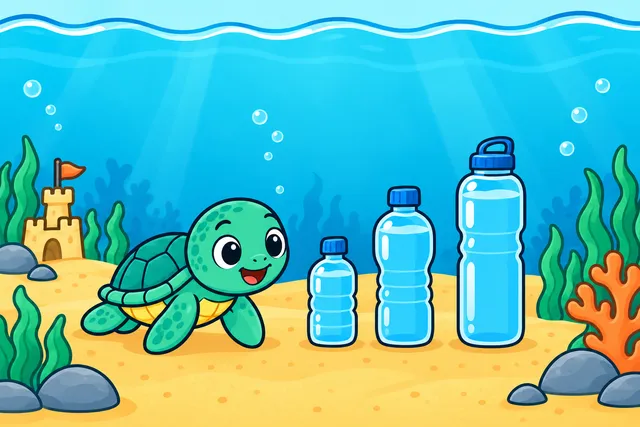
One US fluid ounce is 29.57 ml, so one liter is about 33.8 oz, by the NIST conversion table. A 500 ml bottle holds 16.9 oz and a 1-liter bottle about 34 oz. Use the two tables below to turn any bottle or goal into the unit you need.
Milliliters to Ounces
| Metric | US fluid ounces |
|---|---|
| 100 ml | 3.4 oz |
| 250 ml | 8.5 oz |
| 330 ml | 11.2 oz |
| 500 ml | 16.9 oz |
| 750 ml | 25.4 oz |
| 1 L | 33.8 oz |
| 1.5 L | 50.7 oz |
| 2 L | 67.6 oz |
| 3 L | 101.4 oz |
Ounces to Milliliters
| US fluid ounces | Metric |
|---|---|
| 8 oz (1 cup) | 237 ml |
| 12 oz | 355 ml |
| 16 oz | 473 ml |
| 20 oz | 591 ml |
| 24 oz | 710 ml |
| 32 oz | 946 ml |
| 40 oz | 1,183 ml |
| 64 oz | 1,893 ml |
| 128 oz (1 gallon) | 3,785 ml |
How Many Ounces Are in a Cup or a Glass of Water?
A US cup is 8 fl oz, about 0.24 liters by the NIST table. A glass has no fixed size, so measure your own: fill it from a measuring jug or a bottle you know, and count your day in that glass.
This is where the most famous rule slips. Eight 8 oz cups make 64 oz, but eight bigger glasses make far more, and is 8 glasses of water a day enough runs those numbers. If you like an ounces-per-pound rule instead, water intake by weight tests the half-your-weight idea against the official figures.
General information for healthy adults, not medical advice. If a doctor has set your fluid amount, follow that.
More in Water Intake
Sources
- National Academies of Sciences. Dietary Reference Intakes for Water, Potassium, Sodium, Chloride, and Sulfate: Summary, 2005.
- National Academies of Sciences. Dietary Reference Intakes for Water, Potassium, Sodium, Chloride, and Sulfate: Chapter 4, Water, 2005.
- National Academies of Sciences. Report sets dietary intake levels for water, salt, and potassium (press release), 2004.
- NIST. Approximate Conversions from U.S. Customary Measures to Metric, checked 2026.
- NHS. Dehydration, 2026.
- CDC NIOSH. Heat Stress, Workplace Recommendations, 2024.
Sources checked by the Glubbo team on Oct 16, 2026. General information, not medical advice.