Exercise and Heat · Hot Weather
How Much Water to Drink in Hot Weather, From a Heat Wave to a Shift
 By the Glubbo team · Updated Oct 16, 2026 · 8 min read
On This Page
- How Often Should You Drink Water in Hot Weather?
- How Much Water Should You Drink When Working Outside in the Heat?
- How Much Water Should You Drink in a Heat Wave?
- What Should You Drink in Hot Weather?
- How Much Is Too Much in the Heat
- Signs You Need to Stop and Cool Down
- Your Glubbo Goal on a Hot Day
- What to Do Today
- Sources
About 1 cup every 15 to 20 minutes.
never more than 6 cups an hour
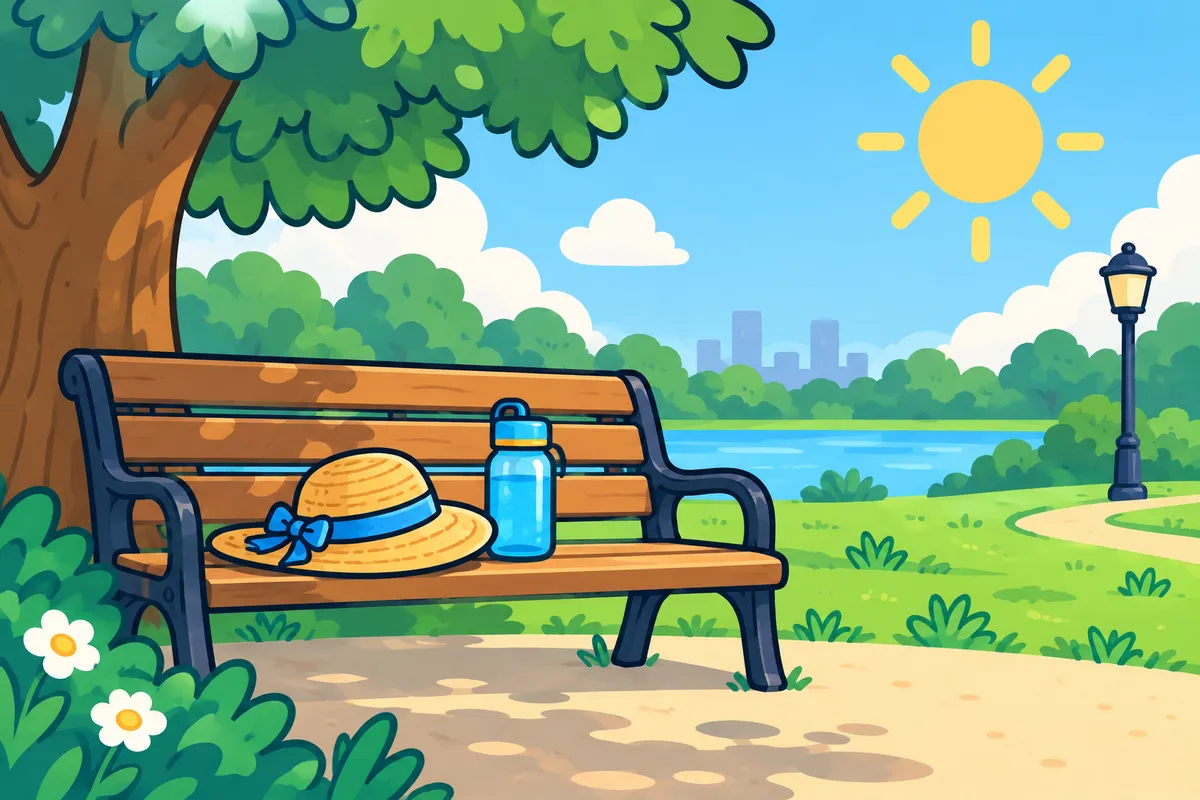
When you work or move in the heat, drink about 1 cup (8 oz, 240 ml) every 15 to 20 minutes, and stop short of 6 cups in any hour. When a heat wave keeps you indoors, drink more than on a normal day, even if you do nothing at all.
This page is about the weather: hot days, outdoor work and heat waves. For training sessions in any season, see how much water to drink before, during and after a workout.
How Often Should You Drink Water in Hot Weather?
Every 15 to 20 minutes while you are active in the heat. NIOSH, the US institute for workplace safety, advises 1 cup (8 oz) at that pace for moderate activity lasting less than 2 hours. Resting on a hot day, keep a bottle in reach and drink from it through the day.
Do not wait for thirst. The CDC's advice for outdoor workers is to "drink plenty of water, and don't wait until you are thirsty to drink."
At that pace, a full bottle runs out faster than most people expect:
- A 500 ml (17 oz) bottle lasts about 30 to 40 minutes.
- A 1 L (34 oz) bottle lasts about 60 to 80 minutes.
- A 2 L (68 oz) jug lasts a little over 2 hours, up to about 2 hours 45 minutes.
So the real question on a hot job is where the refill comes from. NIOSH asks employers to keep cool water "near the work area" for exactly this reason.
How Much Water Should You Drink When Working Outside in the Heat?
About 3 to 4 cups an hour, which is 0.7 to 1 L (24 to 32 oz), during moderate work, and never more than 6 cups (48 oz, about 1.4 L) in one hour. If you sweat for several hours, NIOSH says to add sports drinks with balanced electrolytes. It also says to avoid alcohol and drinks high in caffeine or sugar.
What NIOSH Sets Out
The recommendations are short, and each line answers a question workers ask on site.
| Situation | What NIOSH says |
|---|---|
| Moderate work in the heat, under 2 hours | 1 cup (8 oz) of water every 15 to 20 minutes |
| Sweating that lasts for several hours | Sports drinks with balanced electrolytes |
| Any single hour | Fluid "should not exceed 6 cups per hour" |
| The water itself | Cool, below 15 °C (59 °F), close to where you work |
| Drinks to skip | Alcohol, and drinks high in caffeine or sugar |
| Breaks | Rest and water breaks whenever a worker feels heat discomfort |
A Roofer's Morning, Worked Out
Here is the same morning next to the catch-up habit, where Marco drinks nothing until his 9 am break and then finishes a 1.5 L bottle:
A Cup Every 20 Minutes
- Small cups from the first hour
- Never past half the hourly limit
- On pace all morning
One Bottle at 9 AM
- 1.5 L in one go
- Past the 6-cup (1.4 L) hourly limit
- Still behind by 11
Your First Week in the Heat
NIOSH asks employers to build up each worker's time in the heat over 7 to 14 days, and new workers start slowest. A new worker spends no more than 20 % of their usual time in the heat on day 1 and adds no more than 20 % each day after.
Adapting raises your water needs. The National Athletic Trainers' Association reports that sweat losses increase as you acclimatize, while the salt in each litre of sweat drops. Your second week on the job can call for more water than your first.
How Much Water Should You Drink in a Heat Wave?
More than on a normal day, even if you stay inside. The CDC says water on hot days helps "regardless of how active you are", and the NHS advises extra fluids and regular cold drinks. Glubbo's Hot climate setting adds 250 ml (8 oz) a day as a minimum, and you drink more when you sweat.
How much more depends on how much you sweat. The US National Academies note that people living in hot climates often lose "several liters" of sweat a day; in one study, 97 men in the desert averaged 4.9 L a day, against 2.3 L for 26 men in the tropics.
Very active people who spend every day in hot weather "often have daily total water needs of six liters or more", the National Academies report. That is the group for whom a gallon of water a day makes sense.
Who Needs to Drink on a Plan in a Heat Wave
The NHS names the people a heat wave hits hardest. If you are one of them, or you look after one, drink by the clock instead of by thirst:
More Vulnerable in a Heat Wave
- older people, especially those aged 65 and over
- babies and young children aged 5 years and under
- people who are pregnant or have serious long-term conditions – such as heart problems, breathing problems, dementia, diabetes, kidney disease, Parkinson's disease, mobility problems, mental health problems, or drug or alcohol addiction
- people who live alone and may be unable to care for themselves
- people who are on multiple medicines or medicines that may make them more likely to be badly affected by hot weather
- people who are already ill and dehydrated (from diarrhoea and vomiting, for example)
- people who are homeless, or who work or spend a lot of time outside, particularly if they're physically active, such as runners, cyclists and walkers
- people whose jobs involve manual labour
For babies and young children, ask a doctor or health visitor for their amounts; the adult numbers here do not apply. On medicines, the CDC warns that "many medicines can make you dehydrated or overheated on hot days."
What Should You Drink in Hot Weather?
Plain water first, as cold as you like it. NATA notes that people exercising in the heat drink more of a chilled drink; save sports drinks for sweat that lasts several hours. The CDC suggests limiting drinks high in sugar, salt, caffeine and alcohol, and the NHS adds hot drinks to the list.
Cold food counts too: the NHS suggests cold food alongside regular cold drinks, and fruit or salad adds water to your day.
When you need electrolytes answers whether an electrolyte drink beats water after a long sweaty shift, and how much salt you lose. To know your own loss per hour, work out your sweat rate on one hot day with a bathroom scale.
How Much Is Too Much in the Heat
Six cups in an hour is the NIOSH ceiling, about 1.4 L (48 oz). The ceiling fits what your kidneys can handle: the National Academies put their maximum at about 0.7 to 1.0 L an hour, and drinking far faster than that has led to water poisoning.
The danger moment is the catch-up drink after a long dry stretch. Drinking well past your sweat losses dilutes the sodium in your blood; the signs and the people most at risk are in can you drink too much water.
Signs You Need to Stop and Cool Down
Thirst, heavy sweating and a headache are on the CDC's list of heat exhaustion signs, so stop, move to shade or air conditioning, and drink. The CDC's advice to outdoor workers is blunt: "If you feel faint or weak, STOP all activity and get to a cool place."
Milder dehydration has its own checklist, from dark pee to dizziness when you stand up: see the signs of dehydration in adults.
Your Glubbo Goal on a Hot Day
Glubbo's habit formula raises your daily goal by 250 ml in a hot climate. It is the habit you aim for every day, and work or sport in the heat adds to it.
| Person | Weight | Activity | Climate | Sex | Glubbo goal |
|---|---|---|---|---|---|
| Marco, roofer | 80 kg (176 lb) | High | Hot | Male | 3,100 ml (105 oz) |
| June, at home in a heat wave | 62 kg (137 lb) | Low | Hot | Female | 1,850 ml (63 oz) |
| June in mild weather | 62 kg (137 lb) | Low | Mild | Female | 1,600 ml (54 oz) |
Marco's morning on the roof alone took 2.9 L, so on work days his real intake runs well past his goal, and that is fine. June's heat-wave goal is 250 ml above her mild-weather one: one more glass, spread across the hottest hours.
Your own goal is one step away in the water intake calculator. The water drinking schedule then spreads it over your waking hours, so a hot afternoon never turns into one big catch-up drink.
What to Do Today
- Put a full bottle in the fridge tonight; you will drink more of it cold.
- If you work outside tomorrow, plan where each refill comes from before you start.
- Drink a cup every 15 to 20 minutes while you work, and stop at 6 in any hour.
- Check your pee: light yellow or clear, the CDC says, usually means you are drinking enough.
- On a cool day, the opposite problem starts: why you can get dehydrated in cold weather. If you run, the runner's plan for hot days adds the race-day numbers.
General information for healthy adults, not medical advice. If a doctor has set your fluid amount, follow that.
More in Exercise and Heat
Sources
- CDC, National Institute for Occupational Safety and Health. Heat Stress: Workplace Recommendations, 2026.
- CDC, National Institute for Occupational Safety and Health. Heat-related Illnesses, 2026.
- CDC. About Heat and Your Health, 2026.
- CDC. Heat and Outdoor Workers, 2024.
- NHS. Heatwave: how to cope in hot weather, 2026.
- National Academies of Sciences. Report sets dietary intake levels for water, salt, and potassium (press release), 2004.
- National Academies of Sciences. Dietary Reference Intakes, Chapter 4: Water, 2005.
- Journal of Athletic Training (National Athletic Trainers' Association). National Athletic Trainers' Association Position Statement: Fluid Replacement for the Physically Active, 2017.
Sources checked by the Glubbo team on Oct 16, 2026. General information, not medical advice.