What Is the Most Hydrating Drink? Milk, Water and the Hydration Index
See which of 13 drinks your body keeps longest, why milk wins, and when that matters for you.
 By the Glubbo Editorial Team · Updated Oct 19, 2026 · 8 min read
On This Page
- What Is the Most Hydrating Drink?
- What Is the Beverage Hydration Index?
- Is Milk More Hydrating Than Water?
- Is an Oral Rehydration Solution More Hydrating Than Water?
- Do Salt and Sugar Make a Drink Hydrate Better?
- Which Drinks Hydrate the Same as Water?
- Should You Drink Milk Instead of Water?
- Do Hot, Cold, Caffeinated or Alcoholic Drinks Change the Score?
- What the Score Cannot Tell You
- Pick Any Drink That Hydrates Like Water
- Sources
Short answer
Milk, by a small margin and for a few hours.
- Milk kept about 1.5 times as much fluid as water two hours after 1 L.
- Coffee, tea, juice and sparkling water matched water: log each at full size.
- Keep oral rehydration solution for vomiting or diarrhea, not daily drinking.
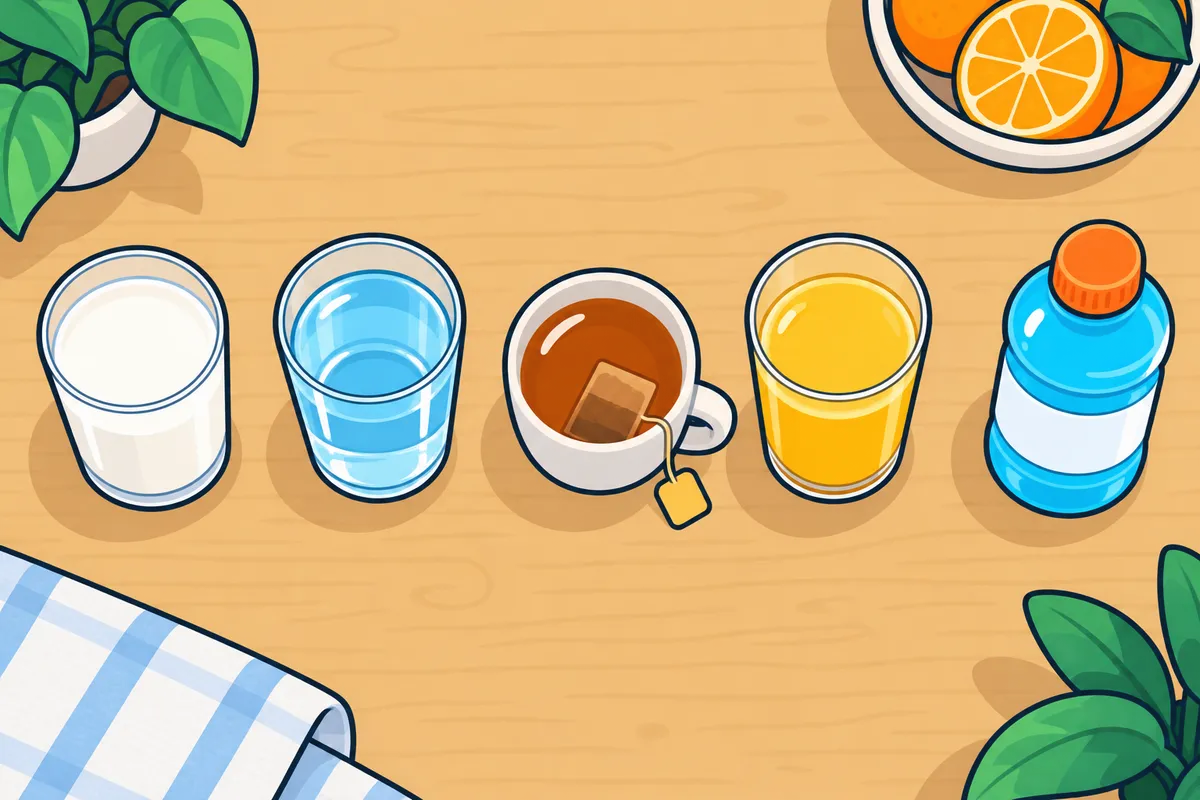
Milk scored highest of the everyday drinks in the main hydration trial, but only by a small margin and only over a few hours. Water, coffee, tea, juice and sparkling water all hydrate you about equally, and each one counts toward your daily water at its full size.
What Is the Most Hydrating Drink?
Skim milk, full-fat milk and an oral rehydration solution came out on top in the 2016 trial that created the hydration index. Two hours after drinking 1 L, the body held about 1.5 times as much of their fluid as it held from still water. The other nine drinks, coffee and orange juice among them, left about as much urine as water after 4 hours.
That test is the 2016 beverage hydration index trial. Each of 72 fasted, healthy men tested still water and three other drinks, 1 L at a time, and the researchers weighed all the urine they passed over the next 4 hours.
After water, the men passed 1,337 g of urine on average. After milk or the oral rehydration solution, they passed about 290 g less, so close to 0.3 L (10 oz), about one small glass, more stayed in their bodies. The European Hydration Institute paid for the trial.
What Is the Beverage Hydration Index?
The beverage hydration index, or BHI, is a score for how much of a drink your body keeps compared with still water. Water scores 1.0. A drink scoring 1.5 left about 1.5 times as much fluid in the body two hours after drinking, measured in fasted adults who drank 1 L in 30 minutes.
The 2016 trial created the score and corrected it for each drink's own water content, so a drink with sugar or milk solids is judged on its water alone. Later trials kept the idea and changed details, such as reading the score at 4 hours instead of 2.
How the Test Works
- 72
- fasted, healthy men, each tested on water and 3 other drinks
- 1 L
- of one drink, finished within 30 minutes
- 4 h
- of urine collected and weighed after each drink
- 13
- drinks compared, from coffee to lager
A score this precise hides a lot of spread. The milk results came with standard deviations of about 0.6, which means some men kept far more and some far less than the average. Your own result on a given morning could land anywhere in that range.
Is Milk More Hydrating Than Water?
Yes, for a few hours. In the 2016 trial, skim milk scored 1.58 and full-fat milk 1.50 at two hours, against 1.0 for water, and both milks still left less urine at four hours. The test used fasted men drinking 1 L in 30 minutes, so a glass of milk with dinner will show far less of a gap.
Why Milk Stays Longer
The trial's authors name four things that change how much urine a drink produces:
- The volume you drink.
- The energy the drink carries.
- Its electrolytes.
- Anything that makes you pee, such as caffeine or alcohol.
Milk scores on two of them. It carries calories, protein and fat, and it holds more sodium and potassium than water.
| Per 250 g (about a glass) | Tap water | Skim milk | Whole milk |
|---|---|---|---|
| Energy | 0 kcal | 85 kcal | 153 kcal |
| Protein | 0 g | 8.4 g | 7.9 g |
| Sodium | 10 mg | 105 mg | 108 mg |
| Potassium | 0 mg | 390 mg | 330 mg |
Values are USDA FoodData Central figures per 100 g, multiplied by 2.5. The later trials below point at sodium as the main reason a drink stays in you longer.
Is Skim Milk More Hydrating Than Whole Milk?
No, not by an amount that matters. Skim scored 1.58 and full-fat 1.50, a gap far smaller than the spread between the men, and their urine at 4 hours was almost the same: 1,049 g against 1,052 g. Pick the milk you like on other grounds, such as calories.
Is an Oral Rehydration Solution More Hydrating Than Water?
Yes. In the 2016 trial an oral rehydration solution scored 1.54, level with milk, and a 2018 trial of 40 adults found two different rehydration solutions scored 1.21 and 1.15, both above water. These drinks are made for losses from vomiting or diarrhea, not for everyday drinking.

In that 2018 trial, 17 men and 23 women each drank 1 L of water, a glucose-based solution, an amino-acid-based solution and a sports drink. The two solutions beat water, at 1.21 and 1.15.
Is a Sports Drink More Hydrating Than Water?
No, not in a short test at rest. The sports drink scored 1.09 in the 2018 trial, which did not beat water, and it tied with water in the 2016 trial too. Sports drinks earn their place in long, salty sweating, not in a 1 L test at rest.
Do Salt and Sugar Make a Drink Hydrate Better?
Salt does most of the work. Two later trials mixed drinks on purpose to see which ingredient raises the score, and sodium came out as the main driver, with sugar or amino acids adding a little on top. Both tested rehydration-style drinks, not milk or coffee.
| Trial | Who took part | What they found | Paid for by |
|---|---|---|---|
| Clarke, 2019 | 12 young adults (about 23) and 12 older adults (about 68) | In the young group, the score rose with sodium; the saltiest drink scored 1.24 | US National Institutes of Health and Entrinsic Health Solutions |
| Millard-Stafford, 2021 | 19 young adults | Electrolytes alone, at sports-drink levels, did not raise the score every time; with sugar added it reached 1.15 at 2 hours | Coca-Cola |
Both trials were small, and both had a drink maker among the funders. Read them as a hint about why milk and rehydration solutions score high, and not as a reason to buy a special drink.
Does the Ranking Change for Women and Older Adults?
Not by much. The 2018 trial included 23 women among its 40 adults, and neither body size nor sex changed the scores, which matters because the 2016 trial tested men only.
Older adults are the exception on timing: in the 2019 trial the average age was 67, and they passed urine more slowly, so the authors suggest reading their score at 4 hours instead of 2.
Which Drinks Hydrate the Same as Water?
Most of them. In the 2016 trial, nine drinks left the same amount of urine after 4 hours as still water did, so your body treats their water like any other water:
Matched Still Water in the 2016 Trial
9 items- Coffee
- Hot tea
- Iced tea
- Cola
- Diet cola
- Orange juice
- Lager
- Sparkling water
- Sports drink
- Coffee counts in full, and what limits it is the caffeine, not the water.
- Orange juice and cola passed the same test too, so a small glass of juice and a can of soda count too, with sugar as their limit.
- Coconut water was not among the 13 drinks, but smaller trials found it rehydrates about as well as water.
Should You Drink Milk Instead of Water?
No. Milk's extra hold lasts a few hours and costs calories: a 250 g glass of whole milk carries 153 kcal, water none. The trial's authors see the score as useful when you cannot get to fluids freely or cannot take frequent bathroom breaks, such as a long drive, a shift without breaks, or a flight.

For a normal day, the total you drink matters far more than the score of each glass. Glubbo logs every drink at its real volume, so 250 ml of milk counts as 250 ml, not 375 ml. Food adds its own water on top of your drinks.
Do Hot, Cold, Caffeinated or Alcoholic Drinks Change the Score?
Not in this test. Hot tea and iced tea both landed level with water, so temperature made no difference to the urine passed. Coffee and lager, the two drinks people expect to dry you out, did not leave more urine than water either, over 4 hours in healthy men who drank 1 L each.
That is a short test at rest with one dose, so it settles the question for a mug of coffee or a beer with dinner and says less about a night of heavy drinking. How alcohol changes your total takes that longer question on its own.
What the Score Cannot Tell You
The score reads one number: how much urine follows a drink. It does not measure thirst, how you feel, or your balance across a day.
Every trial above used a fasted, rested body and one large dose. Your day has many small drinks with food, which is why the total you reach counts for more than the rank of any one glass.
Pick Any Drink That Hydrates Like Water
Pick the drink for the day you have
- An ordinary dayAny drink from the matches-water list, logged at full size
- A morning before a long stretch without a bathroomA glass of milk
- Vomiting or diarrheaOral rehydration solution, not for lunch
- Hours of exercise in the heatRead up on salt before you buy any special drink
- Not sure how much to drinkWork out your own daily number
General information for healthy adults, not medical advice. If a doctor has set your fluid amount, follow that.

More in What Counts

Sources
- American Journal of Clinical Nutrition (Maughan and colleagues). A randomized trial to assess the potential of different beverages to affect hydration status: development of a beverage hydration index, 2016.
- American Journal of Clinical Nutrition (Sollanek and colleagues). Neither body mass nor sex influences beverage hydration index outcomes during randomized trial when comparing 3 commercial beverages, 2018.
- American Journal of Clinical Nutrition (Clarke and colleagues). A randomized trial to assess beverage hydration index in healthy older adults, 2019.
- Nutrients (Millard-Stafford and colleagues). The Beverage Hydration Index: Influence of Electrolytes, Carbohydrate and Protein, 2021.
- USDA Agricultural Research Service. FoodData Central, SR Legacy (skim milk, whole milk, tap water), 2019.
Sources checked by the Glubbo Editorial Team on Oct 19, 2026. General information, not medical advice. How we write and check our guides.

