Coconut Water vs Water: Which Hydrates Better, and When Each Fits
See what one cup holds next to water and a sports drink, and when a carton is worth your money.
 By the Glubbo Editorial Team · Updated Oct 19, 2026 · 8 min read
On This Page
- Is Coconut Water More Hydrating Than Water?
- What Is in a Cup of Coconut Water?
- Is Coconut Water Better Than a Sports Drink?
- Can You Drink Coconut Water Every Day?
- When Is Coconut Water Worth It?
- How Coconut Water Fits Your Daily Goal
- How Does It Compare With Milk and Other Drinks?
- How to Try Coconut Water Without Wasting a Carton
- Sources
Short answer
It hydrates about the same as plain water.
- A cup of packaged coconut water holds 9.6 g of sugar and 404 mg of potassium.
- After a long, salty sweat, add a salty snack or pick a sports drink.
- With kidney disease or potassium-raising medicines, ask your doctor first.

Coconut water hydrates you about as well as plain water does. It also brings sugar, calories and a lot of potassium, so for everyday drinking, water does the same job for nothing. Every milliliter of either one counts toward your daily water.
The difference shows up after a long, sweaty session, in your budget and in your sugar for the day. Five small trials compared the two, and one cup of the packaged kind holds 9.6 g of sugar and 404 mg of potassium.
Is Coconut Water More Hydrating Than Water?
No, not in any way you would notice. After exercise, people who drank coconut water got back about as much of their lost fluid as people who drank plain water, and a cycling trial found it matched a sports drink. A 2017 trial found it did not improve any hydration marker, and riders drank less of it when free to choose: 115 ml of coconut water against 209 ml of plain water.
What the Five Trials Found
Three trials dried people out with exercise, gave them a set amount to drink and measured what stayed in the body. The other two gave the drinks during a ride. All five are small, and at least two were paid for by the companies that make the coconut drink tested.
| Trial | Who took part | What they drank | What happened | Paid for by |
|---|---|---|---|---|
| Saat, 2002 | 8 men, after exercise in the heat | 120 % of their sweat loss as fresh coconut water, plain water or a sports drink | They won back 75 %, 73 % and 80 % of the lost weight; no real difference | Not stated |
| Kalman, 2012 | 12 trained men who lost about 2 % of body weight | Bottled water, pure coconut water, coconut water from concentrate or a sports drink | All four rehydrated them in a similar way; coconut water left them more bloated | VitaCoco |
| Peart, 2017 | 10 men on a 60-minute ride and 10 km time trial | Coconut water or plain water | No hydration marker improved; the time trial took 971 s with coconut water and 967 s with water | Not stated in the abstract |
| O'Brien, 2023 | 19 cyclists (15 men, 4 women) | A coconut water drink with sodium and carbohydrate added, or a sports drink, during a 90-minute ride | Time trial and physiology were the same | The company that made the test drink |
| Bell and Spriet, 2025 | 8 recreational athletes (7 men, 1 woman) | 150 % of their loss as flavored water, coconut water or a sports drink | Flavored water: 530 ml of urine; the other two: 170 ml each. Final fluid status did not differ | Not stated in the paper |
Two details change how far the table goes:
- The O'Brien drink was coconut water fortified with sodium and carbohydrate, not the carton off the shelf, and it carried about 16 % more energy than the sports drink it was compared with.
- In Kalman's trial the men drank more than 2 liters within an hour, which the authors blame for the bloating.
Of the 57 people in the five trials, 52 were men. Every test ran over a few hours, and nobody tested coconut water as an everyday drink.
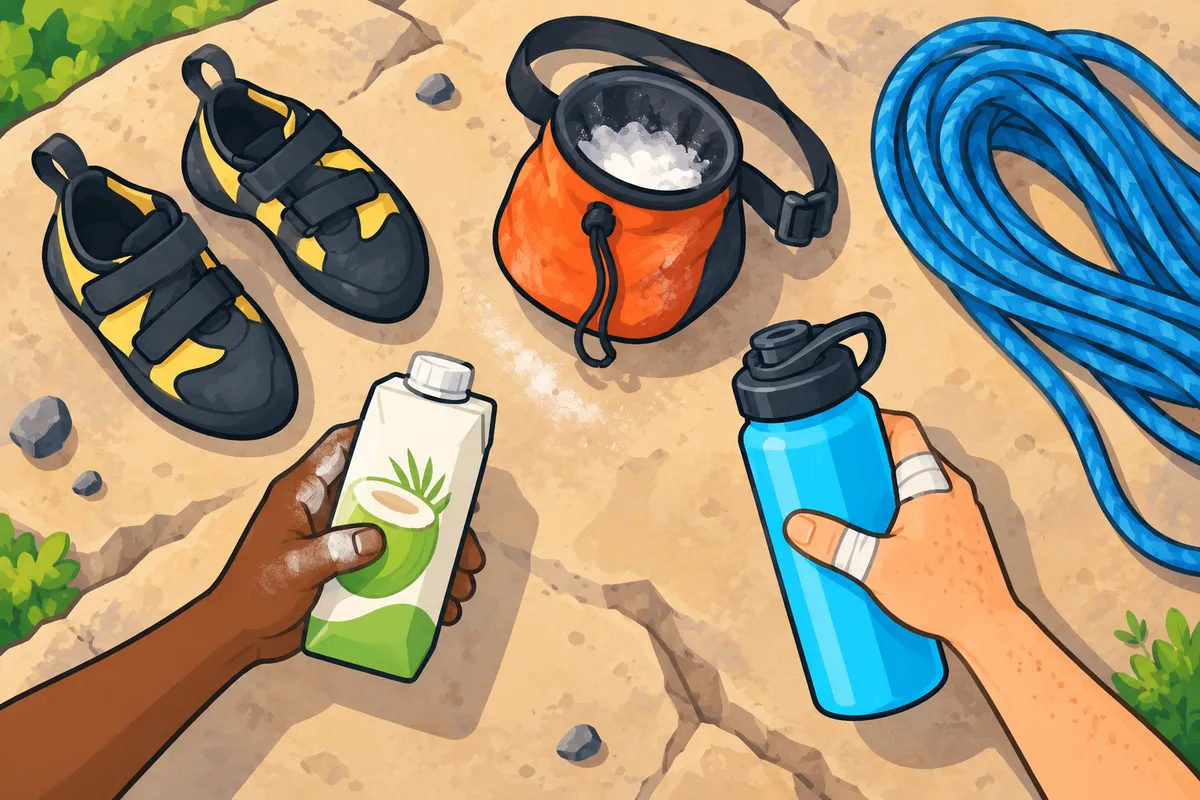
In the 2002 trial, the men found coconut water sweeter and easier to drink in large amounts, with less nausea than the other two. In the 2017 trial the cyclists did the opposite and drank much less of it, which the authors link to its taste. Both findings say the same thing: the drink you will actually finish after a hot run rehydrates you better than the one you leave half full.
What Is in a Cup of Coconut Water?
Mostly water: USDA FoodData Central puts both fresh and packaged coconut water at 95 % water. The other 5 % is where it differs from a glass of tap water. A cup of unsweetened packaged coconut water weighs about 245 g by USDA's measure, and it holds 44 kcal, 9.6 g of sugar, 404 mg of potassium and 64 mg of sodium.
Fresh coconut water from the nut is saltier and richer in potassium than the packaged kind. Brands also vary, so check the label on yours.
| Per cup (240 ml) | Tap | Packaged | Fresh nut | Sports drink |
|---|---|---|---|---|
| Energy | 0 kcal | 44 kcal | 46 kcal | 62 kcal |
| Sugar | 0 g | 9.6 g | 6.3 g | 12.6 g |
| Potassium | 0 mg | 404 mg | 600 mg | 36 mg |
| Sodium | 10 mg | 64 mg | 252 mg | 94 mg |
All values are USDA FoodData Central figures per 100 g, multiplied up to one cup; the sports drink is USDA's ready-to-drink Gatorade entry. Unsweetened packaged coconut water carries less sugar than the sports drink, and about 11 times its potassium. Its sugar is the fruit's own, but sweetened cartons add more, and the added sugar you can fit in a day is a smaller number than most labels suggest.
Is Coconut Water Better Than a Sports Drink?
For most workouts, neither one beats water. In the trials above, coconut water performed about as well as a sports drink, but the cycling trial used a version with sodium and carbohydrate added, and plain packaged coconut water carries less sodium, the salt you lose most in sweat. If salt replacement is the goal, a sports drink or salty food does that job better.
Sodium Is the Salt You Sweat Out
Sweat holds 10 to 100 mEq of sodium per liter, the National Athletic Trainers' Association reports, which is about 230 to 2,300 mg. Packaged coconut water holds about 260 mg per liter by USDA's numbers, near the bottom of that range.
- 230 to 2,300 mg
- sodium in a liter of sweat
- 260 mg
- sodium in a liter of packaged coconut water
Set side by side, a liter of the saltiest sweat carries almost nine times the sodium of a liter of coconut water (2,300 mg against 260 mg), while a liter of the least salty sweat carries about the same. Which end you sit at decides whether coconut water replaces much of what you lose.
So coconut water suits someone with a light sweat who wants a drink with some flavor. A salty sweater after a two-hour run in July gets more from a sports drink plus a salty snack, and the athletic trainers report measured sodium losses anywhere from 0.2 to 7.3 g an hour.
How Your Stomach Takes It
The trials disagree here:
- In 2002 the men had less nausea and fullness with fresh coconut water.
- In 2012 the men felt more bloated and had more stomach upset with both coconut waters, after drinking over 2 liters in an hour.
Try it on a short, easy day before you count on it during a race.
Can You Drink Coconut Water Every Day?
Most healthy adults can, as long as you count its sugar and keep an eye on potassium. A daily carton of 330 ml (11 oz) adds about 59 kcal, 13 g of sugar and 545 mg of potassium. People with kidney disease, or who take medicines that raise potassium, should ask their doctor first.
For a healthy person, that potassium is useful. The NIH Office of Dietary Supplements sets the adequate intake at 2,600 mg a day for women and 3,400 mg for men, so one cup of packaged coconut water covers about 16 % and 12 % of those. Healthy kidneys pass any extra out in the urine.
When Is Coconut Water Worth It?
Pick it for taste or for a long, hot session, and pick water the rest of the time. Plain water and coconut water hydrate about the same, so the choice comes down to sugar, salt, cost and what you will actually drink.
Water Does the Job
- Your desk bottle and meals
- A short or easy workout
- Days you watch sugar or calories
- Kidney disease or potassium-raising medicines
Coconut Water Can Help
- You drink more when it has some taste
- Rehydrating after a long hot session
- A swap for soda or juice
- Paired with a salty snack if you sweat heavily
Fruit is the other way to add taste to your water day. Watermelon is 91.5 % water by USDA's numbers, so one wedge holds about as much water as a glass, with no carton to buy.
How Coconut Water Fits Your Daily Goal
Count it at its full size, like any other drink. A 330 ml carton is 330 ml toward your goal, the same as nearly every other drink you log. Here are two adults and their goals from Glubbo's habit formula, which adds steps for activity, climate and sex to 30 ml per kg.
On a heavy training day your real intake runs past your goal, and that is fine. To know how much you lose in an hour, weigh yourself before and after one session and work out your sweat rate.

How Does It Compare With Milk and Other Drinks?
Milk beat plain water in a 2016 trial of 13 everyday drinks, while coconut water was not one of the 13. In it, men who drank 1 L of milk passed about 300 g less urine over 4 hours, and milk's calories, protein and salt keep its fluid in you a little longer.
Sparkling water, on the other hand, matched still water and adds nothing but bubbles.
How to Try Coconut Water Without Wasting a Carton
Before you buy a case
- Pick an unsweetened carton and read the label: sugar and salt differ a lot between brands
- Try one on a short, easy day, so a bloated stomach never meets a race
- Log it at its real size: a 330 ml carton is 330 ml toward your goal
- If you have kidney disease or take a potassium-raising medicine, ask your doctor first
General information for healthy adults, not medical advice. If a doctor has set your fluid amount, follow that.

More in What Counts



Sources
- USDA Agricultural Research Service. FoodData Central, SR Legacy (coconut water, ready-to-drink and fresh; sports drink; tap water), 2019.
- Journal of Physiological Anthropology and Applied Human Science (Saat and colleagues). Rehydration after exercise with fresh young coconut water, carbohydrate-electrolyte beverage and plain water, 2002.
- Journal of the International Society of Sports Nutrition (Kalman and colleagues). Comparison of coconut water and a carbohydrate-electrolyte sport drink on measures of hydration and physical performance in exercise-trained men, 2012.
- Sports (O'Brien and colleagues). Coconut Water: A Sports Drink Alternative?, 2023.
- Journal of Strength and Conditioning Research (Bell and Spriet). Rehydration After Exercise-Induced Fluid Losses: Comparing Flavored Water, Coconut Water, and Carbohydrate-Electrolyte Sports Beverage, 2025.
- International Journal of Sport Nutrition and Exercise Metabolism (Peart and colleagues). Coconut water does not improve markers of hydration during sub-maximal exercise and subsequent time trial performance, 2017.
- NIH Office of Dietary Supplements. Potassium: Fact Sheet for Consumers, 2021.
- Journal of Athletic Training (National Athletic Trainers' Association). National Athletic Trainers' Association Position Statement: Fluid Replacement for the Physically Active, 2017.
Sources checked by the Glubbo Editorial Team on Oct 19, 2026. General information, not medical advice. How we write and check our guides.

