Does Herbal Tea Count as Water? Chamomile, Hibiscus and More
Why a cup of chamomile or hibiscus counts like a glass of water, and the few herbs that change the answer.
 By the Glubbo Editorial Team · Updated Oct 19, 2026 · 8 min read
On This Page
- Does Herbal Tea Count as Water?
- Is Herbal Tea Hydrating?
- How Much Water Is in a Cup of Herbal Tea?
- Does Hibiscus Tea Dehydrate You?
- Do Diuretic Herbal Teas Make You Lose Water?
- Is Sweetened Iced Herbal Tea Still a Good Choice?
- Who Should Be Careful With Herbal Teas?
- Does Chamomile Help You Sleep?
- Count Herbal Teas Like Water
- Sources
Short answer
Yes, cup for cup, like plain water.
- A brewed cup of chamomile or hibiscus is 99.6 to 99.7 % water, USDA data show.
- USDA lists 0 mg of caffeine in both, so nothing pushes water out.
- Licorice and dandelion are the herbs to check before a daily habit.

Yes: a mug of herbal tea counts toward your goal at its full size, because what your body sees is hot water with a little flavor in it.
People doubt it because "tea" makes them think of caffeine, and some herbs are sold as water pills. Neither applies to an ordinary cup, and the few exceptions are easy to spot.
Does Herbal Tea Count as Water?
Yes, in full. A brewed cup of chamomile is 99.7 % water by USDA FoodData Central figures, and the US National Academies count the water in every drink toward your total. An 8 oz (237 ml) mug of herbal tea adds 237 ml to your day.
The herbs add a trace of flavor and almost no calories: USDA lists 1 kcal per 100 g for chamomile and 0 for hibiscus. A cup of herbal tea sits closer to water than any other drink in the table.
Is Herbal Tea Hydrating?
Yes, as hydrating as water. No trial has tested herbal tea on its own, because there is little to test: it is water with no caffeine, by USDA figures. Black tea, which does contain caffeine, still matched water in a randomized trial, so a caffeine-free cup has even less reason to differ.
Three results point the same way:
- In that 2011 black tea trial, 21 men drank 4 or 6 mugs of 240 ml a day, with 168 or 252 mg of caffeine, or the same amounts of boiled water. Their blood and urine showed no difference between tea and water.
- Temperature did not matter either. In the 13-drink trial, hot tea and cold tea each left the same urine over 4 hours as still water, so a chilled herbal tea logs the same as a steaming one.
- Herbal tea skips the one ingredient that raised the question. The US National Academies saw more urine only with caffeine above about 180 mg a day, "perhaps transiently", and chamomile and hibiscus carry 0 mg. A caffeine-free cup therefore starts further from that line than a cup of black tea does.
Check the Box for Hidden Caffeine
How Much Water Is in a Cup of Herbal Tea?
About 236 g in an 8 oz cup. USDA weighs a brewed cup of chamomile or other herbal tea at 237 g, of which 99.7 % is water. Hibiscus lands at 236 g too, so the difference between herbs is under one gram a cup.
| Brewed, 8 oz cup (237 g) | Water | Caffeine | Energy |
|---|---|---|---|
| Chamomile | 236 g | 0 mg | 2 kcal |
| Hibiscus | 236 g | 0 mg | 0 kcal |
| Other herbal tea | 236 g | 0 mg | 2 kcal |
Values are USDA FoodData Central figures per 100 g, multiplied by the 237 g cup. So log your mug by its size: a 350 ml mug of peppermint or rooibos adds 350 ml.
Does Hibiscus Tea Dehydrate You?
No. Brewed hibiscus is 99.58 % water with no caffeine, by USDA figures, and no study shows it makes you lose more water than you drink. What hibiscus has been studied for is blood pressure, which is a separate effect from hydration.
A 2022 meta-analysis of 17 trials found hibiscus lowered systolic blood pressure by about 7.1 mmHg against placebo, with a range of 1.2 to 13.0 mmHg and big differences between trials. The drop was largest in people whose pressure was already high, and the authors asked for more studies on dose and duration.
If you take medicine for blood pressure and plan to drink hibiscus every day, mention it to your doctor. For everyone else, a cup of hibiscus is simply a red, tart cup of water.
Do Diuretic Herbal Teas Make You Lose Water?
Rarely in a way that matters, and the evidence is thin. Dandelion is the herb sold most often as a natural diuretic, and the one human trial tested a strong leaf extract in 17 healthy women, not a cup of tea.
In that 2009 pilot study, they took 8 ml of fresh dandelion leaf extract three times in one day:
- They peed more often in the 5 hours after the first dose.
- They passed more urine for what they drank after the second.
- The third dose changed nothing.
That is a short effect from a concentrated extract in a study with no placebo group and no blinding. The authors could not rule out that the extract simply irritated the bladder, since the number of trips rose more than the total urine. The NCCIH still finds "no compelling scientific evidence" for dandelion in any health condition, and notes it might interact with water pills.
Is Sweetened Iced Herbal Tea Still a Good Choice?
The tea counts the same; the sugar is what changes. Unsweetened, an iced herbal tea is still about 99.7 % water. Stirred with sugar or honey, it starts to look like a soft drink: the CDC puts a 12 oz brewed sweet tea at 7 teaspoons of sugar and 115 calories.
Brew a jug of hibiscus or mint, chill it and leave it unsweetened, or add a slice of orange. It tastes sharp enough cold that many people stop missing the sugar after a few days.
Who Should Be Careful With Herbal Teas?
Most people can drink ordinary herbal teas freely, but a few herbs and a few people need care. The NIH's NCCIH flags licorice root for people with high blood pressure or heart or kidney conditions, chamomile for people allergic to ragweed and its relatives, and dandelion alongside water pills.
Four Herbs and What the NCCIH Says
Chamomile
Likely safe in tea
- Allergy risk with ragweed or daisies
- May interact with warfarin
Suits you if you want a caffeine-free evening cup.
Hibiscus
Lowered blood pressure
- About 7.1 mmHg lower systolic, pooled
- 99.58 % water, no caffeine
Suits you if you like a tart cup, hot or iced.
Licorice root
Check first
- Risky with high blood pressure
- Also with a lot of salt in your diet
Suits you if your doctor knows you drink it daily.
Dandelion
Sold as a diuretic
- One small trial, of an extract
- Might interact with water pills
Suits you if you do not take diuretic medicine.
For pregnancy and breastfeeding, the NCCIH's licorice page calls large amounts of oral licorice in pregnancy unsafe and links them to deliveries before 38 weeks. Its chamomile page calls chamomile likely safe in tea amounts, but says little is known about it in pregnancy or while breastfeeding, so ask your provider before a daily habit.
Does Rooibos Tea Count as Water?
Yes, in full. Rooibos contains no caffeine and counts at its full mug size, just like chamomile or hibiscus. The USDA lists it alongside other herbal teas as mostly water, so log a 300 ml mug of rooibos as 300 ml, hot or iced.
Does Peppermint Tea Help Bloating?
People drink it for that reason, but the evidence is thin. The NIDDK lists peppermint oil capsules among the treatments a doctor may suggest for irritable bowel syndrome, but the research uses enteric-coated capsules, not brewed tea, and a cup holds far less oil than a capsule. The water counts, but do not rely on peppermint tea to fix constipation-related bloating.
Is Kombucha an Herbal Tea?
No. Kombucha starts from sweetened black or green tea, so it carries caffeine and sugar and sits outside the herbal-tea group. A glass still counts toward your water for the day, with its sugar, caffeine and trace of alcohol counted alongside.
Does Chamomile Help You Sleep?
The evidence is weak. The NCCIH says there is very little information on chamomile for insomnia, and a 2019 review it cites found one insomnia study, which showed no benefit. A warm, caffeine-free cup still beats a late coffee, which can still disturb your sleep when drunk six hours before bed.
Count Herbal Teas Like Water
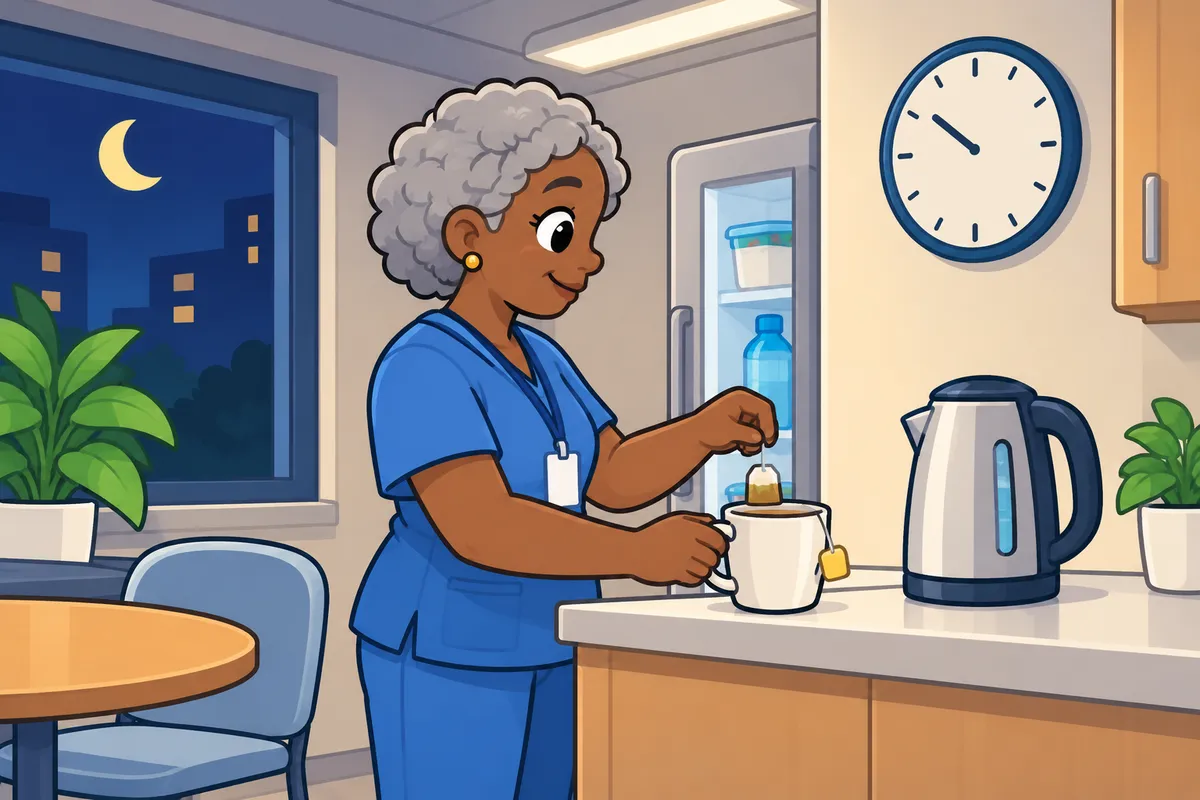
If you only logged plain water, a day like hers would look 1,200 ml short when it is on target. Coffee and black tea count too, with caffeine as their limit, and decaf coffee is in the same group as herbal tea.
Make tonight's mug count
- Read the box: tea leaves in the blend mean caffeine, so pick one without
- Log the mug at its real size, hot or iced, such as 300 ml for a big cup
- Put it where a late coffee used to go
- Drink licorice or dandelion blends every day only after asking your doctor
General information for healthy adults, not medical advice. If a doctor has set your fluid amount, follow that.

More in What Counts


Sources
- USDA FoodData Central (SR Legacy). Beverages, tea, herb, brewed, chamomile (FDC 174156), 2018.
- USDA FoodData Central (SR Legacy). Beverages, tea, hibiscus, brewed (FDC 171946), 2018.
- USDA FoodData Central (SR Legacy). Herb tea other than chamomile, black tea, decaf coffee, cola, bottled water (FDC 173232, 173227, 171889, 174852, 174158), 2018.
- National Academies of Sciences. Dietary Reference Intakes for Water, Potassium, Sodium, Chloride, and Sulfate: Chapter 4, Water, 2005.
- British Journal of Nutrition (Ruxton and Hart). Black tea is not significantly different from water in the maintenance of normal hydration in human subjects: results from a randomised controlled trial, 2011.
- Journal of Alternative and Complementary Medicine (Clare, Conroy and Spelman). The diuretic effect in human subjects of an extract of Taraxacum officinale folium over a single day, 2009.
- Nutrition Reviews (Ellis and colleagues). A systematic review and meta-analysis of the effects of Hibiscus sabdariffa on blood pressure and cardiometabolic markers, 2022.
- National Center for Complementary and Integrative Health (NIH). Chamomile, 2024.
- National Center for Complementary and Integrative Health (NIH). Licorice Root, 2024.
- National Center for Complementary and Integrative Health (NIH). Dandelion, 2024.
- US Centers for Disease Control and Prevention. Rethink Your Drink, 2024.
Sources checked by the Glubbo Editorial Team on Oct 19, 2026. General information, not medical advice. How we write and check our guides.

