Does Kombucha Count as Water? What a Bottle Adds to Your Day
How much water, sugar and caffeine a bottle holds, what hard kombucha changes, and who should skip it.
 By the Glubbo Editorial Team · Updated Nov 2, 2026 · 6 min read
On This Page
Short answer
Yes, kombucha counts, but no study has tested it.
- USDA lists 94.9 g of water per 100 g, about 353 g per 12 oz bottle (USDA portion weight).
- The 13-drink hydration trial left kombucha out, so no trial backs it.
- Leave out any bottle at 0.5 % alcohol or more; that is an alcohol drink.

Yes, kombucha counts as fluid toward your day. USDA's record lists 94.9 g of water in every 100 g, so a 12 oz (355 ml) bottle, which USDA weighs at 372 g, brings about 353 g of it.
No trial has tested how well kombucha hydrates, so that answer rests on its water content and on the National Academies' rule for beverages. One bottle type is the exception: kombucha at 0.5 % alcohol or more is an alcohol drink, and Glubbo's log leaves alcohol out.
Does Kombucha Count as Water Intake?
Yes. The US National Academies count the water in beverages toward your total water for the day, and say caffeinated drinks "appear to contribute" about as much as caffeine-free ones. Kombucha is 94.9 % water, so log the full bottle, the same as tea.
The 2004 report never names kombucha, so this applies its beverage rule to a drink it did not list.
16 oz kombucha
- About 20 g of total sugars
- 79 kcal
- 55 mg of caffeine
- Under 0.5 % alcohol, or it is an alcohol drink
16 oz plain water
- No sugar
- No calories
- No caffeine
- No alcohol
How Much Water Is in a Bottle of Kombucha?
A 12 oz bottle holds about 353 g of water, 15 g of total sugars, 60 kcal and 41 mg of caffeine, using USDA's per-100 g values and its 372 g portion weight. A 16 oz bottle holds about 471 g of water and 20 g of sugars. Brands differ, so your label has the final say.
USDA's record gives 16 kcal, 3.99 g of total sugars and 11 mg of caffeine per 100 g, and weighs a fluid ounce of kombucha at 31 g. The table multiplies the two.
| Bottle | Weight | Water | Energy | Total sugars | Caffeine |
|---|---|---|---|---|---|
| 8 oz (237 ml) | 248 g | 235 g | 40 kcal | 9.9 g | 27 mg |
| 12 oz (355 ml) | 372 g | 353 g | 60 kcal | 14.8 g | 41 mg |
| 16 oz (473 ml) | 496 g | 471 g | 79 kcal | 19.8 g | 55 mg |
Colorado State University's food-safety page puts unflavored kombucha at about 30 calories and 2 to 3 g of sugar per 8 oz, against 40 kcal and 9.9 g in the USDA record. The gap is wide, so the Nutrition Facts panel on your bottle outranks both. USDA lists total sugars, not added sugars.
Is Kombucha Hydrating?
Most likely, but no trial has measured it. No study of urine or body water after kombucha has been published that we could find, and the 2016 trial of 13 drinks did not include it. The nearest drinks it did test, tea and cola, matched water.
In that 2016 trial, 72 fasting men drank 1 L of still water or one of three other drinks within 30 minutes, and the researchers collected their urine for 4 hours:
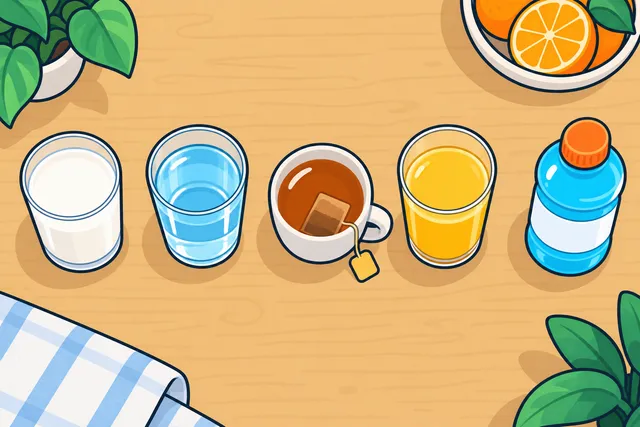
- Cola, diet cola, hot tea, iced tea, coffee, lager, orange juice, sparkling water and a sports drink left urine totals no different from water.
- Milk and an oral rehydration solution left less.
TTB describes kombucha as a fermented drink made from steeped tea and sugar with a culture of yeast and bacteria, so iced tea and cola are its nearest neighbors in the trial. That is a reasoned guess, not a result, and the men were fasting and drank 1 L in one sitting.

Does Kombucha Dehydrate You?
A standard bottle should not. It is 94.9 % water, holds about 41 mg of caffeine per 12 oz, and carries under 0.5 % alcohol when sold as non-alcoholic. Regular kombucha has no known link to dehydration, but hard kombucha is an alcohol drink.
Does the Alcohol in Kombucha Dry You Out?
Fermentation makes alcohol, and the amount can rise after bottling. Two sources set the line:
- TTB treats kombucha at 0.5 % alcohol by volume or more, at any time in production or after bottling, as an alcohol beverage, and says continued fermentation in the bottle can push it over that line.
- Poison control notes that a non-alcoholic label allows no more than 0.5 %, and that some preparations contained as much as 3 %.
A bottle at 0.5 % or more is an alcohol drink, so leave it out of your water log. What alcohol does to your fluid balance is a separate question with its own trials.
Does the Caffeine in Kombucha Dry You Out?
USDA's record has 11 mg of caffeine per 100 g, about 41 mg in a 12 oz bottle. For most adults the FDA cites:
- 400 mg a day as an amount not generally associated with negative effects.
- 113 to 247 mg of caffeine in regular brewed coffee, per 12 fl oz.
The National Academies found that caffeinated drinks can contribute as much to your daily water as caffeine-free ones, so 41 mg is no reason to drop a bottle from the log. If caffeine is your worry, coffee is where the long answer sits.
Who Should Not Drink Kombucha, and Is Home Brew Safe?
Young children, pregnant women and people with weakened immune systems should not drink it, says the National Capital Poison Center. Colorado State University says consumption is not advised for people with compromised immune function, or for pregnant or lactating women. Home-brewed kombucha has been tied to several adverse health events.
MotherToBaby gives a general pregnancy limit of about 200 mg of caffeine a day, and how much caffeine is safe in pregnancy depends on every drink you have that day.
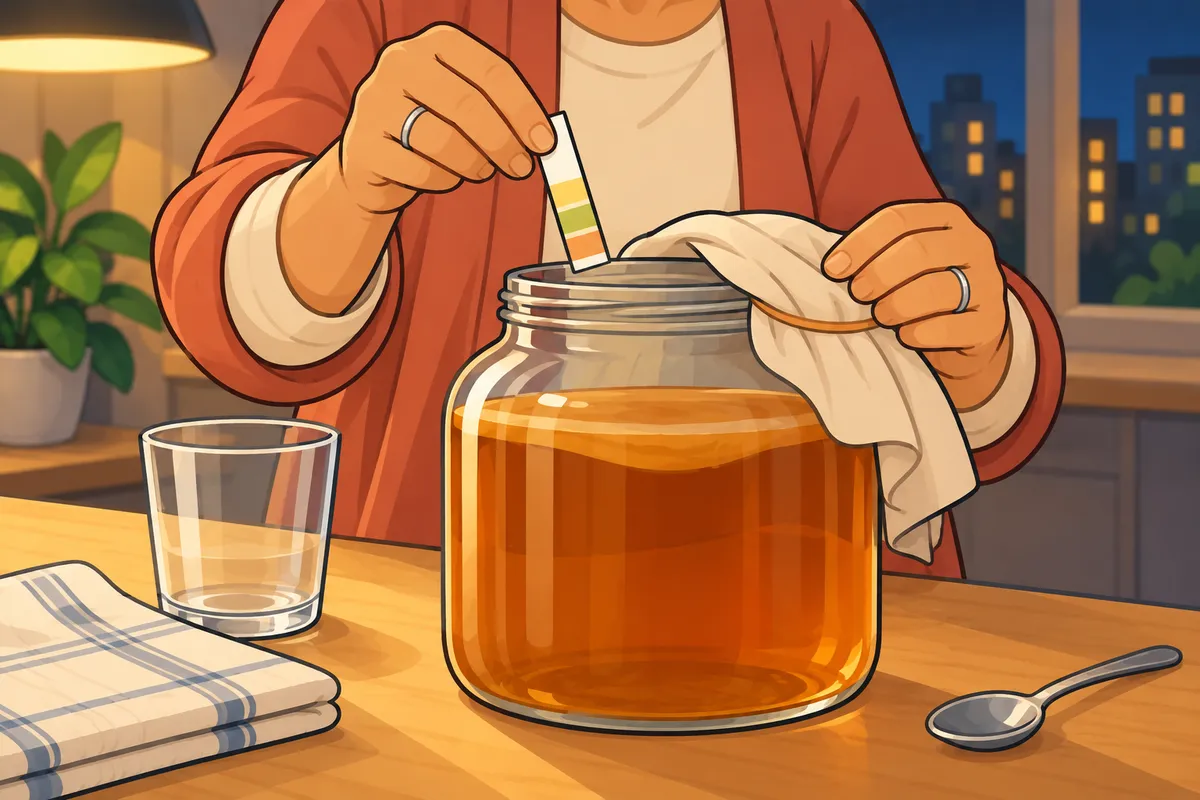
Brewing at home adds its own hazards. The poison center reports that lead poisoning followed kombucha brewed in ceramic containers, because the tea is acidic. Colorado State University gives a safe pH window and warns that contamination can still happen when the pH is low.
Before you brew a batch
4 items- Keep the pH below 4.2 and not lower than 2.5
- Keep hands and all equipment clean and sanitary
- Use only a food-safe fermentation vessel
- Skip ceramic pots: lead leached into brewed kombucha
Can Kombucha Replace Water?
It can cover part of your fluid goal, not all of it. A 12 oz bottle brings about 15 g of total sugars and 60 kcal that plain water does not, so water stays the base of the day and kombucha is a flavored extra.
If plain water bores you, other ways to drink more of it come before reaching for a sweet drink. When you do pour a sweetened one, soda is the page that shows how the daily limits work.
Log Your Next Bottle in Four Quick Checks
Read the label for alcohol first, then log the volume and glance at the sugar.
Each time you open one
- Read the label: 0.5 % alcohol or more stays out
- Log the bottle at its full size
- Check the sugar per serving on the panel
- Fill the rest of your goal with water
A bottle of kombucha is one entry among the day's drinks, and the calculator sets the goal it counts toward.
General information for healthy adults, not medical advice. If a doctor has set your fluid amount, follow that.

More in What Counts

Sources
- USDA FoodData Central (Survey, FNDDS). Tea, kombucha (FDC 2710509), 2024.
- National Academies of Sciences. Report sets dietary intake levels for water, salt, and potassium (press release), 2004.
- National Academies of Sciences. Dietary Reference Intakes, Chapter 4: Water, 2005.
- American Journal of Clinical Nutrition (Maughan and colleagues). A randomized trial to assess the potential of different beverages to affect hydration status: development of a beverage hydration index, 2016.
- Alcohol and Tobacco Tax and Trade Bureau (TTB). Kombucha (TTB G 2010-3A), 2019.
- Colorado State University, College of Health and Human Sciences. Kombucha - Food Source Information, 2026.
- National Capital Poison Center. Kombucha tea: Health tonic or dangerous?, 2026.
- MotherToBaby (Organization of Teratology Information Specialists). Kombucha and Pregnancy: Answers to Your Brewing Questions, 2020.
- US Food and Drug Administration. Spilling the Beans: How Much Caffeine is Too Much?, 2024.
Sources checked by the Glubbo Editorial Team on Nov 2, 2026. General information, not medical advice. How we write and check our guides.

