Water at Home · What Can Be in Water
Lead in Drinking Water, Where It Comes From and How to Cut It
Which pipes and faucets add lead, what the EPA limits mean, how to test, and the habits that cut it today.
 By the Glubbo Editorial Team · Updated Oct 19, 2026 · 9 min read
On This Page
- How Does Lead Get Into Tap Water?
- What Is the EPA Limit for Lead in Drinking Water?
- How Many Homes Still Have Lead Pipes?
- Who Is Most at Risk From Lead in Water?
- How Do You Test Your Water for Lead?
- Is Lead a Problem in Well Water?
- How Can You Reduce Lead in Tap Water?
- Why Boiling Is the Wrong Fix for Lead
- Can You See, Taste or Smell Lead in Water?
- Is It Safe to Shower in Water That Has Lead?
- Your Lead Plan for This Week
- Sources
Short answer
It comes from pipes, so act at your own tap.
- EPA's health goal for lead is zero; no safe level is known.
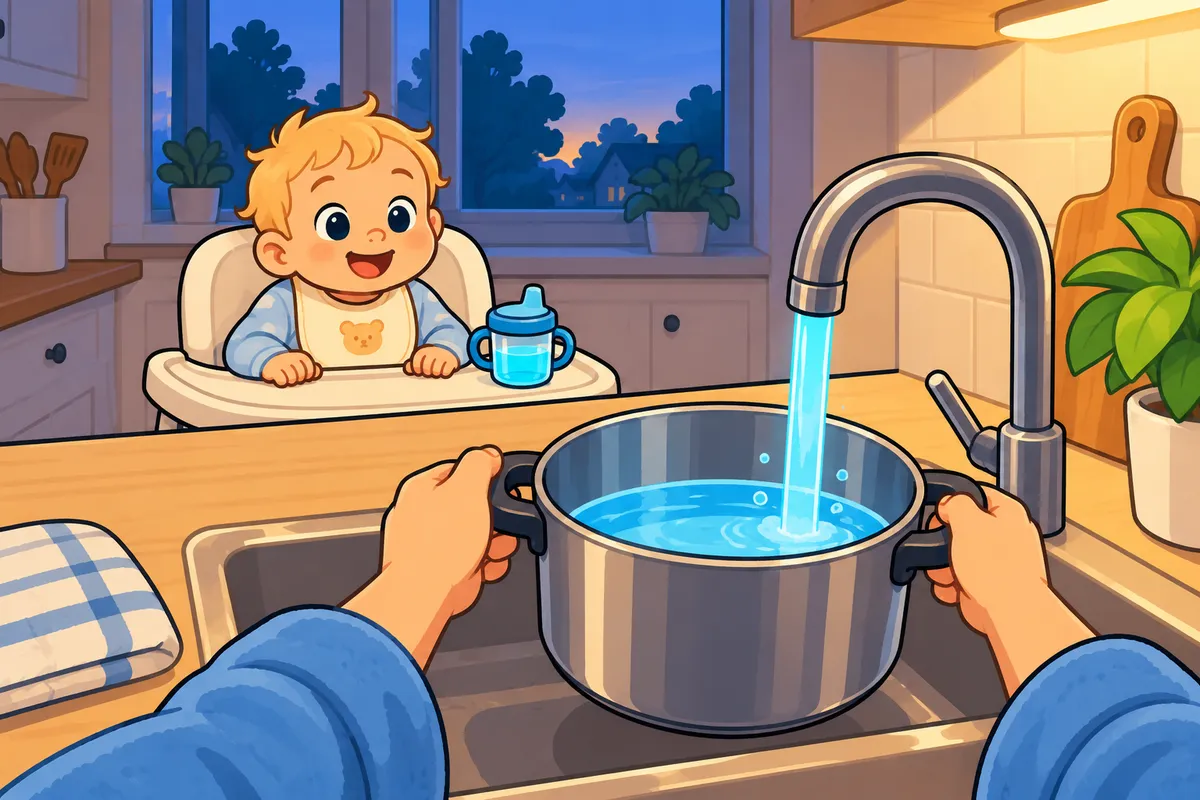
- Use cold water only for drinking, cooking and formula; boiling does not remove lead.
- A lab test costs about $20 to $100; ask your utility first.
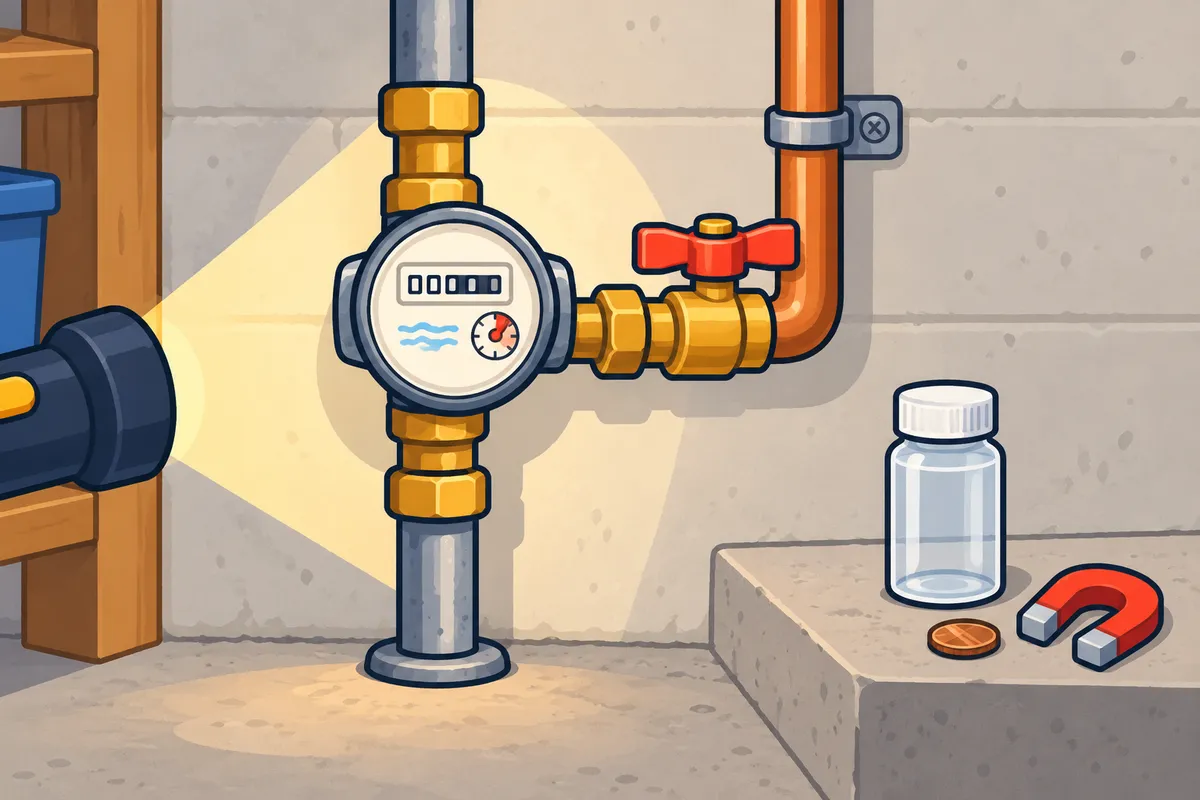
Lead in tap water comes from pipes, not the source: it enters on the last stretch, in the service line from the street and the plumbing and fixtures inside your home, and EPA's health goal for it is zero. Use only cold water for drinking, cooking and formula, run the tap after water has sat, and ask your utility for a test; none of those wait on a result.
Two houses on one street can pour different water, because the pipes differ. The habits below cost nothing, and a test tells you how much they matter for your tap.
Where Lead Can Come From in a Home
5 items- A lead service line, the pipe from the water main to your home
- Brass or chrome-plated brass faucets
- Lead solder on copper pipes
- Galvanized iron pipes
- Fixtures, solder and fittings made before 1986
How Does Lead Get Into Tap Water?
Through corrosion. When pipes and fixtures that contain lead wear away, the metal dissolves into the water, the EPA explains, and acidic water or water low in minerals makes it worse. Where a lead service line exists, it is typically the biggest source.
Why Water That Sits Picks Up More
The CDC lists what sets the amount: the water's chemistry, how long it stays in the pipes, its temperature, how worn the pipes are and whether a protective scale lines them. Overnight water and water after a week away have had the longest contact.
Warm or hot tap water may carry more lead than cold. So the advice is the same everywhere: drink and cook with cold water only.
What "Lead-Free" Means on a Fixture
Under the Safe Drinking Water Act, "lead-free" plumbing may still hold a little lead: a weighted average of no more than 0.25 % on wetted surfaces, and 0.2 % for solder and flux. A faucet sold as lead-free today is a big step down from a 1970s one, though not zero. The EPA says the definition has applied since 2011.
What Is the EPA Limit for Lead in Drinking Water?
The health goal is zero, because no safe level of lead is known. The enforceable rule works through an action level instead: if more than 10 % of a system's tap samples exceed it, the utility must improve corrosion control, inform the public and replace lead lines it controls.
- 0
- EPA health goal for lead in drinking water
- 15 ppb
- action level today (0.015 mg/L)
- 10 ppb
- action level once the 2024 rule takes effect in late 2027 (0.010 mg/L)
The lower number comes from the Lead and Copper Rule Improvements. The EPA's page on that rule says it requires water systems to identify and replace lead pipes within 10 years, test more strictly and tell residents where lead pipes are, and EPA's questions and answers put the start three years after the rule's publication, in late 2027.
An action level is a trigger for the utility, not a safe line for your glass. A home tap can read above it while the system as a whole passes.
How Many Homes Still Have Lead Pipes?
About 4 million lead service lines, by the EPA's estimate as of 19 October 2026, drawn from the inventories water systems had to file. Of those, the EPA's service line inventory counts about 3 million that states report as lead or as galvanized lines that need replacing, and estimates that about 1 million more lines of unknown material are likely lead.
So "unknown" on your utility's map is not the same as "safe". If your line shows as unknown, treat it as possible lead until someone checks the pipe where it enters the house, and keep the cold-water habits in the meantime.
Who Is Most at Risk From Lead in Water?
Young children, babies on formula and pregnant women. The CDC has identified no safe blood lead level for young children, and the EPA says infants fed mostly formula can get 40 to 60 percent of their lead exposure from tap water mixed into it.
The EPA lists what lead can do:
| Who | What the EPA lists |
|---|---|
| Children | Behavior and learning problems, lower IQ, slowed growth, hearing problems, anemia |
| Pregnancy | Lead stored in bone can leave it and reach the baby, with reduced growth and premature birth |
| Adults | Heart and blood pressure problems, decreased kidney function, reproductive problems |
Most children and adults who take in lead have no symptoms, the CDC adds. You cannot tell from how someone feels.
How Do You Test Your Water for Lead?
Call your utility first. Many public water systems test a home's water on request, and they can tell you whether a lead service line serves your address. Otherwise, a state-certified lab will test it; the EPA puts the cost at about $20 to $100.
Results can change with the time of day, the season, how someone took the sample and how much water ran first, the CDC notes. So follow the lab's sampling instructions to the letter.
The CDC also flags a time window: lead risk rises while crews work on a service line or water main, and for up to six months afterwards. If the street was dug up this year, test this year.
Finding Out Whether You Have a Lead Pipe
Your utility keeps records, and the new rule requires it to identify its lead pipes. If it does not know, the EPA suggests a licensed plumber, or its own "Protect Your Tap" guide, which uses a coin and a magnet. Testing the water is still the only way to know what reaches your glass.
What Do Lead Test Results Mean?
Labs report lead in parts per billion (ppb) or milligrams per liter (mg/L); 15 ppb and 0.015 mg/L are the same amount. Read your number against the two EPA action levels, and remember the health goal stays zero.
| Your result | In mg/L | What it means for you |
|---|---|---|
| Not detected | below the lab's limit | Keep the habits below: one clean sample does not cover every day |
| Under 10 ppb | under 0.010 | Below both action levels, still above the zero goal |
| 10 to 15 ppb | 0.010 to 0.015 | Under today's level, at or above the one that applies once the 2024 rule takes effect in late 2027 |
| Over 15 ppb | over 0.015 | Above today's action level: call your utility, and drink and mix formula with filtered or bottled water |
One result is a snapshot. Because lead varies with the season and the sample, a second test a few months later tells you more than a single number, and a clean result does not cover the months after pipe or street work.
How Utilities Will Sample Lead Pipes
For sites with lead service lines, the 2024 rule requires utilities to collect and analyze both the first liter and the fifth liter from the tap, and to use the higher of the two values when checking compliance. A single first-draw bottle, the sample most home tests use, can therefore read lower than the number the utility is judged on.
Is Lead a Problem in Well Water?
It can be, and nobody tests for it unless you do. The EPA says private wells are not regulated under the Safe Drinking Water Act, so the action levels and the utility's sampling above do not apply to them. The pump, pipes, solder and faucets in a well house can hold lead like any other plumbing.
On a well, ask your health department whether lead belongs in your yearly lab test, and use the same five habits at the tap until you know.
How Can You Reduce Lead in Tap Water?
Five habits, all from the EPA's advice for homes. None of them waits for a test result, and together they cut what reaches your glass whatever metal your pipes hold.
Five Habits at the Kitchen Tap
- Run water that sat for hours: a shower, laundry or the tap itself
- Use cold water only for drinking, cooking and formula
- Use a filter certified to reduce lead, and never run hot water through it
- Clean the faucet aerator regularly
- Ask your utility how long to flush and whether your line is lead
How long to run the tap depends on whether you have a lead service line and how long it is, so the EPA asks you to get that time from your utility. A shower or a load of laundry in the morning does the same job without wasting a sink of water.
Filter or Bottled Water?
Both work if they carry a certification. The CDC names NSF/ANSI 53 for lead removal on a point-of-use filter, plus NSF/ANSI 42 for particles, and says certified bottled water can virtually remove exposure, though it may cost too much to use for long.
Certified Tap Filter
- Look for NSF/ANSI 53 for lead
- Replace the cartridge on schedule
- Cold water only through it
Certified Bottled Water
- Can nearly eliminate exposure from tap water
- Costly over months
- Handy for formula while you wait for a test
In the shop, the rule is short: look for a lead claim under NSF/ANSI 53 on the box or its listing before you trust a filter. A taste and odor claim alone says nothing about lead.
Why Boiling Is the Wrong Fix for Lead
No. Boiling leaves the lead in the pot, and a long boil raises the level as water evaporates. Use a certified filter or bottled water for drinking and formula, and start any cooking or kettle from cold tap water.
Can You See, Taste or Smell Lead in Water?
No, and that is why testing matters. The EPA says you cannot see, taste or smell lead, so clear, good-tasting water proves nothing. An old pipe or a pre-1986 fixture is the signal to test, not the look of the glass.
Is It Safe to Shower in Water That Has Lead?
Yes, the EPA says: bathing and showering are safe because skin does not absorb lead from water. The care goes into what you swallow: drinking water, cooking water and formula.
Your Lead Plan for This Week
- Call your utility: ask for a lead test at your address and what your service line is made of.
- Switch to cold tap water for drinking, cooking and formula today.
- If you use a filter, check its box or listing for an NSF/ANSI 53 lead claim.
- If anyone is pregnant or a child is under 6, ask the doctor whether a blood lead test fits.
- Put a second test on the calendar for a few months after the first.
Lead is one item on the list of checks for a home. For the rest, from the yearly water report to a private well, see the check for each water source in your home.
General information for healthy adults, not medical advice. If a doctor has set your fluid amount, follow that.

More in Water at Home
Sources
- US Environmental Protection Agency. Basic Information about Lead in Drinking Water, 2026.
- CDC. About Lead in Drinking Water, 2025.
- US Environmental Protection Agency. EPA's Lead and Copper Rule Improvements (fact sheet), 2024.
- US Environmental Protection Agency. LCRI Questions and Answers, 2026.
- US Environmental Protection Agency. Lead and Copper Rule Improvements, 2025.
- US Environmental Protection Agency. Reduce the Risk of Lead Exposure at Home, 2026.
- US Environmental Protection Agency. Service Line Inventory (SDWIS Federal Reports), 2025.
- US Environmental Protection Agency. Private Drinking Water Wells, 2026.
Sources checked by the Glubbo Editorial Team on Oct 19, 2026. General information, not medical advice. How we write and check our guides.

