Water at Home · Filters and Treatment
Does a Water Filter Remove Lead? Which Ones Do and How to Check
Which filters carry a real lead claim, how to read the box in a minute, and the habits that keep one working.
 By the Glubbo Editorial Team · Updated Oct 19, 2026 · 10 min read
On This Page
- Does a Water Filter Remove Lead?
- What Should a Filter Label Say to Remove Lead?
- Do Brita, PUR and ZeroWater Filters Remove Lead?
- Which Filter Types Can Carry a Lead Claim?
- How Well Do Certified Filters Work in Real Homes?
- Can Lead Get Through a Certified Filter?
- Mistakes That Let Lead Past a Good Filter
- Does Your Water Utility Have to Offer a Lead Filter?
- Should You Drink Bottled Water Instead?
- Do You Need a Lead Filter at All?
- Sources
Short answer
Yes, if it is certified for lead, not just for taste.
- Look for NSF/ANSI 53 with a lead claim, plus NSF/ANSI 42 Class I for particles.
- EPA's tool lists filters certified to cut lead to 5 ppb or less.
- In Flint, over 97 % of filtered samples held under 0.5 ppb of lead.
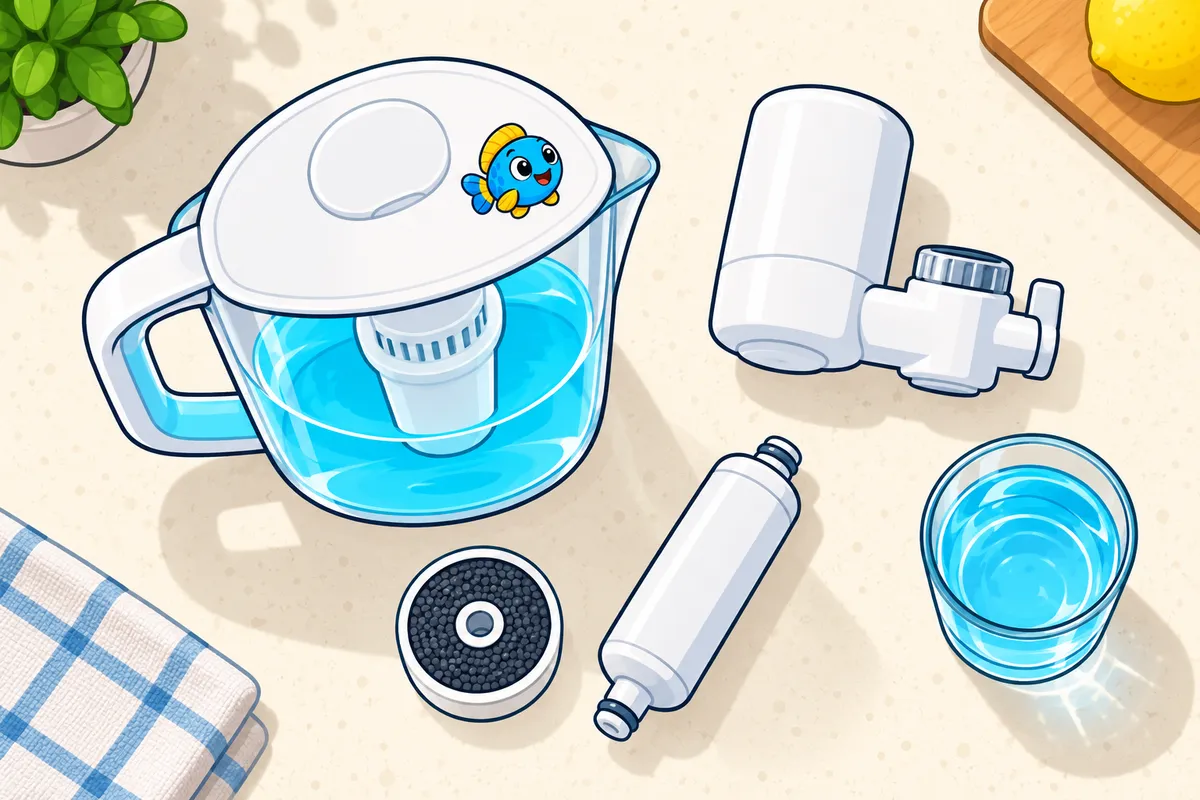
A water filter removes lead only when a third party has certified it for lead: look for NSF/ANSI Standard 53 with a lead claim on the box or data sheet, ideally with NSF/ANSI 42 Class I for particles. A filter sold for taste and odor may cut lead a little, a lot or not at all, and nothing on the box tells you which.
Two filters can sit side by side on a shop shelf, same price, same shape, and only one of them was ever tested on lead. The difference sits in small type on the box, and once you know the two numbers to look for, the check takes about a minute.
A Filter You Can Trust for Lead
- Certification mark plus NSF/ANSI 53
- A lead reduction claim on the box or data sheet
- NSF/ANSI 42 Class I for particles as well
Not Proof of Lead Removal
- NSF/ANSI 42 alone, which covers taste and odor
- Words like "purifies" or "cleaner water" with no standard
- A mark with no lead claim beside it
Does a Water Filter Remove Lead?
Some do, and you can tell which from the label. The CDC advises a point-of-use filter certified to NSF/ANSI standard 53 for lead removal, plus NSF/ANSI 42 for particulate removal. Its filter page adds that pitcher and fridge filters are mostly sold to improve taste and smell, which is why the lead claim is the part to look for.
The EPA's consumer tool sets the bar in numbers. It covers filters that an accredited third-party body has evaluated for lead reduction to 5 parts per billion (ppb) or less and for Class I particulate reduction, against both standards.
A lead claim under NSF/ANSI 53 is the one thing that separates a lead filter from a taste filter.
Why the Particle Claim Matters Too
Lead reaches your tap in two forms: dissolved in the water, and as tiny bits that flake off old pipes and solder. The particle rating under NSF/ANSI 42 Class I tells you the filter also traps those flakes, which is why the EPA asks for it next to the lead claim.
What Should a Filter Label Say to Remove Lead?
Three things: a certifier's mark, the standard numbers, and a lead claim. The wording to expect next to the mark reads like "Tested and Certified by (certification body) against NSF/ANSI Standards 42 and 53 for the claims specified on the Performance Data Sheet."
Check a Filter Box in One Minute
- Find a certifier's mark on the box, the filter or its smallest container
- Read the text beside it for NSF/ANSI 53 and NSF/ANSI 42
- Find the lead claim: on the box, the data sheet inside, or online
- Look for lead reduced to 5 ppb or less and particulate Class I
The EPA's 2024 tool names five accredited certifiers, each with its own mark and online product directory: NSF, IAPMO, WQA, UL Solutions and CSA. A filter can carry more than one mark. Claims that are not on the box usually sit on the performance data sheet inside the package.
A Real Label, Read Line by Line
The CDC shows a sample label that reads "against NSF/ANSI Standard 53 for the reduction of Cysts, Lead, Asbestos, Benzene, Carbofuran, and Turbidity." Lead appears by name in the list, so this filter makes a lead claim. A label that names chlorine, taste and odor only, under Standard 42, does not.
Do Brita, PUR and ZeroWater Filters Remove Lead?
It depends on the model and the cartridge, not the brand name. One brand can sell a pitcher with a lead claim and another with only a taste claim, and a replacement cartridge sold for the same pitcher can carry different claims. So look up the exact model: the CDC suggests the NSF database, and the EPA tool points to the other four certifiers' directories.
If the model you own does not appear with a lead claim in any directory, treat it as a taste filter and keep using cold tap water or certified bottled water for formula and cooking until you replace it.
Which Filter Types Can Carry a Lead Claim?
Pitchers, filter bottles, faucet-mount units and fridge cartridges all can; the EPA's tool covers exactly those types. Under-sink reverse osmosis carries its own standard. What decides it is the certification of the model in front of you, never the type.
Five Filter Types and Lead
Pitcher
Easiest start
- In EPA's tool for certified models
- Models varied most in EPA lab tests
Suits you if you want a filter today with no tools
Faucet-mount
Field-tested
- In EPA's tool for certified models
- The type Flint homes used in 2016
Suits you if your test showed lead and you drink a lot
Fridge cartridge
Check the model
- In EPA's tool for certified models
- Replacement models differ in claims
Suits you if your fridge dispenser is your main tap
Filter bottle
On the go
- In EPA's tool for certified models
- Check the bottle model's own claim
Suits you if you refill at work or school taps
Reverse osmosis
Many chemicals
- Removes lead
- Its own standard, NSF/ANSI 58
Suits you if your test names lead and other chemicals
Do Pitcher Filters Remove Lead?
Certified ones do. The EPA lists pitcher filters among the types its tool covers, and carbon pitcher filters can remove heavy metals like lead. Plenty of pitchers on sale carry only a taste and odor claim, though, so the box check above decides it.
The gap between models is wide. In an EPA lab study with very fine lead particles, three pitchers removed anywhere from 10.9 % to 92.9 % of the lead.
Do Refrigerator Filters Remove Lead?
Some do. The EPA's tool includes filters "inserted into refrigerators for water and ice dispensers", so a fridge cartridge can carry the same NSF/ANSI 53 lead claim as a faucet unit. Check the model number of the cartridge you actually buy, since a cheaper replacement may claim taste and odor only.
Does Reverse Osmosis Remove Lead?
Yes. Reverse osmosis filters remove some chemicals from water, including lead, copper and chromium, and NSF/ANSI Standard 58 is the standard for reverse osmosis systems. A membrane unit under the sink suits a home whose test names several problems at once.
How Well Do Certified Filters Work in Real Homes?
Very well, in the best field test so far. In 2016, EPA researchers tested faucet-mount carbon block filters at over 345 locations in Flint, Michigan, against high lead levels from home plumbing and lead service lines.
- 345+
- Flint locations sampled with and without the filter
- 97 %
- of filtered samples under 0.5 ppb of lead
- 2.9 ppb
- the highest lead level in any filtered sample
The highest filtered sample, 2.9 ppb, sat under the 5 ppb the certification aims for. The authors credit the carbon block's tiny pores, which trap particles, along with sorption of dissolved lead, and they found the filters worked even above the 150 ppb lead level the NSF/ANSI 53 test uses.
Their conclusion carries a condition. Filters certified under both standards protect everyone in the home, pregnant women and children included, when they are installed and maintained properly.
What a Lab Result Means for Your Filter
Can Lead Get Through a Certified Filter?
Under unusual conditions, some can. In a 2021 EPA lab study, lead phosphate particles far finer than the ones used in certification tests passed through faucet and pitcher filters; the faucet units removed 44.6 % to 65.1 % of that lead.
The authors call their test "likely" an extreme case. The certification test uses lead particles of 700 to 1,800 nanometers, while theirs were around 16 to 98, and they ran the filters to only a fraction of rated life. Field results like Flint's still hold for ordinary homes.
What it means for you: a filter lowers the risk; it does not prove your glass holds no lead. If your home tested high, a second test of the filtered water tells you what the filter is doing at your tap.
Mistakes That Let Lead Past a Good Filter
Most failures come from how the filter gets used, not from the filter. Each fix below comes from the EPA's advice for homes or the CDC.
| Mistake | Why it fails | Do this instead |
|---|---|---|
| Buying a filter with only an NSF/ANSI 42 claim | Standard 42 covers taste and odor | Find a lead claim under NSF/ANSI 53 |
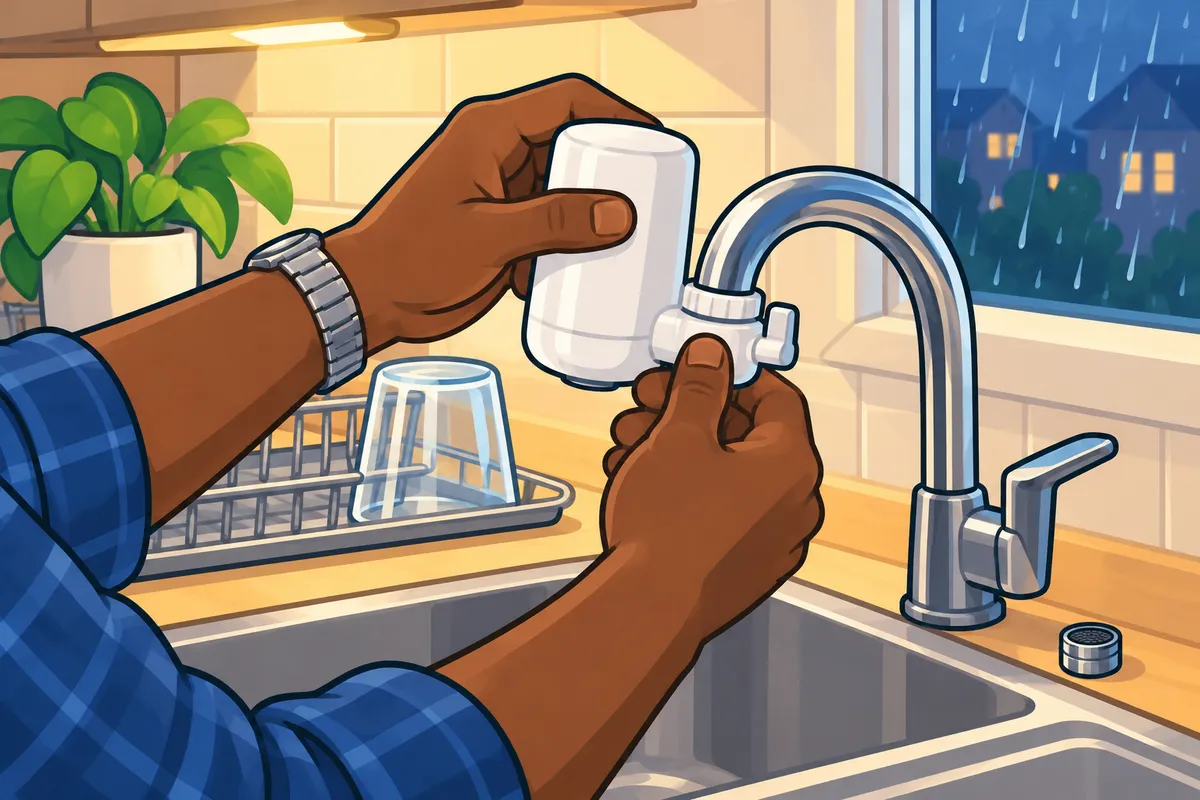
| Running hot water through it | The EPA says never to | Cold water only, heat on the stove |
| Keeping a cartridge past its date | An expired cartridge removes less lead, per the EPA | Replace it on the maker's schedule |
| Filtering only drinking water | The EPA lists drinking, cooking and formula | Fill pasta pots and formula bottles from the filter too |
| Skipping the aerator | The EPA asks you to clean the faucet screen regularly | Clean it on a schedule |
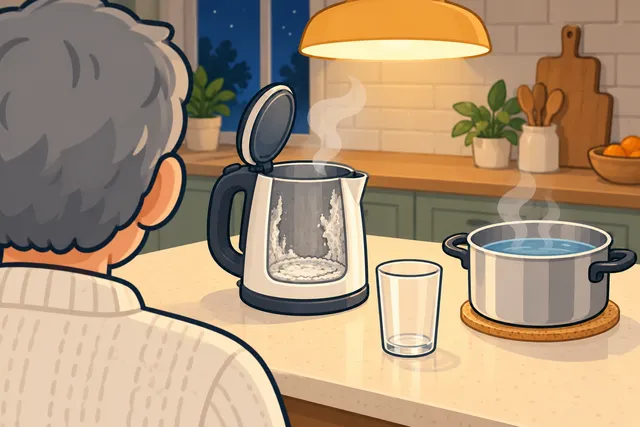
| Assuming boiling helps | Boiling does not reduce lead | Filter first, then boil if you need hot water |
Neglect has a second cost. Regular filter maintenance, the CDC says, helps keep germs from growing in the filter, so the cartridge date matters even when lead is not your worry.
Does Your Water Utility Have to Offer a Lead Filter?
Sometimes, under the 2024 rule. EPA's Lead and Copper Rule Improvements change three things that reach your tap:
- Systems with repeated lead exceedances must make filters certified to reduce lead available to all consumers.
- The lead action level drops from 15 to 10 micrograms per liter, the same as 10 ppb.
- Most systems must replace lead service lines within 10 years.
EPA's questions and answers say systems must comply three years after the rule's publication, which puts it in late 2027. Until your line is replaced, a certified filter handles the tap while the line stays a source, since the EPA calls lead service lines typically the most significant source of lead in drinking water.
Should You Drink Bottled Water Instead?
Either works if it carries a certification. The CDC notes that bottled water may not be the most cost-effective option for long-term use, and a family that drinks and cooks with it pays that price every week.

Bottled water fits the first days:
- after a high result
- while a filter ships
- for formula when you are unsure, since the CDC warns that infants who drink formula made with lead-contaminated tap water may be at higher risk
A certified filter fits the months after, until the pipe that adds the lead gets replaced.
Do You Need a Lead Filter at All?
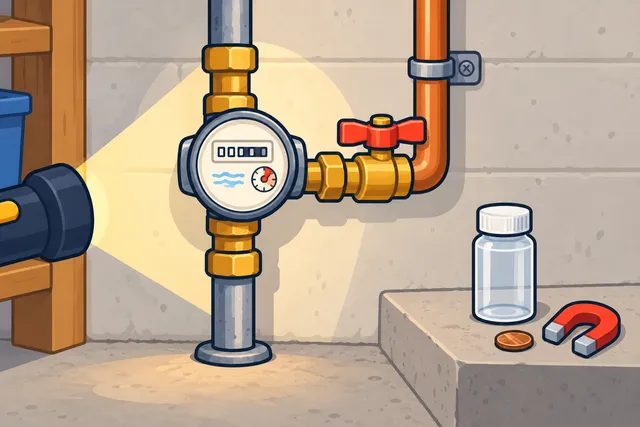
Only if lead can reach your tap. The EPA says testing is the only way to know, because you cannot see, taste or smell lead; a home built before 1986, a lead or unknown service line, or a high result is the case for a filter. On city water, your utility's yearly report comes first, before you buy anything.
Your First Week With a Lead Question
- Call your water utility: ask for a lead test and whether your service line is lead
- Until the result: cold tap water only for drinking, cooking and formula
- If lead shows up, pick a model from the EPA tool or a certifier directory
- Write the cartridge swap date on the filter and set a phone reminder
- Test the filtered water once to see what it does at your tap
General information for healthy adults, not medical advice. If a doctor has set your fluid amount, follow that.

More in Water at Home
Sources
- US Environmental Protection Agency. Consumer Tool for Identifying Point-of-Use and Pitcher Filters Certified to Reduce Lead in Drinking Water, 2024.
- CDC. About Lead in Drinking Water, 2025.
- CDC. About Choosing Home Water Filters, 2024.
- US Environmental Protection Agency. Reduce the Risk of Lead Exposure at Home, 2026.
- Journal of Environmental Science and Health, Part A (Bosscher, Lytle, Schock, Porter and Del Toral), abstract on EPA's Flint page. POU water filters effectively reduce lead in drinking water: a demonstration field study in Flint, Michigan, 2019.
- Water Research (Doré, Formal, Muhlen, Williams, Harmon, Pham, Triantafyllidou and Lytle). Effectiveness of point-of-use and pitcher filters at removing lead phosphate nanoparticles from drinking water, 2021.
- US Environmental Protection Agency. Basic Information about Lead in Drinking Water, 2026.
- US Environmental Protection Agency. EPA's Lead and Copper Rule Improvements (fact sheet), 2024.
- US Environmental Protection Agency. LCRI Questions and Answers, 2026.
Sources checked by the Glubbo Editorial Team on Oct 19, 2026. General information, not medical advice. How we write and check our guides.

