Water at Home · Filters and Treatment
How Much Water to Run Through a New Water Filter, by Type
What each maker tells you to run through a new pitcher, fridge, faucet, under-sink or reverse osmosis filter, and why.
 By the Glubbo Editorial Team · Updated Oct 22, 2026 · 9 min read
On This Page
- Which Filter Needs How Much Flushing?
- Why Do You Need to Flush a New Water Filter?
- How Much Water Should You Run Through a New Refrigerator Filter?
- Do You Need to Flush a New Brita or Pitcher Filter?
- How Long Do You Run Water Through a New Faucet Filter?
- How Long Do You Flush an Under-Sink or Reverse Osmosis Filter?
- Is It Safe to Drink Water From a New Filter Before Flushing?
- Why Is My Water Black or Cloudy After Changing the Filter?
- Your Plan for the Next Cartridge You Fit
- Common Questions
- Sources
Short answer
It depends on the type: three pitchers to a full day.
- Fridge: 1 to 4 gallons for Whirlpool, about 2.5 for LG, 1 to 2 for GE.
- Pitcher: Brita says pour away the first three; ZeroWater needs no flush.
- Faucet: 5 minutes of cold water; under-sink: 10 to 15 minutes; RO: 24 hours.
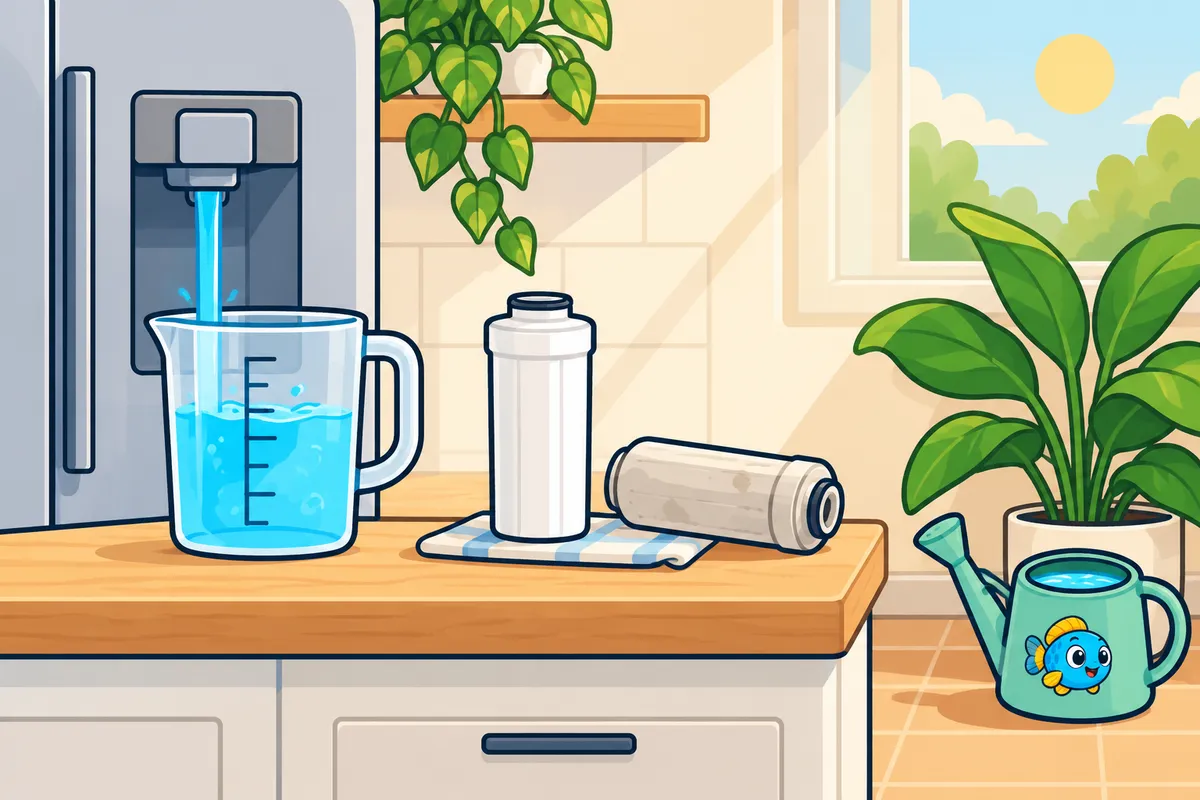
Run as much as your filter's maker asks, and that depends on the filter type: about 1 to 4 gallons for a refrigerator filter, 5 minutes of cold water for a faucet filter and 10 to 15 minutes for an under-sink unit. Pitcher filters range from no flush at all to three pitchers poured away, and a new reverse osmosis system can need a full day.
The leaflet in the box carries your exact number. When the box has gone into the recycling, the maker's support page or manual still publishes the rule for each filter.
Which Filter Needs How Much Flushing?
Refrigerator, faucet and under-sink filters need the most water through them; most pitcher filters need the least. Each row is the maker's own rule for its own product, as of 22 October 2026.
| Filter type | Maker and filter | Maker's rule before drinking |
|---|---|---|
| Pitcher | Brita Standard (white) | Rinse 15 seconds; pour away the first 3 pitchers |
| Pitcher | Brita Elite (blue) | No pre-rinse; pour away the first 3 pitchers |
| Pitcher | PUR Plus | Soak 15 minutes in cold water, rinse 10 seconds |
| Pitcher | PUR basic | Rinse 15 seconds under cold water |
| Pitcher | ZeroWater 5-stage | No soak, flush or prep |
| Refrigerator | Whirlpool everydrop | 1 gallon (Filter A) or 4 gallons (most others) |
| Refrigerator | LG | About 2.5 gallons (9.5 liters) |
| Refrigerator | GE | 1 to 2 gallons to purge air |
| Refrigerator | Samsung | "Several gallons" |
| Faucet | Brita, PUR | 5 minutes of cold water |
| Under-sink | Aquasana Claryum Direct Connect | At least 15 minutes, cold, full force |
| Under-sink | Aquasana Claryum 1-Stage (AQ-5100R) | 10 minutes |
| Reverse osmosis | Aquasana AQ-RO-3, first install | 24 hours with the RO faucet open |
Sources: makers' own pages for pitchers (1, 2, 3), refrigerators (1, 2, 3, 4), faucets (1) and under-sink systems (1, 2, 3).
When the box gives no number, the maker's manual or support page does. The spread runs from zero for ZeroWater to a whole day for a new reverse osmosis system, so one brand's figure does not carry over to another.
Why Do You Need to Flush a New Water Filter?
A new water filter holds air and loose carbon dust from the factory, and the first water through it carries both out. Whirlpool says flushing "reduces excess air, prepares the filter for use, and removes excess carbon", and says the carbon is dust left over from manufacturing.
One faucet filter maker adds that the flush "activates the filter media". Aquasana's under-sink manual says its 15-minute flush purges air and carbon fines and helps the filter last.
How Much Water Should You Run Through a New Refrigerator Filter?
Run 1 to 4 gallons through a new refrigerator filter, the amount set by the fridge maker:
- Whirlpool says "Some filters need 1, 2, or 4 gallons dispensed", with 1 gallon for its everydrop Filter A and 4 for most others.
- LG asks for about 2.5 gallons.
- GE asks for about 1 to 2 gallons "to make sure all air is purged from the system".
Dispense in Bursts, Not One Long Pour
Whirlpool and LG both ask for short bursts, and the first day of a new fridge filter runs in three steps:
- Dispense in bursts: Whirlpool 5 seconds on and 5 off until the water flows steadily and the air is out of the line, LG 30 seconds on, 60 seconds off for a total of 5 minutes.
- Expect the first few ounces to sputter, GE says, because of air in the new filter.
- Once you finish, allow 24 hours for the fridge to chill the water again, as Whirlpool says.
Counting Gallons With a Pitcher
A 2-quart pitcher holds half a gallon (4 quarts make a gallon), so a pitcher turns the maker's gallons into a count of fills.
If your fridge is a Whirlpool with a 4-gallon filter, the same pitcher means 8 fills. With GE's 1 to 2 gallons, it is 2 to 4.
Do You Need to Flush a New Brita or Pitcher Filter?
Yes for Brita, which asks you to pour away the first three pitchers; no for ZeroWater, which says its filters "do not need to be soaked, flushed, or otherwise prepped". Brita's filter FAQ adds a 15-second rinse for the white Standard filter, says the blue Elite needs no pre-rinse, and suggests using the poured-away water on plants.
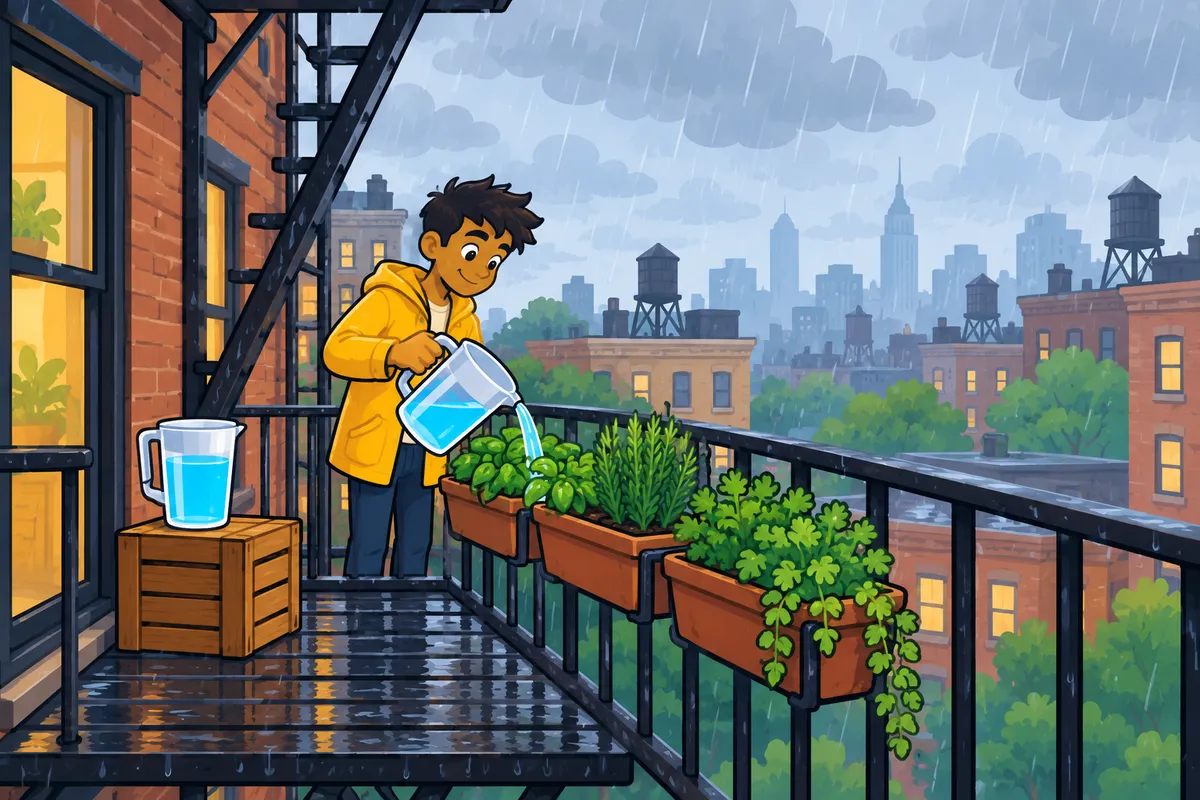
PUR splits by filter: soak a Plus filter in cold water for 15 minutes and hold it under the cold tap for 10 seconds, or rinse a basic one for 15 seconds. Its support page gives no number of pitchers to pour away, so the soak and the rinse are the whole preparation.
An older white Standard filter gets a 15-minute soak before use, by the same FAQ. A filter bottle is a smaller case of the same idea: its cartridge needs only a short rinse under the tap before the first fill.
How Long Do You Run Water Through a New Faucet Filter?
Run cold water through a new faucet filter for 5 minutes with the filter switched on. Brita says to "flush with cold water for 5 minutes" on the filtered setting, and PUR says to "run cold water for 5 minutes in a filtered position" before first use.
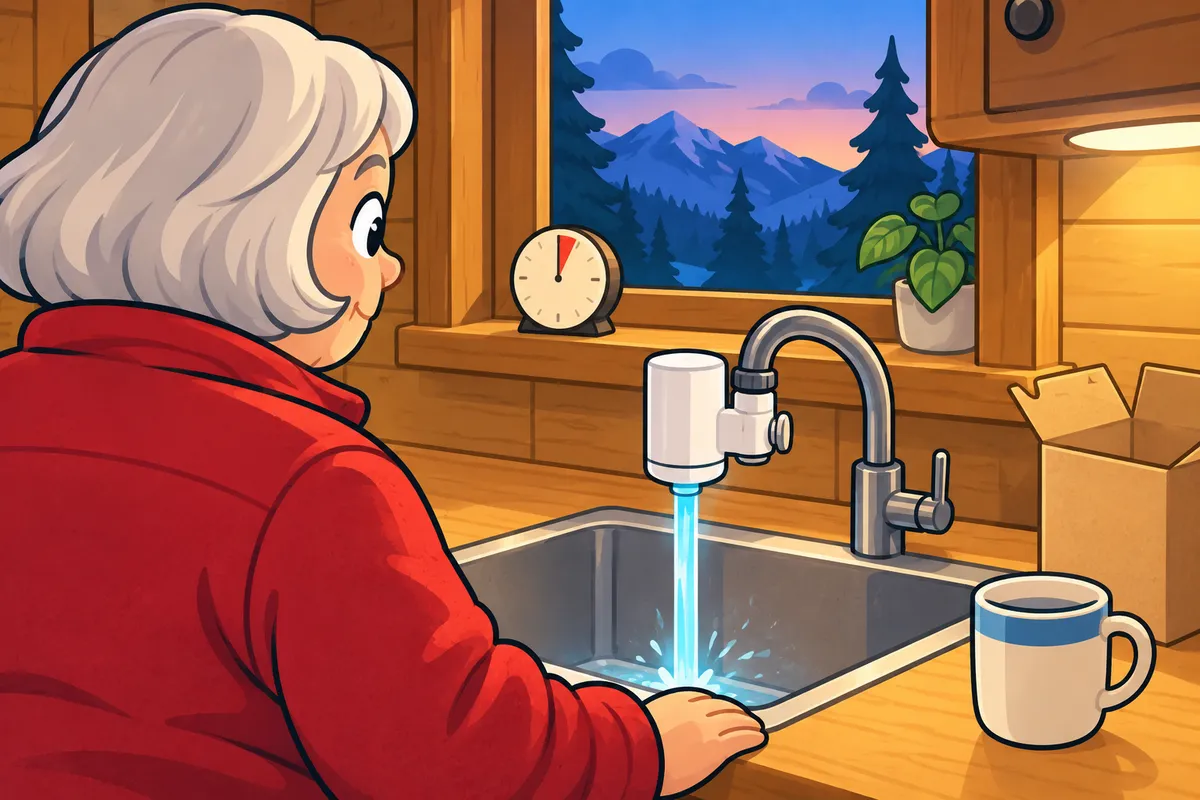
Five minutes uses less water than it sounds. Federal rules cap a kitchen faucet at 2.2 gallons per minute at 60 psi, the EPA's WaterSense sheet notes, so a 5-minute flush sends at most 5 × 2.2 = 11 gallons down the drain, and less where the filtered setting runs slower.
How Long Do You Flush an Under-Sink or Reverse Osmosis Filter?
An under-sink carbon filter takes 10 to 15 minutes of running water, and a new reverse osmosis system takes much longer. Aquasana asks for at least 15 minutes of cold water at full force through a new Claryum Direct Connect cartridge, and 10 minutes for its Claryum 1-Stage (AQ-5100R) cartridge, with the warning "Do not drink flushed water."
- 15 min
- flush for a new Claryum Direct Connect cartridge
- ≤ 33 gal
- the most a 2.2 gpm tap can pass in 15 minutes
- 24 h
- first purge of a new AQ-RO-3 reverse osmosis system
The 33 gallons is an upper limit, 15 × 2.2, and a filter in the line usually slows the flow. A simple way to get your own figure: time a 1-quart jug under the filtered tap. If it fills in 30 seconds, the tap runs 0.5 gallon a minute, and a 15-minute flush uses 15 × 0.5 = 7.5 gallons.
The First Day of a New Reverse Osmosis System
A reverse osmosis system needs a longer start because its membrane, tank and filters all fill for the first time. Aquasana's AQ-RO-3 manual lays out the first day like this:
Starting a New AQ-RO-3 Reverse Osmosis System
- Sanitize it with household bleach as the manual shows
- Watch the fittings for leaks while pressure builds, about 2 hours
- Open the RO faucet and let water run for 24 hours
- Close the faucet; the 3.2-gallon tank fills in 1 to 3 hours
- Drink from the tank once it has filled
The same manual warns that water runs to the drain while the system filters, at 3 to 5 times the flow of treated water, and stops when the tank is full. Other reverse osmosis brands write their own start-up steps, and the same manual sets the cartridge schedule that makes up most of a home RO system's running cost.
Is It Safe to Drink Water From a New Filter Before Flushing?
The carbon dust itself is harmless, GE and LG both say, but skip that first water anyway. Aquasana tells owners not to drink the flush water, and the flush clears air and loose carbon before your first glass.
An NSF mark tells you what a certified filter reduces. NSF tests certified filters for material safety, structural integrity and the specific contaminant claims on the product, and its water filter FAQ asks owners to swap cartridges per the manufacturer's instructions.
| NSF/ANSI standard | What it covers | Example claims |
|---|---|---|
| 42 | Aesthetic effects | Chlorine, taste and odor, chloramine, particulate, iron, manganese, zinc, TDS |
| 53 | Health effects | Over 50 claims, among them lead, Cryptosporidium, VOCs and chromium |
| 401 | Emerging compounds | Up to 15, such as prescription drugs, pesticides and herbicides |
| 58 | Reverse osmosis systems | TDS reduction required; optional cyst, arsenic, nitrate, lead, fluoride and more |
Sources: NSF on 42, 53 and 401, NSF on 58. Every one of the four also tests the materials that touch your water.
A certification names what that model reduces, so check the claim on the box against what your tap needs; a filter bought for lead in old pipes needs a lead claim under 53 or 58. Once the flush is over, how safe the filtered glass is comes down to the claims behind the filter and the cartridge's age.
Why Is My Water Black or Cloudy After Changing the Filter?
Black specks after a filter change are carbon dust from the new cartridge, and cloudy water is air trapped inside it. Both clear with a full flush.
Black specks
- Fine carbon left from making the filter
- Harmless, GE and LG say
- Gone after a longer flush
Cloudy or milky water
- Air trapped in the new cartridge
- Comes with sputtering, drips or hollow ice
- Clears as the bursts push the air out
Specks are the one case where GE asks for more water. Its black particles page calls them "fine carbon particles left over from the water filter manufacturing process" and recommends dispensing 2 to 3 gallons, or about 5 minutes when you cannot measure; Whirlpool ties cloudy water, dripping and small or hollow ice to trapped air.
If the specks or cloudiness outlast that, a simple next step is to take the cartridge out, seat it again and call the fridge or filter maker. Changing a cartridge is its own job, with its own schedule for each brand, and the flush is the last step of it.
Your Plan for the Next Cartridge You Fit
Match the flush to the filter in your hand, and decide where the water goes before you start.
The filter you are fitting, and its first flush
- A Brita pitcher filterPour the first 3 pitchers on your plants
- A fridge filter, box thrown away4 gallons, the top of the makers' range
- A faucet filter5 minutes of cold water, filter on
- An under-sink cartridgeThe manual's minutes, 10 to 15 for Aquasana
- A brand-new reverse osmosis systemStart it in the morning; drink the next day
The 4-gallon pick is Glubbo's own cautious rule for a lost box: it covers every refrigerator figure in the table. Write the fitting date on the new cartridge with a marker, so the next change comes on time.
Common Questions
Do unused water filters expire?
No, not while the pouch stays sealed. Pitcher makers such as ZeroWater give a sealed, unused filter an indefinite shelf life when it is kept in a cool, dry place.
Can hot water go through a water filter?
No, use cold water only. PUR says never to run water hotter than 100°F (38°C) through its filters, because the heat may alter the filter.
General information for healthy adults, not medical advice. If a doctor has set your fluid amount, follow that.

More in Water at Home


Sources
- Whirlpool. How to Flush the Water System in a Refrigerator, 2026.
- LG Electronics USA. How to Replace the Water Filter in Your LG Refrigerator, 2026.
- GE Appliances. Refrigerator: Replacing the Water Filter, 2026.
- GE Appliances. Refrigerator: Black Particles in the Water, 2026.
- Samsung Electronics America. How to replace the water filter in a Samsung refrigerator, 2026.
- Brita. Replacement Filters FAQ, 2026.
- Brita. How to Set Up Your Water Filter Faucet System, 2026.
- PUR. Replacement Filters Support, 2026.
- ZeroWater. Frequently Asked Questions, 2026.
- Aquasana. AQ-MF-1-R Claryum Direct Connect replacement instructions, 2020.
- Aquasana. AQ-5100R under sink replacement filter instructions, 2023.
- Aquasana. AQ-RO-3 OptimH2O reverse osmosis owner's manual, 2017.
- NSF. NSF/ANSI 42, 53 and 401: Filtration Systems Standards, 2025.
- NSF. NSF/ANSI 58: Reverse Osmosis Drinking Water Treatment Systems, 2025.
- NSF. Water Filters FAQs, 2026.
- US Centers for Disease Control and Prevention. Choosing Home Water Filters and Other Water Treatment Systems, 2024.
- US Environmental Protection Agency (WaterSense). Indoor Features: Kitchen Faucets, 2023.
Sources checked by the Glubbo Editorial Team on Oct 22, 2026. General information, not medical advice. How we write and check our guides.

