Water at Home · Filters and Treatment
Do You Need a Water Filter? Check Your Water First
Match evidence from your own supply to a treatment claim instead of buying from fear or taste alone.
 By the Glubbo Editorial Team · Updated Oct 24, 2026 · 2 min read
On This Page
Short answer
Check your water before choosing a filter.
- Use the current utility report or a private-well laboratory result.
- Treat a named concern with a certified claim.
- Taste treatment is a preference, not proof of danger.
You do not automatically need a water filter. Start with evidence from the supply that reaches your home, then decide whether treatment has a specific job. The CDC recommends knowing what is in the water and checking what a filter is certified to remove.
Do You Need a Water Filter?
| Evidence | First action | Filter decision |
|---|---|---|
| Current public-system report with no issue for your concern | Check building plumbing and current notices | Optional for taste unless other evidence appears |
| Private well | Use a suitable laboratory and local testing guidance | Choose only after results name a problem |
| Lead-service-line or fixture concern | Ask utility and test the relevant tap | Use a model with a verified lead claim while fixing the source |
| Chlorine taste or odor | Confirm no advisory or unusual change | Certified aesthetic treatment may fit the preference |
| Active advisory | Follow the notice exactly | Do not substitute an ordinary filter |
Evidence Before Equipment
1Does a current report or suitable test name a concern?
YesMatch the named concern. Verify that the exact filter model carries that reduction claim.
No2Is the goal only a normal taste or odor preference?
YesChoose an aesthetic claim. Plan the cartridge schedule before buying.
NoOtherwiseGather evidence first. Identify the supply or arrange the appropriate test before shopping.
Is a Water Filter Worth It?
It is worth it when these three things line up:
- The device has a defined job.
- The claim matches that job.
- The household will replace cartridges on schedule.
A box promising “cleaner” water without a named claim does not answer the decision.
Separate safety evidence from preference
A carbon filter bought for taste can be a reasonable comfort purchase. That does not mean untreated water failed a health standard. Conversely, pleasant taste cannot rule out lead or another concern that has no reliable sensory warning.
Check Before You Buy
4 items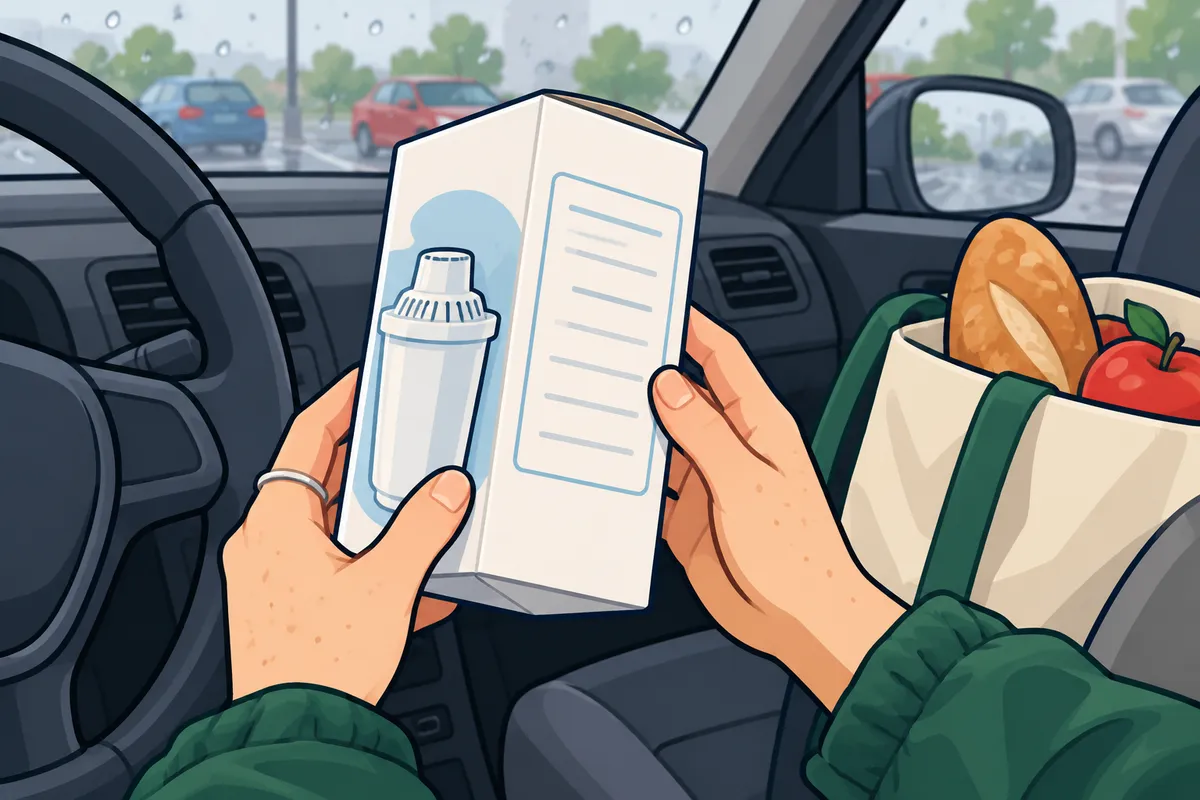
Should I Filter My Tap Water?
Use the tap-water safety guide to place the utility report in context. If lead is the named concern, check the model-specific rules in the lead-filter guide.
Once a filter is installed, maintenance determines what comes out.
Make the Decision Today
- Write one sentence: “I want to reduce ___ at ___ tap.”
- If the blank is not a named contaminant or a clear taste goal, gather the missing report or test before shopping.
- If it is named, verify the model's current listing and put the replacement date on the calendar.
Common Questions
Can taste alone identify unsafe water?
No. Taste and odor can suggest a nuisance, but they do not identify every health concern and do not replace a report or appropriate test.
Should I filter during an advisory?
Follow the advisory's instructions. An ordinary household filter may not address the incident and never overrides the utility or health department notice.
General information for healthy adults, not medical advice. If a doctor has set your fluid amount, follow that.

More in Water at Home
Sources
- CDC. About Choosing Home Water Filters, 2024.
- NSF. Home Water Treatment, 2026.
Sources checked by the Glubbo Editorial Team on Oct 24, 2026. General information, not medical advice. How we write and check our guides.

