Water at Home · Filters and Treatment
Water Filter vs Water Softener: Which One Your Water Needs
What a softener does to hard water, what a filter does to contaminants, and how to tell which one your house needs.
 By the Glubbo Editorial Team · Updated Oct 19, 2026 · 9 min read
On This Page
- What Is the Difference Between a Water Filter and a Water Softener?
- Does a Water Softener Make Water Safe to Drink?
- What Hardness Level Calls for a Water Softener?
- What Does a Softener Add to Your Water?
- How Much Water Does a Softener Use?
- Is Reverse Osmosis Better Than a Water Softener?
- Does a Shower Filter Soften Water?
- Water Softener vs Salt-Free Conditioner
- Can You Use a Water Filter and a Softener Together?
- What Does a Water Softener Cost to Run Per Year?
- Sources
Short answer
A softener fixes hard water; a filter, what it is rated for.
- Softeners swap calcium and magnesium for sodium; they do not remove germs.
- Penn State: softening is preference, and under 7 gpg rarely causes scale.
- Each grain of hardness removed adds 7.5 mg of sodium per quart.
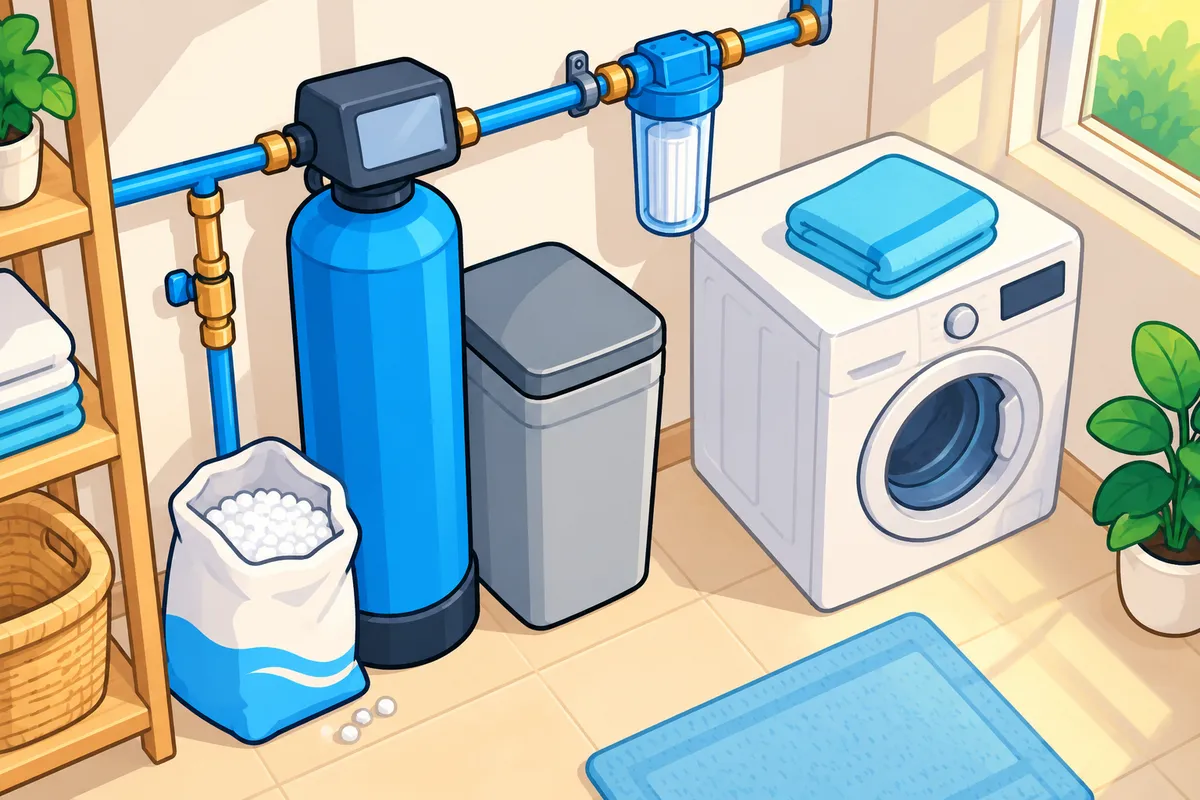
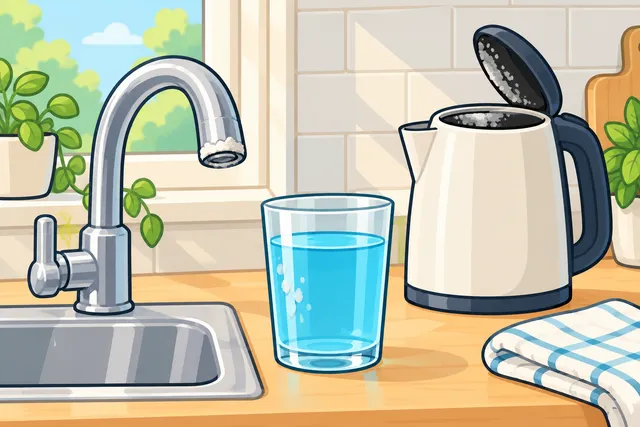
A water softener removes the calcium and magnesium that make water hard; a water filter removes only what its certification names, such as chlorine taste, lead or germs. White scale on the taps and a kettle that rattles with crust call for a softener, and a lab result or a taste complaint calls for a filter.
The two machines do almost opposite jobs. One takes out minerals that are harmless to drink and hard on pipes; the other leaves the minerals alone and goes after contaminants.
Your Problem, the Device That Fixes It
- White scale, spotty glasses, soap that will not latherA water softener
- Chlorine taste or smellA filter certified to NSF 42
- Lead pipes or a lead resultA filter certified for lead (NSF 53)
- Several chemicals on a lab testReverse osmosis certified for them
- Coliform bacteria in a wellNeither: disinfect the well, then retest
What Is the Difference Between a Water Filter and a Water Softener?
A softener swaps minerals; a filter catches or removes contaminants. The CDC says softeners remove minerals, mainly calcium and magnesium, while a filter traps germs or chemicals on its surface or in its pores, depending on how fine it is and what it is certified for.
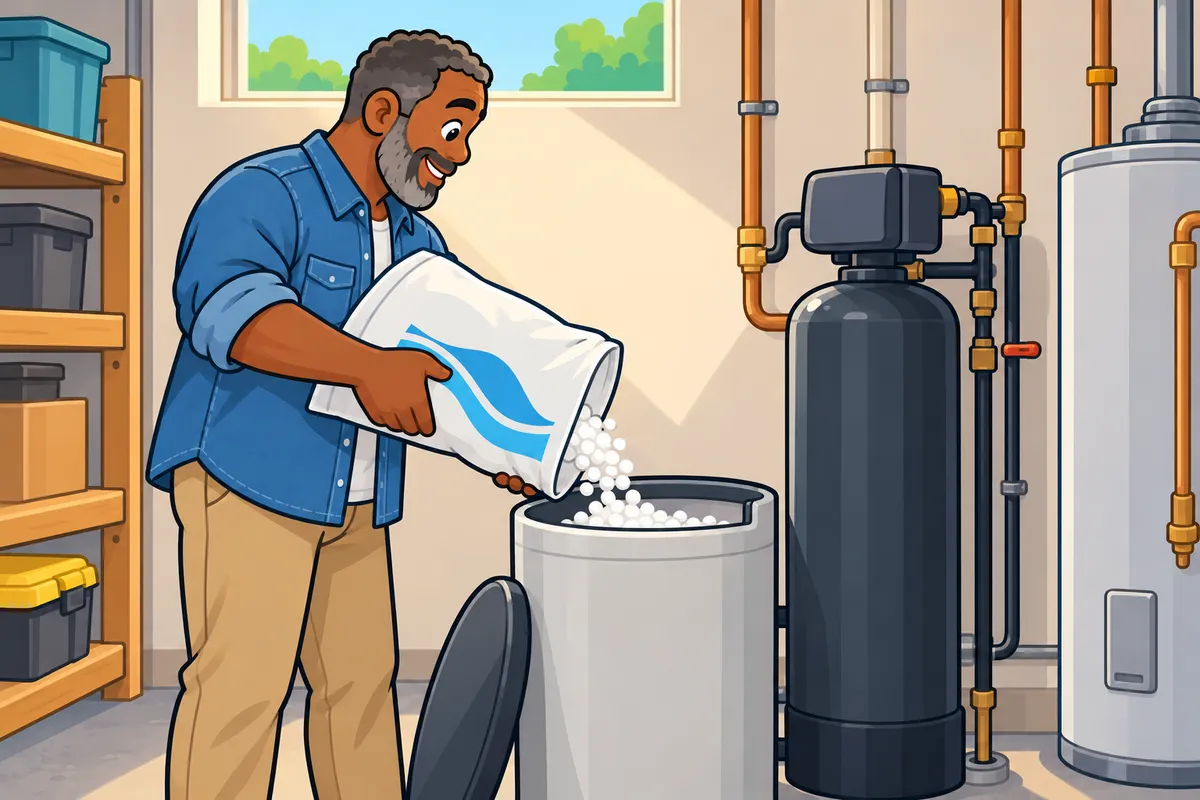
Penn State Extension explains the softener's trick. Water runs through a resin coated with sodium, the resin trades its sodium for calcium and magnesium, and when the resin is spent the unit backwashes it with salt brine that carries the hardness down the drain.
Water Softener
- Removes calcium and magnesium
- Swaps them for sodium on a resin
- Needs salt for each regeneration
- Leaves germs and most chemicals in
Water Filter
- Removes what its certification names
- Carbon for taste; RO for many chemicals
- Needs a new cartridge on schedule
- Leaves hardness in, apart from RO
Neither device is a general fix: each solves one kind of problem, and a water test tells you which one you have.
| Problem | Water softener | Carbon pitcher/fridge filter | Reverse osmosis |
|---|---|---|---|
| Calcium and magnesium (hardness) | Removes them | No claim to | Not its main job |
| Germs | Does not remove them | Not designed to remove them | Removes parasites, bacteria, viruses |
| Lead | Some models remove heavy metals | Only if certified for lead | Removes it |
| Nitrate | Some models; check the label | Not a listed method | Removes most of it |
| Sodium | Adds it | No change | Removes it |
Sources: CDC home systems, CDC filters, Penn State.
Does a Water Softener Make Water Safe to Drink?
No, it was never meant to. What a softener leaves in your water, by the two sources that cover it:
- Parasites, bacteria and viruses: not removed, says the CDC.
- The more serious contamination problems: Penn State says a softener "will not necessarily remove any" of them.
- Iron, manganese and heavy metals: the CDC notes that some softeners may also remove these, so the model's certification decides.
Penn State calls softening a process that "simply removes hardness minerals", not a purifier. Read the label before you assume more.
That is why a softener does nothing for a well with bacteria. Penn State says bacteria and fungi can form mats in the resin, so bacteria-laden water may need disinfection before it reaches the softener.
The right way to take nitrate out is anion exchange or reverse osmosis, not a standard softener.
What Hardness Level Calls for a Water Softener?
None does, strictly. Penn State calls softening "a matter of personal preference not necessity", and says levels below 7.0 grains per gallon will probably not cause major scaling and soap film.
Your water report or a test gives hardness in grains per gallon (gpg) or in milligrams per liter, which equal parts per million. Penn State's scale lines them up:
| Hardness | Grains per gallon | mg/L (ppm) | What you tend to see |
|---|---|---|---|
| Soft | Under 1.0 | Under 17 | No scale |
| Slightly hard | 1.0 to 3.5 | 17 to 60 | Little or none |
| Moderately hard | 3.5 to 7.0 | 60 to 120 | Probably no major scale or soap film |
| Hard | 7.0 to 10.5 | 120 to 180 | Scale and soap film begin to bother |
| Very hard | Over 10.5 | Over 180 | Scale and soap film most likely |
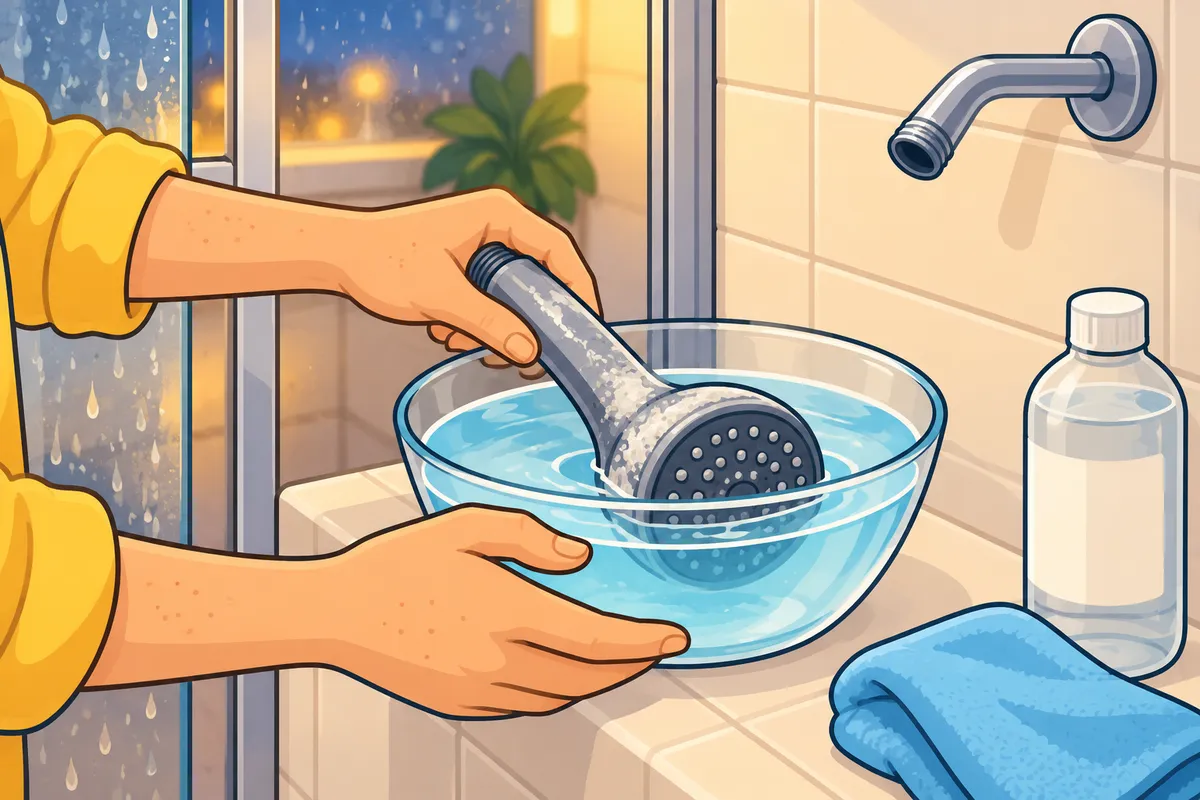
What Does a Softener Add to Your Water?
Sodium, from the trade on the resin. Penn State says softening adds 7.5 milligrams per quart for each grain per gallon of hardness removed, and calls the risk for people on low-sodium diets its major drawback. It also notes that softening takes calcium and magnesium out of your diet.
The amount depends on how hard your water was. At 2 liters a day, about 2.1 quarts, each grain removed adds about 16 mg of sodium to what you drink.
For scale, the FDA notes that the Dietary Guidelines advise adults to keep sodium under 2,300 mg a day, and that Americans eat about 3,400 mg on average. Softened water at 15 gpg adds about a tenth of the limit, which matters most to someone a doctor has put on a sodium limit.
How Much Water Does a Softener Use?
About 50 gallons for each regeneration cycle, Penn State says, and how often it runs depends on your household's hardness load. A timed model regenerates on a schedule whether or not it needs to; a demand-control model waits until a set number of gallons has passed.
Which Taps to Skip
Penn State says you can bypass toilets, outside spigots and basement sinks, while showers, sinks and laundry are the ones worth softening. It also raises one cost that is easy to miss: each regeneration adds load to a septic drainage field, so septic owners ask the installer about it before buying.
Is Reverse Osmosis Better Than a Water Softener?
They do different jobs, and the two can work as a pair.
| Water softener | Reverse osmosis | |
|---|---|---|
| Where it works | Throughout the house | Drinking water at one tap |
| What it does | Protects pipes, heaters and taps from scale | Removes sodium, lead, copper and germs among other things, says the CDC |
| What it costs you | Adds sodium to the water | Sends part of its water down the drain and needs filters on a schedule |
In a house with both, the softener takes out the hardness, and the RO unit at the kitchen sink takes out much of the sodium the softener added, along with whatever else its certification covers. The RO unit has costs of its own: it sends part of its water down the drain and needs filters on a schedule.
Does a Shower Filter Soften Water?
No. Softening means trading calcium and magnesium for sodium on a resin, which takes a softener's resin tank. Where the two sit decides what you get:
- A cartridge on the shower arm: leaves the hardness where it was.
- A whole-house softener on the main line: softens the shower along with every other tap.
What a shower filter can do depends on its certification, the same rule as for any filter. Read what the label claims to reduce before you expect a change in scale.
Water Softener vs Salt-Free Conditioner
A softener takes the hardness out; a salt-free conditioner leaves it in and changes how it behaves. A WateReuse Research Foundation study led at Arizona State University tested template-assisted crystallization (TAC) units, which turn dissolved hardness into microscopic crystals that stay in the water instead of sticking to a heater as scale.
The test ran each device for 20 days on a method based on the German DVGW W512 standard, pumping 130 liters a day through a heated 10-liter reservoir and weighing the scale left behind. TAC worked best, and the electromagnetic and electrically induced units also cut scale, leaving a soft scale that brushed off.
What the 20-Day Test Did Not Show
The researchers name the limit themselves: their test does not determine how scale builds up over years. Nothing in the study looked at soap lather, spots on glasses or skin. Those are the things people buy a softener for, so ask a seller for results on them in water like yours.
| What changes | Water softener | Salt-free (TAC) conditioner | Water filter |
|---|---|---|---|
| Calcium and magnesium | Swapped out for sodium | Left in, turned into tiny crystals | Left in, apart from RO |
| Salt and brine | Needs salt; brine goes down the drain | No salt | No salt |
| Proof it worked | A hardness test drops | Scale weighed in a lab test | Its certification |
Can You Use a Water Filter and a Softener Together?
Yes, and order matters. Penn State recommends filtering before softening where iron is present, because oxidized red iron clogs the resin, while the softener can remove reduced iron that has not met air or chlorine.
The CDC makes a similar point about other equipment: ultraviolet systems that filter the water before disinfecting it work better than those that do not. A softened house still drinks its tap water, so if a pitcher sits in your fridge as well, whether its water is safe depends on the cartridge, not the softener.
What Does a Water Softener Cost to Run Per Year?
The upfront hardware runs $500 to $1,500, Penn State says, and the running cost is mostly salt. For a family of four at 10 gpg, the yearly cost has two parts:
- Salt: the softener regenerates about once a week, and each cycle uses about 5 to 10 lb of salt pellets. At roughly $6 to $10 per 40 lb bag, that comes to about $40 to $65 a year in salt alone.
- Water: each regeneration uses about 50 gallons by Penn State's figure. At 52 cycles a year that is 2,600 gallons, which at a typical US water and sewer rate of about $0.01 per gallon adds another $25 to $30.
Total running cost for a medium-hardness household: roughly $65 to $95 a year in salt, water and a new O-ring now and then, before you count the electricity for a demand-control valve.
A pitcher filter certified to NSF 42 runs about $30 to $60 a year in cartridges, so for taste alone a pitcher is cheaper. A reverse osmosis unit under the sink adds $50 to $100 a year in membranes and pre-filters.
Get These Numbers Before You Buy
- Test the water: hardness in gpg, iron, and anything your report or area flags
- Hardness over about 7 gpg and scale you mind: get softener quotes (hardware runs $500 to $1,500, Penn State says)
- A named contaminant: a filter certified for it
- Ask whether anyone at home has a sodium limit before the softener goes in
General information for healthy adults, not medical advice. If a doctor has set your fluid amount, follow that.

More in Water at Home

Sources
- Penn State Extension (Robillard, Sharpe and Swistock). Water Softening, 2025.
- US Centers for Disease Control and Prevention. About Home Water Treatment Systems, 2024.
- US Centers for Disease Control and Prevention. About Choosing Home Water Filters, 2024.
- WateReuse Research Foundation (Fox, Arizona State University; Thomure, HDR Engineering). Evaluation of Alternatives to Domestic Ion Exchange Water Softeners, project 08-06 (webcast), 2013.
- US Food and Drug Administration. Sodium in Your Diet, 2024.
Sources checked by the Glubbo Editorial Team on Oct 19, 2026. General information, not medical advice. How we write and check our guides.

