Water at Home · Filters and Treatment
Spring Water vs Purified Water: What Each Label Promises
What the FDA lets a bottle call spring, purified, distilled or mineral water, and what the words mean in your glass.
 By the Glubbo Editorial Team · Updated Oct 19, 2026 · 9 min read
On This Page
- What Is the Difference Between Spring Water and Purified Water?
- Where Does Purified Water Come From?
- Is Distilled Water the Same as Purified Water?
- Is Spring Water Healthier Than Purified Water?
- What Makes Mineral Water Different From Spring Water?
- Are Spring and Purified Water Held to the Same Safety Limits?
- Which Bottle Fits Your Need
- Sources
Short answer
Spring names the source; purified names the treatment.
- FDA: spring water must flow naturally from an underground formation.
- Purified water can start as any water, even tap, then be distilled or RO-treated.
- Both meet the same FDA limits, such as 5 ppb for lead.

The word spring names the source, an underground formation that flows to the surface; the word purified names the treatment, and purified water can start as any water, even a city supply. Both are legal names under the FDA's bottled water rule, and both must meet the same quality limits, so the difference you notice is minerals and taste.
Two bottles on the shelf, same size, same price, one says spring and one says purified. One word tells you where the water came from, and the other tells you what happened to it.
Spring Water
- From an underground source that flows to the surface
- Keeps the minerals of its rock
- Taste differs from spring to spring
Purified Water
- From any source, even a city supply
- Distilled, deionized or reverse osmosis
- Few minerals, a flat, even taste
What Is the Difference Between Spring Water and Purified Water?
The source against the process. Under the FDA's bottled water rule, 21 CFR 165.110, spring water must come from an underground formation from which water flows naturally to the surface. Purified water can start anywhere and earns its name by treatment, such as distillation or reverse osmosis.
So a spring water label is a promise about the place, and a purified label is a promise about the treatment. Neither word, on its own, means the water is safer than the other.
What the Rule Asks of Spring Water
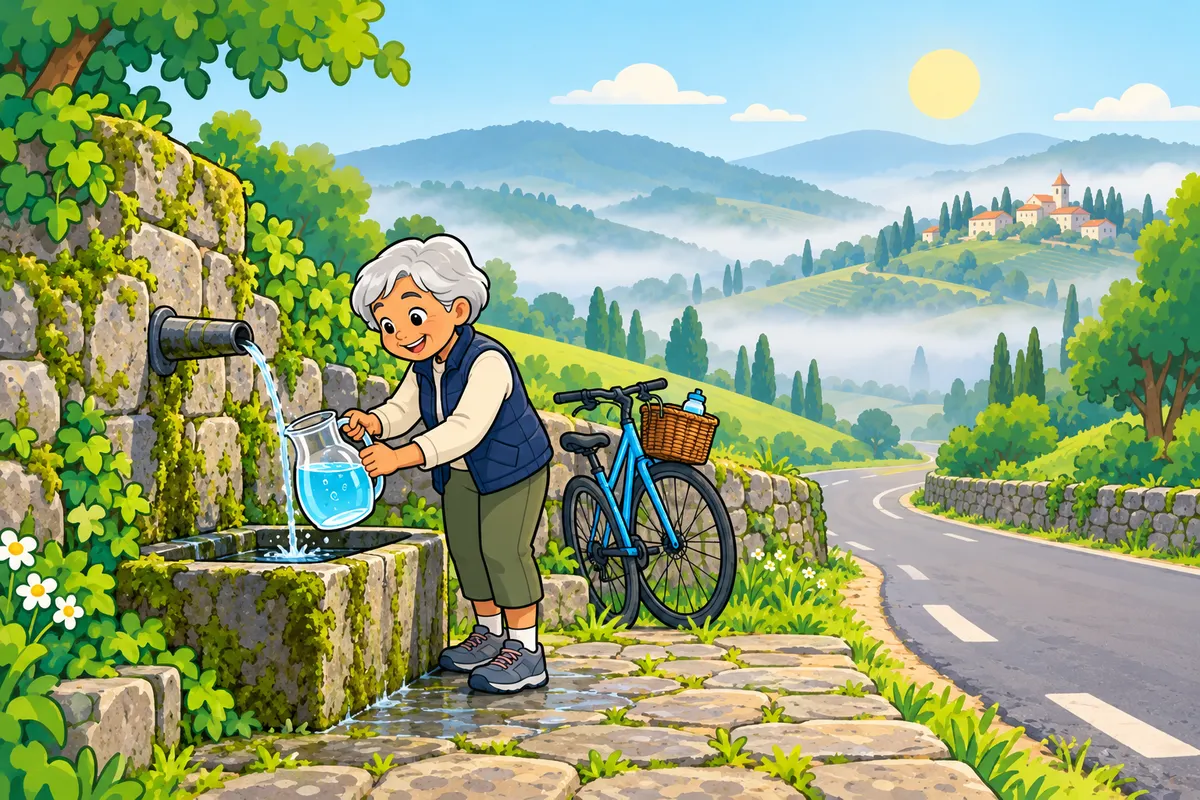
The rule is strict about the source. The bottler may collect the water only at the spring or through a borehole that taps the same underground formation, and a natural force must move it to the surface through a natural opening.
A pumped borehole needs proof. The plant must show:
- A measurable hydraulic connection between the borehole and the natural spring.
- The same composition and quality as the water flowing out on its own.
That stops a bottler from printing "spring" on ordinary well water.
Where Does Purified Water Come From?
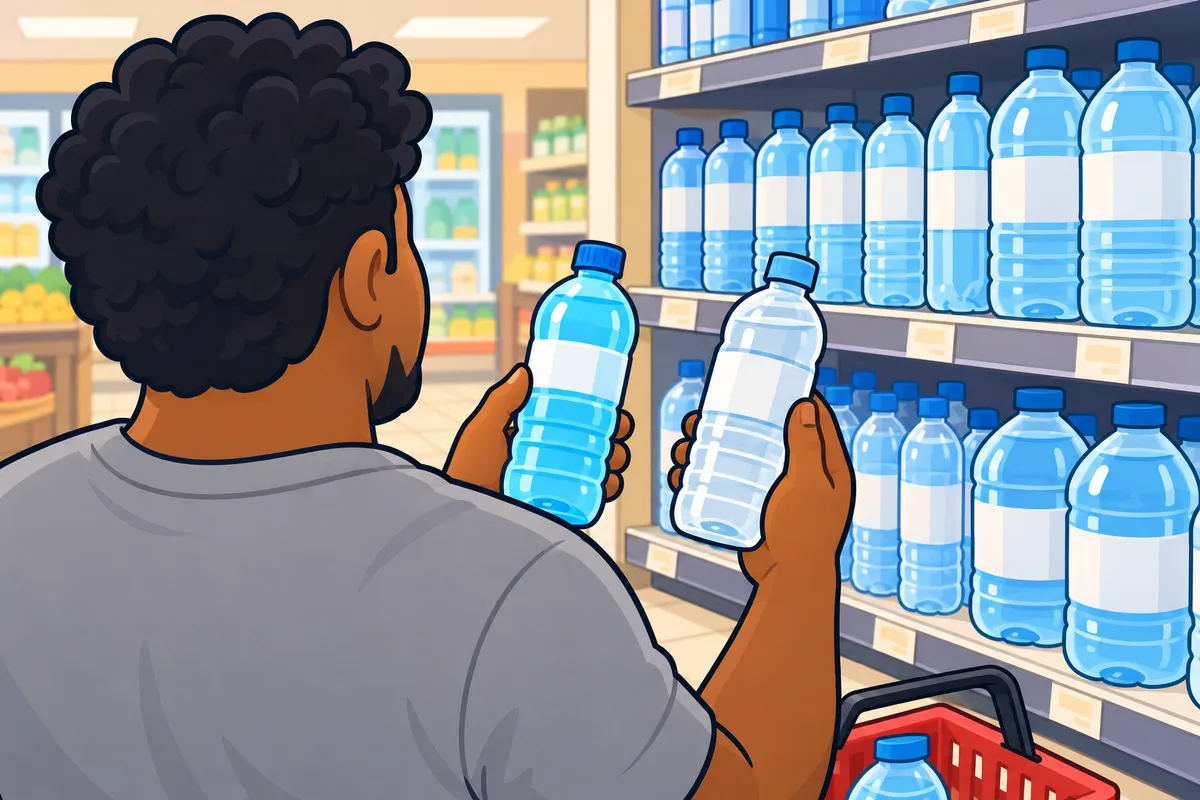
From anywhere, including the tap. The FDA says some bottled water comes from municipal sources, usually treated before bottling, and that water that goes through distillation, reverse osmosis or another suitable process can carry the label purified.
What makes it purified is the result. The federal rule asks that it meet the US Pharmacopeia's definition of purified water, which is why it tastes the same whether it started in a river or a well.
The rule also closes a loophole: bottled water drawn from a community water system has to say "from a community water system" or "from a municipal source" on the front label, unless the bottler treats it to meet the purified or sterile definition and names it that way.
Is Distilled Water the Same as Purified Water?
Distilled water is one kind of purified water. The federal rule lets purified water carry a more exact name for the process:
- "Distilled water" after distillation.
- "Deionized water" after deionization.
- "Reverse osmosis water" after reverse osmosis.
It may also carry the name "demineralized water", which says what all three share. The CDC's overview of home systems explains the difference in method: distillation boils water and collects it as it cools, while reverse osmosis pushes it through a membrane.
Six Names a Bottle Can Carry
Spring water
Named for the source
- Flows naturally from underground
- Borehole only with a proven link
Suits you if you like a mineral taste that comes from rock.
Purified water
Named for the treatment
- Any source, tap included
- Meets the US Pharmacopeia definition
Suits you if you want the same neutral taste in every bottle.
Distilled water
A kind of purified
- Boiled; a still catches the steam
- Also called demineralized
Suits you if a device asks for distilled, such as a humidifier.
Mineral water
At least 250 ppm minerals
- Protected underground source
- The rule bars added minerals
Suits you if you want calcium and magnesium in your water.
Artesian water
From a confined aquifer
- Water level stands above the aquifer
Suits you if you like a groundwater source with a pedigree.
Well water
From a drilled hole
- Taps an aquifer through a bored well
Suits you if the label is just telling you the source.
What Do "Drinking Water" and "Sterile Water" Mean?
"Bottled water" and "drinking water" are both accepted names for the product, and they can combine with a defined term, as in "purified drinking water". Sterile water is a separate label: it has to meet the US Pharmacopeia's sterility tests, and it may also carry the name sterilized water. That is the label that matters for a neti pot, a point the neti pot water guide covers.
Is Sparkling Water or Seltzer Bottled Water?
Not under the FDA's rules. The FDA treats drinks labeled sparkling water, seltzer water, soda water, tonic water or club soda as soft drinks, not bottled water, so the spring and purified definitions above do not apply to them.
Is Spring Water Healthier Than Purified Water?
Not by its name alone. Spring water carries some calcium and magnesium from its rock and purified water carries almost none, so the difference is the minerals in that one water.
How much a water adds depends on the water, not the word. A 2001 study in the Journal of General Internal Medicine compared tap water from 21 North American cities with bottled waters and found mineral levels varied widely in both.
- 8–16 %
- of the adult calcium intake from 2 L of half the tap waters studied
- 20–58 %
- of the calcium intake in 1 L of most moderately mineral European bottled waters
- Up to half
- of the maximum daily sodium in some high-mineral waters
The authors' advice was simple: check the mineral content of the water you drink, whether tap or bottled, and choose the one that suits you. A label with a mineral analysis tells you more than the word spring does.
When the Minerals Do Matter
Two cases change the answer:
- If you drink a high-mineral water every day, its sodium adds up, as the 2001 study found; if a doctor has told you to limit sodium or certain minerals, read the analysis on the label or the maker's website.
- The other case is a device. When a humidifier or steam iron manual asks for distilled water, only a bottle labeled distilled meets it.
What Makes Mineral Water Different From Spring Water?
Its minerals, and the fact that nobody adds any. Mineral water must hold at least 250 parts per million of total dissolved solids from a protected underground source, at steady levels, and the federal rule forbids adding any.
The label then grades it. Mineral water under 500 ppm may say "low mineral content", water over 1,500 ppm may say "high mineral content", and water in between needs no extra words.
| Label | Where it comes from | Treatment | Minerals you get |
|---|---|---|---|
| Spring water | Underground formation that flows to the surface | Allowed; the source stays the same | Whatever its rock gives |
| Mineral water | Protected underground source | Nothing added to the minerals | At least 250 ppm, constant |
| Purified water | Any source, city water included | Distilled, deionized, RO or similar | Very few |
| Distilled water | Any source | Boiled and condensed | Very few |
| Artesian water | Confined aquifer under pressure | Allowed | Whatever its aquifer gives |
Are Spring and Purified Water Held to the Same Safety Limits?
Yes. The quality standards in the same federal rule apply to every bottled water, whatever its name, and the FDA keeps them compatible with the EPA's limits for public tap water, adopting or rejecting each EPA contaminant standard. Lead is one place they differ from tap: the FDA says the bottled water limit is 5 parts per billion, against 15 for public tap water, because bottled water does not travel through lead pipes.
The rule's other limits apply to all of them too, such as 0.010 mg/L for arsenic and a coliform standard per 100 mL of water; if E. coli is present, the bottled water counts as adulterated. Plastic particles, which studies have counted in tap and bottled water alike, have no limit in the rule.
How Do You Read the Label on a Bottle of Water?
The front tells you the type: spring, purified, mineral or distilled. The back, on US bottles, carries a nutrition label showing minerals per serving and, on many brands, a water analysis or a phone number to request one. The FDA requires bottled water to list its ingredients, but since the only ingredient is water, the useful numbers are in the analysis: calcium, magnesium, sodium, potassium and total dissolved solids, all in mg/L.
If a bottle says "from a municipal source" on the front, its source is city tap water, treated further before bottling.
How Long Does an Unopened Bottle of Water Last?
The water itself does not spoil, and the FDA does not require an expiration date on bottled water, though most brands print one. The date reflects the plastic, not the water: over years, chemicals from the bottle can leach into the water, especially in heat.
Store bottles in a cool, dark place and away from cleaning products. Once opened, finish within a day or two, because bacteria can grow on any open container.
Fluoride Limits on Bottled Water
The same rule caps fluoride, and the cap depends on where the water is sold. For water packaged in the US with no fluoride added, the limit falls as the local average of daily high air temperatures rises.
| Avg daily high where sold | Limit, no fluoride added |
|---|---|
| 53.7 °F and below | 2.4 mg/L |
| 53.8 to 58.3 °F | 2.2 mg/L |
| 58.4 to 63.8 °F | 2.0 mg/L |
| 63.9 to 70.6 °F | 1.8 mg/L |
| 70.7 to 79.2 °F | 1.6 mg/L |
| 79.3 to 90.5 °F | 1.4 mg/L |
Imported water with no added fluoride has a flat limit of 1.4 mg/L, and water with fluoride added, domestic or imported, a limit of 0.7 mg/L.
Where the tap and the bottle both meet their limits, the real gap for most homes is what bottles cost over a year.
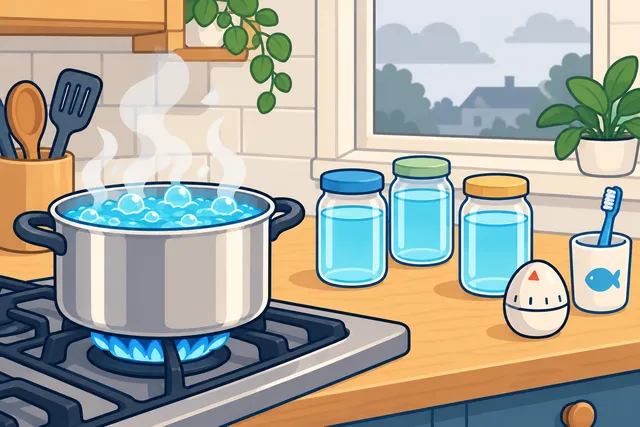
A purified water does not have to come in a bottle. A certified reverse osmosis system under the sink makes much the same water at your own tap, and a pot and a lid can distill a few cups in an emergency.
Which Bottle Fits Your Need
Your Reason, Your Bottle
- You want minerals in your waterMineral water, or a spring water with a high calcium figure
- You want the same neutral taste every timePurified water
- A device asks for distilled waterA bottle labeled distilled
- A neti pot needs safe waterA bottle labeled distilled or sterile; spring does not qualify
- You limit sodium on a doctor's adviceRead the analysis; purified carries very little
- Your tap water meets every limitYour tap, in a refillable bottle
General information for healthy adults, not medical advice. If a doctor has set your fluid amount, follow that.

More in Water at Home
Sources
- US Code of Federal Regulations, 21 CFR 165.110 (Cornell Legal Information Institute). Bottled water, 2026.
- US Food and Drug Administration. Bottled Water Everywhere: Keeping it Safe, 2022.
- Journal of General Internal Medicine (Azoulay, Garzon and Eisenberg). Comparison of the mineral content of tap water and bottled waters, 2001.
- US Centers for Disease Control and Prevention. About Home Water Treatment Systems, 2024.
Sources checked by the Glubbo Editorial Team on Oct 19, 2026. General information, not medical advice. How we write and check our guides.

