Water at Home · Wells, Storage and Emergencies
Does Water Expire? Bottled, Tap, Stored and Opened Water
Which water has a shelf life, what the printed date means, and the 6-month swap for water you stored yourself.
 By the Glubbo Editorial Team · Updated Nov 2, 2026 · 7 min read
On This Page
Short answer
Water does not spoil, but its container and storage can.
- Sealed bottled water has no safety date; the printed date is about taste.
- Water you filled yourself: swap it every 6 months, but old water is fine in an emergency.
- No official clock exists for an opened bottle; bacteria grow faster when warm.
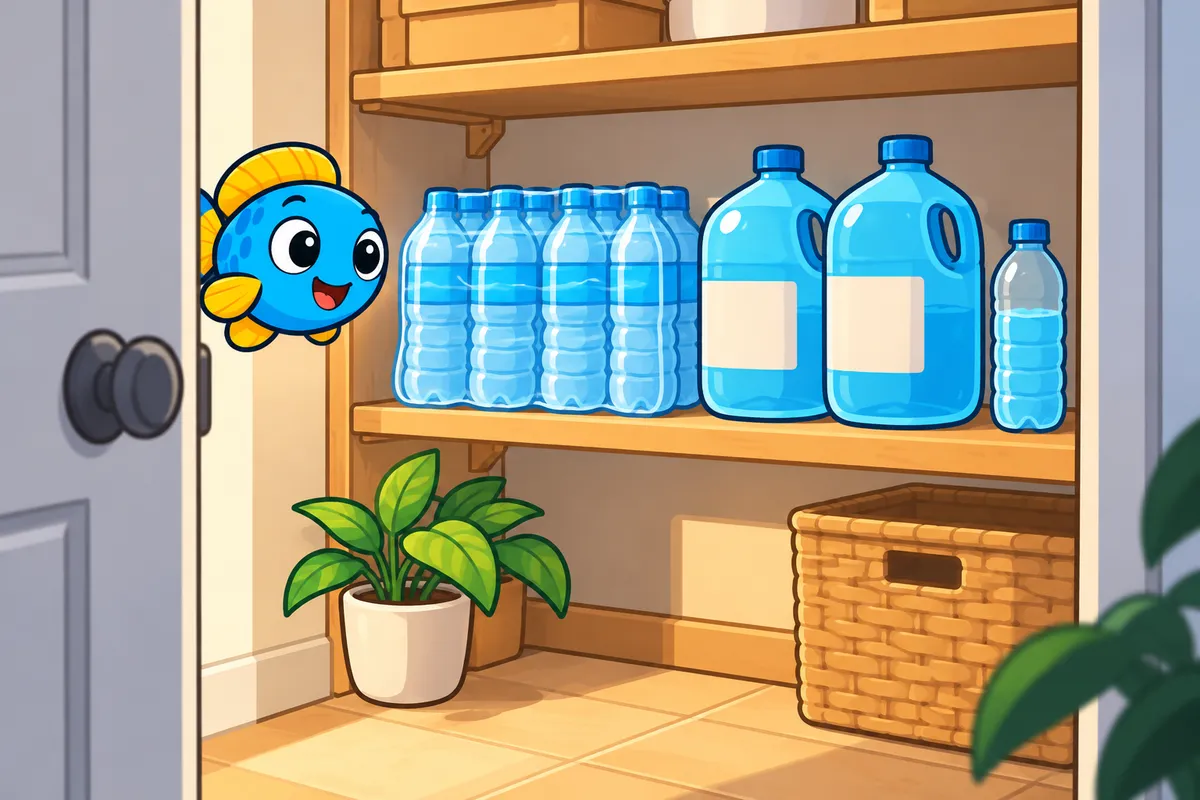
Water itself does not expire. What changes is the container, the place it sits and whether anyone has put their mouth on the bottle. Three kinds of water, three answers:
- Sealed bottled water has no safety date.
- Water you bottled at home needs a swap every 6 months.
- An opened bottle has no official time limit at all.
Does Water Expire?
Not the water, but the way you keep it. Water has no nutrients to run out and nothing in it that rots, so the question is whether something gets into it or the container changes it. A sealed bottle from a bottler, a jug you filled at the tap and a bottle you have been sipping from face different risks, so each gets its own answer.
| Water | Official time limit? | What to do | Source |
|---|---|---|---|
| Sealed bottled water | No safety limit for properly produced, unopened water | Store it cool and out of sunlight; go by the printed date for taste | Minnesota Dept. of Health, CDC |
| Water you filled into containers | Replace it every 6 months | Label the fill date; empty and refill (older water is okay in an emergency, see below) | CDC, Ready.gov |
| Tap water from the faucet | None; it arrives fresh | Run the tap and drink | Regional Water Providers Consortium |
| An opened bottle | None published | Finish it, or chill it | Raj 2005 |
Does Sealed Bottled Water Expire?
Sealed and stored well, no. The Minnesota Department of Health says that the FDA considers bottled water to have an unlimited shelf life when the bottler made it properly and nobody has opened it. A bad storage spot can still change the bottle or the taste, so the storage rules below matter.
The International Bottled Water Association, an industry group, states that the FDA has determined there is no limit to the shelf life of bottled water and so does not require an expiration date. That is IBWA's description of the rule, not the FDA's own text, which this page did not open. The Regional Water Providers Consortium says it in plainer words: bottled water doesn't expire.
What Does the Date on a Water Bottle Mean?
It tells you about taste, not safety. The Minnesota health department says bottlers may add a date because of concerns about taste and odor, not safety. The consortium calls it a best-by date that gives you a sense of when the water will taste the best.
Some caps carry a string of letters and numbers instead of a date. IBWA says some companies still print date-based lot codes for stock rotation. The CDC still says to observe the expiration date for store-bought water, so a pack in your emergency kit gets used oldest first.
IBWA states the no-limit rule for bottled water in general. None of these sources says whether flavored, vitamin or sparkling bottles are included, so go by the printed date on those.
Does Tap Water Expire?
Faucet water is fresh; a stored jug ages. The consortium says tap water does not expire, but it begins to taste less fresh after sitting in a plastic container for a long time. Whether your tap is safe to start with is a separate question.
Once you fill a container at home, three sources give an interval:
- Ready.gov says to swap water a bottler did not seal every six months, and the CDC gives the same interval.
- The consortium says to check home-stored water every 6 to 12 months and change it out if you like.
- Oregon State Extension is stricter: it says even sealed store-bought water should go every six months for quality, while IBWA says there is no limit.
For jugs you filled, follow the 6-month swap. In an emergency the consortium says water stored longer than 6 to 12 months is okay to use, so old jugs in an outage still count.
Does Water Go Bad After You Open the Bottle?
No source gives a safe number of days. In one small 2005 lab test of bottled water that testers opened and drank from (the abstract does not report how many bottles), the count rose from under 1 colony per milliliter to 38,000 per milliliter within 48 hours at 37 °C (99 °F). That is warmer than a kitchen, so read it as a direction, not a deadline.
The same paper notes the FDA has no temperature recommendations for bottled water once someone opens and uses it. No public health source sets a number of days for an opened bottle. In the test, cold slowed the growth: refrigerated bottles had 50 % fewer colonies at one day and 84 % fewer at two days.
What to Do With a Bottle You Have Started
- A gym bottle you finish in a few hoursWash it at the end of the day
- A half-full bottle you will sip from tomorrowPut it in the fridge after each use
- A bottle that sat in a warm carOur suggestion: open a fresh one; no source sets a time limit
Refilling a reusable bottle is a different job, and washing it between fills does more for you than any date.
Does Heat or Sunlight Shorten Water's Life?
Heat does, mainly for water in plastic. In nine bottled waters bought in Arizona, the antimony level (a metal in PET plastic) showed no significant change over three months at 22 °C (72 °F). The model estimates the days to pass the EPA limit of 6 parts per billion: 176 at 60 °C (140 °F), 38 at 65 °C (149 °F), and the authors write that summertime temperatures in cars, garages and enclosed storage areas in Arizona can exceed 65 °C.
Those are model numbers for the bottles tested, not a promise for yours, and the plastic bottle guide covers a hot car. The storage advice from the public health sources is short: keep water cool, which the CDC puts at 50 to 70 °F (10 to 21 °C), and out of direct sunlight.
Where Else Should Bottled Water Not Sit?
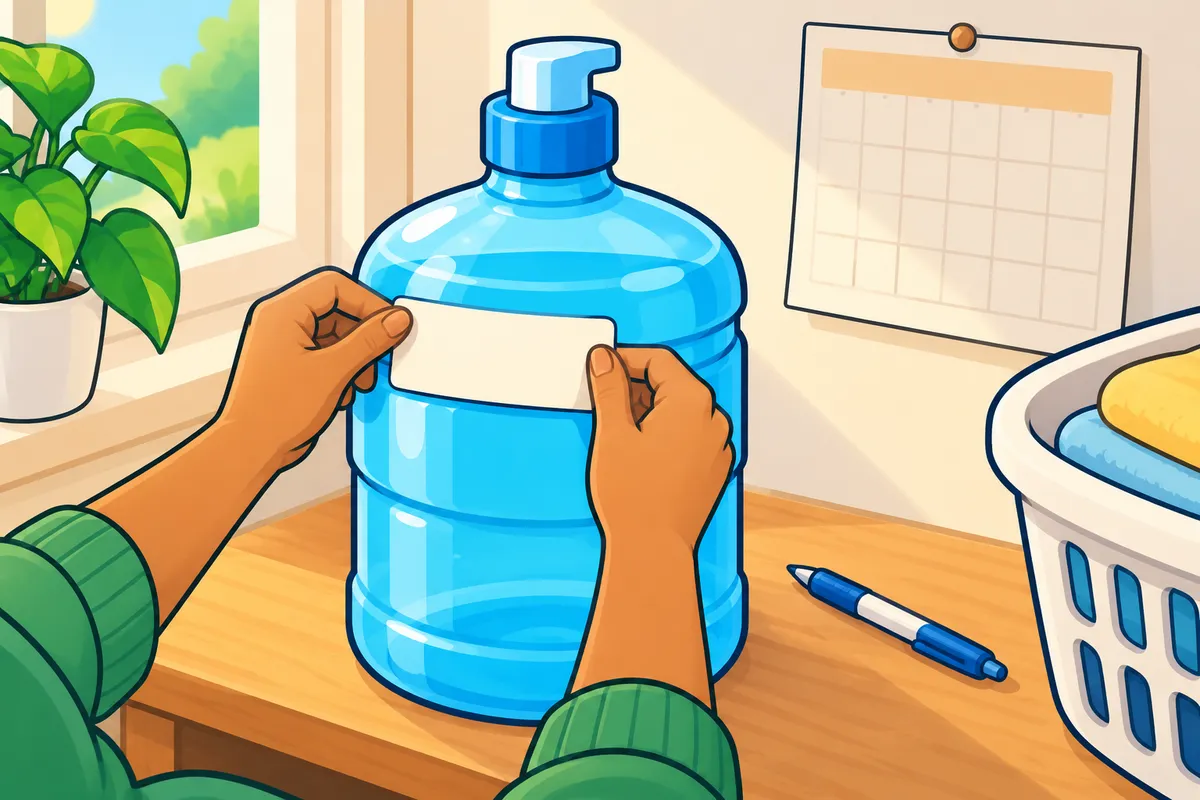
Away from fuel, paint and cleaners. The CDC says to keep containers away from toxic substances such as gasoline or pesticides. IBWA gives the reason: plastic can let ambient air gases, such as vapors from household solvents like paint thinners, affect the taste and odor of the water.
A garage shelf next to the lawn mower is a poor place for water. A hall closet is a good one.
How Can You Tell if Water Has Gone Bad?
Check the seal, the age and the storage spot first. The public health pages cited here offer no taste or look test that proves stored water safe, so the useful questions are about the history of the water.
Before You Drink Stored Water
5 items- The cap or seal is intact, not cracked or already opened
- A jug you filled yourself is under 6 months old (or you have no other water)
- It did not sit near gasoline, paint thinner or pesticides
- It did not bake in a hot car or an attic for weeks
- The container is not scratched, cloudy or smelly
Then act on the answer:
- If the 6-month answer is no and you have other water, use the old jug on the plants or for washing; the consortium says water stored longer is okay to use in an emergency.
- If another answer is no, such as fuel nearby or a cracked cap, open a fresh bottle instead.
- If you have to use doubtful water in an emergency, boil it first, which kills germs but does not remove fuel or chemicals.
Your Water Shelf Check for This Weekend
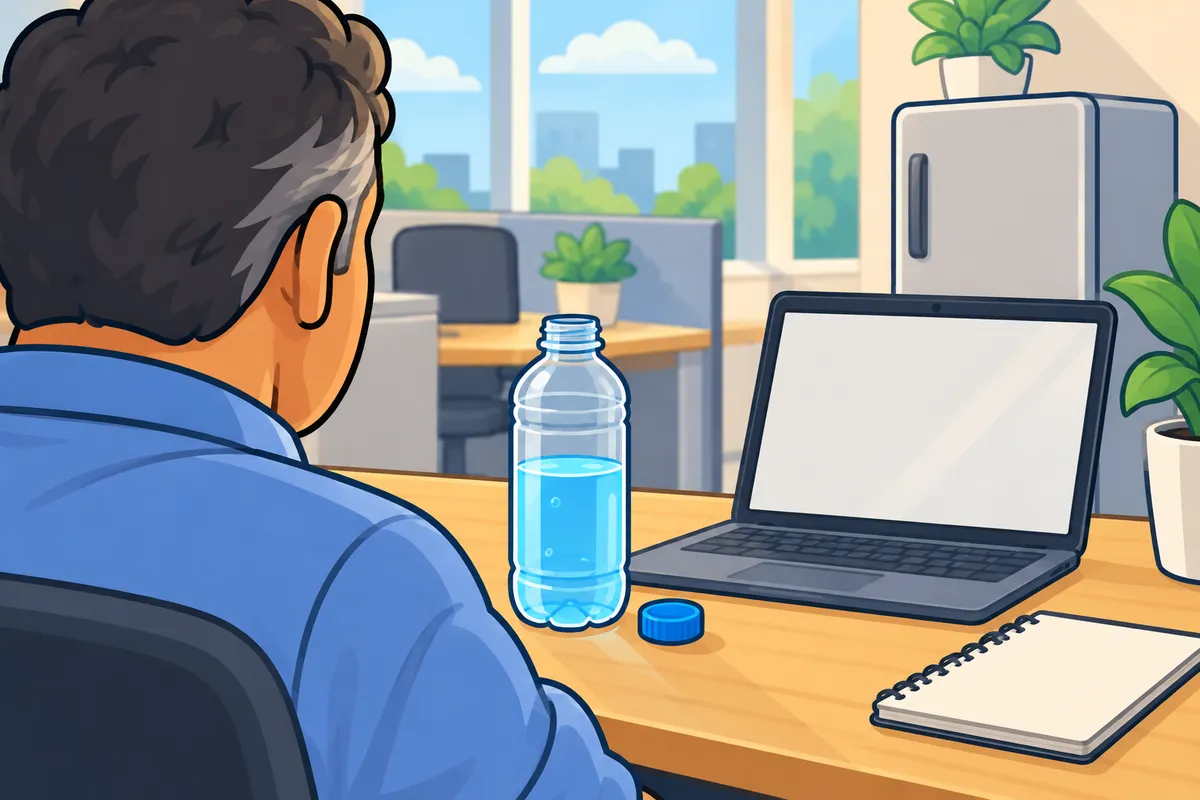
Filling and storing jugs has its own page, with the gallons per person. The habit that matters here is dating what you fill, and the swap date is the 6-month mark.
Date Your Water in Ten Minutes
- Find any bottled water in your home and read the printed date
- Write today's date on every jug you filled yourself
- Set a phone reminder for six months from today
- Move the oldest bottles to the front of the shelf
Common Questions
Should you refrigerate a half-finished water bottle?
Yes, if you will keep sipping from it. Cold slowed the bacterial growth that a small 2005 lab test measured in opened bottles, and washing the bottle between days helps as well.
Why does old water in a plastic bottle taste flat?
Plastic ages. The Regional Water Providers Consortium says tap water stored in plastic for a long time tastes less fresh, though it does not expire.
General information for healthy adults, not medical advice. If a doctor has set your fluid amount, follow that.

More in Water at Home
Sources
- Minnesota Department of Health. Bottled Water: Questions and Answers, 2024.
- CDC. How to Create and Store an Emergency Water Supply, 2025.
- Ready.gov (FEMA). Water, 2021.
- International Bottled Water Association. Bottled Water Storage, 2026.
- Oregon State University Extension. Emergency Water Storage, 2025.
- Regional Water Providers Consortium. Emergency Water Storage, 2026.
- Water Environment Research (Raj). Bottled water: how safe is it?, 2005.
- Water Research (Westerhoff, Prapaipong, Shock and Hillaireau). Antimony leaching from polyethylene terephthalate (PET) plastic used for bottled drinking water, 2008.
- US Environmental Protection Agency. National Primary Drinking Water Regulations, 2026.
Sources checked by the Glubbo Editorial Team on Nov 2, 2026. General information, not medical advice. How we write and check our guides.

