Water Bottles · Materials and Safety
Is Plastic Water Bottle Safe? What Heat, Cold and Reuse Change
What the FDA says, what a hot car does to a PET bottle, whether you can reuse one, and the freezer myth checked.
 By the Glubbo Editorial Team · Updated Oct 19, 2026 · 8 min read
On This Page
- Is Plastic Water Bottle Safe?
- Can Plastic Water Bottles Leach Chemicals When Heated?
- Is It Safe to Drink Water From a Bottle Left in a Hot Car?
- Is It Safe to Freeze Plastic Water Bottles?
- Which Plastic Bottles Are Safe?
- Is a Plastic Bottle Safe for Kids?
- Can You Reuse a Single-Use Plastic Water Bottle?
- What About Microplastics in Plastic Bottles?
- Sources
Short answer
Yes at room temperature; keep it out of a hot car.
- FDA: BPA is safe in its approved food uses; most water bottles are BPA-free PET.
- PET bottles kept at 22 °C showed no antimony rise over 3 months (Westerhoff 2008).
- Freezing is fine: a Johns Hopkins scientist calls the dioxin warning an urban legend.
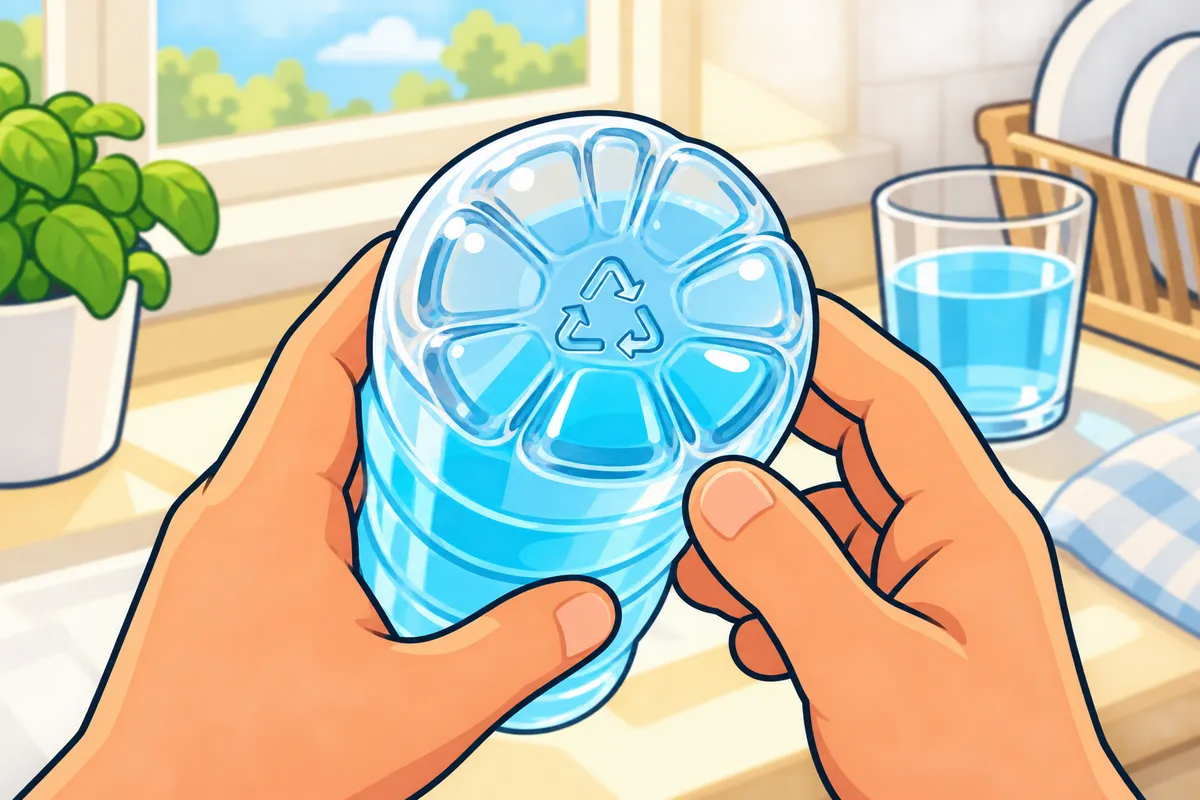
Yes, if the plastic is a food plastic and the bottle has not sat for days in heat. A plastic water bottle is safe at room temperature, safe from the freezer, and a poor idea after a week on a hot dashboard.
Most of the fear around plastic bottles comes from three places: a chemical called BPA, a hot car, and an old chain email about freezers. Each one has a real answer, and the answers point in different directions.
Is Plastic Water Bottle Safe?
The FDA says "the available information continues to support the safety of BPA for the currently approved uses". It ties BPA to polycarbonate plastic and can linings, not to PET, the plastic of the clear single-use bottle in a shop fridge.
Fine to Drink
- A PET bottle stored at room temperature
- A bottle chilled or frozen
- A reusable bottle its maker labels BPA-free
Pour It Out
- A bottle that sat for days in a hot car
- Hot drinks in a thin single-use bottle
- An old clear bottle marked 7 with no BPA-free claim
What the FDA does not say matters too. Its page notes that "very small amounts of BPA may migrate from the food packaging into foods or beverages", and the agency keeps reviewing new studies. Small amounts at room temperature are what the safety finding covers; heat changes the amounts.
Can Plastic Water Bottles Leach Chemicals When Heated?
Yes, and heat is the main thing that speeds it up. In PET bottles the chemical studied most is antimony, a metal present in the plastic itself; the EPA limit in drinking water is 6 parts per billion (ppb). At room temperature the amount barely moves, but at 60 °C (140 °F) and above it climbs with every day.
The clearest numbers come from Westerhoff and colleagues, who tested nine bottled waters sold in Arizona. Stored at 22 °C (72 °F), the antimony level was 0.195 ppb at the start and 0.226 ppb three months later, with no real difference. Then they heated bottles and worked out how long each temperature takes to pass the 6 ppb limit.
A second study, in Kuwait, found the same direction but a much faster rise in the bottles it tested. Allafi saw no change after three months at 25 °C, but a bottle brand kept at 50 °C went from 0.53 to 8.53 ppb in 24 hours and reached 16.8 ppb after 7 days, above the 6 ppb limit.
The two studies differ by brand, plastic and method, so do not read either as a fixed schedule. They agree on three points:
- Room temperature leaves antimony alone.
- Heat raises it.
- Only a small share of the antimony in the plastic (213 mg per kg in one Arizona brand) ever reaches the water.
What About BPA and Phthalates?
They matter less for a modern water bottle than the internet suggests. PET contains no BPA; the FDA links BPA to polycarbonate, the hard clear plastic of older reusable bottles. Heat matters for both: Rolf Halden of Johns Hopkins told USA Today, "the hotter it is, the more readily the transfer occurs of things from the plastic polymer".
Phthalates are the plasticizers that make plastics flexible. Yale's Gary Ginsberg notes that bottles can contain plasticizers that migrate into water, more so the longer it sits and the warmer it gets, and he suggests stainless steel for regular use. US rules on children's products set limits too, covered under the kids' section below.
Is It Safe to Drink Water From a Bottle Left in a Hot Car?
From a bottle left an afternoon, yes; from one that baked for days in summer, pour it out. The Arizona team ties its numbers to summer heat in cars and storage areas, and at a steady 65 °C (149 °F) a PET bottle takes about 38 days to pass the antimony limit. At 75 °C, the same model gives under five days.
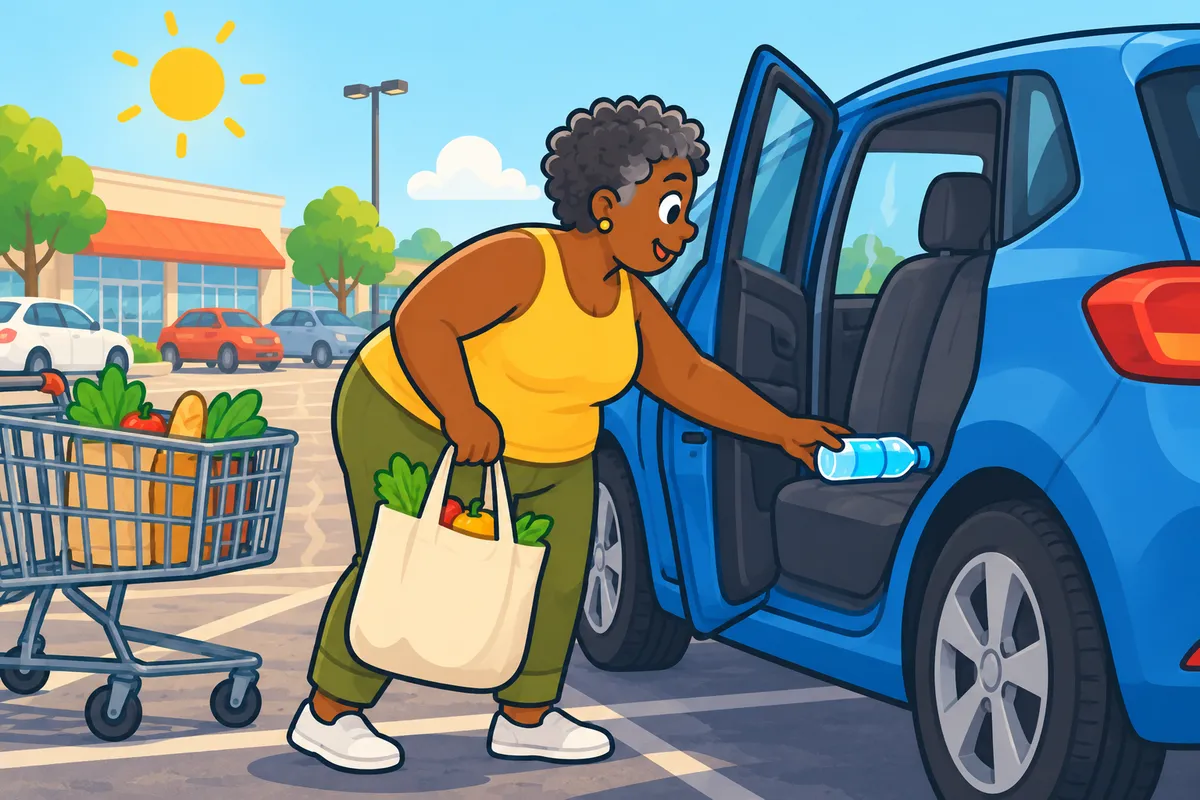
How Long Your Bottle Sat in the Heat
The answer depends on how hot the spot was and for how many days, not on the date printed on the cap. Work through these questions in order.
A bottle that sat in the heat
1Did it sit for weeks somewhere that reaches 60 °C or more, like a dashboard in summer?
YesPour it out. At a steady 60 to 65 °C the Arizona model passes the antimony limit in 38 to 176 days, and the dashboard case is the one the studies warn about.
No2Did it sit for several days in a closed car, trunk or garage in summer?
YesUse it for washing, buy fresh water. Daily heating and cooling is hard to judge against steady-heat studies, and a new bottle costs little.
NoOtherwiseDrink it. Hours of heat are shorter than the 24 hours of the shortest test in either study.
Is It Safe to Freeze Plastic Water Bottles?
Yes. The warning that freezing releases dioxins is a hoax email that carried the name of Johns Hopkins without its consent.
Halden, who studied dioxins for his degrees, told the university: "This is an urban legend. There are no dioxins in plastics." Cold also slows chemicals down, he added, so freezing works against any release.
The Kuwait study agrees: bottles held at -5 °C for 24 hours showed no significant change in antimony.
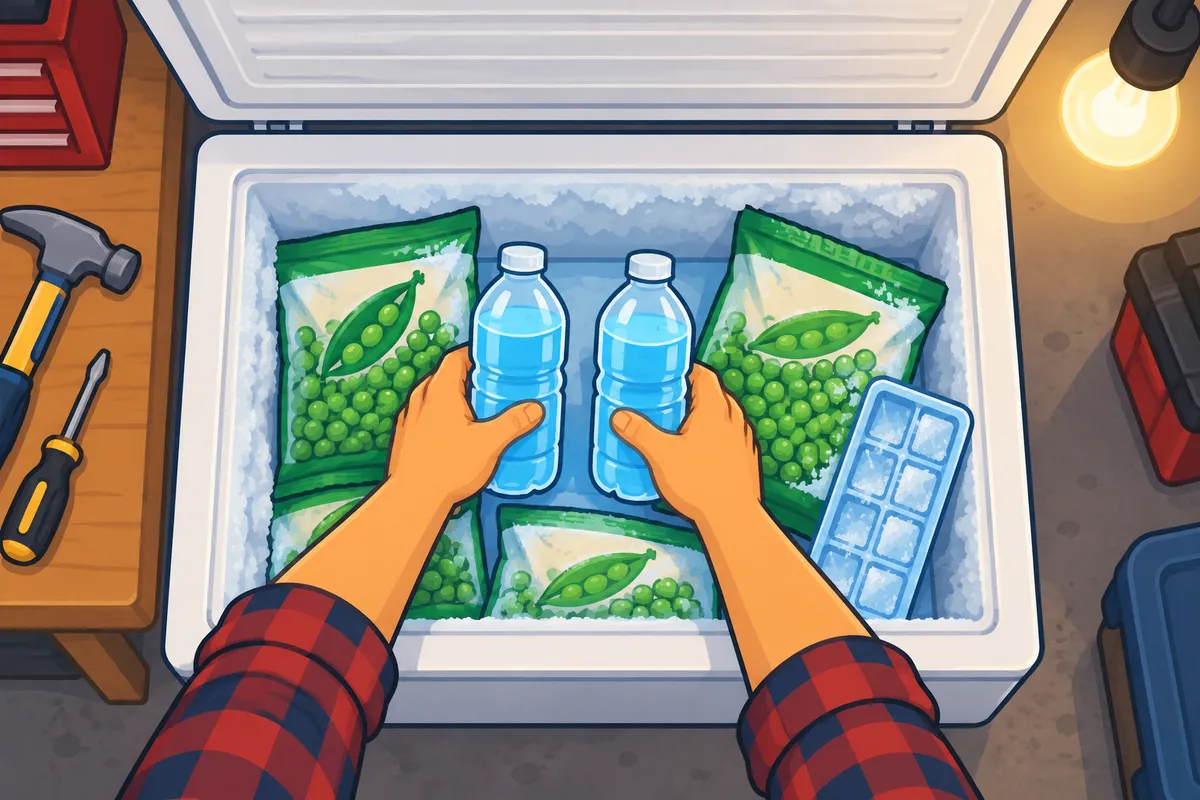
The only freezer risk is mechanical. Ice takes more room than water, so a full bottle can bulge or crack; Nalgene's FAQ asks owners to fill its bottles only about 2/3 full before freezing for the same reason.
Which Plastic Bottles Are Safe?
Plastics made and sold for drinks are safe for cold and room-temperature water. What differs between them is weight, how well they survive heat and reuse, and whether they could contain BPA. The number inside the recycling triangle on the base tells you which plastic you hold.
Five plastics you will find in drink bottles
PET
Code 1, single-use bottles
- FDA ties BPA to polycarbonate
- Antimony rises in long heat
- Safe for single use, says UPMC
Suits you if you drink it within days and keep it out of hot cars.
HDPE
Code 2, milky and flexible
- The lightest reusable bottle plastic
- Hot water to about 82–93 °C
- Among UPMC's safer reusable plastics
Suits you if you want the lightest reusable bottle and rarely add boiling water.
Polypropylene
Code 5, cloudy and stiff
- Listed beside HDPE as a safer reuse
- Look for a 5 on the base
Suits you if you want a reusable plastic that UPMC lists beside HDPE.
Tritan copolyester
Code 7, clear and hard
- Sold as free of BPA and BPS
- Boiling water is fine in Nalgene's
- Survives drops and the dishwasher
Suits you if you want a clear bottle that survives drops, the dishwasher and hot fills.
Polycarbonate
Code 7, older clear bottles
- Made with BPA, per the FDA
- FDA: safe in approved uses
Suits you if you already own one and use it cold; skip it if you would rather avoid BPA.
A 7 alone does not settle BPA, because the code covers both the newer copolyester and polycarbonate. UPMC adds that some "BPA-free" products may contain other bisphenols. Old hard Nalgene bottles are the common case, and a printed BPA-free claim is what tells the two apart.
How to Read Your Own Bottle
- Ask what kind of bottle it is: a thin bottle from a shop fridge is single-use PET, made for one fill.
- A milky, flexible reusable bottle is usually HDPE, like Nalgene's Ultralite.
- On a clear, hard bottle, find the number in the triangle and look for a BPA-free claim.
- A 7 with no claim on an old hard bottle may be polycarbonate.
Is a Plastic Bottle Safe for Kids?
Yes, and a bottle sold for children has to pass extra rules in the US.
| Rule | What it covers | Limit | Source |
|---|---|---|---|
| Phthalate cap | Children's toys and childcare articles for age 3 and under | 8 phthalates each ≤ 0.1 % | CPSC |
| BPA ban | Polycarbonate baby bottles and sippy cups | Banned since 2012 | FDA (makers had already stopped) |
| Food-contact clearance | All plastics that touch food or drink | Must pass FDA review | FDA |
The FDA ended BPA-based baby bottles and sippy cups in 2012 because makers had stopped using them. The phthalate limits apply to any article a child age 3 and under is meant to sleep, feed, teethe or suck with, which covers bottle nipples, sippy cup valves, teething rings and pacifier clips. In a shop, the age grading and labels on a child's bottle show which of those rules it was sold under.
Can You Reuse a Single-Use Plastic Water Bottle?
Advice splits:
- UPMC calls single-use PET bottles "safe for single use" and says to refill none of them, since reuse can raise the chance of chemicals leaching.
- Cancer Council Australia says reuse is safe too, but warns that bacteria and fungi grow in a reused bottle, so you wash it with hot soapy water and let it dry between refills.
The two agree on the practical part. A thin single-use bottle wears faster than a reusable one, and a scratched, cloudy or smelly bottle is done. If you refill one for a few days, the washing is what matters:
Reusing a single-use bottle for a day or two
- Empty it at the end of the day
- Wash it with hot soapy water and a bottle brush
- Leave it open to dry
- Retire it at the first crack, cloudy patch or smell
What About Microplastics in Plastic Bottles?
The FDA says current evidence "does not demonstrate that levels of microplastics or nanoplastics in water pose a risk to human health", and adds that more research is needed. A 2024 study counted about 240,000 particles per liter in three brands of bottled water, 90 % of them nanoplastics, which is two to three orders of magnitude more than earlier counts that looked only at larger pieces.
UPMC also notes that opening, closing and squeezing a bottle can release particles. If you would rather carry less plastic, a steel or glass bottle filled at the tap avoids it, and tap against bottled water compares the two.
General information for healthy adults, not medical advice. If a doctor has set your fluid amount, follow that.

More in Water Bottles
Sources
- US Food and Drug Administration. Questions & Answers on Bisphenol A (BPA) Use in Food Contact Applications, 2018.
- US Food and Drug Administration. Microplastics and Nanoplastics in Foods, 2024.
- Water Research (Westerhoff, Prapaipong, Shock and Hillaireau). Antimony Leaching From Polyethylene Terephthalate (PET) Plastic Used for Bottled Drinking Water, 2008.
- US Environmental Protection Agency. National Primary Drinking Water Regulations, 2026.
- Acta Biomedica (Allafi). The Effect of Temperature and Storage Time on the Migration of Antimony From Polyethylene Terephthalate (PET) Into Commercial Bottled Water in Kuwait, 2020.
- Johns Hopkins Bloomberg School of Public Health. Researcher Dispels Myth of Dioxins and Plastic Water Bottles, 2004.
- USA Today. Fact check: Plastic water bottles left in hot cars don't release dioxins, do leach other chemicals, 2021.
- US Consumer Product Safety Commission. Phthalates Business Guidance and Small Entity Compliance Guide, 2026.
- PNAS (Qian, Gao, Lang et al.). Rapid Single-Particle Chemical Imaging of Nanoplastics by SRS Microscopy, 2024.
- UPMC HealthBeat. Are Plastic Water Bottles Safe?, 2026.
- Cancer Council Australia. It's safe to drink water out of plastic bottles without a risk of cancer, 2023.
- Yale School of Public Health. Is it safe to use plastic refillable water bottles?, 2014.
- Nalgene. 32oz Wide Mouth Ultralite Bottle, specifications, 2026.
- Nalgene. Can You Put Boiling Water in a Nalgene? Here's What You Should Know, 2026.
- Nalgene. Frequently Asked Questions, 2026.
Sources checked by the Glubbo Editorial Team on Oct 19, 2026. General information, not medical advice. How we write and check our guides.

