Water Bottles · Materials and Safety
What Do the Numbers on Plastic Water Bottles Mean? Codes 1 to 7
Each code from 1 to 7, the letters under it, what it says about recycling, and what a 7 can tell you about BPA.
 By the Glubbo Editorial Team · Updated Nov 2, 2026 · 10 min read
On This Page
- What Do the Numbers on Plastic Water Bottles Mean?
- Does the Number on a Plastic Bottle Mean It Is Recyclable?
- Which Plastic Numbers Are Safe for Water Bottles?
- Is Number 7 Plastic Safe?
- What Is the Difference Between PETE and HDPE?
- Does the Number Say Whether a Bottle Can Take Heat?
- Read the Code on the Bottle in Your Hand
- Common Questions
- Sources
Short answer
The number names the plastic, not how safe it is.
- 1 PETE, 2 HDPE, 3 vinyl, 4 LDPE, 5 PP, 6 PS, 7 every other plastic.
- A code molded into the base is not a recyclable claim under FTC rules.
- Only a 7 can point to BPA, and the FDA says a 7 only "may" mean it.
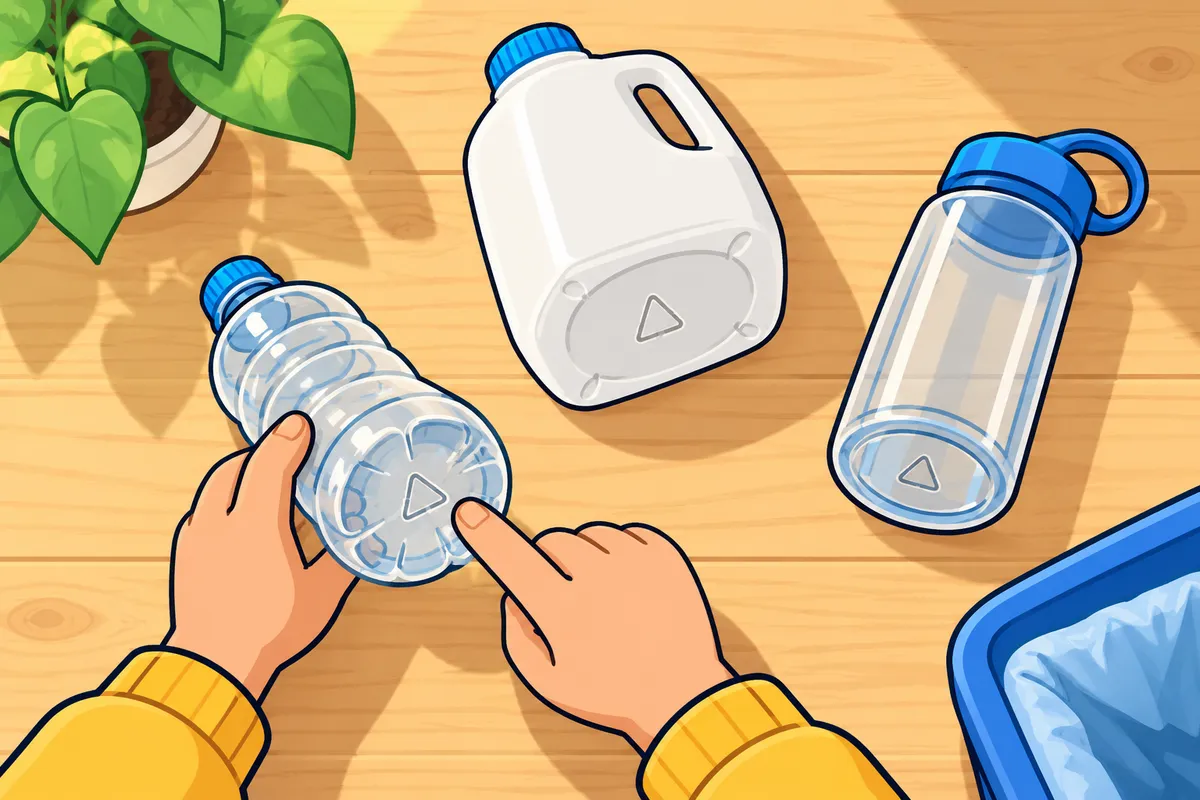
The number inside the triangle on your bottle names the plastic it is made of, as a number from 1 to 7. It tells a recycling sorter what the bottle is. It does not grade how safe the plastic is, and it does not promise that your town takes it.
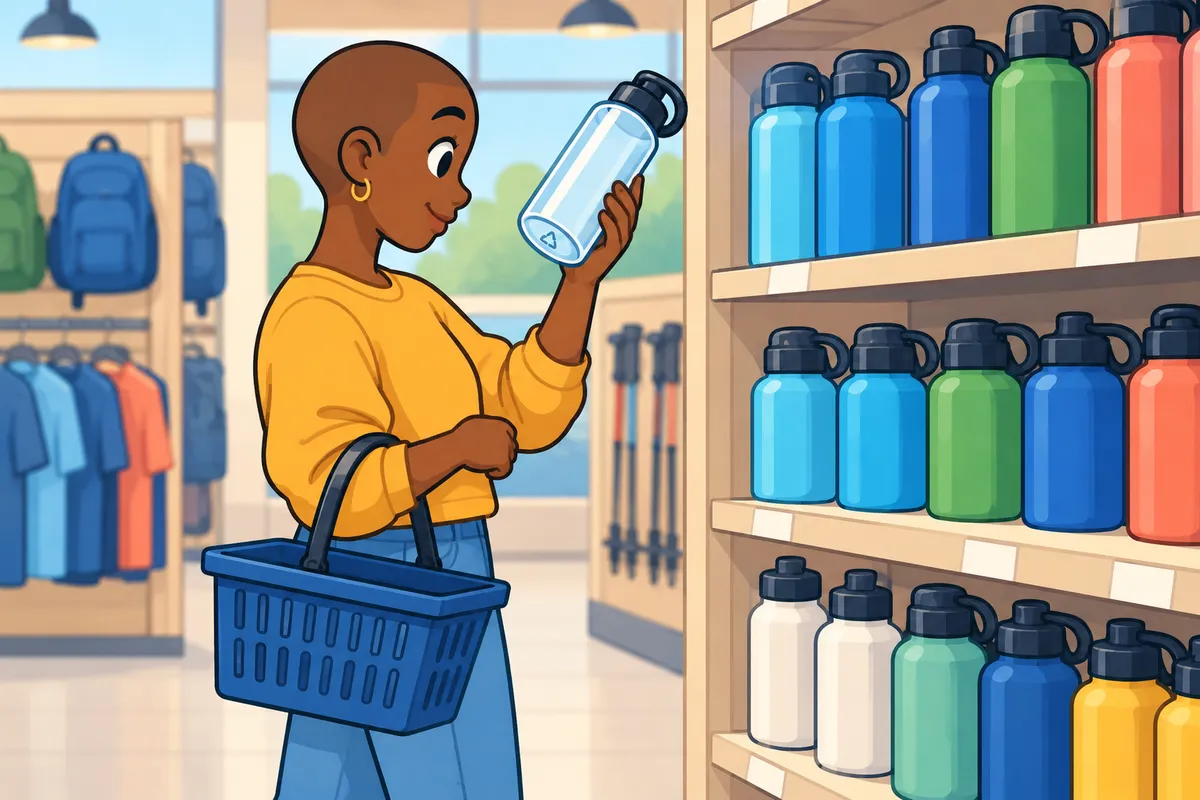
So a 1 on a shop-fridge water bottle and a 7 on a hard reusable bottle say different things. The 1 is one specific plastic. The 7 is a catch-all, and it is the only number worth a second look when you care about BPA.
What Do the Numbers on Plastic Water Bottles Mean?
Each number is a resin code: 1 to 6 name one plastic each, and 7 covers every plastic that does not fit those six. The University of Nebraska–Lincoln explains that "the code was developed for recycling purposes", so sorters can keep one plastic apart from another.
California writes the codes into law. Public Resources Code § 18015 requires rigid plastic bottles and containers sold in the state to carry a number in a triangle with letters under it, and it fixes what each one means.
| Code | Letters under it | Plastic | Where EPA names it | Can it contain BPA? | Bottle recycling rate, 2018 |
|---|---|---|---|---|---|
| 1 | PETE | Polyethylene terephthalate | PET beverage bottles | No | 29.1% (PET bottles and jars) |
| 2 | HDPE | High-density polyethylene | Bottles for milk and water | No | 29.3% (HDPE natural bottles) |
| 3 | V | Vinyl | Not named on EPA's page | No | Not reported |
| 4 | LDPE | Low-density polyethylene | Trash bags | No | Not reported |
| 5 | PP | Polypropylene | Not named on EPA's page | No | Not reported |
| 6 | PS | Polystyrene | Clear or foamed food service items | No | Not reported |
| 7 | OTHER | Every other plastic, including multilayer | Some reusable water and baby bottles (UNL) | Some do, some do not | Not reported |
The table's columns come from three places:
- The letters come from the California statute.
- The examples and rates come from EPA's plastics data.
- The BPA column comes from UNL, which notes that BPA does not fit codes 1 through 6.
So a bottle of water from the shop fridge is usually a 1, and a bottle of milk usually a 2.
Where the Code Sits and What Extra Marks Mean
Turn the bottle over. Makers usually mold the code into the base: a small triangle with a number inside and letters below.
Two smaller marks trip people up:
- Under the California rule, a 7 printed below the letters means the container has more than one layer of that resin.
- A bottle whose label or base cup is a different material still carries the code of its main plastic, so a PETE bottle with a plastic sleeve label is still a 1.
Why the Triangle Looks Like Recycling Arrows
The triangle of arrows looks like the recycling symbol, and that look is where most of the confusion starts. The federal Green Guides note that the Resin Identification Code was once the plastics industry's own code and "is now covered by ASTM D 7611", a standard for identifying resins.
Does the Number on a Plastic Bottle Mean It Is Recyclable?
No. A code molded into the bottom tells you the plastic, and the FTC says that on its own it "would not constitute a recyclable claim". Whether you can recycle the bottle depends on whether your local program collects that plastic, which you learn from the program's list, not from the base.
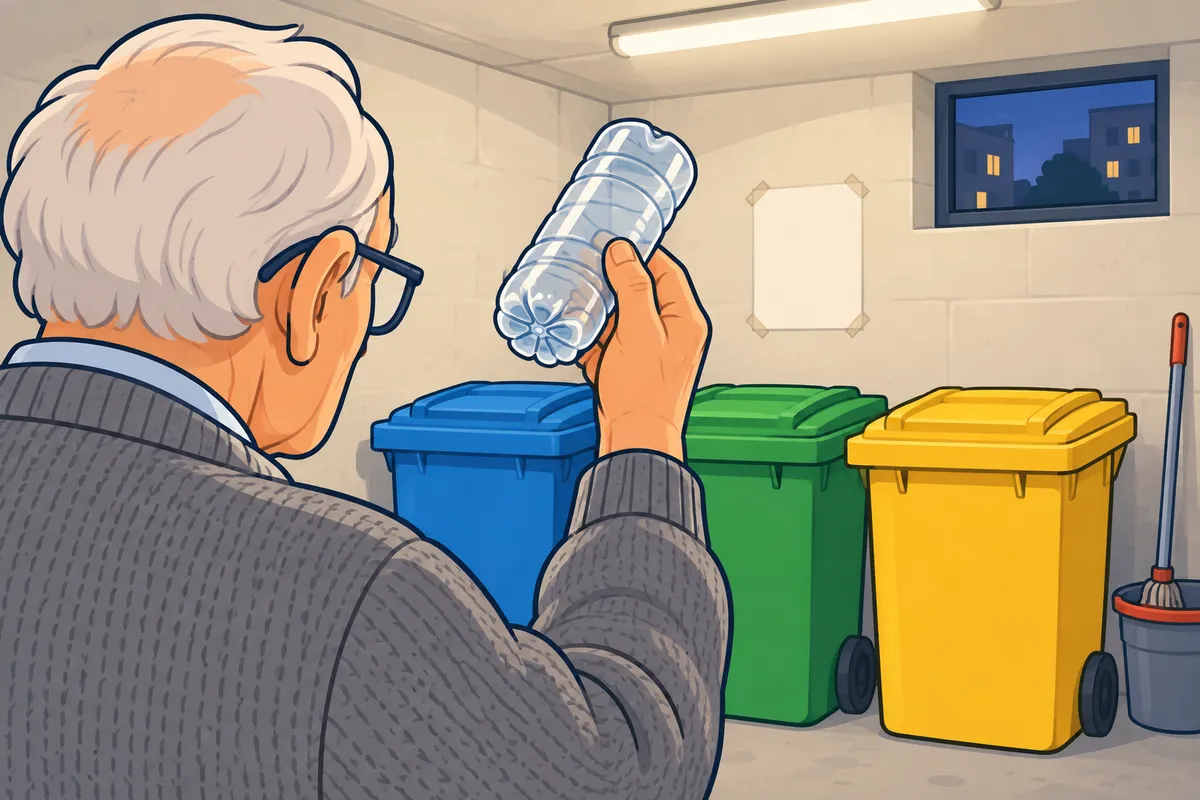
The code is not a promise. EPA's rates cover the whole country and say nothing about your local program. Even so, the two bottle plastics EPA reports separately came back less than a third of the time:
- Recycling reached 29.1% of PET bottles and jars (code 1) in 2018.
- Recycling reached 29.3% of HDPE natural bottles (code 2) in 2018.
EPA's figures by plastic come from 2018, when the US generated 35.7 million tons of plastic. Turned around, about 70.9% of PET bottles and jars and 70.7% of HDPE natural bottles went somewhere other than recycling that year, even though both carry a clear 1 or 2.
Across all plastics the gap is wider. EPA counts about three million tons recycled out of 35.7 million, an 8.7% rate, so roughly 91% of the plastic generated in the US that year never reached a recycler. If the bin rules in your town do not list a number, the number alone will not get the bottle recycled.
- 35.7 million tons
- of plastic generated in the US in 2018
- 3 million tons
- of it recycled, about
- 8.7%
- recycling rate across all plastics
- 91%
- never reached a recycler, roughly
Which Plastic Numbers Are Safe for Water Bottles?
The number cannot answer that, because nobody designed it to. It names a plastic for sorting; it carries no safety grade, so a 1, a 2 and a 5 are not ranked from safe to unsafe. What decides how a bottle behaves is the plastic, how hot it gets and how long you use it, and heat, cold and refilling each change that differently.
The one thing the code can tell you about safety is whether BPA is possible at all, because a bottle with BPA always carries a 7.
What the number on your bottle can tell you
- You see a 1 (PETE)PET, the plastic of beverage bottles; no BPA, since BPA plastics carry a 7
- You see a 2 (HDPE)High-density polyethylene, the plastic of milk and water bottles
- You see a 5 (PP)Polypropylene; the code says nothing more than the plastic's name
- You see a 7 (OTHER)Any other plastic; look for a BPA-free claim before you decide
Is Number 7 Plastic Safe?
Some are and some may contain BPA, so there is no single answer for the number. UNL puts it plainly: "one cannot categorically make a risk statement about all #7 plastic products", because 7 groups different plastics with different chemicals. A printed BPA-free claim is what separates them on the shelf.
The FDA links BPA to one kind of 7 in particular. Its BPA page says BPA "is a chemical component present in polycarbonate plastic", and that a resin code of 7 "indicates that the container may be made of a BPA-containing plastic". May, not does.
What the FDA Says About BPA in a 7 Bottle
The FDA's view is that the available information "continues to support the safety of BPA for the currently approved uses in food containers and packaging". That page was last updated in February 2018.
UNL, writing about BPA bottles, gives one step anyone can take: avoid heating drinks in bottles that contain BPA. Heat raises the amount that reaches the drink, so a 7 bottle you use for cold water and one you fill with hot tea are two different cases.
Reading a bottle marked 7
1Does the bottle, its box or the maker's page say BPA-free?
YesIt is one of the 7s without BPA. Seven covers many plastics, and UNL notes that not every 7 contains BPA.
No2Is it an older hard, clear reusable bottle with no BPA-free claim?
YesIt may be a BPA plastic. The FDA says a 7 may mean a BPA-containing plastic. Ask the maker which plastic it is; until you know, UNL advises not heating drinks in BPA bottles.
NoOtherwiseAsk the maker. The code alone cannot tell you which plastic a 7 is; the maker's page or support line can.
An old hard Nalgene is the bottle people ask about most, and which Nalgene plastics are BPA-free depends on the year you bought it.
What Is the Difference Between PETE and HDPE?
They are two different plastics with their own codes: PETE is 1, polyethylene terephthalate, and HDPE is 2, high-density polyethylene. EPA lists PET for beverage bottles and HDPE for bottles of milk and water. In 2018 both bottle types came back at almost the same recycling rate, about 29 percent.
PETE, code 1
- Polyethylene terephthalate
- EPA lists it for beverage bottles
- 29.1% of PET bottles and jars recycled in 2018
HDPE, code 2
- High-density polyethylene
- EPA lists it for bottles of milk and water
- 29.3% of HDPE natural bottles recycled in 2018
PETE and PET are the same plastic. California's statute prints PETE under the triangle, while EPA writes PET in its data, so a bottle may show either set of letters above the same 1.
Neither code tells you whether the maker built the bottle for one use or many. A thin beverage bottle and a thick reusable one can both be a 1 or a 2, and whether to refill it is a question about the bottle's build, not the number.
Does the Number Say Whether a Bottle Can Take Heat?
No. The code names the plastic, and it carries no temperature, dishwasher or microwave rating. Two bottles with the same number can have different limits, so the maker's page and the label answer the heat question.
Nalgene shows how far apart two of its own plastics sit. Its hot water guide rates:
- the Sustain Renew bottles for boiling water, up to 212°F (100°C);
- its HDPE bottles for hot water to about 180–200°F (82–93°C), with occasional boiling only.
Both go in the dishwasher, top rack recommended.
Where the answer is, since the code does not say
- Can I pour in boiling water?The maker's stated limit, such as 212°F (100°C) for Nalgene Sustain Renew
- Can it go in the dishwasher?The maker's care page; Nalgene says top rack
- Can I microwave it?A "microwave safe" label, which needs FDA-reviewed test data
- Could it contain BPA?A BPA-free claim from the maker; the code only says a 7 might
The microwave question trips up the most people. Harvard Health explains that the FDA reviews a maker's test data before a container may be sold for microwave use, and it lists water bottles and most takeout containers among the items that are not microwave-safe. An unlabeled container is not proven unsafe; the FDA simply has not ruled on it.
Read the Code on the Bottle in Your Hand
You need about ten seconds and good light. The aim is to know which plastic you hold and whether your bin takes it.
Reading the base of a plastic bottle
- Turn the bottle over and find the small triangle on the base
- Read the number and the letters under it
- On a 7, look for a BPA-free claim on the bottle or the maker's page
- Check the number against your local recycling list
- Shop water bottle, 1 PETE: PET, no BPA. He puts it in the bin if his list includes 1, in the trash if not.
- Milk jug, 2 HDPE: high-density polyethylene, no BPA. Same check against his list for 2.
- Foam takeout cup, 6 PS: foamed polystyrene, a food service plastic. Same check for 6.
- Hard clear sports bottle, 7 OTHER, no BPA-free claim: per the FDA it may be a BPA-containing plastic, so he asks the maker which plastic it is and checks his list for 7.
The list did the recycling half of the job, and the code only told him what he held. Two towns can take different numbers, which is why the list, not the number, decides where each container goes.
No triangle on the base? Then the maker's product page or support line is where you learn the plastic. Keep the number in mind when you shop for a reusable bottle, since a 7 is the only code that sends you looking for a BPA-free claim.
Common Questions
Can a number 7 water bottle go in the recycling bin?
Only if your local program lists 7. Nalgene's FAQ says many municipalities now accept #7, so look up your town's list before you drop a hard reusable bottle in the bin.
Which plastic numbers are easiest to recycle?
The code cannot say; your local program's list decides. EPA reports 2018 recycling rates for PET bottles and HDPE natural bottles (codes 1 and 2), which cover the whole country, not local bins.
General information for healthy adults, not medical advice. If a doctor has set your fluid amount, follow that.

More in Water Bottles
Sources
- California Legislature (via Public.Law). Public Resources Code § 18015, plastic container code, 2022.
- University of Nebraska–Lincoln Extension (Skipton and Dvorak). Plastic Reusable Water Bottles, 2026.
- US Federal Trade Commission (16 CFR 260.12, via Cornell LII). Guides for the Use of Environmental Marketing Claims, recyclable claims, 2012.
- US Environmental Protection Agency. Plastics: Material-Specific Data, 2026.
- US Food and Drug Administration. Questions & Answers on Bisphenol A (BPA) Use in Food Contact Applications, 2018.
- Nalgene. Can You Put Boiling Water in a Nalgene? Here's What You Should Know, 2026.
- Harvard Health Publishing. Microwaving food in plastic: Dangerous or not?, 2017.
- Nalgene. Frequently Asked Questions, 2026.
Sources checked by the Glubbo Editorial Team on Nov 2, 2026. General information, not medical advice. How we write and check our guides.

