Water Bottles
How to Choose a Water Bottle: Size, Material, Lid and Care
Pick the size you will refill, the material you will carry, and a lid and wash routine you will keep.
 By the Glubbo Editorial Team · Updated Oct 19, 2026 · 10 min read
Short answer
Pick the size you will refill, then the material.
- A 24 to 32 oz bottle covers a 2 L day in two to three fills.
- Plastic is lighter: a 32 oz Nalgene weighs 6.25 oz, the steel Hydro Flask 0.97 lb.
- Insulated steel keeps water cold for 11 to 24 hours, per Stanley and Hydro Flask.
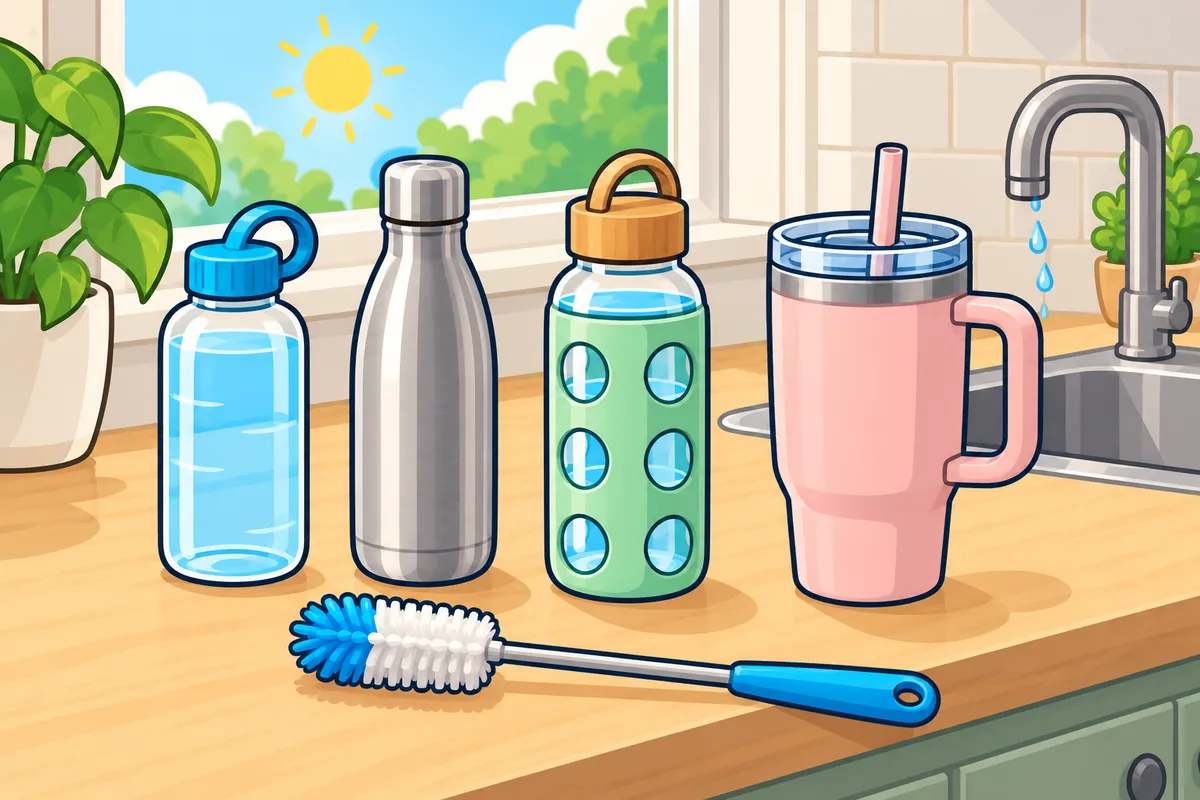
Choose the size first, because a bottle you never refill does nothing for your day. Then choose the material by where the bottle goes: light plastic for bags and hikes, insulated steel for long hours away from a cold tap. The lid and the wash routine decide whether you still use it in a month.
How Do I Choose a Water Bottle?
Start from how much you drink and how often you can refill. A bottle you can fill three or four times a day suits most people, which points to 24 to 32 oz for a 2 liter day. Next, choose plastic or insulated steel, a lid that suits how you drink, and a bottle you can wash easily.
Four Choices, in This Order
- Size: how many fills reach your goal
- Material: light plastic or insulated steel
- Lid: wide mouth, narrow mouth or straw
- Care: parts you can take apart and wash
The order matters. Pick a color or a material first and you can end up with a 40 oz bottle too heavy to carry, or a 16 oz bottle you refill six times. Settle the size, and the other three choices get easier.
What Size Water Bottle Should I Get?
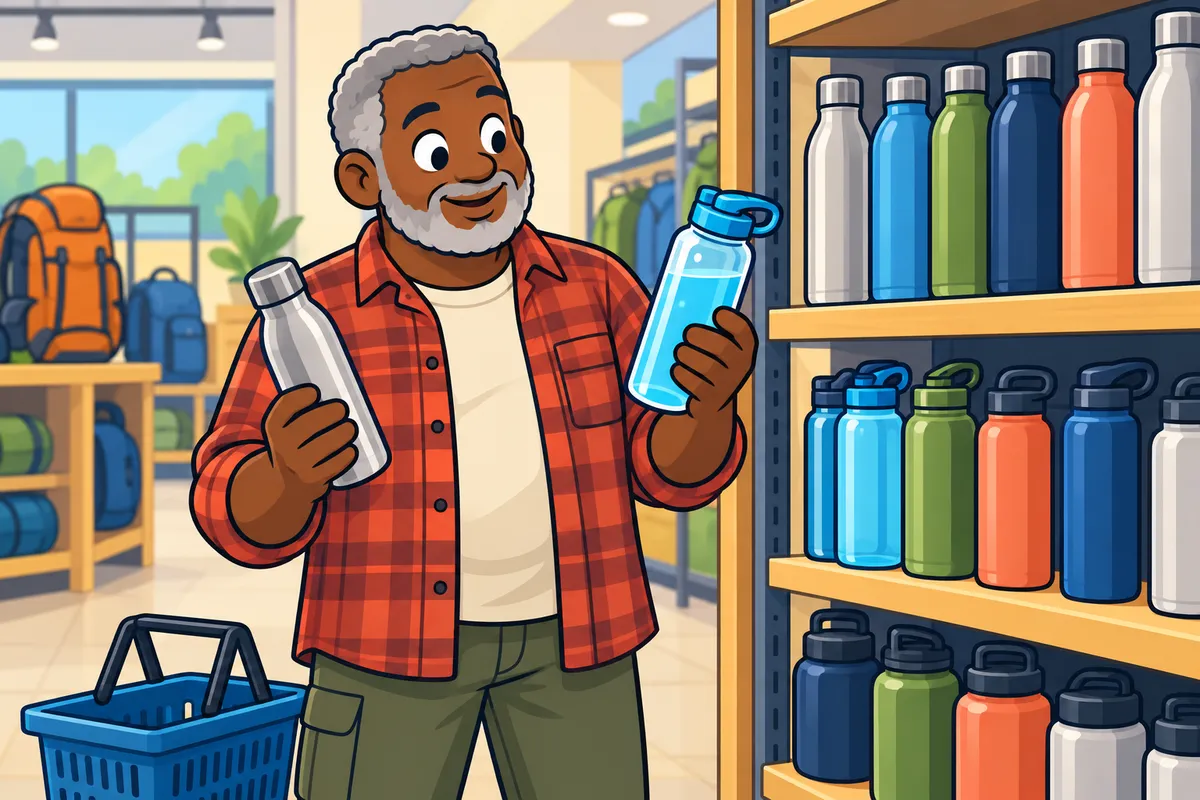
Get the size you can refill at natural breaks. For a 2,000 ml day, a 24 oz (710 ml) bottle takes about three fills and a 32 oz (946 ml) bottle about two, while a 40 oz (1,183 ml) bottle needs fewer trips to the tap but weighs the most. Small 16 oz bottles suit children carrying a school bag and short outings.
All the milliliter figures here use NIST's factor of 29.57 ml per US fluid ounce.
| Bottle size | Holds | Fills for a 2 L day | Fills for a 3 L day |
|---|---|---|---|
| 16 oz | 473 ml | about 4.2 | about 6.3 |
| 24 oz | 710 ml | about 2.8 | about 4.2 |
| 32 oz | 946 ml | about 2.1 | about 3.2 |
| 40 oz | 1,183 ml | about 1.7 | about 2.5 |
If your goal differs from 2 or 3 liters, enter it with your bottle size and you get the exact count, including how full the last fill needs to be.
The standard 16.9 oz store bottle sits between the first two rows. For every common size with its height and empty weight, see the bottle sizes chart, maker by maker.
What Is the Best Type of Water Bottle?
The best type is the one that suits where you drink. Plastic is the lightest and goes in the dishwasher, insulated stainless steel weighs more but keeps water cold for many hours, and glass and aluminum fill the gaps between them. For a desk with a cold tap nearby, plastic is enough; for a hot car, a building site or a long day out, insulation earns its weight.
Five materials, one real bottle each
Tritan plastic
Light, clear
- 32 oz: 6.25 oz empty
- Dishwasher safe, BPA/BPS-free
Suits you if you drink near a tap and carry the bottle all day.
Insulated steel
Keeps cold
- 32 oz: 0.97 lb empty
- Double-wall vacuum insulation
Suits you if you work outdoors or far from a cold tap.
Glass with a sleeve
Plain taste
- 22 oz: about 1 lb 2.4 oz
- Silicone sleeve against drops
Suits you if you want no plastic on the water and handle a bottle with care.
Aluminum
Very light
- 0.6 L: 106 g, 215 mm tall
- Lined; hand wash only
Suits you if grams matter more than insulation.
Tritan Plastic
Nalgene makes its 32oz Wide Mouth bottle from Tritan Renew and calls it "BPA/BPS-Free" on its spec page. It weighs 6.25 oz empty, stands 8.25 in tall and goes in the dishwasher. The lighter Ultralite line is HDPE instead, and both plastics carry the BPA-free label.
The trade-off is temperature. A single plastic wall does nothing to keep water cold, so on a hot day the water warms up as fast as the air around it.
Insulated Stainless Steel
Hydro Flask's 32 oz Wide Mouth, on its product page, and Stanley's 40 oz Quencher, on Stanley's, both list how long the insulation holds. Stanley's tumbler uses 90 % recycled 18/8 stainless steel and comes in four other sizes, from 14 to 64 oz.
- 24 h
- cold in the 32 oz steel bottle
- 12 h
- hot in the same bottle
- 11 h
- cold in the 40 oz Quencher
- 2 days
- cold with ice in the Quencher
The cost is weight. The steel 32 oz weighs 0.97 lb empty, about two and a half times the plastic one of the same size.
Is a Stainless Steel Water Bottle Better Than Plastic?
Better for cold water over a long day, worse for weight. An insulated steel bottle keeps water cold for 11 to 24 hours by its makers' figures, while a plastic bottle weighs less than half as much. If you drink within an hour or two of filling, plastic does the job.
Steel bottles also have rules of their own. Owala's FAQ says not to microwave, freeze or boil its steel bottles, and suggests a few ice cubes for a colder drink.
Glass and Aluminum
Three more materials, in short:
- Glass gives a plain taste and no plastic on the water, at the price of weight and breakage. Lifefactory's 22 oz bottle holds 650 ml in a glass body with a silicone sleeve and a polypropylene cap, and CleverHiker's review weighed it at 1 lb 2.4 oz and called it one of the most durable bottles in its test. The same review notes that glass "is inherently more fragile than plastic or metal" and that a good sleeve cuts the risk of breakage.
- Aluminum is the featherweight. SIGG's Traveller holds 0.6 L in a single piece of recycled aluminum, weighs 106 g and stands 215 mm tall, with an interior liner the maker lists as free of BPA and phthalates. It has no insulation and the page lists hand cleaning only.
- Copper bottles are sold on health claims; copper suits plain water but not lemon water, and a copper bottle is washed by hand, never in the dishwasher.
Is BPA in Water Bottles Safe?
The FDA says yes for its approved uses: "the available information continues to support the safety of BPA for the currently approved uses in food containers and packaging." BPA is part of polycarbonate plastic, which makes bottles "generally clear and tough", per the FDA's BPA questions and answers. For a single-use bottle, heat matters more than BPA: one left for weeks in a hot car can pass the antimony limit.
In 2012, the FDA stopped allowing BPA-based materials in baby bottles and sippy cups, because makers had already stopped using them rather than because of a new safety finding.
Is your bottle a BPA question?
1Is it a clear, hard reusable bottle marked 7, with no BPA-free claim?
YesTreat it as polycarbonate. Polycarbonate is made with BPA; a current bottle labeled BPA-free settles it.
No2Is it a thin single-use bottle that sat for days in heat?
YesHeat is the issue, not BPA. PET has no BPA; days of heat raise antimony, so pour it out.
NoOtherwiseNothing to chase. A bottle labeled BPA-free, or a PET bottle kept cool, needs no special step.
The question is still open in one sense. The FDA is reviewing a 2022 petition about BPA in food contact uses, docket FDA-2022-F-1108, and says it will publish its answer when the review ends, on its BPA page. If you would rather avoid BPA anyway, buy a bottle its maker labels BPA-free, as Nalgene and Stanley do.
Which Lid Suits How You Drink?
Choose the lid by what you put in the bottle and where you drink from it. A wide mouth takes ice cubes and a bottle brush: Nalgene's 32 oz cap is 2.5 in (63 mm) across, and Owala describes its wide opening as made "for cleaning and adding ice". A narrow mouth pours more slowly and spills less when you drink on the move.
Pick the lid by how you drink
- Ice in every fill, and a brush to scrub itWide mouth (you tip it further to drink)
- Sips on the move and a slim side pocketNarrow or standard mouth
- One-hand drinking at a desk or in a carStraw or flip lid, with more parts to wash
Stanley sizes its 40 oz Quencher for the car: its base is 3.1 inches and Stanley says it fits most car and truck cup holders.
Can Your Water Bottle Go in the Dishwasher?
It depends on the maker, and the label on the base or the maker's page is the authority. Lids and cups are often treated differently, and older bottles differ from current ones.
| Bottle | In the dishwasher? | Care page |
|---|---|---|
| 32 oz Tritan plastic | Yes, listed "Dishwasher-Safe" | Nalgene spec page |
| 32 oz insulated steel | Yes, but older ones with a ™ by the logo are hand wash only | Hydro Flask, cleaning guide |
| 40 oz steel tumbler | Yes, listed "Dishwasher safe" | Stanley product page |
| Steel bottle with a straw lid | Lid on the top rack; the steel cup is best by hand | Owala FAQ |
| 22 oz glass with sleeve | Yes; the cap goes on the top rack | Lifefactory spec page |
| 0.6 L aluminum | No: hand cleaning only | SIGG product page |
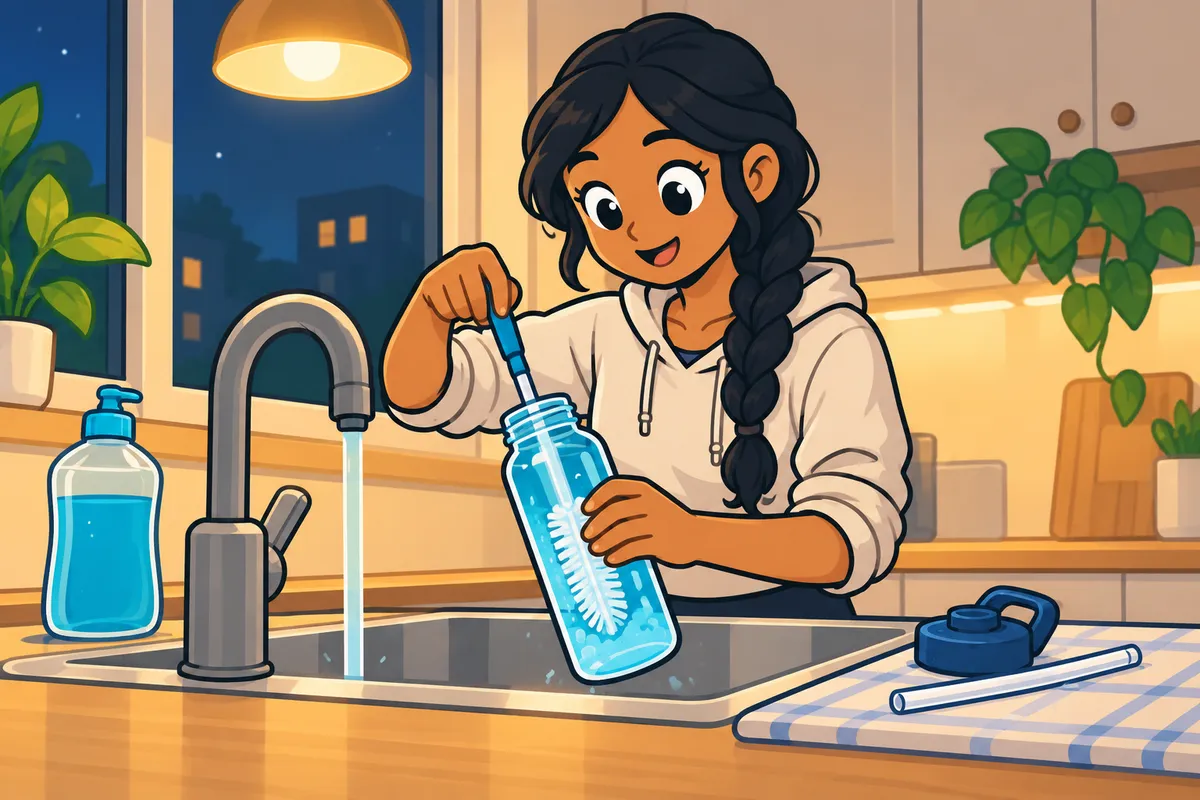
The lid decides how easy care is. A plain screw cap has one or two parts; a straw lid has a straw, a mouthpiece and a seal, and each one needs a brush and time to dry. If you know you will not take a lid apart, buy the simpler one.
Which Bottle for a Desk, a Roof or a School Bag?
The same rules give different answers for different days. These are five common ones, each with the numbers from the pages above.
The bottle for the day you have
Office desk
Cold tap down the hall
- 24 oz plastic bottle
- About three fills for 2,000 ml
Suits you if you pass a tap several times a day and insulation would be weight you never use.
Outdoor work
July, no tap
- 40 oz insulated steel
- 1.12 lb empty, kept in the shade
Suits you if you need water that stays cold for most of a morning.
School bag
A child who can refill
- 16 oz plastic bottle
- 3.1 oz empty
Suits you if a big bottle would only add weight to a small back.
Long hike
Every ounce counts
- HDPE: 3.75 oz for 32 oz
- Aluminum: 106 g for 0.6 L
Suits you if you carry it all day and refill from a stream or a filter.
Once you have the bottle, the work is emptying it. On a desk day, keeping the bottle on your desk with one refill before noon does more than any feature on the bottle.
Measure Before You Buy
Size, material and lid all fail on one thing: whether the bottle fits the places it must live. Before you buy, measure the three spaces it has to fit, and write the numbers where you will see them in the shop.
- The shelf in your fridge door or the gap under your tap, in height.
- The bag pocket or the car cup holder, in width across the floor of the holder.
- Your hand around the neck, because a lid you cannot work with one hand stays in the bag.
Heights and widths for common bottles are on the sizes chart linked above, so you can rule out the wrong ones from the couch.
General information for healthy adults, not medical advice. If a doctor has set your fluid amount, follow that.
All Guides in Water Bottles
Every guide, A to Z
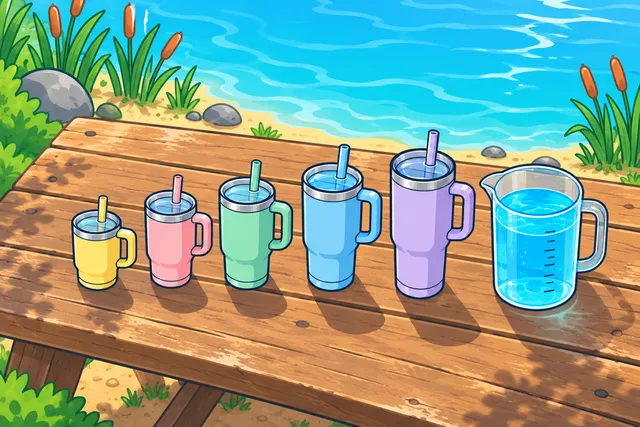
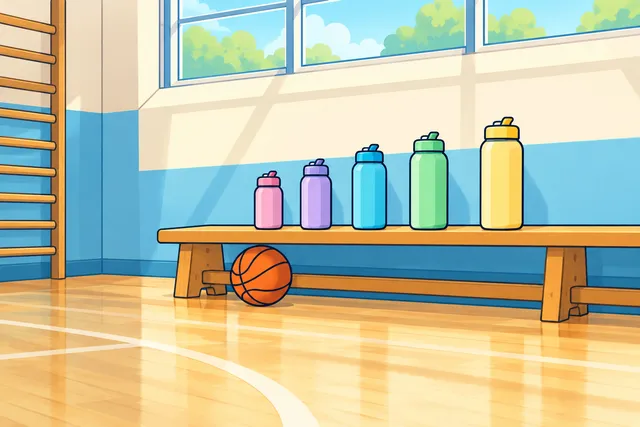
Sizes and Capacity 4 guides
The number on a bottle tells you how many refills your day takes. These guides list each size in US ounces and milliliters, worked out from the maker's own spec page.
Sizes and Capacity page
Materials and Safety 7 guides
A bottle touches every sip you take. These guides check each material against what the FDA and the makers state, from BPA and lead seals to copper and the bottles made for kids.
Materials and Safety page Is Plastic Water Bottle Safe? What Heat, Cold and Reuse Change
 Is Nalgene Safe to Drink From? Tritan Renew, HDPE and Microplastics
 Kids Safe Water Bottle: What a Child's Bottle Must Pass in the US
 Do Stainless Steel Water Bottles Contain Lead? What to Check
 Are Copper Water Bottles Safe? What Copper Does to Your Water
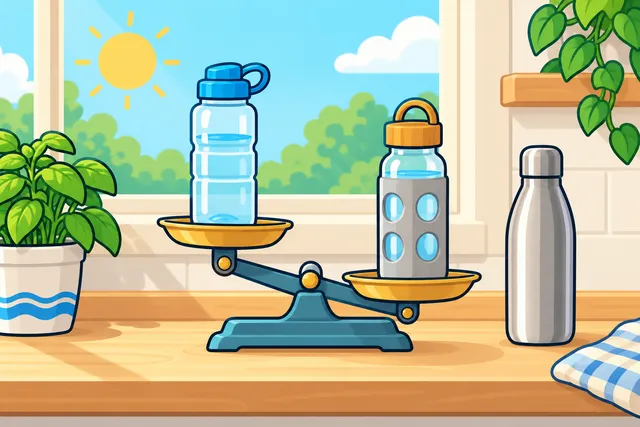 Stainless Steel vs Plastic Water Bottle: Which Should You Carry?
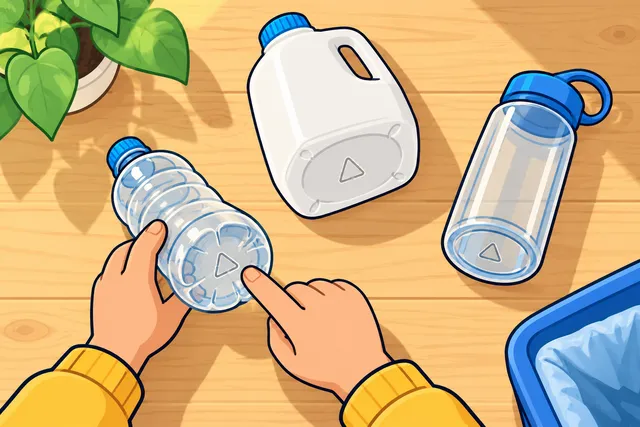 What Do the Numbers on Plastic Water Bottles Mean? Codes 1 to 7
Cleaning and Care 7 guides
Most bottle smells and slime come from the lid and straw, not the body. These guides give the cleaning steps the makers recommend, brand by brand, with what goes in a dishwasher and what does not.
Cleaning and Care page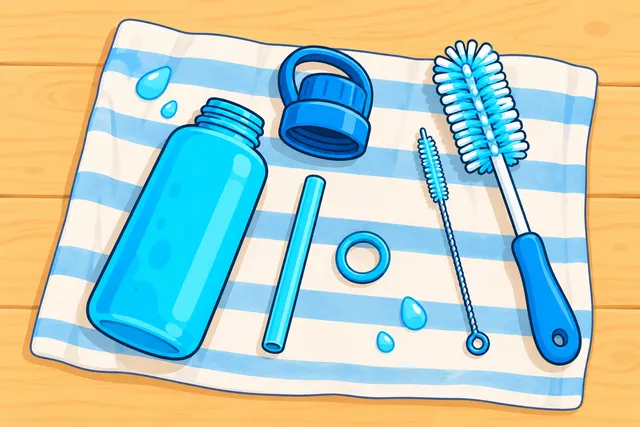 How to Clean a Water Bottle and Keep Bacteria Out of It
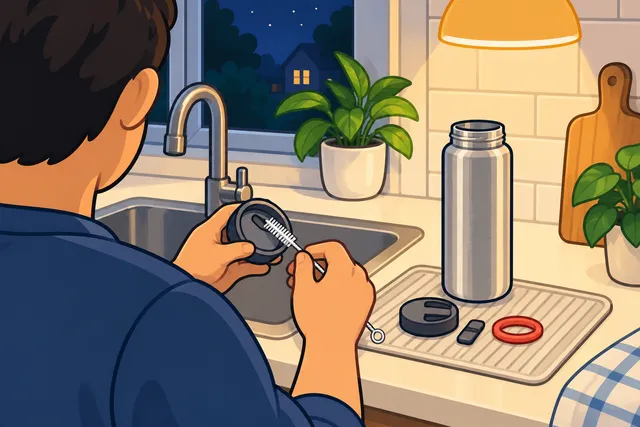 How to Clean Hydro Flask Bottles, Sip Lids and Straws Step by Step
 How to Clean an Owala: FreeSip Lid, Spout Gasket and Steel Cup
 How to Clean a Nalgene Bottle: Bleach Soak, Hot Water and Drying
 How to Clean a Filter Bottle Without Ruining the Filter Inside
 How to Clean Copper Bottle Inside and Out, Tarnish Included
 How to Get Mold Out of a Water Bottle: Lid, Gasket and Straw
Sources
- US Food and Drug Administration. Questions & Answers on Bisphenol A (BPA) Use in Food Contact Applications, 2018.
- US Food and Drug Administration. Bisphenol A (BPA), 2023.
- Nalgene. 32oz Wide Mouth Bottle, specifications, 2026.
- Hydro Flask. 32 oz Wide Mouth, features and dimensions, 2026.
- Hydro Flask. 40 oz Wide Mouth, features and dimensions, 2026.
- Stanley. The Quencher H2.0 Flowstate Tumbler, 40 oz, 2026.
- Lifefactory. 22oz Glass Water Bottle with Silicone Sleeve and Classic Cap, 2026.
- SIGG. Water Bottle Traveller Alu 0.6 L, 2026.
- CleverHiker. Best Glass Water Bottles, 2026.
- Owala. Frequently asked questions, 2026.
- NIST. Approximate Conversions from U.S. Customary Measures to Metric, 2026.
Sources checked by the Glubbo Editorial Team on Oct 19, 2026. General information, not medical advice. How we write and check our guides.

