Water Bottles · Materials and Safety
Do Stainless Steel Water Bottles Contain Lead? What to Check
Where lead sits in some insulated bottles, what Stanley and other makers say, and how to check the base of yours.
 By the Glubbo Editorial Team · Updated Oct 19, 2026 · 9 min read
On This Page
- Do Stainless Steel Water Bottles Contain Lead?
- Does a Stanley Cup Have Lead?
- Is Lead in a Stanley Cup Safe?
- Which Insulated Bottles Say They Are Lead-Free?
- What If the Bottom of My Stanley Cup Came Off?
- What Home Lead Tests Can and Cannot Tell You
- Lead in the Water You Pour In
- When to Replace an Insulated Bottle
- Is an Insulated Tumbler Safe for a Child?
- Sources
Short answer
The steel has no lead; some seals under the base do.
- Stanley seals the vacuum with a pellet that includes some lead, under a steel cap.
- Stanley says no lead is on any surface that touches you or your drink.
- A missing or broken base cap is the one case to stop using it.
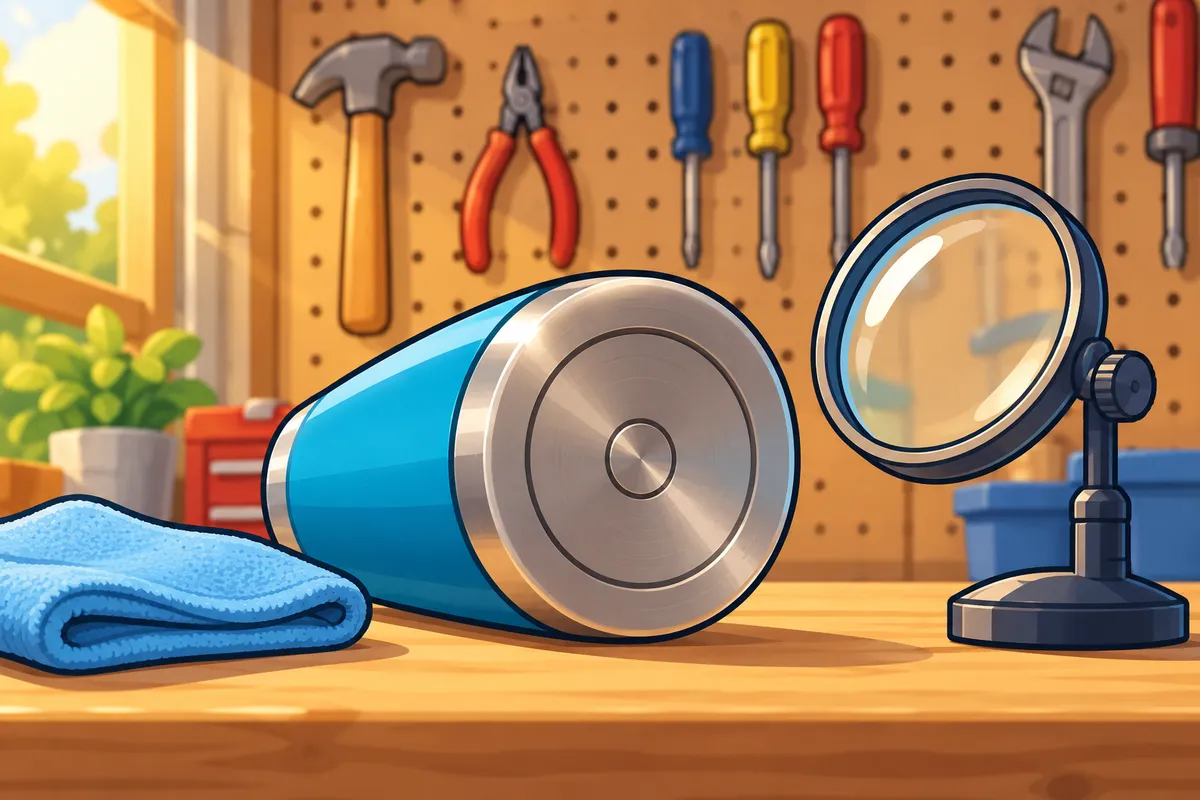
The steel does not contain lead, but some vacuum-insulated bottles seal the gap between their two walls with a small pellet that does, hidden under a steel cap on the base. Stanley confirmed this in January 2024, and says no lead touches the cup's surface or your drink.
That came after Stanley owners posted home lead tests that found lead on their tumblers. Once you know where the lead sits, you can check your own bottle in ten seconds.
Do Stainless Steel Water Bottles Contain Lead?
The steel does not, but some vacuum-insulated bottles have lead in the seal under the base. To make the vacuum layer, the maker closes a tiny hole between the two steel walls with a sealing pellet, and Stanley says its pellet "includes some lead". A steel cap then covers it, so the lead stays sealed away from your drink.
Single-Wall Steel Bottle
- One steel wall, no vacuum layer
- No vacuum seal at the base
- Water warms with the air
Vacuum-Insulated Bottle
- Two walls with a vacuum between
- A sealing pellet at the base
- On Stanley's, the pellet includes some lead
The difference comes from how insulation works. A single-wall bottle has no vacuum to seal, so it has no reason to carry a sealing pellet; only the double-wall kind needs one.
Stanley's maker, Pacific Market International (PMI), explained it in a January 2024 statement quoted by FOX 6: it uses "an industry standard pellet to seal the vacuum insulation at the base of our products". It added that, once the seal closes, "a durable stainless steel layer" covers the area, "making it inaccessible to consumers."
Does a Stanley Cup Have Lead?
Yes, in the seal at the base. Stanley says the pellet that closes the vacuum layer includes some lead and sits under a stainless steel layer, and that "no lead is present on the surface of any Stanley product that comes in contact with you or the contents of your container", as WLOX reported.
That also explains the home tests. By Stanley's account the only lead in the cup is in the seal at the base, not on the inside wall or in the water. The statement covers the base of its vacuum-insulated products, so it applies to every Quencher size from 14 to 64 oz.
| Who | What they said | When |
|---|---|---|
| Stanley (PMI) | The sealing pellet "includes some lead" and sits under "a durable stainless steel layer" | January 2024 |
| Stanley | Exposure takes a missing cover, which it calls rare; it is developing alternative sealing materials | January 2024 |
| Stanley | Products meet US rules, including California's Proposition 65; its lifetime warranty covers a broken cup | February 2024 |
| Tamara Rubin | X-ray (XRF) tests found lead on several tumblers after their covers came off | raised since March 2023 |
| FDA | "There are no FDA regulations that authorize lead" as a food or color additive | page current January 2025 |
| CDC | "No safe blood lead level in children has been identified" | June 2024 |
Sources: FOX 6, WLOX, TODAY on NBC News, FDA, CDC.
What Independent Voices Add
Outside Stanley's own statement, four things stand out:
- The FDA page on lead in foodware does not mention tumblers or vacuum bottles.
- The home tests that spread on social media gave mixed results, since the posts often did not say what the swab touched or how.
- The one lab-style method behind the story is X-ray fluorescence, which Tamara Rubin, a lead-safety advocate, used to find lead on tumblers whose covers had come off.
- TODAY notes that she earns commissions on products she recommends, some of them Stanley's competitors, and that she says covers loosen with heavy use, washing and children's fidgeting.
Stanley calls a missing cover rare. Neither side has published a count, so how often covers come off is the open question.
Is Lead in a Stanley Cup Safe?
While the base cap is intact, the steel keeps the lead away from your drink, by Stanley's account and the account of the experts quoted. A Mayo Clinic doctor, Denise Millstine, told CNN: "If you are using these cups correctly and they are not broken in terms of their sealant, I don't think you need to be terribly concerned."
Two more experts say the same:
- Ronnie Levin, a former EPA scientist, told TODAY that people are not exposed while the barrier stays in place.
- Northeastern toxicologist Kimberly Garrett says an intact base should pose no risk and advises owners not to throw one away, while noting that long-term lead exposure can affect the nerves, kidneys and thinking, and that babies and pregnant people are the most vulnerable.
The worry starts when the cap breaks.
Why the caution, then? Lead is one of the few things public bodies set no safe level for. The EPA sets its health goal for lead in drinking water at zero, and the CDC says researchers have found no safe blood lead level in children.

The rule that follows is simple: keep the base cap whole, and the lead stays where it is. Stanley names three ways the lead could reach the surface, in the FOX 6 report: damage to the product, use it was not made for, or extreme heat.
Which Insulated Bottles Say They Are Lead-Free?
Two big brands answered publicly in 2024. Hydro Flask posted that it "does not use lead in our vacuum sealing process" and stopped more than a decade ago, while Owala said its bottles never used lead, as The Takeout reported. For any other brand, look for the maker's own statement.
What three makers said about lead in 2024
Stanley
Lead in the base seal
- Pellet covered by a steel layer
- No lead on drink surfaces, it says
- Lifetime warranty for a broken cup
Suits you if you keep the base cap whole and replace a cup with a damaged base.
Hydro Flask
Says lead-free seal
- No lead in its vacuum sealing
- Lead-free process for over a decade
Suits you if you want a maker that says it seals without lead.
Owala
Says never used lead
- Bottles and tumblers lead-free
- Says this has always been so
Suits you if you want a maker that says it never used lead.
These are company statements. They tell you what each maker says it does, and a reporter repeated them; none of the three published a lab report with them.
What If the Bottom of My Stanley Cup Came Off?
Stop drinking from it and contact Stanley. A missing or broken base cap can leave the sealing area open, and Stanley says its lifetime warranty covers a damaged cup, per WLOX. Do not glue the cap back on and keep using it.
TODAY's advice for an exposed pellet:
- Avoid handling it.
- Keep it away from children's mouths.
- Consider a warranty claim.
- Report a lead concern to the CPSC at saferproducts.gov.
Jenna Forsyth of Stanford adds that touching exposed lead once carries a low risk, but sliding the cup on hard surfaces could flake off lead particles.
Three habits keep the cap whole:
- Do not pry at it or sand it.
- Do not put the bottle on a stove or in an oven.
- Do not drop a heavy bottle on concrete base-first.
Each one damages the base or heats it, the cases Stanley names.

What Home Lead Tests Can and Cannot Tell You
A swab on the base finds the seal, not lead in your water. Garrett's advice for a positive home test is to test the drinking water first, since lead pipes are often the source, and not to throw out a cup whose base is intact.
Four slips follow the 2024 headlines:
- Throwing away an intact tumbler: the experts above say to keep it and check the base now and then.
- Assuming every steel bottle has a lead seal: single-wall bottles have no vacuum to seal.
- Warming a drink in the tumbler on a stove: extreme heat is one of the three cases Stanley names.
- Buying a child a tumbler on impulse: Garrett advises against a Stanley for a child now, and a bottle sold for children has its own lead limit. TODAY adds that the CPSC has recalled several children's stainless steel cups for lead violations.
Lead in the Water You Pour In
For most homes, the bottle is the smaller lead question; the water you fill it with is the bigger one. Old service lines and plumbing can add lead to tap water, and the EPA's action level for lead is 0.015 mg/L, falling to 0.010 mg/L from 1 November 2027. The same rules set copper's action level at 1.3 mg/L, a line plain water left 16 hours in copper stayed far below.
Put numbers on it. If your tap water held lead right at the 0.015 mg/L action level, one fill of a 40 oz tumbler (1.183 L) would carry about 0.018 mg of lead, and three fills a day about 0.053 mg, from the water alone.
- 0
- EPA health goal for lead in drinking water
- 0.015 mg/L
- EPA action level today
- 0.010 mg/L
- EPA action level from 1 November 2027
- 5 ppb
- FDA limit for lead in bottled water
If your house is old or you are not sure what metal your pipes contain, testing the tap and running it before you fill does more for your family than swapping bottles.
When to Replace an Insulated Bottle
Replace it when the base cap is missing, cracked or dented through, or when the bottle sat on a stove or in a fire. Until then, an intact insulated bottle keeps the seal covered, by its maker's account, and needs nothing from you but a look at the base now and then.
Keep it or retire it? Look at the base
1Is the base cap missing, loose, cracked or dented through?
YesReplace the bottle. The cap is what covers the seal.
No2Did the bottle sit on a stove, in an oven or in a campfire?
YesReplace the bottle. Scorch marks mean the seal took the heat.
NoOtherwiseKeep using it. An intact base keeps the seal covered, so look at it now and then.
Is an Insulated Tumbler Safe for a Child?
Garrett, the Northeastern toxicologist, advises against buying a Stanley for a child now, and says parents who already own one should check the base after school and teach the child to check it too. TODAY adds that children absorb lead more easily than adults, and that a child mouthing or fidgeting with an exposed base is the case to prevent.
For a product made for children the CPSC test is stricter: a part may not exceed 100 ppm of lead unless a sealed covering keeps it from being exposed, even through "reasonably foreseeable use and abuse". A base cap that pops off with ordinary use would fail that test, which is why a bottle sold for children is a safer pick than an adult tumbler handed down.
General information for healthy adults, not medical advice. If a doctor has set your fluid amount, follow that.

More in Water Bottles



Sources
- FOX 6 Milwaukee. Stanley products contain 'some lead,' company says as insulated steel tumblers surge in popularity, 2024.
- WLOX. Do Stanley cups really contain lead? Here's what you need to know, 2024.
- The Takeout. Feud: Stanley Vs. Hydro Flask, 2024.
- TODAY (via NBC News). Do Stanley cups contain lead or pose a risk of lead poisoning? Experts weigh in, 2024.
- Northeastern University. How worried should you be about lead in your Stanley cup?, 2024.
- US Food and Drug Administration. Lead in Food and Foodwares, 2025.
- US Centers for Disease Control and Prevention. Preventing Childhood Lead Poisoning, 2024.
- US Consumer Product Safety Commission. Total Lead Content, 2026.
- US Environmental Protection Agency. National Primary Drinking Water Regulations, 2026.
Sources checked by the Glubbo Editorial Team on Oct 19, 2026. General information, not medical advice. How we write and check our guides.

