Water Bottles · Materials and Safety
Kids Safe Water Bottle: What a Child's Bottle Must Pass in the US
The lead, phthalate and BPA rules a kids bottle must pass, which cup suits which age, and what to check in the shop.
 By the Glubbo Editorial Team · Updated Oct 19, 2026 · 8 min read
On This Page
Short answer
A bottle sold for kids must pass lead and testing rules.
- CPSC: no more than 100 ppm lead in any part a child can reach.
- Feeding products for kids 3 and under: 8 phthalates capped at 0.1 %.
- BPA-based baby bottles and sippy cups ended in the US in 2012.
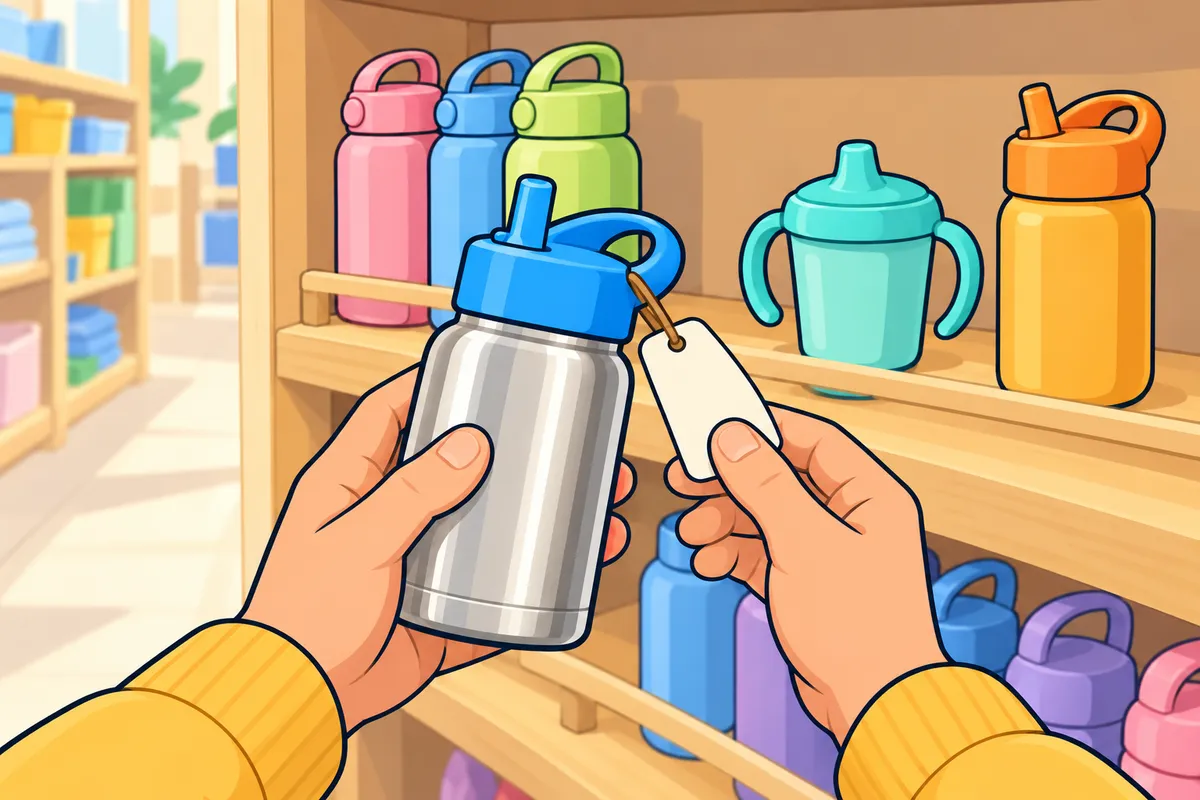
A kids water bottle is safe when it is sold as a children's product and the cup suits the child's age. In the US the first part means lead, testing and certificate rules that an adult bottle never meets; the second means a simple spout or straw for a toddler and an open cup by about age 2.
You cannot test a bottle in the shop. You can match the bottle to the child and check for the signs that a maker followed the rules.
What Makes a Kids Water Bottle Safe?
A kids bottle is safe when it is sold as a children's product and meets the rules that come with that:
- The CPSC caps lead in every part a child can reach.
- The maker has it tested by a third-party lab.
- The plastics carry no BPA.
Then a lid your child can work and a mouth you can scrub keep it safe in daily use.
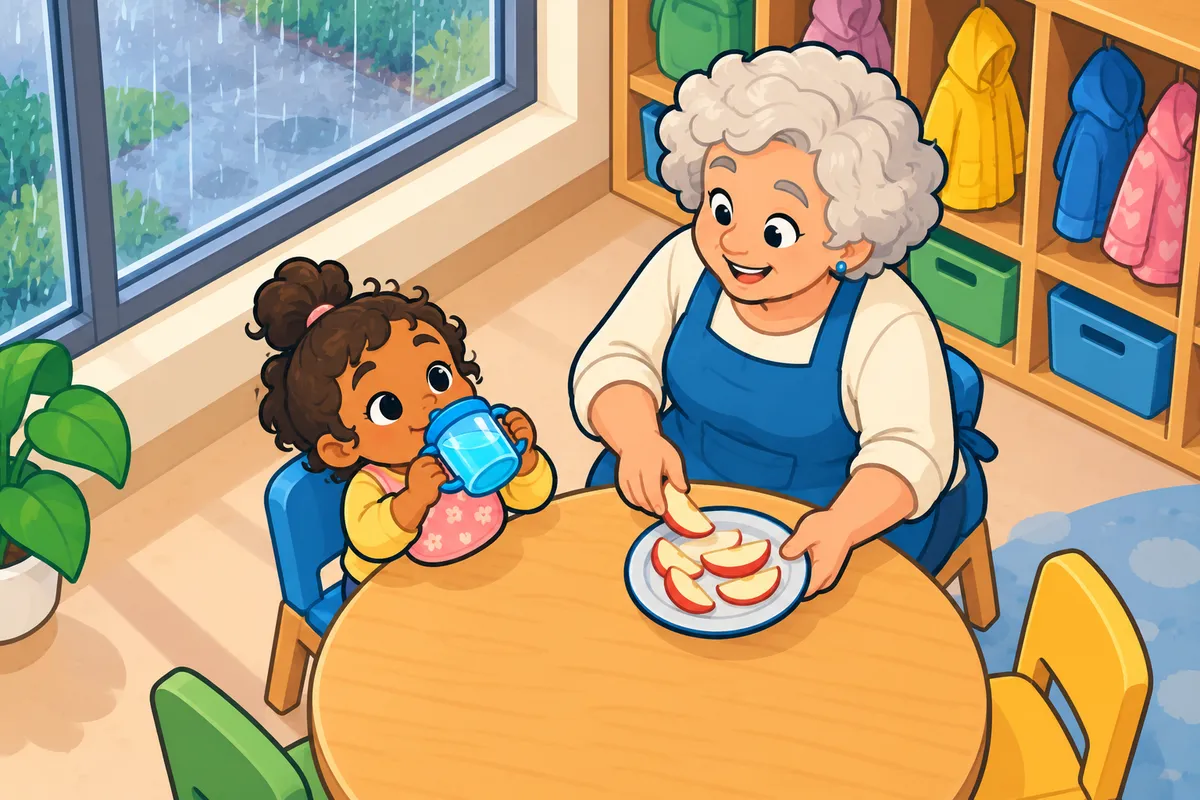
The American Academy of Pediatrics gives the age side. Its advice is to offer a cup when solid foods start, usually around 6 months, and to move to an open cup by about 2 years.
| Child | What the AAP suggests | What to look for in the shop |
|---|---|---|
| About 6 months, when solids start | A sippy cup with no valve and a simple spout, a cup with a straw, or an open cup | A snap-on or screw-on lid; plain fluoridated water only |
| About 2 years | An open cup, with sippy cups only while the child is learning | Offer cups mainly at mealtimes, not carried all day |
| 3 to 12 years | Any bottle sold for children | The lead and testing rules below apply to it |
| 13 and older | An adult bottle | The children's rules no longer reach it |
A kids bottle for each stage
- A baby learning to drink from a cupSippy cup with no valve, or a straw cup, and plain water
- A toddler of 2 and overAn open cup at the table; a straw or spout bottle only for outings
- A school-age child with a bagA bottle sold for children: light plastic, or insulated steel with an intact base cap
- A teenagerAny bottle; the children's rules stop at 12
The first line does more work than it seems. A product "designed or intended primarily for children 12 years of age or younger" is a children's product to the CPSC, and only then do the lead, testing and certificate rules apply. An adult bottle in a child's hand is outside them.
What Rules Does a Water Bottle for Children Have to Pass?
Three US rules reach a kids bottle: a lead limit for every children's product, a phthalate limit for products that feed children 3 and younger, and the end of BPA-based baby bottles and sippy cups. A maker or importer must have the product tested by a third-party lab and issue a written certificate.
| Rule | Limit | Which bottles | Source |
|---|---|---|---|
| Total lead | No more than 100 ppm in accessible parts | Every bottle sold for children 12 and under | CPSC |
| Lead in paint | No more than 0.009 % (90 ppm) | Painted or coated bottles for children | CPSC |
| Phthalates | 8 named phthalates, no more than 0.1 % each | Products that feed children 3 and under | CPSC |
| BPA | No BPA-based materials | Baby bottles and sippy cups | FDA, 2012 |
| Testing and certificate | Third-party testing, a written certificate | Every children's product | CPSC |
Sources: CPSC lead, CPSC phthalates, FDA BPA, CPSC certificate.
The Lead Limit
Any part a child can reach may hold no more than 100 parts per million of lead, the CPSC says, and a paint or coating no more than 90 ppm. On a bottle that means the body, the lid, the straw and any printed design on the outside.
The word "accessible" matters for insulated steel bottles. The CPSC counts a part as inaccessible only if a sealed covering hides it, even through "reasonably foreseeable use and abuse". Paint and coatings do not make a part inaccessible.
Phthalates in Sippy Cups
Phthalates are chemicals that make plastic soft. The CPSC caps eight of them, including DEHP, DBP and BBP, at 0.1 % each in a soft plastic part of toys and of "child care articles", which it describes as products that help feed children 3 and younger or help them with sucking or teething. A toddler's sippy cup with a soft spout sits squarely in that group.
BPA in Baby Bottles and Sippy Cups
The FDA stopped allowing BPA-based materials in baby bottles and sippy cups in 2012. It did so because makers had already dropped them, not because of a new safety finding, and the agency still says current approved uses of BPA in food containers are safe.
The Children's Product Certificate
Every children's product needs a written Children's Product Certificate, based on tests by a third-party lab. The CPSC lists seven things it must name, among them the product, each safety rule it meets, the date and place of manufacture and testing, and the lab.
Is an Insulated Water Bottle Safe for Kids?
Yes, when the base is intact. The water touches only stainless steel, but some makers seal the vacuum between the two walls with a small pellet that contains lead, hidden under a steel cap on the base. A sealed pellet is out of reach for the CPSC limit until that cap breaks off, which is the case the CPSC's "foreseeable use and abuse" wording is about.
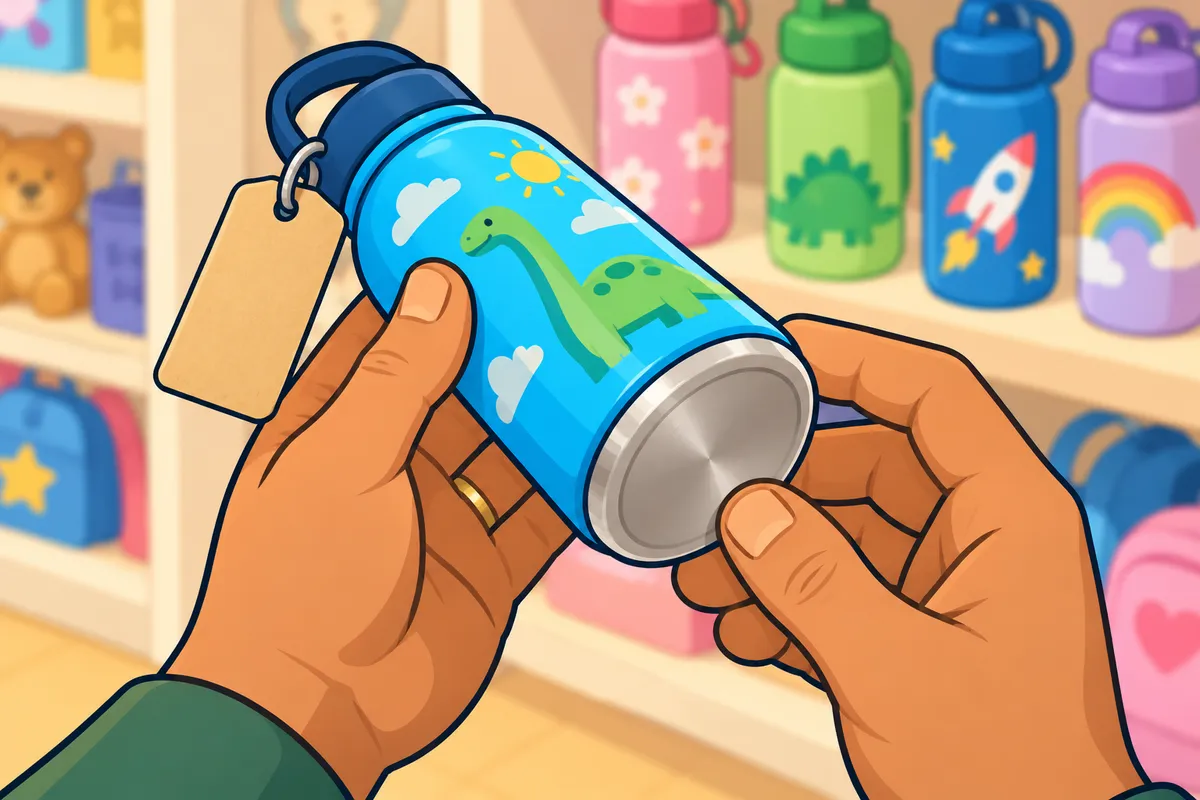
Some brands state outright that their kids bottles use no lead. One maker lists its 16 oz Kids' FreeSip as "BPA-free, lead-free, and phthalate-free", in triple-layer insulated stainless steel.
Weight is the other trade-off for a small child, since insulated steel weighs more than plastic. How much more, and how that adds up in a school bag, is part of choosing the bottle itself.
Is a Kids Water Bottle Dishwasher Safe?
Often only in part. Brands split on it: some kids bottles go in whole, while others allow the lid in the dishwasher but ask you to wash the insulated cup by hand to protect the finish. The rule sits on the maker's page or the base, so check before the first wash.
What three makers say about kids bottles in the dishwasher
Hydro Flask Kids
Whole bottle
- "Kids Bottles are dishwasher safe"
- Older ™-logo bottles: hand wash
Suits you if you want to load the whole bottle without sorting parts.
Kids' FreeSip
Lid only
- Dishwasher-safe lid
- Hand-wash the steel cup
- Listed lead-free and BPA-free
Suits you if you can rinse a cup by hand each evening and like the spout and straw lid.
Nalgene kids bottles
Plastic, small parts
- Small parts in the silverware basket
- Parts need not come off every wash
- Free of BPA, BPS, BPF, phthalates
Suits you if you want a light plastic bottle that tolerates a busy dishwasher.
Hand washing is the safe default when a label is missing. Take the straw and the spout out, because those are the parts a child's mouth touches and the parts that stay damp longest; the daily wash that keeps any bottle clean takes about two minutes.
Where Kids Bottle Safety Slips
Most problems come from treating any small bottle as a kids bottle, or from habits that matter more than the material.
- Buying an adult bottle in a small size. The children's lead and testing rules cover only products made for children, so buy one sold for children.
- Filling a sippy cup with juice or milk. The AAP says only plain fluoridated water belongs in a sippy cup.
- Choosing a cup with a valve. The AAP says to choose one with no valve, a simple spout, or a straw.
- Letting a toddler carry a cup all day. The AAP suggests offering cups mainly at mealtime.
- Ignoring chipped paint. Paint on a children's product has its own 90 ppm lead cap, so retire a bottle that flakes.
- Keeping an insulated bottle with a missing base cap. The cap keeps a sealing pellet out of reach, so replace the bottle.
A Check That Fits in the Aisle
Five looks cover the rules on this page. Heat, cold and reuse raise separate questions for any plastic bottle, adult or child.
Before the bottle goes in the basket
- Check it is sold for children, by a maker you can name
- Find BPA-free on the base, box or maker's page
- Look for chips in paint or print
- On insulated steel, check the base cap is smooth and whole
- Read the dishwasher line; plan to wash the spout by hand
How Do You Check a Kids Bottle for a Recall?
Check before you buy a secondhand bottle and again once a year for the one in your bag. The CPSC has recalled several children's stainless steel cups for lead violations, as TODAY reported, so a recall is a real possibility for a steel cup.
Use the CPSC recall page: it filters recalls by category and hazard, and it offers email alerts so a recall reaches you without a search. If a bottle you own looks unsafe, such as chipped paint or a missing base cap, report it on SaferProducts.gov, and ask the seller for the Children's Product Certificate if you buy a new bottle from a maker you do not know.
General information for healthy adults, not medical advice. If a doctor has set your fluid amount, follow that.

More in Water Bottles
Sources
- US Consumer Product Safety Commission. Children's Products, 2026.
- US Consumer Product Safety Commission. Total Lead Content, 2026.
- US Consumer Product Safety Commission. Phthalates Business Guidance and Small Entity Compliance Guide, 2026.
- US Consumer Product Safety Commission. Children's Product Certificate (CPC), 2026.
- US Consumer Product Safety Commission. Recalls and Product Safety Warnings, 2026.
- US Food and Drug Administration. Questions & Answers on Bisphenol A (BPA) Use in Food Contact Applications, 2018.
- American Academy of Pediatrics. From Bottle to Cup: Helping Your Child Make a Healthy Transition, 2026.
- Hydro Flask Clean & Care. Is Your Hydro Flask Water Bottle Dishwasher Safe?, 2026.
- Owala. Kids' FreeSip, 16 oz, 2026.
- Nalgene. Frequently Asked Questions, 2026.
- Nalgene. How to Clean Your Nalgene, 2026.
Sources checked by the Glubbo Editorial Team on Oct 19, 2026. General information, not medical advice. How we write and check our guides.

