Water Bottles · Materials and Safety
Is Nalgene Safe to Drink From? Tritan Renew, HDPE and Microplastics
What Nalgene bottles are made of, what the maker and the FDA say about each plastic, and what no one has measured yet.
 By the Glubbo Editorial Team · Updated Oct 19, 2026 · 6 min read
On This Page
Short answer
Yes: current Nalgene bottles are BPA-free food plastics.
- Nalgene dropped its BPA polycarbonate bottles in 2008; most now use Tritan Renew.
- Nalgene says all its bottles are free of BPA, BPS, BPF and phthalates.
- No study has measured microplastics from a Nalgene; the FDA sees no shown risk.
Yes, a current Nalgene is safe to drink from. The company announced on 18 April 2008 that it would phase out its BPA polycarbonate bottles, and today's bottles are Tritan Renew or HDPE, which the maker says are free of BPA, BPS, BPF and phthalates.
The worry usually comes from one of two places:
- The old story about BPA in hard plastic bottles.
- Newer talk of microplastics.
They have different answers, and one of them is still "nobody has measured it".
Is Nalgene Safe to Drink From?
Yes. The maker's FAQ states that "all of our bottles are free of BPA, BPS, BPF and phthalates." The FDA, for its part, still says that "current approved uses of BPA in food containers and packaging are safe", so even the old worry has a clear official answer.
The open questions are microplastics, and a smaller dispute over whether Tritan itself releases hormone-like chemicals.
What Changed in 2008
Until 2008, the clear hard Nalgene Outdoor bottles were polycarbonate, a plastic made with BPA. On 18 April 2008 the company announced it would phase out those bottles and pull them from stores over the following months, citing growing customer concern about BPA.
The milky Ultralite bottles are HDPE, which is made without BPA. Any clear hard bottle made before the switch is the one to check.
What Are Nalgene Bottles Made Of?
Two plastics cover the line:
- Most Nalgene bottles are Tritan Renew, a hard, clear copolyester. The FAQ says the company uses Tritan Renew "for the majority of our bottles".
- The Ultralite line is HDPE, a lighter, milky, slightly flexible plastic, and its Ultralite pages list "High Density Poly Ethylene (HDPE)".
Both carry the BPA/BPS-free label.
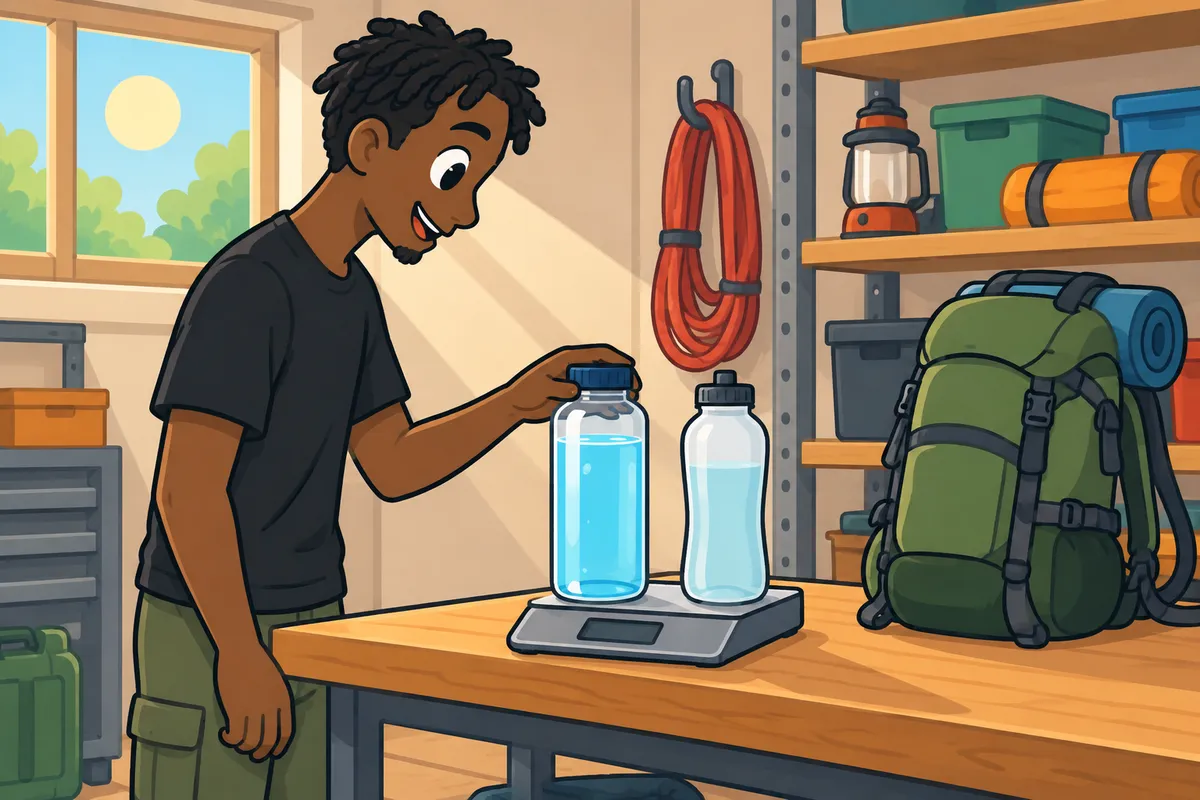
Weight is the real difference in daily use, and it is why the HDPE Ultralite is sold as "perfect for when you're packing light".
- 6.25 oz
- a 32 oz Tritan Renew bottle, empty
- 3.75 oz
- a 32 oz HDPE Ultralite, empty
- 40 %
- lighter in HDPE
The same two plastics, plus the polycarbonate of older bottles, turn up in every reusable plastic bottle, and which of them suit hot fills, the freezer and the car does not change with the brand.
Is Nalgene Sustain the Same as Tritan?
Yes, in practice: Sustain is the name Nalgene gave its bottles made from Tritan Renew. The 2020 launch release says the "Nalgene Sustain" line uses Tritan Renew with 50 % certified recycled material allocated by ISCC mass balance, "the equivalent of 8 single-use plastic bottles in each bottle".
Today the word has mostly left the product names. The 32 oz Wide Mouth page lists its material as Tritan Renew. So "Tritan vs Nalgene" compares a plastic with a brand: Nalgene is the bottle, and Tritan Renew is the plastic in most of its bottles.
Is Nalgene Safe From Microplastics?
Nobody has measured a Nalgene bottle itself.
The big counts in the news come from single-use bottled water, a different plastic used once and stored for months. The FDA's general view is that the evidence "does not demonstrate that levels of microplastics or nanoplastics in water pose a risk to human health", which covers a Nalgene like any other plastic.
A Nalgene filled at the tap avoids the single-use bottle those counts came from; how much a reusable bottle sheds on its own is the part no one has measured.
The Tritan Dispute
The dispute started with a 2011 paper from CertiChem and PlastiPure, two plastic-testing companies whose ties the authors disclosed. Mother Jones later reported how Eastman, which makes Tritan, answered it.
The testing companies
- 2011 paper: 455 plastic products tested
- About 72 % released estrogen-active chemicals, BPA-free ones included
- More activity after stress such as sunlight
- Press reports tied some Tritan products to the testing
Eastman, the maker of Tritan
- Says Tritan has no estrogen activity
- Cites its own tests; a 2012 study it paid for did not disclose that role
- A federal jury in Austin sided with Eastman in July 2013 on false advertising
- The judge barred the two companies from calling Tritan estrogenic in commercial settings
The disputed testing dates from the early 2010s, and the Tritan Renew line launched in 2020. The Nalgene claim covers named chemicals, BPA, BPS, BPF and phthalates; it does not say that no plastic chemical can ever migrate.
What You Can Control
You can still lower the wear on any plastic bottle. These habits come from the maker's own care advice.
- Retire a bottle with deep scratches, cracks or discoloration, as the hot-water guide advises.
- Keep sand and abrasive materials off it, because the FAQ says they scratch and wear away the print.
- Wash it with a soft brush and soap, not a scouring pad.
Are Old Nalgene Bottles Safe?
An old bottle is safe in the FDA's view, but it may contain BPA. The FDA says a resin code of 7 "may" mean a BPA plastic such as polycarbonate, the hard clear material of older reusable bottles. If your old Nalgene is hard and clear, marked 7 and carries no BPA-free claim, treat it as polycarbonate.
What to do with it depends on how you feel about BPA, since the FDA position covers it. If you want to avoid BPA, a current bottle marked BPA-free settles it; the FAQ notes that many towns now accept #7 plastic for recycling.
Telling a New Nalgene From an Old One
| Clue | Current Tritan Renew | HDPE Ultralite | Older polycarbonate |
|---|---|---|---|
| Look | Clear, hard | Milky, slightly flexible | Clear, hard |
| Base code | 7, with a BPA-free claim | Check the base | 7, no BPA-free claim |
| BPA | None, per Nalgene | None, per Nalgene | Contains BPA, per FDA |
Sources: 32 oz Wide Mouth and Ultralite pages, the FAQ for #7 recycling, and the FDA's BPA page.
Is a Nalgene Safe With Hot Drinks?
Yes, within the maker's limits. The blog says Tritan Renew bottles take boiling water up to 212 °F (100 °C) "in everyday use", while HDPE bottles suit hot water up to about 180 to 200 °F (82 to 93 °C), with only occasional boiling water. You can pour hot water in; you must never heat the bottle on a stove or fire.

Heat speeds up what any plastic releases, which is why the hot-car advice for thin single-use bottles exists. A reusable bottle built for heat has its stated limits; a thin single-use bottle left for days in a hot car does not.
Which Nalgene Suits Your Use
The material choice comes down to weight, heat and how you feel about older plastics.
Pick the Nalgene for the job
- Every ounce counts on a long hikeHDPE Ultralite: 3.75 oz for 32 oz
- Hot drinks or a hot-water bottle at campTritan Renew: boiling water allowed
- An old hard bottle marked 7, no BPA-free claimTreat it as polycarbonate; replace it if you avoid BPA
All of the bottles are listed as dishwasher safe, on the top rack and away from the heating element, and the FAQ adds a cleaning routine of very warm water with a few drops of bleach, which the Nalgene cleaning guide walks through.
General information for healthy adults, not medical advice. If a doctor has set your fluid amount, follow that.

More in Water Bottles
Sources
- Nalgene. Frequently Asked Questions, 2026.
- Nalgene. Can You Put Boiling Water in a Nalgene? Here's What You Should Know, 2026.
- Thermo Fisher Scientific (Nalgene Outdoor). Nalgene Outdoor Is First to Market With Reusable Water Bottle Made From 50% Transformed 'Trash', 2020.
- Nalgene. 32oz Wide Mouth Bottle, specifications, 2026.
- Nalgene. 32oz Wide Mouth Ultralite Bottle, specifications, 2026.
- NBC News. Nalgene to phase out hard-plastic bottles, 2008.
- US Food and Drug Administration. Questions & Answers on Bisphenol A (BPA) Use in Food Contact Applications, 2018.
- US Food and Drug Administration. Microplastics and Nanoplastics in Foods, 2024.
- Environmental Health Perspectives. Most Plastic Products Release Estrogenic Chemicals: A Potential Health Problem That Can Be Solved, 2011.
- Mother Jones. The Scary New Evidence on BPA-Free Plastics, 2014.
- Journal of Hazardous Materials. Polymer-specific abrasion and aging govern microplastic release from reusable plastic shaker bottles, 2026.
Sources checked by the Glubbo Editorial Team on Oct 19, 2026. General information, not medical advice. How we write and check our guides.

