Water Bottles · Cleaning and Care
How to Clean a Nalgene Bottle: Bleach Soak, Hot Water and Drying
Nalgene's own deep clean, the bleach-free options, boiling water, and the drying step that keeps the smell away.
 By the Glubbo Editorial Team · Updated Oct 19, 2026 · 7 min read
On This Page
Short answer
Warm water, a few drops of bleach, one hour, then rinse.
- Nalgene: fill 2/3 with very warm water, add a few drops of bleach, shake, wait 1 hour.
- Every Nalgene bottle is dishwasher safe on the top rack, away from the heater.
- Air-dry it with the cap fully off: Nalgene says this stops bacteria and odors.
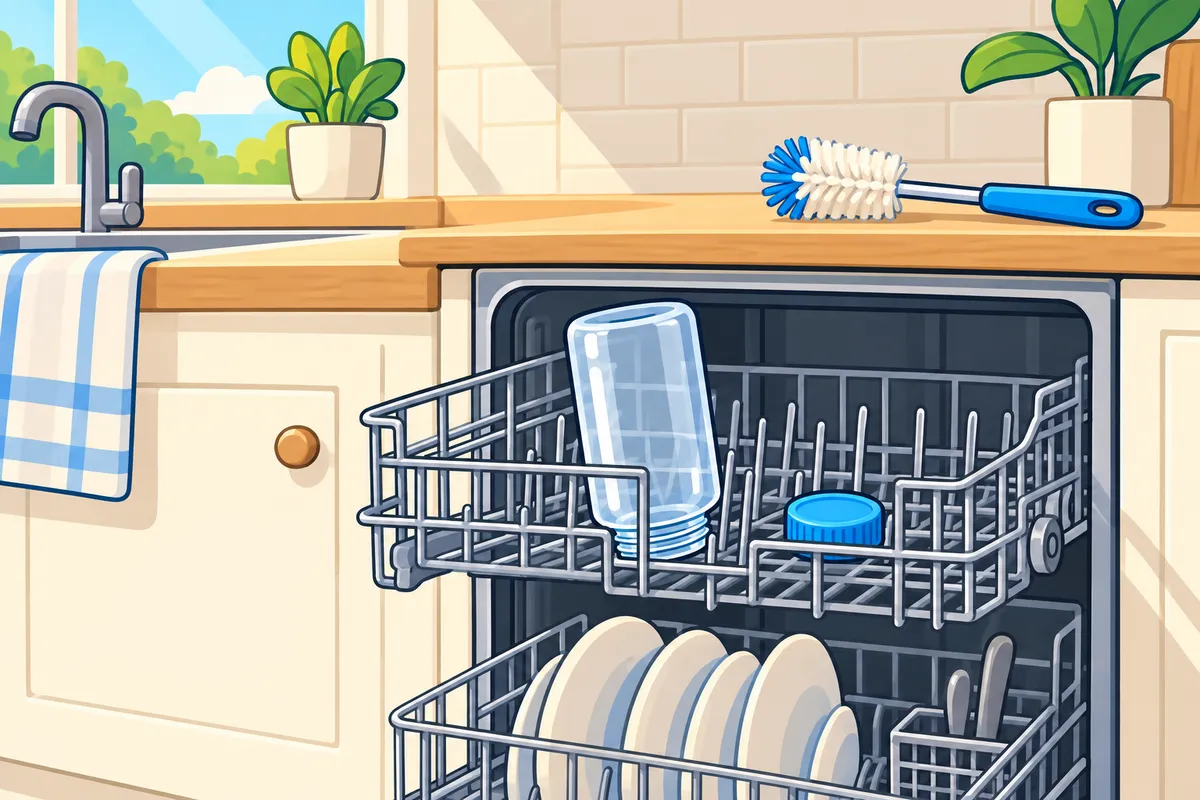
Clean a Nalgene by washing it on the dishwasher's top rack or by hand, then drying it with the cap off. For a film or a smell, fill it about 2/3 with very warm water, add a few drops of bleach, shake, wait an hour, scrub and rinse.
A Nalgene is about the easiest bottle there is to clean: a wide mouth, one cap, no straw, no gasket to pull. Most Nalgene smells come from how the bottle dries, not from how it was washed.
How Do You Clean a Nalgene Bottle?
Wash it on the dishwasher's top rack or by hand with warm soapy water and a bottle brush, then let it air-dry with the cap off. Nalgene says all its bottles are dishwasher safe, best on the top rack and away from the heating element, and you can also wash them by hand.
Which clean your Nalgene needs today
- Water only, used yesterdayTop rack, or warm soapy water and a brush
- A film, a smell, or juice and drink mixThe bleach soak: a few drops, one hour
- Back from a trip, bottle sat closed for daysBleach soak, then dry with the cap off overnight
- Deep scratches, cracks or cloudy spotsReplace it, as Nalgene advises
The wide mouth helps. The 32 oz Wide Mouth has a 2.5 inch (63 mm) cap, wide enough for a hand with a sponge, so nothing in the bottle is out of a brush's reach. A bottle with a filter built into it is a different case, with its own washing rules.
How Often Should You Clean a Nalgene?
Nalgene gives no schedule. A retailer's care guide suggests a rinse after each use and a deep clean about once a week, which matches how the bottle gets dirty: the film builds over days, not hours.
For a 32 oz bottle used every day, that plan looks like this:
- Monday to Thursday: rinse after use, brush if you had anything but water, then dry with the cap off.
- Friday: run the bleach soak (about 630 ml of very warm water and a few drops of bleach for an hour), or the dishwasher's top rack.
- Weekend: leave the cap off the rack so it is dry on Monday.
How Do You Deep Clean a Nalgene With Bleach?
Fill the bottle about 2/3 full of very warm water, add a few drops of bleach, cap it, shake it well and let it sit for an hour. Then scrub the cap and the bottle with a bottle brush and rinse well. That is the whole method on the maker's cleaning page.
The deep clean, about an hour
- Fill about 2/3 with very warm water
- Add a few drops of plain bleach
- Cap it and shake well
- Let it sit for one hour
- Scrub the cap and bottle, then rinse well
How Much Water That Is in Your Bottle
"About 2/3 full" works out differently for each size. The milliliters use Nalgene's sizes and 29.57 ml per ounce.
| Nalgene bottle | Holds | 2/3 full is about | Bleach |
|---|---|---|---|
| 16 oz | 473 ml | 315 ml (10.7 oz) | A few drops |
| 32 oz | 946 ml | 630 ml (21.3 oz) | A few drops |
| 48 oz | 1,419 ml | 946 ml (32 oz) | A few drops |
The page gives no exact drop count. For comparison, the CDC's method for sanitizing water containers uses 1 teaspoon of unscented bleach (5 to 9 % sodium hypochlorite) per quart of water for at least 30 seconds, the approach for any reusable bottle. Nalgene's version is weaker and longer: a few drops, a full hour.
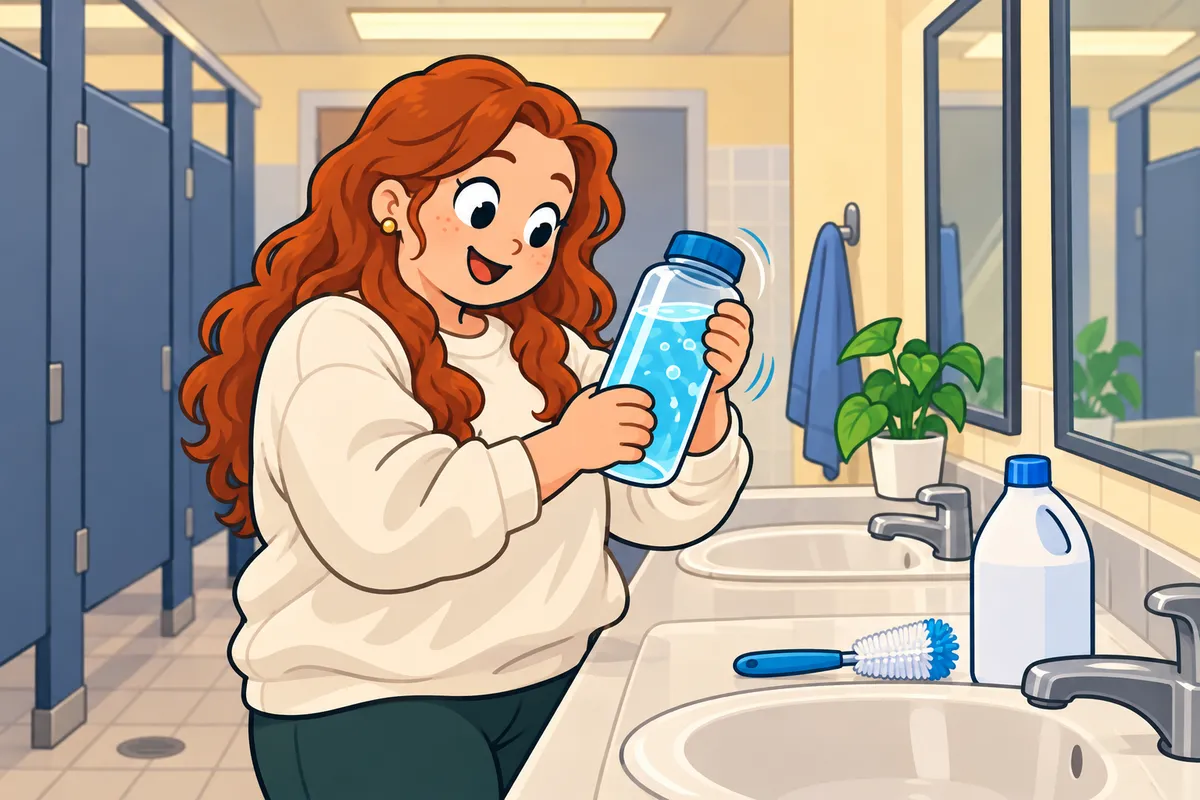
Use plain household bleach, never a scented one, and never mix it with vinegar or other cleaners. Rinse until there is no bleach smell before the next fill.
Can You Clean a Nalgene Bottle With Vinegar?
Yes, though it is not the maker's method. Nalgene's cleaning page and FAQ give the dishwasher and the bleach soak only.
A retailer's care guide adds three bleach-free options:
- White vinegar in warm water to soak, scrub and rinse.
- A spoonful of baking soda in warm water.
- Effervescent cleaning tablets.
It gives no amounts or times for any of them.
If you use vinegar, rinse it out fully, and do not combine vinegar and bleach in the same bottle. Many owners reach for vinegar to fight a smell, but on a Nalgene the smell usually returns from drying with the cap on. Drying with the cap off is the fix that lasts.
Can You Use Boiling Water to Clean a Nalgene?
You can pour it in, but you cannot boil water in the bottle. The maker's blog says its Tritan Renew bottles are safe with boiling water, up to 212 °F (100 °C), and its HDPE Ultralite bottles with hot water up to about 180 to 200 °F (82 to 93 °C), with occasional boiling water allowed. Never put the bottle on a stove or a fire.
Two cautions from the same page apply to a hot rinse:
- Steam builds pressure, and a cap tightened too soon can seal itself shut.
- Hot water does not replace soap, so treat a hot rinse as an extra.
How Do You Get the Smell Out of a Nalgene?
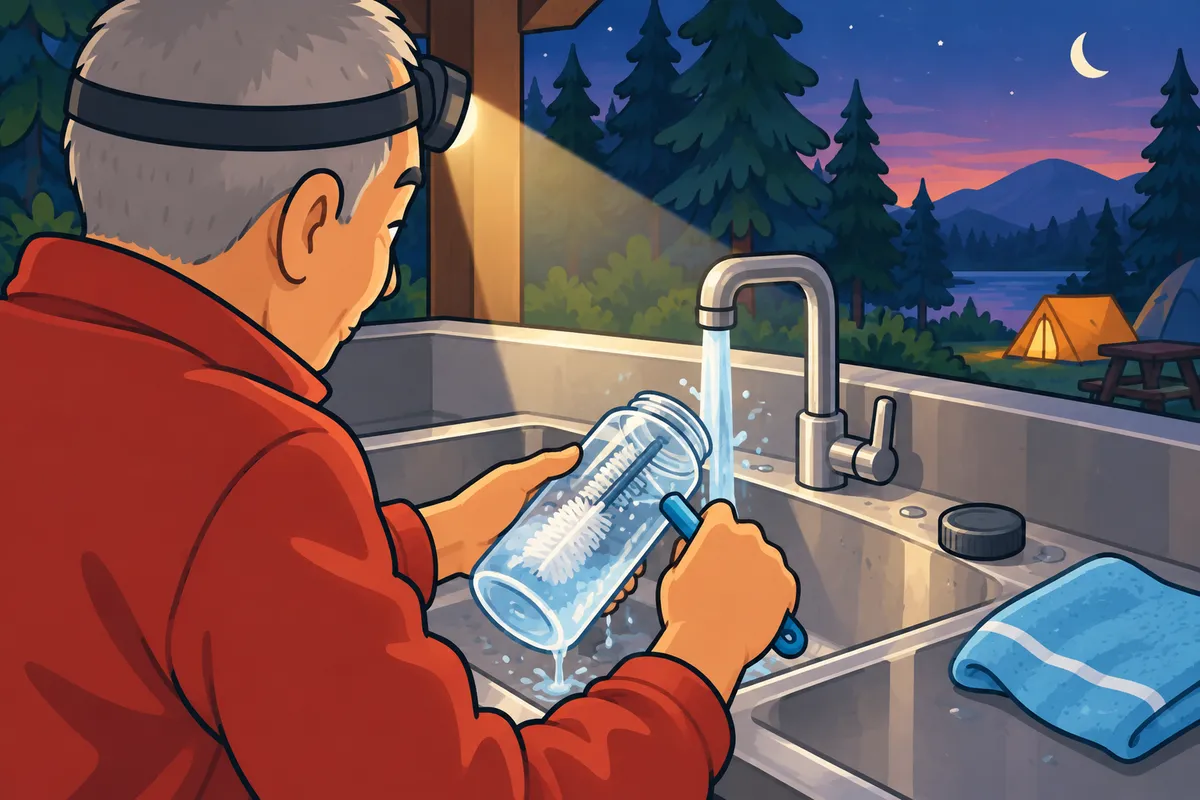
Run the bleach soak, then dry the bottle with the cap completely off. The FAQ says to remove the cap while drying "to enhance air circulation and prevent bacterial growth and odors", and to store the bottle with the cap off in a cool, dry place.
That one habit fixes most smells. A Nalgene closed while still wet keeps a damp film inside until the next fill, and that film is what you smell.
Drink mix and tea add one step. Sugar left in the cap threads feeds a film, so brush the threads with warm soapy water after a drink-mix day. For a tea stain, the bleach soak is the one deep clean the maker gives.
Can a Nalgene Go in the Dishwasher?
Yes. All its bottles are dishwasher safe: put the bottle and cap on the top shelf, away from the heating element. The dishwasher does not dry the inside of an upright, capped bottle, so take the cap off when you unload it and let both pieces finish drying in the air.
The cleaning page names these cases:
- The 48 oz Silo is too tall for the top rack, so its cap goes on top and the bottle can take the bottom rack and a high-temperature sanitizing cycle.
- The valves in kids' bottle caps can go in the silverware basket when they need extra scrubbing.
The Loop Cap
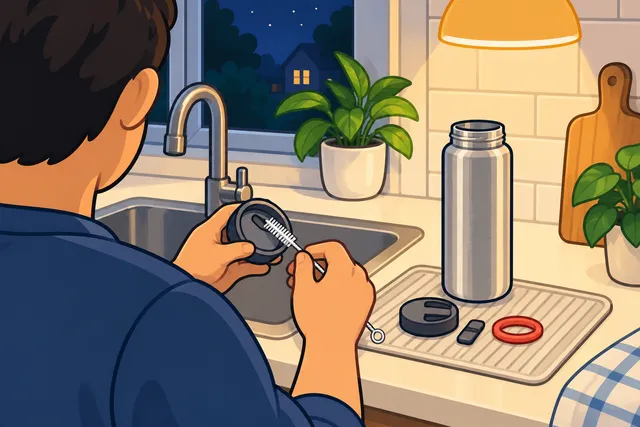
The cap holds the most dirt for its size: its threads and the underside of the top. The deep clean has you scrub the cap with the bottle scrubber as well as the bottle, and the wide 32 oz cap fits an ordinary brush. Dry it apart from the bottle, loop and all, before you screw it back on.
Freezing a Clean Nalgene
You can freeze one, the FAQ says, as long as you fill it only about 2/3 full "to allow for expansion (and prevent cracking)". For a 32 oz bottle that is about 21 oz (630 ml) of water, the same 2/3 line you used for the bleach soak.
Signs Your Nalgene Needs Replacing
Before you pour in hot water, inspect the bottle, and treat "deep scratches, cracks, or discoloration" as signs it is time to replace it. Those are also the places a brush cannot clean.
Clean and Keep
- Faint surface scuffs on the outside
- A smell that goes after a bleach soak
- Faded print from sunscreen or sand
Replace
- Deep scratches inside the bottle
- A crack in the body or the cap
- Cloudy or discolored patches that stay
Faded print is cosmetic. The FAQ says chemicals "such as those found in sunscreens" fade the print, that sand can scratch and wear it away, and suggests a protective sleeve; the print sits on the outside, away from your water.
General information for healthy adults, not medical advice. If a doctor has set your fluid amount, follow that.

More in Water Bottles
Sources
- Nalgene. How to Clean Your Nalgene, 2026.
- Nalgene. Frequently Asked Questions, 2026.
- Nalgene. Frequently Asked Questions (Canada), 2026.
- Nalgene. Can You Put Boiling Water in a Nalgene? Here's What You Should Know, 2026.
- Nalgene. 32oz Wide Mouth Bottle, specifications, 2026.
- Great Outdoors. How to Clean a Nalgene Bottle, 2026.
- US Centers for Disease Control and Prevention. How to Create an Emergency Water Supply, 2025.
Sources checked by the Glubbo Editorial Team on Oct 19, 2026. General information, not medical advice. How we write and check our guides.

