Water Bottles · Cleaning and Care
How to Clean Hydro Flask Bottles, Sip Lids and Straws Step by Step
Each Hydro Flask lid taken apart the way the maker shows, the bleach-free deep clean, and where mold hides.
 By the Glubbo Editorial Team · Updated Oct 19, 2026 · 9 min read
On This Page
- How Do You Clean a Hydro Flask?
- How Do You Clean a Hydro Flask Lid?
- How Do You Clean a Hydro Flask Sip Lid?
- How Do You Clean a Hydro Flask Straw Lid?
- How Do You Clean the Hydro Flask Lid Gasket?
- How Do You Get Mold Out of a Hydro Flask?
- Coffee Days, Water Days and Stains
- Mistakes That Damage a Hydro Flask or Its Lids
- Sources
Short answer
Take the lid apart and wash every piece with warm soap.
- Clean a sip lid after each use when you use it daily, the maker says.
- For coffee stains: ½ cup hydrogen peroxide, 2 tbsp baking soda, 30 minutes.
- Skip bleach and chlorine cleaners; the maker warns against them.
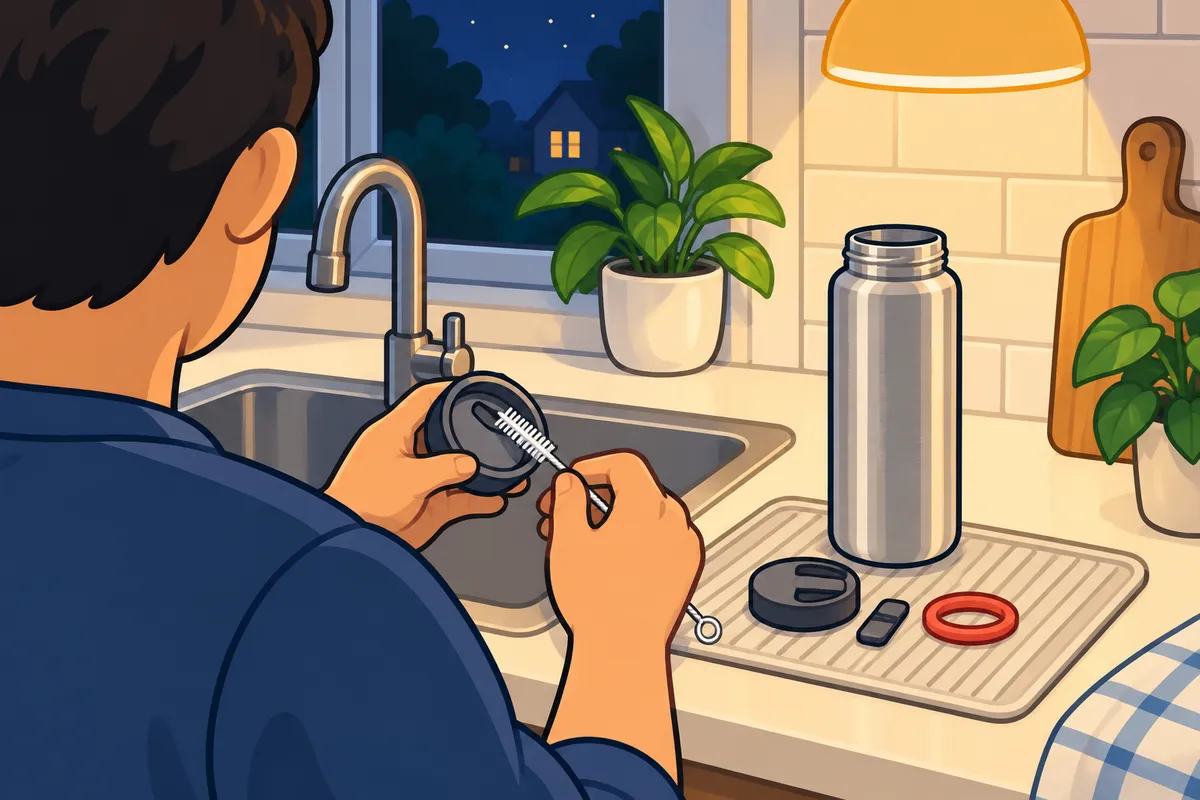
Take the lid apart and wash every piece in warm soapy water; the bottle itself needs only a brush. A Hydro Flask bottle is the easy part to clean. The smell, the coffee taste and the black specks people find live in the lid, under a slider or behind a red rubber ring that most owners never take out.
The maker publishes a cleaning guide for each lid, and its regional sites add a vinegar clean and a few rules of their own. This page gathers them in one place, with the parts that hide dirt marked.
How Do You Clean a Hydro Flask?
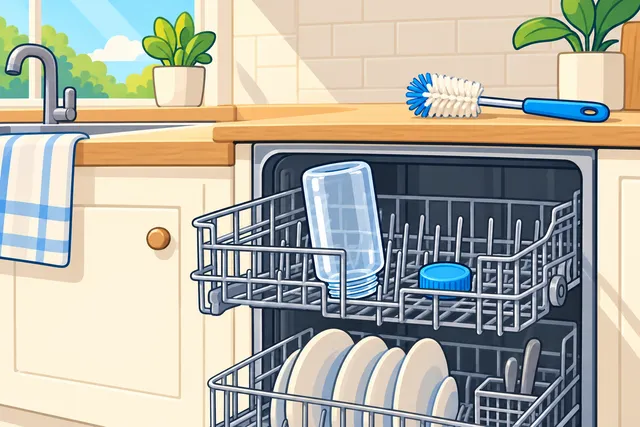
Wash the bottle with warm, soapy water and a bottle brush, or put it on the dishwasher's top rack with the lid off. The maker allows the dishwasher for its bottles and tumblers unless a trademark symbol sits next to the logo; Trail Series bottles are hand wash only.
The bottle, every few days and after any drink but water
- Take off the lid and set it aside for its own wash
- Scrub inside with warm soapy water and a bottle brush
- Rinse until no soap smell is left
- Dry it upside down, lid off, before you close it
The symbol test matters. An older bottle with the ™ symbol beside the logo is not dishwasher safe, the maker says, and neither are its mugs, so those go to the sink.
Is a Hydro Flask Dishwasher Safe?
Mostly, in the US. Current bottles and tumblers, Kids Bottles and the taken-apart lids can go on the top rack, and the maker's guide to dishwashing advises a normal cycle without cleansers that contain bleach or chlorine.
Rules vary by country. The Malaysian care guide tells owners not to put the flask through the dishwasher at all, and to hand-wash the Flex Cap and flat caps, though it calls the Hydro Flip Lid and Wide Straw Lid top-rack safe. If your bottle came with a printed care card, follow the card.
| Item | Dishwasher? | Which guide says so |
|---|---|---|
| Current bottles and tumblers (no ™ symbol) | Top rack, lid off | US cleaning guide |
| Kids Bottles | Top rack | US cleaning guide |
| Trail Series bottles | Hand wash only | US cleaning guide |
| Older bottles with the ™ symbol | Hand wash only | US dishwasher guide |
| Mugs | Hand wash only | US dishwasher guide |
| Flex Cap, Wide Flat Cap, Loop Caps | Hand wash only | Malaysian care guide |
| Lids (taken apart) | Top rack for most | Each lid's own cleaning guide |
| Hydro Flip Lid and Wide Straw Lid | Top rack | Malaysian care guide |
How Do You Clean a Hydro Flask Lid?
Take it apart first. Each of the four lids the maker publishes a guide for comes apart into a few pieces, and those guides wash each piece separately in hot or warm soapy water, then let the pieces dry fully before you reassemble. Most of the lids are top-rack dishwasher safe once apart.
Hydro Flask lids and how each one comes apart
Flex Sip Lid
Twist-open sip lid
- Twist past closed to free the bottom
- All pieces top-rack dishwasher safe
- Mild, bleach-free soap
Suits you if you drink coffee from a Wide Mouth bottle and want the most parts in the dishwasher.
Closeable Press-In Lid
Tumbler lid with a slider
- Pop the slider out from underneath
- Completely top-rack dishwasher safe
- Dry fully before you refit the slider
Suits you if you use a tumbler for hot drinks every morning.
Flex Straw Cap
Straw for cold water
- All pieces in hot soapy water
- Top-rack dishwasher safe
- Not for hot liquids
Suits you if you sip cold water through the day and want a straw.
Flip Sip Cap
Made for hot drinks
- Red gasket and black lever come out
- No bleach or chlorine cleaners
- Dishwasher or hand wash
Suits you if you carry tea or coffee and want a smooth flip mouthpiece.
How often depends on what you drink. For a lid used daily, the maker asks you to clean the Flex Sip, the Press-In and the Flip Sip after each use so no drink is left in them by the next morning. A lid that holds coffee overnight is where the smell starts.
The Flex Chug Cap
The chug cap has no cleaning guide of its own. Its product page lists it as dishwasher safe, leakproof when closed and a fit for all Wide Mouth bottles, and gives no steps for taking it apart.
So wash it whole:
- Open the narrow spout and run a small brush through it.
- Put the cap on the top rack or wash it in warm soapy water.
- Let it dry with the spout open, because a closed spout traps the last of the rinse water inside.
Flat Caps and Loop Caps
The simplest lids have no moving parts. The Malaysian guide has you hand-wash the Flex Cap, the Wide Flat Cap, the Stainless Steel Flat Cap and the Loop Caps with hot soapy water, rinse them and let them dry, rather than running them through a dishwasher.
How Do You Clean a Hydro Flask Sip Lid?
Release it, split it, wash both halves. On the Flex Sip Lid:
- Twist the top to the open position.
- Turn it to closed (red).
- Keep twisting counterclockwise past closed to release it.
- Twist until the bottom comes off.
- Wash all pieces in hot soapy water or the dishwasher.
- Twist them back clockwise.
The Flex Sip guide adds three details:
- Rinse under warm water first.
- Scrub with "a small amount of mild bleach-free soap" and a soft sponge or brush.
- In the dishwasher, set the pieces between the top-rack prongs or in an accessory basket so they do not fall through.

The Press-In Lid on a Tumbler
The Closeable Press-In Lid hides its dirt under the slider. Move the slider to the closed position, flip the lid over and press on the slider to pop it out, then scrub the lid and the slider with soap and warm water, the Press-In guide says.
Let both dry completely before you click the slider back in. The whole lid is top-rack dishwasher safe if you would rather skip the sink.
How Do You Clean a Hydro Flask Straw Lid?
Pull the straw, wash every piece in hot soapy water, and run a straw brush through the straw. The Flex Straw Cap is top-rack dishwasher safe, and the maker asks you to clean it regularly. To put it back, hold the straw at its flat tip and press it into the red seal until it sits firmly.
How Do You Clean the Hydro Flask Lid Gasket?
Take the red gasket out, wash it on both sides, and seat it fully when it goes back. On the Flip Sip Cap, the guide removes the red gasket seal for cleaning and refits it with its tabs aligned so it sits "fully seated in channel". A gasket left in place keeps a ring of old drink behind it.
The same goes for any ring seal you can lift out with a fingernail. Wash it with warm soapy water, dry it apart from the lid, and check the groove it sits in, which is the last place a brush reaches.
Putting the Flip Sip Cap Back Together
A gasket that is half in its channel leaks hot coffee, so reassembly matters as much as the wash. The Flip Sip guide puts it back in this order:
- Refit the red gasket seal, lining its tabs up with the cap.
- Press it down until it sits fully in its channel all the way round.
- Push the black fin lever back in, lining it up with its post.
- Store the cap in a cool, dry place, or put it straight on the bottle.
The guide adds one more line for a cap made for hot drinks: keep hot beverages out of the reach of children.
How Do You Get Mold Out of a Hydro Flask?
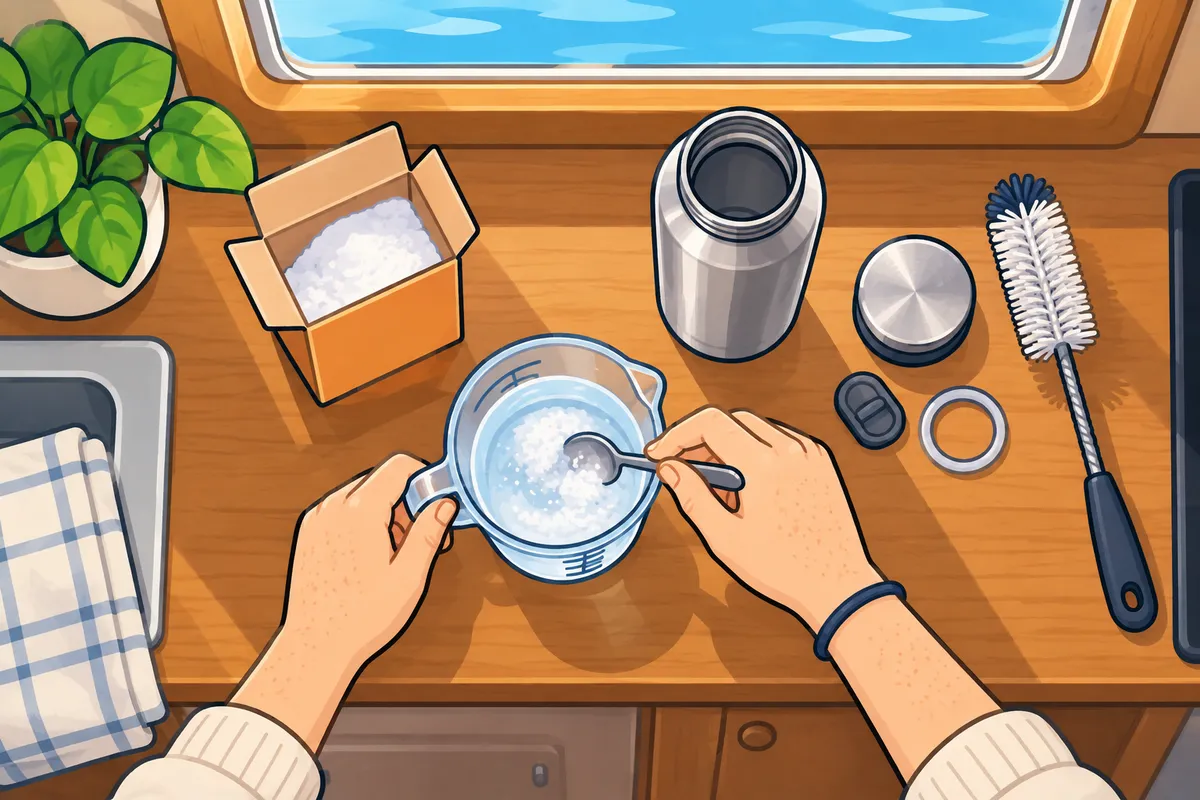
The maker's care pages give no mold steps of their own, so start from the cleaning rules they do publish: take the lid fully apart, scrub every piece and the gasket groove with warm soapy water and a small brush, and let everything dry apart. Mold grows where water sits in the dark, so check under the slider, behind the red gasket and inside the straw.
For the bottle, the maker offers two bleach-free cleans, one from its US page and one from its Malaysian site:
Peroxide mix (US page)
- ½ cup hydrogen peroxide
- 2 tablespoons baking soda
- Leave 30 minutes for stubborn residue
- Then wash with soap and warm water
Vinegar clean (Malaysian guide)
- ½ cup of vinegar in the flask
- Swirl gently, wait 5 minutes
- Rinse thoroughly, repeat if needed
- Baking soda paste for stubborn spots
The peroxide mix is meant for bottles that hold coffee, which tends to stain. The vinegar route is the one the guide gives for interior stains, and it ends the same way: a thorough rinse.
The Malaysian guide spells out the paste and the follow-up:
The vinegar and baking soda clean
- Pour ½ cup of vinegar into the flask and swirl it gently
- Let it sit for 5 minutes, then rinse thoroughly with warm water
- For stubborn spots, mix 2 to 3 tablespoons of baking soda with a little warm water into a paste
- Work the paste in with the bottle brush and repeat until the stains are gone
The guide also points owners to the bottle brush and the Straw & Lid Cleaning Set and suggests using them as often as possible, which fits the lid-after-each-use rule.
A part that stays spotted after a full scrub is worth replacing. For the bottle body, the weekly sanitize in the routine for washing any bottle uses a bleach mix, so keep it away from these bottles and their lids: the Malaysian guide says bleach, salt and chlorine ruin and rust stainless steel.
Coffee Days, Water Days and Stains
The right cleaning depends on what the bottle held and how long ago. These four cases cover most days.
Pick the clean by what happened
- Water only, used yesterdayWarm soapy water and a brush, or the top rack
- Coffee in a Flex Sip or Press-In lid this morningTake the lid apart and wash it tonight
- Brown coffee stain inside the bottle½ cup peroxide plus 2 tbsp baking soda, 30 minutes
- Black specks on the red gasketLift it out, scrub the groove, dry apart; replace if spots stay
Clean bottles come from small habits more than deep cleans. A bottle washed tonight is ready for tomorrow, and an older bottle with the ™ symbol goes to the sink every time while its lid takes the dishwasher.
Mistakes That Damage a Hydro Flask or Its Lids
Most damage comes from a few habits that the maker's own care pages warn against.
- Using bleach, salt or chlorine. The Malaysian care guide says those chemicals ruin and rust stainless steel, and the Australian page tells owners to skip cleansers with bleach or chlorine.
- Running an older ™-logo bottle or a mug through the dishwasher. Those go to the sink.
- Soaking the outside of the flask in hot water, which the Malaysian guide lists among the things to avoid.
- Pouring a hot drink into the Flex Straw Cap. The cap is not designed for hot liquids, so use a sip lid for coffee.
- Putting the Flex Cap, flat caps or loop caps in the dishwasher where the Malaysian guide asks for hand washing.
- Reassembling a lid while a piece is still damp. Every guide above dries the parts before they go back together.
If you are unsure which rule applies to your bottle, the safe default is warm soapy water, a brush and air-drying, because none of the care pages objects to it.
General information for healthy adults, not medical advice. If a doctor has set your fluid amount, follow that.

More in Water Bottles
Sources
- Hydro Flask Clean & Care. Wide Flex Chug Cap, product details, 2026.
- Hydro Flask Clean & Care. Cleaning Your Hydro Flask: 3 Ways to Clean a Bottle, 2026.
- Hydro Flask Clean & Care. Is Your Hydro Flask Water Bottle Dishwasher Safe?, 2026.
- Hydro Flask Clean & Care. How to Clean Your Flex Sip Lid, 2026.
- Hydro Flask Clean & Care. How to Clean Your Closeable Press-In Lid, 2026.
- Hydro Flask Clean & Care. How to Clean Your Flex Straw Cap, 2026.
- Hydro Flask Clean & Care. How to Clean Your Flip Sip Cap, 2026.
- Hydro Flask Malaysia. Care guide, 2026.
- Hydro Flask Australia. Cleaning Hacks: How To Keep Your Bottle Clean, 2026.
Sources checked by the Glubbo Editorial Team on Oct 19, 2026. General information, not medical advice. How we write and check our guides.

