Water Bottles · Cleaning and Care
How to Clean Copper Bottle Inside and Out, Tarnish Included
The everyday wash, the lemon-and-salt scrub, what three makers allow, and why the last rinse matters most.
 By the Glubbo Editorial Team · Updated Oct 22, 2026 · 10 min read
On This Page
- How Do You Clean a Copper Water Bottle Every Day?
- How Do You Clean the Inside of a Copper Bottle?
- Can You Clean a Copper Bottle With Lemon and Salt?
- Can a Copper Bottle Go in the Dishwasher?
- How Often Should You Clean a Copper Water Bottle?
- Why Does a Copper Bottle Turn Black or Green?
- What Not to Use on a Copper Bottle
- Your Next Copper Bottle Clean, Step by Need
- Common Questions
- Sources
Short answer
Soap for every day; lemon and salt for tarnish, then rinse.
- Wash with warm water and a little mild soap, then dry it with a soft cloth.
- Rub tarnish off with half a lemon dipped in salt, then rinse until no acid is left.
- Skip steel wool and the dishwasher; wash by hand with a soft brush.
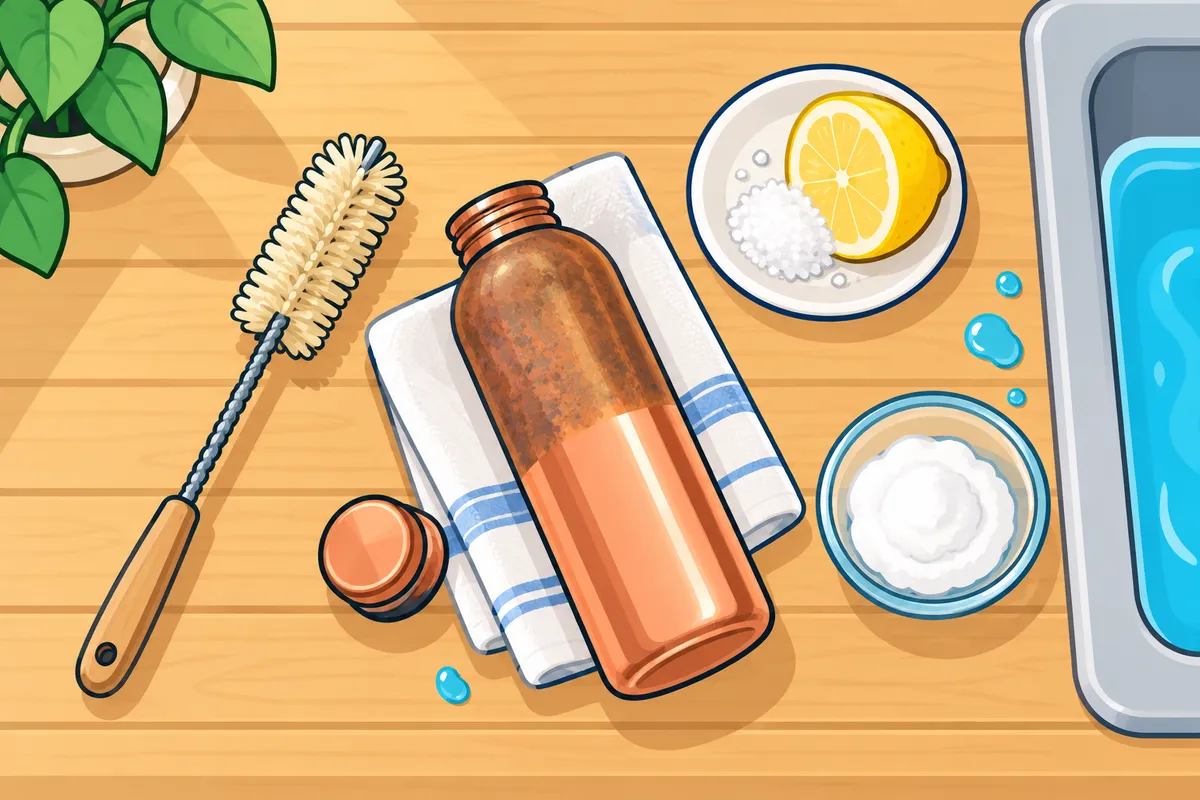
Wash a copper bottle with warm water and a little mild soap, rinse it and dry it with a soft cloth. When the copper turns dull brown, rub it with half a lemon dipped in salt, then rinse with plain water until every trace of the acid is gone.
That last rinse matters most. Lemon, vinegar and salt clean copper because they react with it, and the same reaction keeps going on whatever you leave behind.
How Do You Clean a Copper Water Bottle Every Day?
A copper water bottle needs only warm water, a little mild soap and a soft brush on most days. The maker Advanced Mixology tells owners to wash "regularly" with warm water and a little soap, to avoid "too many chemicals", and to dry the bottle with a soft dishcloth.
The Everyday Wash for a Copper Bottle
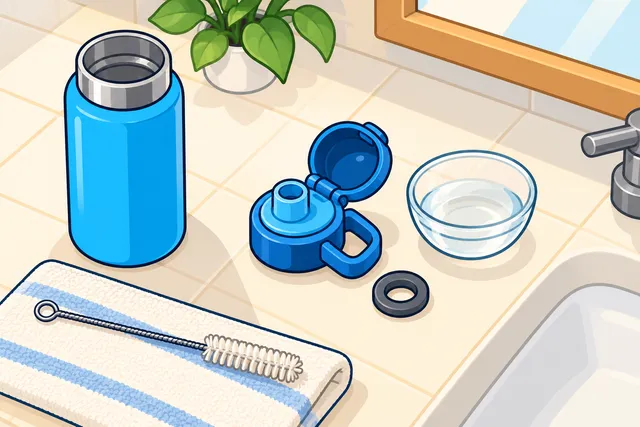
- Empty the bottle and rinse it with warm water
- Brush the inside with a drop of mild soap
- Rinse until no suds are left
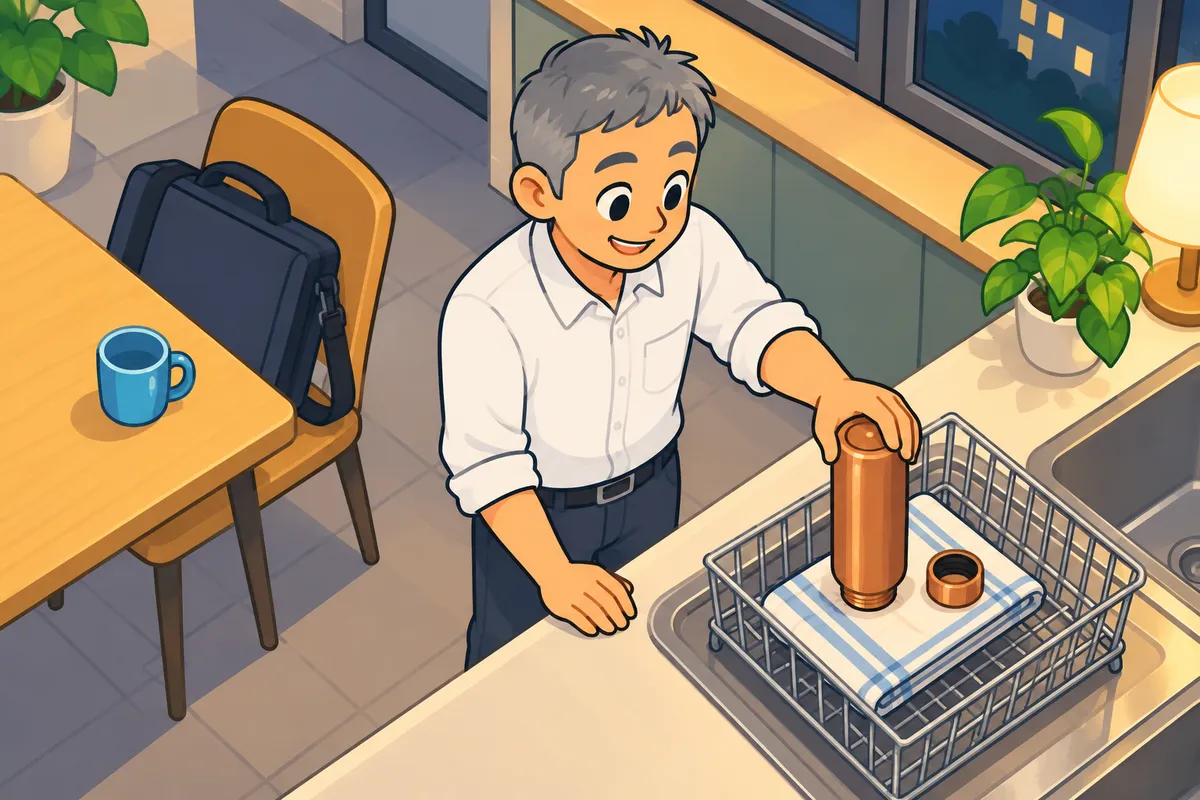
- Dry the outside with a soft cloth and drain it upside down, cap off
The same maker suggests standing the bottle open and upside down after washing so the water drains out. Leave the cap off until both parts are dry, because a closed bottle holds damp air against the metal; the brush and drying rules match those for any reusable bottle.
Dry copper stays bright longer, so the cloth matters as much as the soap.
How Do You Clean the Inside of a Copper Bottle?
Clean the inside of a copper bottle the same way as the outside, but rinse it more. The inside touches your water, so anything you use there, soap, lemon, salt or vinegar, has to leave with the rinse water before the next fill.
First check which inside you have. An unlined bottle shows the same copper inside and out; a lined one has steel, tin or a clear coating inside, and the lining changes how much copper reaches your water. Each surface takes a different cleaner, built here from the makers' pages and the Copper Development Association (CDA).
| Surface | Everyday | For tarnish | Keep away |
|---|---|---|---|
| Unlined copper inside | Warm water, mild soap, bottle brush | Lemon and salt, then several plain rinses | Steel wool, harsh chemicals |
| Bare copper outside | Warm water, soft cloth | Lemon and salt, or vinegar and salt | Steel wool; scouring on a mirror shine |
| Clear-coated (lacquered) outside | Warm water, soft cloth only | Leave it: the coating is what keeps it bright | Scrubbing and abrasive pads, which shorten the coating's life |
| Steel or tin lining inside | Warm water, mild soap | Follow the bottle maker's own care page for the lining | Abrasive pads that scratch the lining |
Sources: makers' copper bottle care pages and cleaning guides, and the CDA on clear finishes. The lacquer row applies the CDA's point that abrasion shortens the life of a clear coating on copper.
A Lemon-and-Salt Clean Inside the Bottle
A simple way to reach the inside:
- Squeeze half a lemon into the empty bottle.
- Add a spoonful of coarse salt and a splash of water.
- Close it and shake for a minute.
- Scrub the bottom with a long-handled brush, where the dark ring usually sits.
These amounts are Glubbo's own starting point; the makers name the ingredients without amounts.
Rinse Until the Acid Is Gone
Rinse at least three times with plain water, filling the bottle about a third each time and shaking it.
Acid is the reason for the care. The FDA Food Code, adopted in state rules such as Minnesota's, says copper "must not be used in contact with a food that has a pH below 6". The NHMRC describes the same effect in pipes: copper in water can rise substantially when water with a low pH sits still in copper pipes and fittings.
Lemon juice left in the bottle becomes part of your next drink. Smell the empty bottle after the last rinse: no lemon or vinegar smell means you can stop rinsing.
Checking the Outside After a Polish
On the outside, watch how the rinse water runs. The CDA's guide to patina finishes says copper is properly clean when rinse water spreads evenly over it without beading into droplets; if the water beads, the CDA says to clean again.
That check comes from the CDA's work on copper sheet, so treat it as a quick eye test rather than a lab result.
Can You Clean a Copper Bottle With Lemon and Salt?
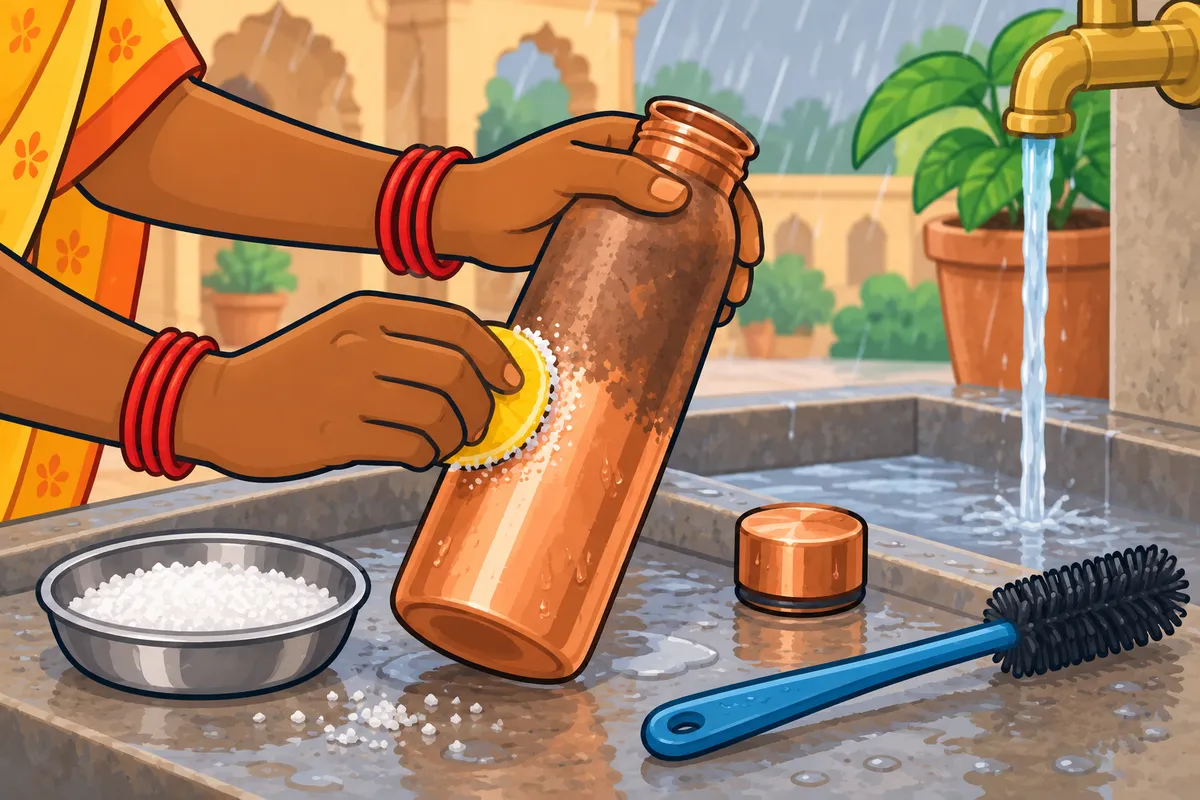
Yes, lemon and salt is a tarnish remover copper bottle makers name on their own care pages. Advanced Mixology says to cut a lemon in half, sprinkle salt on it, scrub the tarnished areas and wash the bottle in lukewarm water, which it says "will return the bottle's natural luster".
LA'FORTE, a maker of copper bottles and jars, goes further and says to wash its copper bottles with lemon and salt with "no soap needed". The acid loosens the dark oxide and the salt grains scrub it off.
Time is the weak point: salt left in a wet bottle keeps working on the metal, so the rinse and the drying finish the job.
Can You Use Vinegar or Baking Soda on a Copper Bottle?
Yes, both appear on makers' pages. Advanced Mixology lists vinegar and salt, because the acidic vinegar lifts tarnish and the salt removes built-up debris. Borosil suggests mixing lemon juice, vinegar, lime juice and baking soda for stubborn stains, and LA'FORTE adds a pinch of baking soda to lemon for extra shine.
Lemon and salt
- Named on two makers' care pages
- Easy to rub on the outside
- Inside the bottle, use the juice
Vinegar and salt
- Named on one maker's care page
- Pours easily into a narrow bottle
- Its smell tells you when to stop rinsing
Both are acids, so both follow the same rule: short contact, full rinse, dry bottle. Baking soda on its own is mild and not acidic, which makes it the gentler paste for a light film on the outside.
Can a Copper Bottle Go in the Dishwasher?
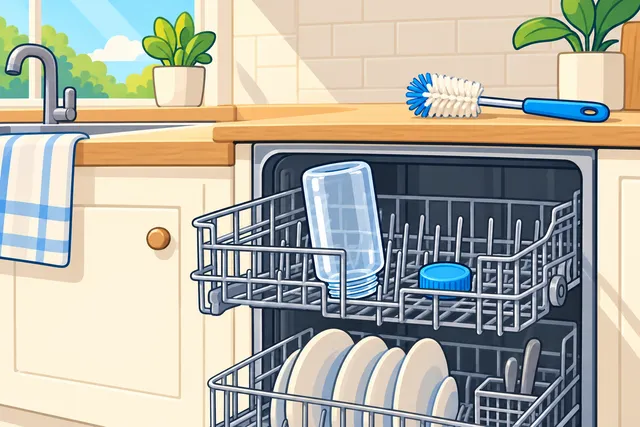
No, keep a copper bottle out of the dishwasher unless its own maker allows it. Advanced Mixology writes "It is not safe to put the copper bottle in the dish-washer", LA'FORTE says "Never use dishwashers for copper", and Borosil tells owners to confirm with the maker or the manual first.
| Maker (22 Oct 2026) | Everyday wash | Tarnish | Dishwasher | Drying |
|---|---|---|---|---|
| Advanced Mixology | Warm water, a little soap | Lemon and salt; vinegar and salt; ketchup | Not safe | Soft cloth; drain upside down |
| Borosil | Gentle dish soap in warm water | Lemon, vinegar, lime and baking soda mix | Only if the maker confirms; gentle, low heat | Lint-free cloth |
| LA'FORTE | Lemon and salt, no soap needed | Baking soda with lemon; turmeric with flour | Never | Let it dry naturally; store upside down |
Sources: each maker's own care page, cleaning guide and tips page; the cleaning guide was last updated on 25 August 2025.
The makers disagree on two points: soap, and whether to wipe or air-dry. Go with the maker of your own bottle; where it is silent, mild soap and a soft cloth match two of the three.
How Often Should You Clean a Copper Water Bottle?
Wash a copper water bottle at the end of each day you use it, and give it a lemon or vinegar clean when it darkens. Borosil gives "every one to two weeks" as its rule for cleaning, and says not to leave water in the bottle for more than 24 hours.
Her plan keeps the water time well inside the 24-hour line. If her bottle sat full over a weekend, the Monday wash would come first, before any new water.
Why Does a Copper Bottle Turn Black or Green?
A copper bottle turns brown or black because the metal reacts with air, and it can turn green where moisture and salts sit on it. The CDA says copper resists corrosion well, but "a superficial discoloring tarnish eventually forms with exposure to the atmosphere or handling".
Green is the next stage. On old roofs, the CDA's patina page names basic copper sulfate as the main coloring agent of the green film, with carbonate and chloride salts, and two of its three recipes for turning copper green on purpose use chloride salts. Table salt is a chloride too, one more reason to rinse every grain of it out of a damp bottle.
When Discoloring Means Stop Using the Bottle
Brown or black tarnish on the outside is a look, not a hazard. Inside, scrub green spots off and rinse; if they come back within days, or fresh water tastes metallic, stop drinking from it.
The NHMRC puts copper's taste threshold in drinking water at 1 to 5 mg/L, so a copper taste you can notice sits near or above the EPA's action level for tap water. When fresh water tastes metallic before it ever reaches the bottle, the tap water itself is the place to look.
Seller pages often add digestion or immunity claims to their cleaning tips, while the EPA treats copper in tap water as a contaminant, with an action level of 1.3 mg/L and stomach upset as the short-term effect above it; its table names no benefit.
What Not to Use on a Copper Bottle
Steel wool, rough scouring pads and strong chemical cleaners do more harm than tarnish does. The CDA warns that ordinary steel wool "may contain chemicals which stain copper metals" and that abrasives should not be used on highly polished, mirror-like surfaces.
Keep These Away From Copper
5 items- Ordinary steel wool, which can stain copper
- Abrasive pads on a mirror-polished finish
- The dishwasher, unless your bottle's maker allows it
- Harsh chemical cleaners on the inside
- Lemon, vinegar or salt left in the bottle overnight
Borosil adds two more limits for its bottles: no very hot liquids and no freezing. LA'FORTE also suggests a separate sponge kept only for copper, so the bottle keeps its shine longer.
Your Next Copper Bottle Clean, Step by Need
Match tonight's clean to what the copper bottle shows: soap for a bright one, acid only for tarnish, and nothing stronger for a coated finish.
What your bottle shows, and what to do tonight
- Bright, just used todayWarm water, a drop of soap, dry upside down
- Dull brown outsideSalted lemon half, lukewarm wash, soft cloth
- Dark ring inside the baseLemon juice, salt and a shake, then three rinses
- Green spots that return, or a metallic tasteStop drinking from it
- Shiny coat outside going patchySoap and water only; no scrubbing
Clean it tonight, rinse until the bottle smells of nothing, and leave it upside down with the cap off until morning.
Common Questions
Can you put electrolyte drinks in a copper bottle?
Not an acidic one. The FDA Food Code, adopted in Minnesota's rules, keeps copper away from food under pH 6, so a mix listing citric acid belongs in a steel or plastic bottle.
What should you do before using a new copper bottle?
Rinse it well with warm water first. Borosil asks owners to throw out any silica gel pouch and rinse away dust or residue; after that, the everyday soap wash applies.
General information for healthy adults, not medical advice. If a doctor has set your fluid amount, follow that.

More in Water Bottles
Sources
- Advanced Mixology. How do I clean the pure copper water bottles?, 2026.
- Borosil. How To Wash Copper Bottles, 2025.
- LA'FORTE. Tip of the Day, 2026.
- Copper Development Association. Clear Organic Finishes For Copper and Copper Alloys, 2026.
- Copper Development Association. Green Patina Finishes, 2026.
- Minnesota Rules (adopting FDA Food Code 4-101.14). 4626.0465 Copper; Use Limitation, 2019.
- US Environmental Protection Agency. National Primary Drinking Water Regulations, 2026.
- National Health and Medical Research Council (Australia). Australian Drinking Water Guidelines: Copper, 2001.
Sources checked by the Glubbo Editorial Team on Oct 22, 2026. General information, not medical advice. How we write and check our guides.

