Water Bottles · Cleaning and Care
How to Get Mold Out of a Water Bottle: Lid, Gasket and Straw
Take it apart, scrub each part, dry it fully, and use bleach only in a drinking-container amount your maker allows.
 By the Glubbo Editorial Team · Updated Nov 2, 2026 · 7 min read
On This Page
- How Do You Get Mold Out of a Water Bottle?
- How Do You Clean Black Mold Out of a Water Bottle Lid?
- Can You Use Bleach to Get Mold Out of a Water Bottle?
- Can You Use Vinegar or Baking Soda on Mold in a Water Bottle?
- How Do You Get Mold Out of a Water Bottle Straw?
- What Each Maker Says to Do With the Parts
- When Should You Throw Away a Moldy Water Bottle Part?
- Is It Safe to Drink From a Bottle That Had Mold?
- Keep Mold From Coming Back
- What to Do Tonight With a Moldy Bottle
- Sources
Short answer
Take it apart, scrub every part, dry it fully.
- EPA: scrub mold off hard surfaces with detergent and water, and dry completely.
- CDC drinking-container mix: 1 tsp unscented bleach per quart, 30 seconds, air-dry.
- Owala asks for no bleach; Hydro Flask says bleach rusts its steel.
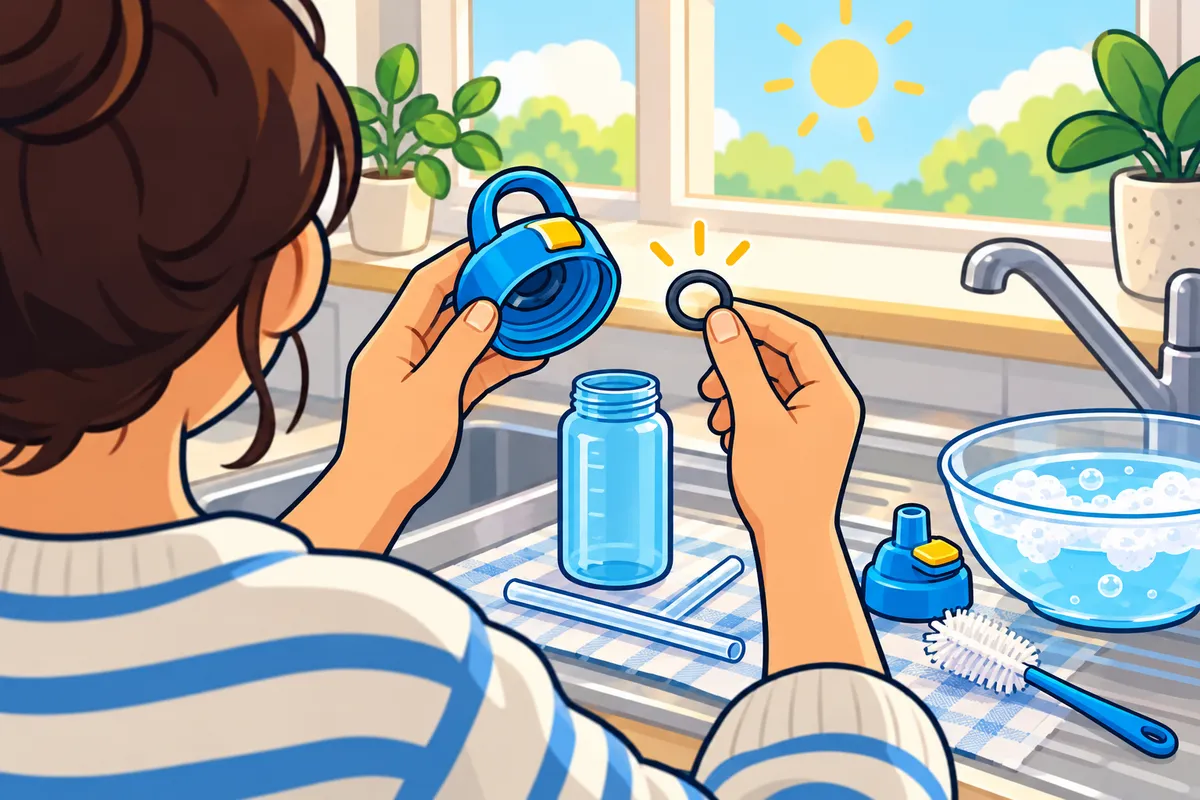
Take the bottle fully apart, scrub the body, lid, gasket and straw with detergent and water, and dry every part before you put it back together. The EPA tells you to "scrub mold off hard surfaces with detergent and water, and dry completely", and a bottle is a hard surface.
Bleach depends on the maker:
- Nalgene allows a few drops in a bottle of very warm water for an hour.
- Owala and Hydro Flask say not to use it.
If a spot is still there after the scrub, replace that part.
How Do You Get Mold Out of a Water Bottle?
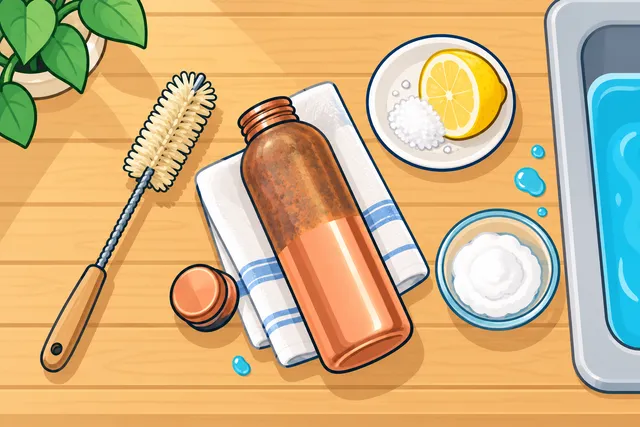
The EPA page names no bottle, so this is its hard-surface advice applied to one. Pull out every removable piece (gasket, straw, spout, carry loop), then work through each in turn.
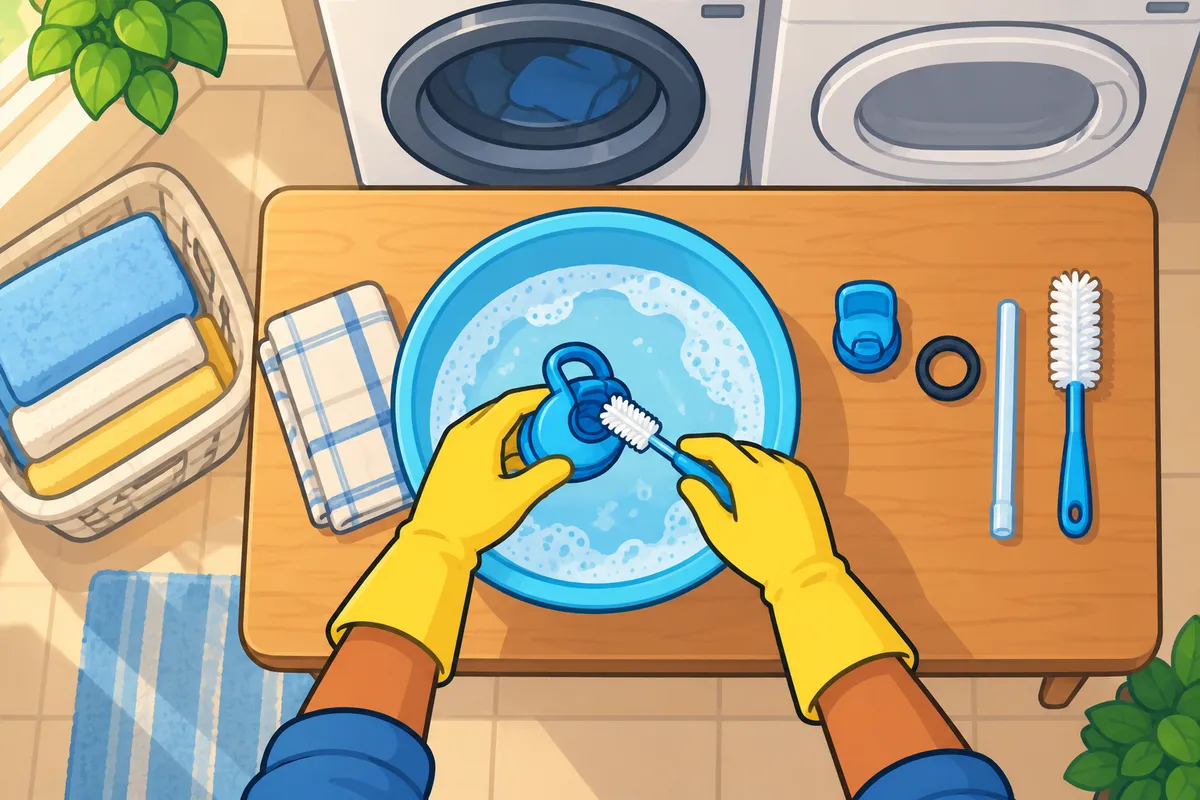
Mold out of a bottle, part by part
- Put on rubber gloves and open a window
- Empty the bottle and pull out the gasket, straw and spout
- Scrub every part with dish soap and a brush, threads included
- Rinse until no soap is left
- Dry every part apart, in open air, before reassembling
The CDC says to open windows and doors for fresh air and to wear rubber boots, rubber gloves and goggles during cleanup. That list is written for a moldy room; for one bottle, wear gloves and keep the window open, and add goggles for any bleach step, since bleach can splash.
How Do You Clean Black Mold Out of a Water Bottle Lid?
Pull the gasket out of the lid and scrub the gasket, its groove and the underside of the lid separately. The Owala cleaning page shows how the FreeSip gaskets come out.
A gasket hides mold because the rubber ring holds a thin line of water against the lid. Hold it up to a window: dark specks show best against light, on both faces.
A lid with no gasket has fewer places to hide. The maker of the plain screw cap on a wide-mouth bottle has you unscrew it and scrub both pieces with a bottle scrubber. Brush the threads and the inside of the top, then dry the cap apart from the bottle.
Which Spots Come Out and Which Stay
A spot that wipes off with a brush and soap was a film, and the part is clean. A spot that stays is covered under when to throw a part away.
Can You Use Bleach to Get Mold Out of a Water Bottle?
Only if the maker of your bottle allows it. For a cup you drink from, use the CDC mix made for drinking-water containers, not the wall-and-floor strength.
| Whose amount | What it is for | The amount | Contact time |
|---|---|---|---|
| CDC, emergency water | Sanitizing a water container | Wash with soap and rinse completely, then 1 teaspoon of unscented liquid household bleach (5% to 9% sodium hypochlorite) in 1 quart (4 cups) of water, shaken over every inside surface | At least 30 seconds, then air-dry before use |
| Nalgene | Its own bottles | "A few drops" of bleach in a bottle about 2/3 full of very warm water | One hour, then scrub and rinse well |
| Owala FAQ | Its own bottles | None: "Do not use harsh chemicals (such as bleach, abrasives, etc.)" | None |
| CDC, Mold | Walls and floors in a building, not bottles | No more than 1 cup of household laundry bleach in 1 gallon of water | Not stated |
The last row is for walls and floors. Do not use it on a bottle. The CDC water-container page does not mention gloves or goggles; the CDC mold page lists them for cleanup, so wear them for the bleach step.
Hydro Flask says no to bleach in two places:
- Its Malaysian care guide says bleach, salt or chlorine "will ruin and rust stainless steel".
- Its Australian page says to "skip cleansers containing bleach or chlorine".
So do not use bleach on a Hydro Flask. The rest of the sanitize steps sit with the everyday wash.
Before any bleach step
4 items- Read your maker's own care page and follow it for each part
- Open a window; wear rubber gloves and goggles
- Never mix bleach with ammonia or other cleaners (CDC)
- Rinse the bottle well and let every part air-dry
Can You Use Vinegar or Baking Soda on Mold in a Water Bottle?
The maker pages tie them to other jobs. The FreeSip FAQ says soaking parts in distilled white vinegar beforehand "will help breakup buildup in inaccessible areas", which describes buildup, not mold. Hydro Flask's care page names baking soda and vinegar for rust, so keep detergent, a brush and full drying as the main steps (Hydro Flask lids have their own guide).
How Do You Get Mold Out of a Water Bottle Straw?
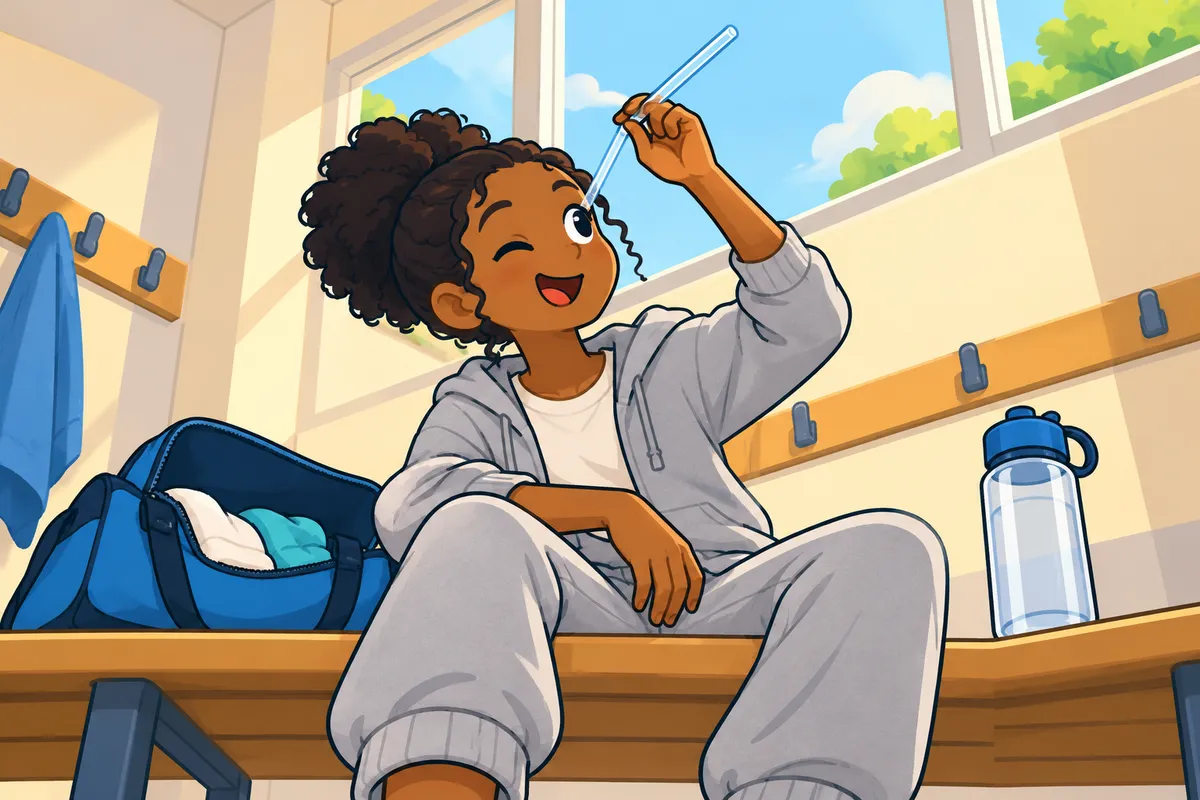
Pull the straw out of the lid and push a thin straw brush through it twice with soapy water. Then stand it up to drain, both ends open. Hydro Flask names a Straw and Lid Cleaning Set for handwashing, and the FreeSip Twist instructions put the straw on the dishwasher's top rack.
A straw is the part you can least see into. Hold it up to a light and look through it: a clear tube is clean, and dark marks the brush does not move mean the part is a candidate for replacing.
What Each Maker Says to Do With the Parts
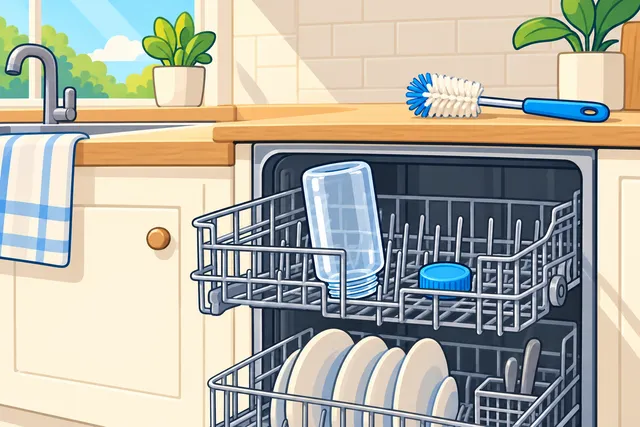
Dishwasher advice differs by maker and by part, and it matters when you are about to put a moldy lid through a cycle. Brush off visible spots by hand first in every case.
| Part | Nalgene | Owala | Hydro Flask |
|---|---|---|---|
| Lid or cap | Cap on the top shelf, away from the heater | "All lids are top-rack dishwasher safe" | "All Hydro Flask caps and lids are top rack dishwasher safe" |
| Straw | No straw on a standard bottle | Top rack | Hand wash with the Straw and Lid Cleaning Set |
| Gaskets | Not mentioned | Utensil case on the Twist; pull tab to remove | Not mentioned |
| Bleach | A few drops, one hour | None | Not for steel: "will ruin and rust stainless steel" |
A filter bottle never takes a soak or a cycle on its filter, so a filter bottle has its own steps.
When Should You Throw Away a Moldy Water Bottle Part?
This is our inference from the EPA, which names no bottle part: "Absorbent or porous materials, such as ceiling tiles and carpet, may have to be thrown away if they become moldy." Applied to a bottle, a rubber or plastic part whose spots stay after a full scrub may hold mold you cannot reach, so replace it. A spot that wipes off was only film.
The part is cheap. The FreeSip maker sells a replacement spout gasket and replacement straws, and Nalgene lists caps for sale on its FAQ page.
Clean and keep
- A film that brushes off with soap
- A smell that goes after washing and drying
- A clear straw you can see through
Replace the part
- Dark spots left on the gasket after a scrub
- A straw with marks the brush will not move
- A part that smells again within days
Is It Safe to Drink From a Bottle That Had Mold?
The CDC says exposure to damp and moldy places may cause a variety of health effects, or none at all, and people with asthma or mold allergies may have severe reactions. If you feel unwell after using a moldy bottle, talk to a doctor.
Keep Mold From Coming Back
Dry every part apart, every time. A damp gasket under a closed lid is where mold starts again, and the EPA's closing instruction for the whole job is to dry items completely.
Nalgene's FAQ says: "Completely remove the cap while drying to enhance air circulation and prevent bacterial growth and odors." The hand-wash steps in Owala's FreeSip Twist instructions end with "Lay out to dry."
Where mold hides, part by part
Gasket and its groove
Look at both faces
- Hold it to a window; dark specks show against light
- Scrub the gasket and groove apart
Suits you if Any lid with a rubber ring
Straw
Least visible
- Look through it toward a light
- Push a thin straw brush through twice
Suits you if Any bottle with a straw
Threads and cap
Easy to skip
- Brush the threads and the inside of the top
- Dry the cap off the bottle
Suits you if Every bottle
Fill it with water only, unless the maker allows other drinks. The Owala FAQ says the FreeSip is "not for use with hot, carbonated, or perishable liquids"; if a bottle held one, take it fully apart the same day.
What to Do Tonight With a Moldy Bottle
- Put on gloves and open a window, then take the bottle apart.
- Scrub each part and leave them to dry apart overnight.
- In the morning hold the gasket and straw up to a window.
- If anything is still dark, order that one part and keep the rest.
If you use bleach, use only the maker's amount or the CDC drinking-container mix above, and never mix it with another cleaner.
General information for healthy adults, not medical advice. If a doctor has set your fluid amount, follow that.

More in Water Bottles
Sources
- US Centers for Disease Control and Prevention. Mold, 2024.
- US Centers for Disease Control and Prevention. About Mold and Your Health, 2024.
- US Centers for Disease Control and Prevention. How to Create an Emergency Water Supply, 2025.
- US Environmental Protection Agency. Mold Cleanup in Your Home, 2026.
- Nalgene. How to Clean Your Nalgene, 2026.
- Nalgene. Frequently Asked Questions, 2026.
- Owala. FreeSip Twist Cleaning Instructions, 2026.
- Owala. Frequently Asked Questions, 2026.
- Owala. Replacement FreeSip Spout Gasket, 2026.
- Owala. Replacement Straws, 2026.
- Hydro Flask. Care and Cleaning, 2026.
- Hydro Flask Clean & Care. Care guide, 2026.
- Hydro Flask Australia. Cleaning Hacks: How To Keep Your Bottle Clean, 2026.
Sources checked by the Glubbo Editorial Team on Nov 2, 2026. General information, not medical advice. How we write and check our guides.

