Water at Home · What Can Be in Water
Microplastics in Water: What Is in Your Glass and What Removes It
What microplastics are, how many studies have counted in water, what the WHO concluded and what a filter can promise.
 By the Glubbo Editorial Team · Updated Oct 19, 2026 · 8 min read
On This Page
- Are There Microplastics in Drinking Water?
- What Counts as a Microplastic?
- Are Microplastics in Water Harmful?
- Are Microplastics Found Inside the Human Body?
- How Many Microplastics Are in Bottled Water?
- Does a Water Filter Remove Microplastics?
- Does Boiling Tap Water Remove Microplastics?
- How Can You Cut the Microplastics You Drink?
- What to Do About Microplastics This Week
- Sources
Short answer
Yes, in tap and bottled water; harm is not shown so far.
- WHO 2019: they don't appear to pose a health risk at current levels.
- A 2018 study found plastic particles in 93 % of 259 bottles tested.
- Particles over 150 micrometres are unlikely to be absorbed, the WHO says.
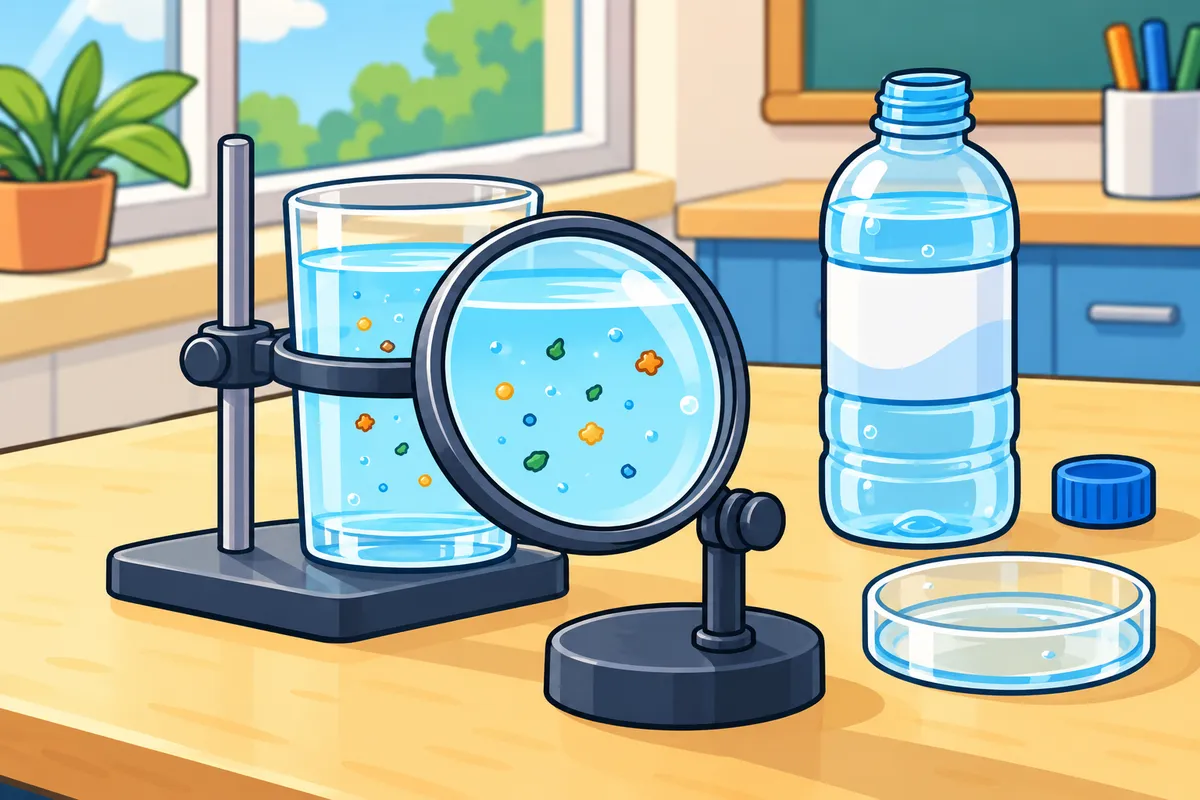
Yes, microplastics turn up in both tap and bottled water, and so far no study has shown they harm health at current levels. The World Health Organization said in 2019 that they "don't appear to pose a health risk at current levels", while stressing that the information is limited.
The counts keep rising largely because newer tools can see smaller pieces. What has not changed as fast is the answer to the question you care about: what those pieces do to you.
- 93 %
- of 259 bottles from 11 brands showed plastic particles
- 10.4
- particles per liter larger than 100 micrometers, on average
- 54 %
- of the confirmed larger particles were polypropylene
Are There Microplastics in Drinking Water?
Yes, in both tap and bottled water. The World Health Organization's 2019 review starts from studies that reported microplastics in treated tap water and in bottled water, which raised the questions it set out to answer.
How much is the hard part. In its 2019 announcement, the WHO called for standard methods to measure microplastic particles in water, because studies so far use different methods and cannot easily be compared.
What Counts as a Microplastic?
A piece of plastic between 1 micrometer and 5 millimeters long; anything smaller than 1 micrometer is a nanoplastic. That is the split the 2024 PNAS study uses, and the size matters because smaller pieces behave differently in the body and in filters.
| Size | Name | What the sources say |
|---|---|---|
| Up to 5 mm | Microplastic, the large end | Qian 2024: the upper size limit of a microplastic |
| Over 150 micrometers | Microplastic | WHO: the body is unlikely to absorb them |
| 1 to 150 micrometers | Microplastic | WHO: the body should take up little of them |
| Under 1 micrometer | Nanoplastic | WHO: data extremely limited |
Are Microplastics in Water Harmful?
Not at current levels, as far as the evidence goes, and the evidence is thin. The WHO's reasoning follows the size line: the body is unlikely to absorb pieces larger than 150 micrometers, should take up little of the smaller ones, and for the nano range the WHO calls the data extremely limited.
Low risk on what is known, and an open question for nanoplastics. WHO's 2022 follow-up on exposure from food, water and air reviewed research up to December 2021 and set out the research still needed.
What the WHO Put First
The WHO's advice to water suppliers was to keep priorities where the known harm is. It asked suppliers and regulators to put the removal of microbial pathogens and chemicals known to threaten health first.
Are Microplastics Found Inside the Human Body?
Yes, in tissue from people who have died, and the headlines are about that. A 2025 study in Nature Medicine by Nihart and colleagues used three detection methods and reported plastic particles in human kidney, liver and brain samples, mostly polyethylene, with the brain's particles mainly nanoscale shard-like fragments.
Concentrations in the liver and brain were higher in samples from 2024 than from 2016, and brains from people with a documented dementia diagnosis held the most. The abstract reports those findings without a cause: the authors say exposure routes, uptake, clearance and health effects, the brain especially, need much more study.
That leaves two true statements side by side. Plastic particles reach human organs, and nobody has shown that the amounts in drinking water make anyone ill. Closing that gap starts with the standard measuring methods the WHO asked for.
How Many Microplastics Are in Bottled Water?
It depends on how small a study can see. A 2018 study in Frontiers in Chemistry tested 259 bottles from 11 brands bought in 9 countries: 93 % showed some plastic, with 10.4 particles per liter larger than 100 micrometers and about 325 per liter once smaller particles were counted.
The authors set their bottled result beside an earlier tap water study at 5.45 per liter for the same size, roughly twice as many in bottles. Over half the confirmed larger particles were polypropylene, a plastic used for bottle caps, which points at the packaging itself.
Newer methods count far more. Using a laser imaging method that sees pieces under 100 nanometers, a 2024 study counted about 240,000 particles per liter of bottled water, 90 % of them nanoplastics; that study did not test tap water. Tap water against bottled is a separate question the counts here cannot settle.
Why the Counts Disagree
Each study sees a different slice of sizes. The 2018 team confirmed its larger particles with infrared spectroscopy, but identified the smaller ones only with a dye called Nile Red, without that confirmation, so its 325 per liter is less certain than its 10.4.
The 2024 method counts single particles below 100 nanometers and names the plastic in each, which is why its total runs orders of magnitude higher than earlier bottled water counts, as its authors note. Neither number is wrong; they measure different things.
| Study | What it tested | Smallest size counted | Count per liter | Tap water tested? |
|---|---|---|---|---|
| Mason, Welch and Neratko, 2018 | 259 bottles, 11 brands, 9 countries | 6.5 micrometers | 10.4 over 100 micrometers; about 325 in all | No; compared with an earlier tap study at 5.45 |
| Qian and colleagues, 2024 | Bottled water, as a test case | Under 100 nanometers | About 240,000, 90 % nanoplastics | No |
Does a Water Filter Remove Microplastics?
Some can catch some of them, and city treatment already removes much. The WHO says conventional drinking water treatment can remove particles smaller than a micrometer, and that wastewater treatment can remove more than 90 % of microplastics, with filtration stages removing the most.
At home, what a filter catches depends on its pore size, the same rule as for germs. The CDC's filter guide explains that an "absolute" 1-micron rating means every pore is 1 micron or smaller, while a "mean" rating only averages that, so a filter's real rating tells you which sizes can pass.
What a Filter Claim Can Tell You
- An absolute pore size in microns
- A certifier's listing for the claim
- The contaminants named on the data sheet
What It Cannot Tell You Yet
- How many nanoplastics get through
- Whether the listing covers pieces under 1 micron
- Any health benefit, which nobody has shown
Is There a Certification for Microplastic Removal?
Yes, a narrow one. The trade magazine Water Conditioning & Purification reported in 2022 that NSF added a microplastics reduction claim to NSF/ANSI 401, and that it rests on the NSF/ANSI 42 Class I particulate test: a filter must cut particles of 0.5 to 1 micrometer by 85 percent. A listing with that claim tells you the filter passed that test, which is not the same as a count of nanoplastics removed.
Nanoplastics are still the gap. By definition they are smaller than 1 micrometer, below the pore size of a 1-micron filter, and the WHO names the efficacy of different treatment processes as one of the questions research still has to answer.
Reverse Osmosis and Microplastics
A reverse osmosis membrane holds back dissolved salts and, the CDC says, viruses, so it works at a far smaller scale than the micro-sized particles above. Research has not settled whether that covers every nanoplastic, while what an under-sink RO unit does for the chemicals on its certification is well documented.
Does Boiling Tap Water Remove Microplastics?
It can, in hard water. A 2024 study from Guangzhou, reported by ScienceAlert, found that boiling made calcium carbonate scale form around added nano- and microplastics, and that the scale could then be filtered out, with up to 90 percent removed. Soft water lost roughly a quarter.
| Hardness (calcium carbonate) | Plastic precipitated (%) |
|---|---|
| 80 mg/L | 34 % |
| 180 mg/L | 84 % |
| 300 mg/L | 90 % |
The researchers call for much larger sample numbers, and they tested plastic they had added to water, so treat the figures as a lab result rather than a promise for your kettle. Boiling also concentrates lead and nitrate, so it is no fix for water with those problems. Your hardness, in mg/L, is on your utility's water report.
How Can You Cut the Microplastics You Drink?
Drink tap water from a refillable bottle, and choose any filter for a reason you can prove. The 2018 authors found about twice the larger particles in bottles that an earlier tap study reported, with different methods behind each count, and the WHO judged the risk from either to be low.
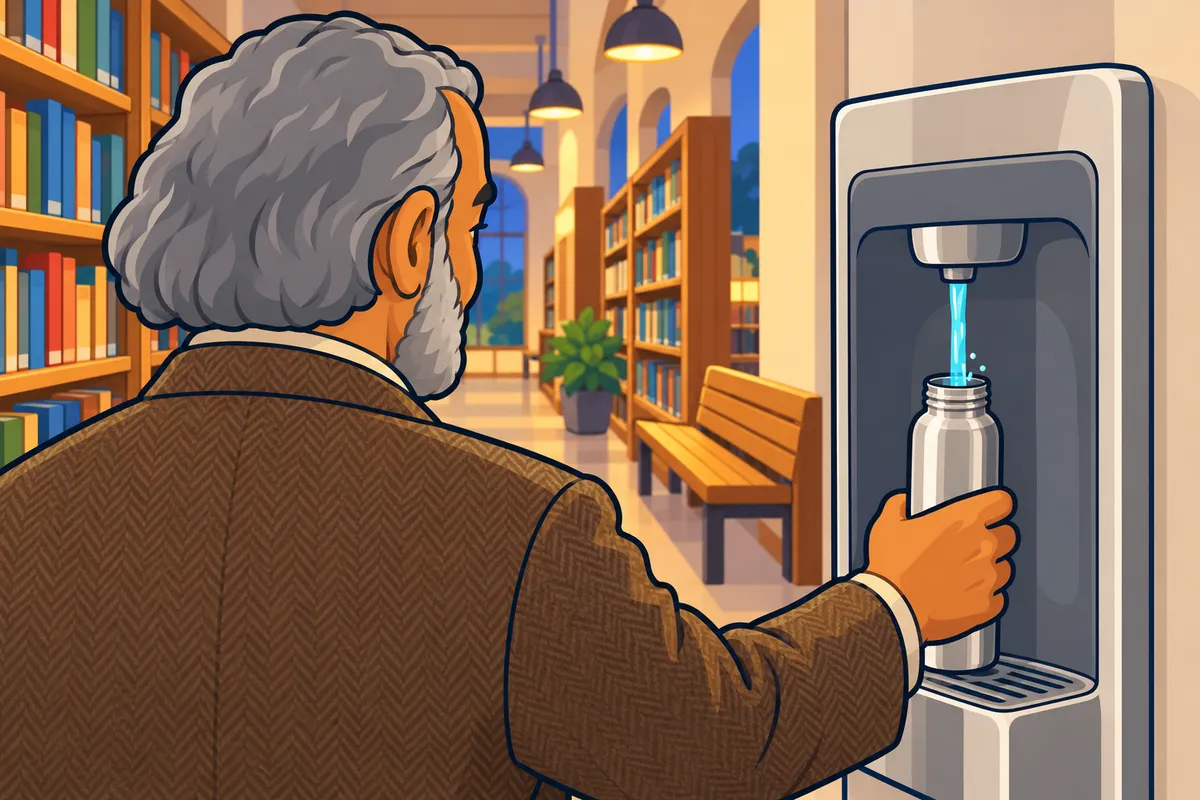
If you swap single-use bottles for a refillable one, steel, glass and plastic bottles each trade weight against care.
Some worries are bigger than plastic. A carbon pitcher bought for microplastics gives you no protection from germs, because pitcher filters are not designed to remove them.
What to Do About Microplastics This Week
- If you drink mostly bottled water, try tap water from a refillable bottle for a week and see whether you miss anything.
- If you want a filter for microplastics, ask for the absolute pore size and look up the listing with the certifier before you buy.
- If you live in hard water and have no lead or nitrate concern, boiling and straining the water is a free extra step; check your hardness on the water report first.
- If your water report names lead or a violation, or you are on a private well, fix that first: it is a known harm.
General information for healthy adults, not medical advice. If a doctor has set your fluid amount, follow that.

More in Water at Home

Sources
- World Health Organization. WHO calls for more research into microplastics and a crackdown on plastic pollution, 2019.
- World Health Organization. Microplastics in drinking-water, 2019.
- Frontiers in Chemistry (Mason, Welch and Neratko). Synthetic Polymer Contamination in Bottled Water, 2018.
- PNAS (Qian, Gao, Lang and colleagues). Rapid single-particle chemical imaging of nanoplastics by SRS microscopy, 2024.
- World Health Organization. Dietary and inhalation exposure to nano- and microplastic particles and potential implications for human health, 2022.
- US Centers for Disease Control and Prevention. About Choosing Home Water Filters, 2024.
- Nature Medicine (Nihart and colleagues), abstract in the University of New Mexico repository. Bioaccumulation of microplastics in decedent human brains, 2025.
- ScienceAlert, reporting Yu, Wang, Liu, Li and Zeng in Environmental Science & Technology Letters. There's a Surprisingly Simple Way to Remove Microplastics in Drinking Water, 2024.
- Water Conditioning & Purification. Update on microplastics reduction claims, 2022.
Sources checked by the Glubbo Editorial Team on Oct 19, 2026. General information, not medical advice. How we write and check our guides.

