Water Bottles · Choosing a Bottle
How to Choose a Water Bottle for Kids Who Carry It All Day
The right size for your child's age, a lid they can open alone, and a mouth wide enough to keep clean.
 By the Glubbo Editorial Team · Updated Oct 19, 2026 · 8 min read
On This Page
- How Do I Choose a Water Bottle for My Child?
- What Size Water Bottle Does a Child Need for School?
- Which Lid and Mouth Work Best for Kids?
- How Heavy Should a Kid's Bottle Be?
- Are Plastic Water Bottles Safe for Kids?
- How Dirty Do School Water Bottles Get?
- What Makes a Good Water Bottle for School?
- What Else Helps a Child Drink at School?
- Sources
Short answer
Size it to their age, then pick a lid they can work.
- The AAP gives about 4 cups of fluids a day at ages 1 to 3 and about 5 at 4 to 8.
- A 12 to 16 oz bottle suits most young children; it stays light in a bag.
- Wide mouths are easier to clean: narrow necks had coliforms 13 times as often.
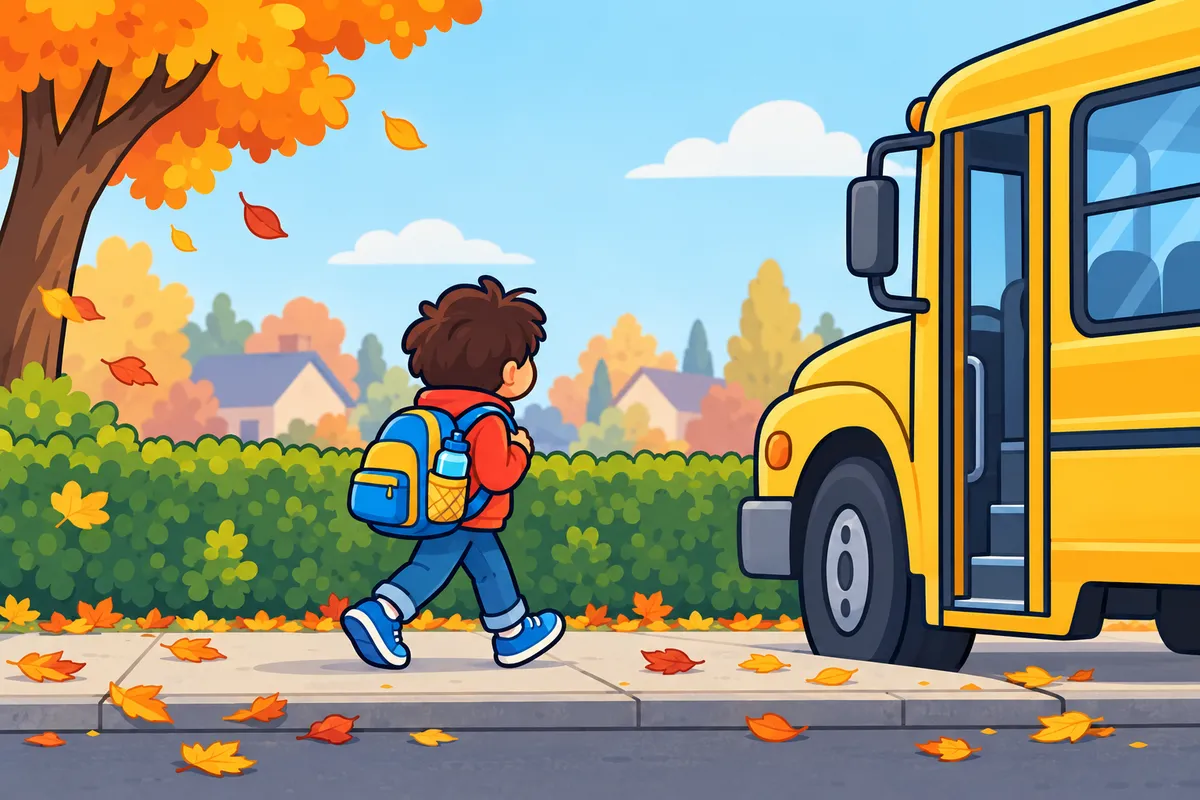
Size the bottle to the child's age and pick a lid they can work alone. A 12 to 16 oz bottle with a wide mouth suits most children under 9, refilled once at school.
The bottle a child takes to school has to survive a backpack, a playground and a pair of small hands that cannot always twist a tight lid. Most of the bottles that come home full at 3 pm fail on one of those, not on the water.
How Do I Choose a Water Bottle for My Child?
Pick the size by age, then the lid, then the material. A 12 to 16 oz bottle suits most children under 9, a lid they can open and close alone matters more than any feature, and a wide mouth makes the nightly wash easy. For plastic, look for a BPA-free label; steel is heavier but tougher.
Four choices, in the order that matters
- How much does it need to hold?12 to 16 oz under age 9; 20 oz or more for older kids and sports
- Can they drink from it alone?A lid they open and close without help: test it in the shop
- Can you keep it clean?A mouth your bottle brush fits, and few lid parts
- Plastic or steel?BPA-free plastic for light; steel if it gets dropped a lot
Let your child try the lid before you buy. If they need two hands and a grimace to twist it open, they will not drink from it at school, where no one has time to help.
What Size Water Bottle Does a Child Need for School?
Size it so that one fill, plus one refill at school, covers a good part of the day's fluids. The AAP gives about 4 cups a day for ages 1 to 3, about 5 for ages 4 to 8 and 7 to 8 for older children, on HealthyChildren.org; that counts water and milk.
| Age | AAP fluids a day | In ounces | One 12 oz bottle covers | One 16 oz bottle covers |
|---|---|---|---|---|
| 1 to 3 | about 4 cups | 32 oz, 946 ml | 38 % | 50 % |
| 4 to 8 | about 5 cups | 40 oz, 1,183 ml | 30 % | 40 % |
| 9 and older | 7 to 8 cups | 56 to 64 oz | 19 to 21 % | 25 to 29 % |
A cup is 8 US fl oz, milliliters use NIST's 29.57 ml per ounce, and the percentages are plain division. The AAP adds that these amounts vary by child and rise with activity and hot or humid weather. For a number tuned to your own child, the kids' water calculator takes age and activity.
What Size Water Bottle for a Toddler?
Small: 8 to 12 oz is plenty. A toddler aged 1 to 3 needs about 4 cups of fluids a day in total, much of it milk, so a 12 oz bottle already holds a third of the day. A smaller bottle is also lighter in a small hand and spills less when it gets thrown from a stroller.
Older Kids and Sports Days
From about age 9, a 20 oz bottle or bigger makes sense, especially on practice days. The AAP says children 9 to 12 who exercise hard need about 3 to 8 oz of water every 20 minutes, which empties a 16 oz bottle in under an hour of a hot practice.
A School Day in Cups
For a child aged 4 to 8, five 8 oz drinks make the AAP's 5 cups. This plan puts two of them in the school bottle and the rest at home. Swap the times for your child's day; milk at breakfast and dinner counts toward the total.
Five cups across a school day (ages 4 to 8)
- 7 AM
- 10 AM
- 12 PM
- 3:30 PM
- 6 PM
For toddlers the AAP suggests offering cups mainly at mealtime rather than letting a child carry one around all day, so a bottle for them belongs on the table, not in the car seat. A paper chart helps an older child see how far along the day is. Print one with a mark for every cup and stick it on the fridge.
Which Lid and Mouth Work Best for Kids?
A lid the child works alone, on a mouth wide enough for your brush.
- Straw and spout lids are easy to drink from but have more parts to wash.
- A plain screw cap is simplest to clean but harder for small hands.
The mouth decides how clean the bottle stays.
For a toddler learning to sip, the AAP says to choose a cup with no valve and a snap-on or screw-on lid with a simple spout, or to offer a cup and straw instead.
Wide Mouth
- A brush reaches the bottom
- Coliforms in 1 of 10 bottles in one study
- Takes ice cubes
Narrow Neck
- A hand and sponge cannot get in
- Coliforms in 16 of 27 bottles
- Needs a long thin brush every night
The numbers come from a 2025 study of 37 medical students' bottles in Malaysia, in which a neck too narrow for a hand raised the odds of coliforms about 13 times, Wong and colleagues found. These were adults' bottles, and the cleaning problem is the same one a child's bottle has.
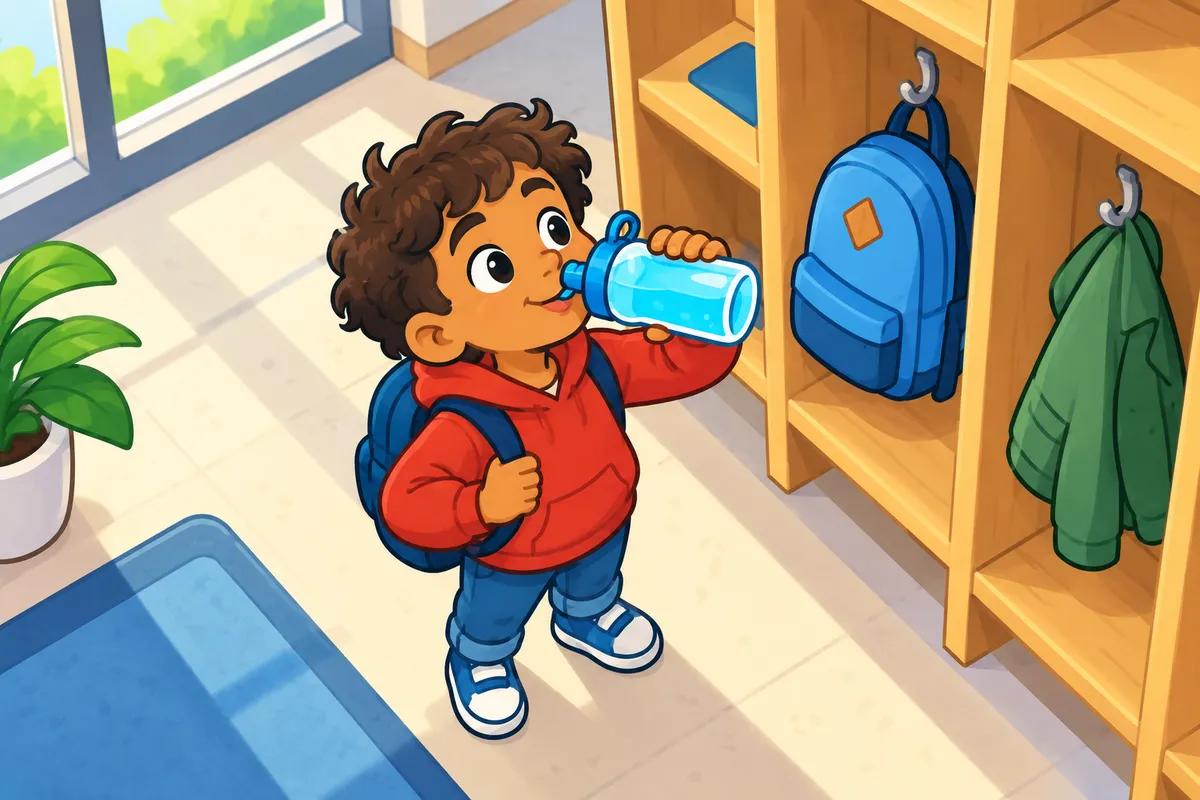
How Heavy Should a Kid's Bottle Be?
Light enough that a child carries it all day: plastic wins on weight. The 16 oz Wide Mouth weighs 3.125 oz empty, on its spec page, while Stanley's insulated 14 oz Quencher weighs 0.58 lb, about three times as much, on its product page.
Three 14 to 16 oz bottles, measured
16 oz plastic
Lightest
- 3.1 oz empty, 1.2 lb full
- 6.5 in tall, 2.75 in wide
- Wide mouth, dishwasher safe
Suits you if the bag is small and your child drops things.
Kids' FreeSip 16 oz
Straw lid, steel
- 8.84 in tall, 2.85 in base
- 24 hours cold
- Ages 3 and up, lead-free
Suits you if your child drinks more through a straw and you want cold water.
14 oz Quencher
Insulated, with ice
- 0.58 lb empty
- 8.8 in tall, 2.76 in base
- Cold 7 hours, 20 with ice
Suits you if a hot day and a cup holder matter more than weight.
The plastic bottle weighs about 1.2 lb filled: 3.1 oz of plastic plus 473 g of water. The steel tumbler's 7 cold hours help on a hot day; on a cool day they are mostly extra weight on a small back.
Are Plastic Water Bottles Safe for Kids?
Yes, for plastics made for food. The FDA stopped allowing BPA-based materials in baby bottles and sippy cups in 2012 because makers had already stopped using them, and its guide to what a resin code of 7 means is the clue to read on the base. What heat, a hot car and reuse change is a separate question from the one a child's bottle raises.
How Dirty Do School Water Bottles Get?
Dirtier than most parents guess. A 2002 Canadian study of elementary students' bottles found 64 % above the safe drinking-water limit for bacteria and 14 % with coliforms, as the 2025 Journal of Environmental Health study recounts it. Daily washing and water-only bottles keep counts down.
Three habits keep the bottle clean:
- At night, take the lid apart, scrub the bottle and each part with hot soapy water and a brush, and let them dry apart.
- Once a week, a mild bleach soak sanitizes the parts that a brush cannot reach.
- A dishwasher is the other route, but the dishwasher rules differ from one kids bottle to the next, so read the label before the first load.
What Makes a Good Water Bottle for School?
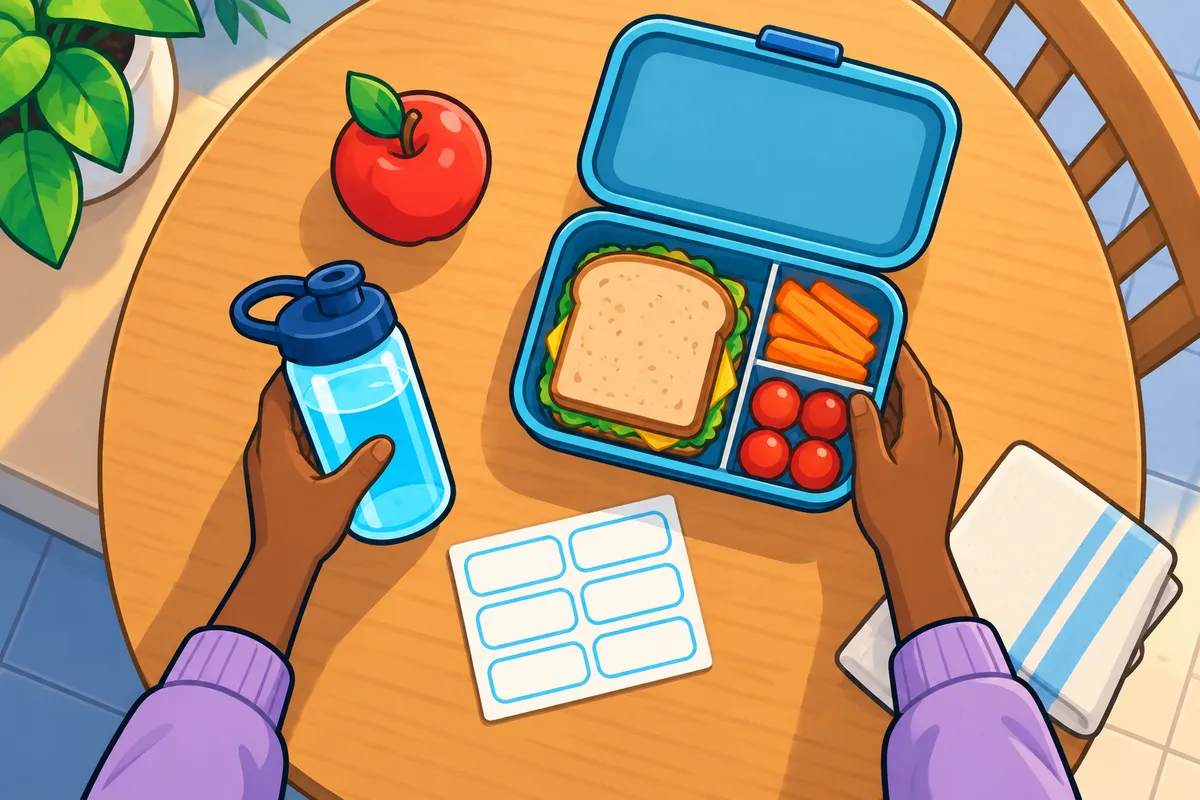
One your child can open alone, carry all day and find again. It should close without leaking in a backpack, fit the side pocket, carry a name and come apart for washing. The 16 oz plastic bottle is 2.75 in (70 mm) wide, which gives you a number to compare against the bag's side pocket.
The school bottle check
5 items- Your child opens and closes it alone, with one try
- Closes tight enough to ride upside down in a bag
- Fits the backpack side pocket (measure: 2.75 in is a 16 oz plastic bottle)
- Room for a name label or engraving
- A mouth your brush fits, and a lid that comes apart
Check the school's supply list before you buy. If the class has a refill fountain, a smaller bottle is enough; if it has none, size up one step.
If the bottle keeps coming home full, the lid and the schedule are the first things to change, and there are more ways to get kids to drink. A full 24 oz bottle adds about 1.6 lb of water to a small backpack, which is why a 12 to 16 oz bottle refilled at school is the lighter plan.
What Else Helps a Child Drink at School?
The AAP suggests special water bottles or cups to make drinking more appealing, and it advises taking the few extra minutes to pack the bottle before you leave. On a day of hard play, the same page says electrolyte drinks may be needed if activity lasts beyond an hour or the child sweats heavily.
Hot or humid weather raises how much a child needs, so send the bigger bottle on those days even if it is heavier. A name label on the bottle, as the checklist above says, brings it back home after a day on the playground.
General information for healthy adults, not medical advice. If a doctor has set your fluid amount, follow that.

More in Water Bottles
Sources
- American Academy of Pediatrics (HealthyChildren.org). Choose Water for Healthy Hydration, 2024.
- American Academy of Pediatrics (HealthyChildren.org). From Bottle to Cup: Helping Your Child Make a Healthy Transition, 2026.
- US Food and Drug Administration. Questions & Answers on Bisphenol A (BPA) Use in Food Contact Applications, 2018.
- Journal of Environmental Health (Wong et al.). Bacterial Water Quality in Personal Reusable Water Bottles of Undergraduate Medical Students at a Malaysian University, 2025.
- Food Protection Trends (Sun et al.). The Cleanliness of Reusable Water Bottles: How Contamination Levels are Affected by Bottle Usage and Cleaning Behaviors of Bottle Owners, 2017.
- Nalgene. 16oz Wide Mouth Bottle, specifications, 2026.
- Stanley. The Quencher H2.0 FlowState Tumbler, 14 oz, 2026.
- NIST. Approximate Conversions from U.S. Customary Measures to Metric, 2026.
Sources checked by the Glubbo Editorial Team on Oct 19, 2026. General information, not medical advice. How we write and check our guides.

