Every Age · Babies and Children
How to Get Kids to Drink More Water, From Toddlers to Teens
Habits you can start tonight, the AAP juice limits for each age, and a school day of drinks you can copy.
 By the Glubbo Editorial Team · Updated Oct 19, 2026 · 9 min read
On This Page
Short answer
Drink water where they see you, and keep it close.
- Let each child pick a cup or bottle, then write their name on it.
- Add lemon, berries, cucumber or mint instead of juice or sweeteners.
- Keep juice to 4 oz a day at ages 1 to 3, and 8 oz from 7 to 18.
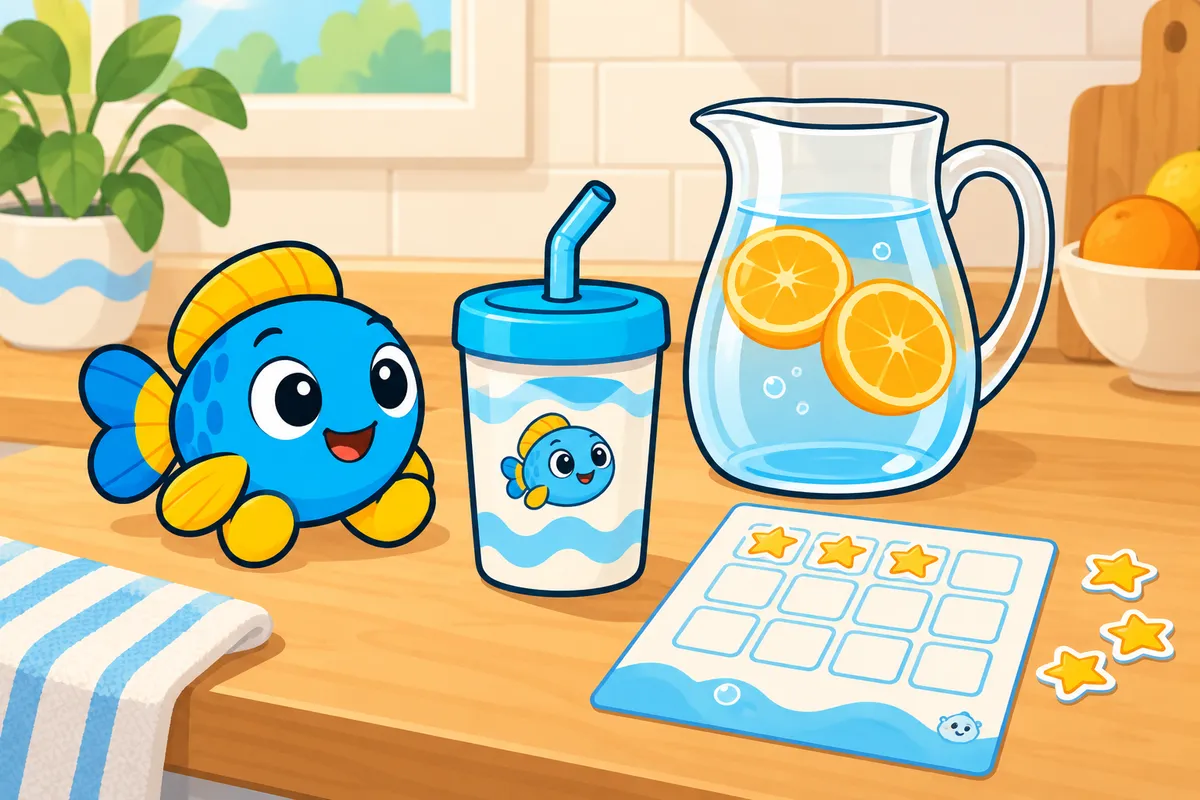
Kids drink water when it is in reach, in a cup they like, and when they see you drinking it too. Sweet drinks work against all three, so the habit starts with what you keep in the fridge.
If you need the number first, your child's cups a day depend on their age, and milk counts toward them.
How Do You Get Kids to Drink More Water?
Drink water yourself where they can see it, let them pick a special cup or bottle, and keep water within reach all day. The American Academy of Pediatrics calls being a good role model "a great way" to make water part of your children's routine. Add fruit for taste, and keep juice and sugary drinks small.
Be the Drink They Copy
Children copy the drink in your hand. Two places to let them see it:
- Put a glass of water at your own place at every meal.
- Carry a bottle on the school run where they can see it.
The habit you want is drinking before thirst arrives, which matters most at play, when kids forget to stop for a drink. A parent who sips between errands shows it better than any reminder.
Let Them Own the Cup
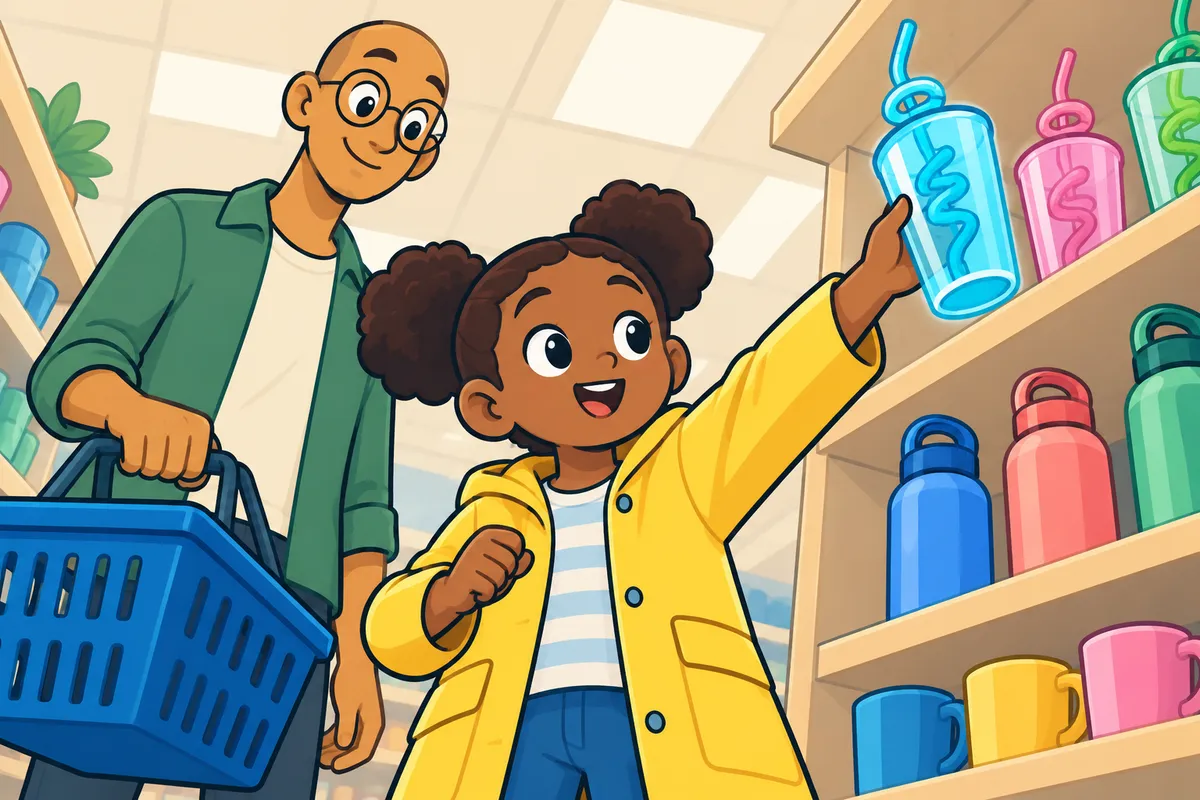
The AAP suggests "special water bottles or cups", and Children's Hospital of The King's Daughters adds a fun straw to the list. Let your child choose it in the shop, then write their name on it so it is clearly theirs.
Make Water Taste Like a Treat
The AAP's ideas cost almost nothing:
Four AAP ideas that make water a treat
Infused jug
Easiest start
- Lemons, berries, cucumber or mint
- Kept cold in the fridge
Suits you if your child turns down plain water.
Fruit ice cubes
Kids can help
- Fruit frozen inside the cubes
- Young children fill the trays
Suits you if your child likes to help in the kitchen.
Fruit popsicles
For hot days
- Pureed fruit in small paper cups
- Cups your kids decorate
Suits you if it is hot and a treat would go down well.
Water-rich fruit
Water you eat
- Watermelon, cantaloupe, strawberries
- Cucumber and tomato
Suits you if your child eats better than they drink.
Keep It in Reach
Make water the closest drink in the house. The AAP suggests keeping a cup of cool water available so your child can drink anytime. The same hospital adds water-rich fruit and vegetables such as cucumber, celery, melon and berries, kept handy on a low fridge shelf where a child can reach them.
What if My Child Refuses Plain Water?
Cut the sweet drinks first, then keep plain water in reach between meals. The AAP says young children introduced to sweet drinks develop a strong preference for them, and that preference "can lead them to dislike or refuse plain water".
Three things are worth checking before you decide your child just hates water:
What may be behind the refusal
- Juice or flavored milk in the afternoonMove it to a meal; a cup of juice at 3 pm leaves little room or taste for water at 4 pm
- A toddler who drinks 24 oz of milk a dayCut milk toward the AAP's 16 oz and serve it with meals only
- Cold plain water in a cup they did not chooseSwap the cup first, then add fruit and offer it at two or three fixed moments
A "sugar-free" squash is not the bridge back to water, for the reason in the flavored-water section below. A slice of orange in the jug is.
How Do You Get a Toddler to Drink Water?
Start a cup early and keep water as the between-meals drink. The AAP suggests offering a cup when solid foods begin, usually around 6 months, with water given only between meals and milk kept to mealtimes. By about age 2 your toddler can drink from an open cup.
The AAP's guide from bottle to cup lays out the steps:
When Your Toddler Only Wants Milk
Milk fills a toddler up fast and leaves less room for water, which is why the toddler drinks list puts an upper limit on it. The AAP's page on a toddler who only wants milk caps milk at 16 to 24 oz (about 470 to 750 ml) a day after the first birthday, and suggests aiming near 16 oz.
Its switch works like this:
- Cut milk back over about a week.
- Serve milk only with meals and only after some solid food, never as a snack.
- Offer water between meals instead.
It advises against a bottle before bed or naptime; if sleep problems follow, fill the bottle with water.
Should Kids Drink Juice Instead of Water?
No. The AAP says even 100 % juice "should be strictly limited", because it is high in sugar and low in fiber, and once children get used to its sweet taste, plain water becomes a harder sell. Whole fruit is better than juice at every age.
| Age | AAP juice limit |
|---|---|
| Under 1 year | None |
| 1 to 3 years | No more than 4 oz (120 ml) a day |
| 4 to 6 years | 4 to 6 oz (120 to 180 ml) a day |
| 7 to 18 years | No more than 8 oz (240 ml) a day |
For children 4 and older, the AAP recommends juice only when whole fruit is not available. Sodas, sports drinks, juice cocktails, lemonade and sweetened water sit on its list of sugary drinks: none under age 2, and as little as possible after.
Those drinks carry more sugar than most parents guess. The CDC's Rethink Your Drink table counts it per 12-ounce serving, the size of one can:
A juice drink in the lunch box adds about 10 teaspoons of sugar; the same box with a water bottle adds none.
Is Flavored Water OK for Kids?
Water flavored with real fruit or herbs is fine, and the AAP suggests it. Sweetened water is a sugary drink, and the AAP says it is best to avoid stevia- or artificially sweetened drinks too, because their health effects on children are not well understood.
Sports drinks sit on that sugary list. The AAP allows one exception: a child who exercises for more than an hour or sweats heavily may need an electrolyte drink. For a recess game or a 40-minute practice, water is the drink.
A sweet taste of any kind keeps a child asking for the next sweet drink. The AAP's guide to recommended drinks for young children puts stevia- and artificially sweetened drinks in the same group as sugar for that reason.
A School Day of Drinks
The AAP puts a child aged 4 to 8 at about 5 cups of fluids a day, milk included. Tie each cup to something that already happens, and the day fills itself:
Five Cups for a 6-Year-Old
- 7 AM
- 10 AM
- 12 PM
- 3:30 PM
- 6 PM
You can turn any amount into clock times: enter your child's AAP amount in ml, their wake time, a bedtime that leaves room for the 9 to 12 hours of sleep the CDC gives ages 6 to 12, and a 250 ml glass.
Do Schools Have to Give Kids Free Water?
In US public schools, yes, at mealtimes. The Healthy, Hunger-Free Kids Act of 2010 requires "access to free drinking water in US public schools where meals are served", as a CDC journal article sums it up. That covers the cafeteria at breakfast and lunch, not the classroom or the playground.
So the bottle in the bag still does most of the work. Ask the teacher about a bottle at the desk, and if the answer is no, ask when the class can refill. Zeke's recess and lunch drinks in the plan above depend on that answer.
Habits That Last
Three adult habits carry over to kids with a small twist.
| Adult habit | The family version |
|---|---|
| Infused water for people who don't like plain water | A jug with orange slices the kids help cut |
| Keeping count of every glass | A sticker for each bottle finished on a printable chart sized to the family's bottles |
| Thirty days of drinking to a daily goal | A month-long family chart with a small prize at the end |
Sports and Hot Days
Pack more on game days. The AAP asks you to make sure your child drinks water before, during and after practices or games, and to replace fluids whenever they sweat, even at the park. At practice that means a few mouthfuls at every water break.
A stomach bug changes the plan again: small, frequent sips and, for some children, an oral rehydration solution, as set out in drinking when you are ill.
One Swap, One Chart, One Week
Choose the one change that fits your house: the after-school juice becomes water or whole fruit, the cup gets a name on it, or a jug of fruit water goes in the fridge. One swap kept for a week beats five started and dropped.
Then print the sticker chart, hang it where the bottles are filled, and set the goal in bottles. With two cups of milk (16 oz) at meals, two fills of a 12 oz bottle bring a child aged 4 to 8 to the 40 oz of a 5-cup day, so the chart needs two marks.
General information for healthy adults, not medical advice. If a doctor has set your fluid amount, follow that.
More in Every Age
Sources
- American Academy of Pediatrics (HealthyChildren.org). Choose Water for Healthy Hydration, 2024.
- American Academy of Pediatrics (HealthyChildren.org). Recommended Drinks for Children Age 5 & Younger, 2023.
- American Academy of Pediatrics (HealthyChildren.org). From Bottle to Cup: Helping Your Child Make a Healthy Transition, 2023.
- American Academy of Pediatrics (HealthyChildren.org). Your Toddler Only Wants Milk? How to Ease a Milk Dependency Habit, 2025.
- Children's Hospital of The King's Daughters. 5 Ways to Get Your Kids to Drink More Water, 2023.
- CDC. Rethink Your Drink, 2026.
- CDC, Preventing Chronic Disease (Patel and colleagues). Observations of Drinking Water Access in School Food Service Areas Before Implementation of Federal and State School Water Policy, California, 2011, 2012.
Sources checked by the Glubbo Editorial Team on Oct 19, 2026. General information, not medical advice. How we write and check our guides.

