Too Little, Too Much · Rehydrating and Too Much Water
How to Stay Hydrated When Sick With Vomiting or Diarrhea, or a Fever
What you should drink with vomiting, diarrhea, a fever or flu, what to skip, and the warning signs.
 By the Glubbo Editorial Team · Updated Oct 19, 2026 · 9 min read
On This Page
- The Sick-Day Plan in Four Steps
- What Should You Drink When You Have Diarrhea?
- Should You Eat When You Have a Stomach Bug?
- How Do You Stay Hydrated When You Can’t Keep Water Down?
- Is Pedialyte Better Than Water When Sick?
- How Much Water Should You Drink When You Have a Fever?
- Who Needs Help Sooner?
- When a Stomach Bug or Fever Needs a Doctor
- When Can You Go Back to Work or Class?
- Getting Back to Normal
- Sources
Short answer
Take small sips often, plus a pharmacy sachet.
- Use a ready-made oral rehydration solution when vomiting or diarrhea drains you.
- Skip fruit juice and fizzy drinks, which the NHS says can make diarrhea worse.
- Call your doctor or nurse line if you keep being sick and cannot keep fluid down.
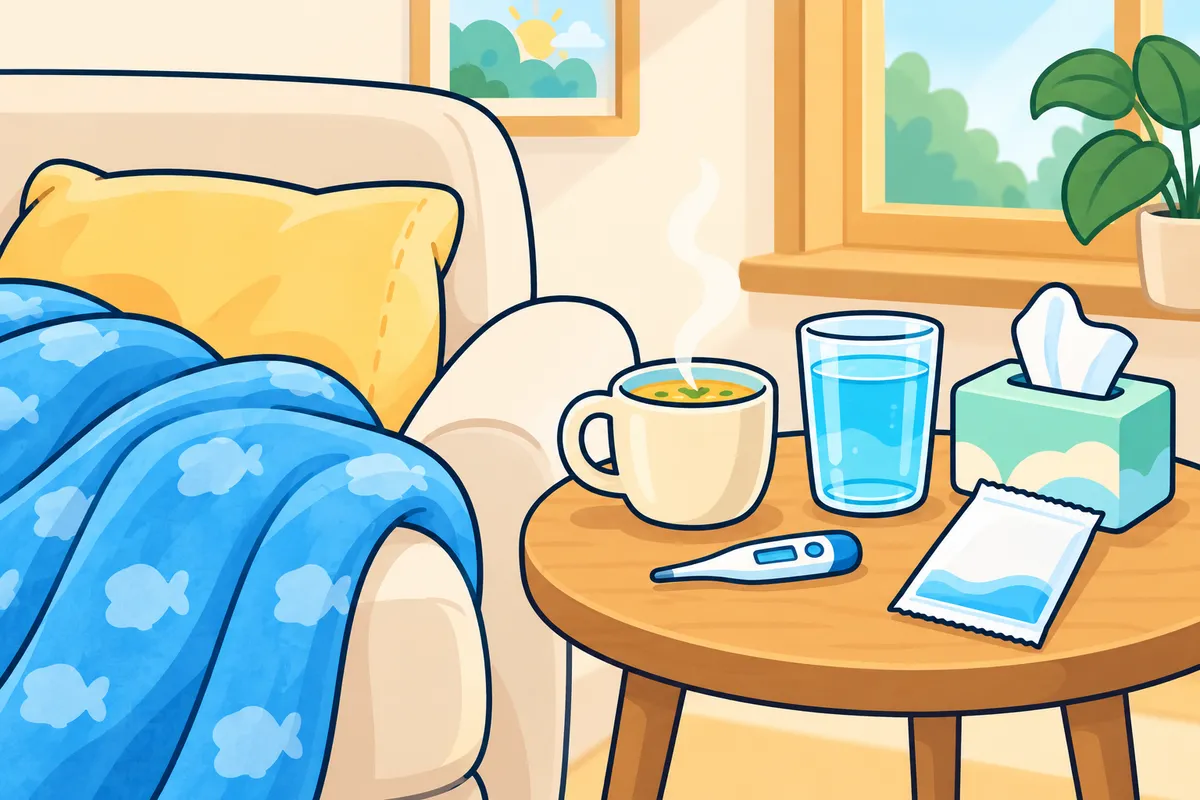
When you are sick, you lose water faster than usual: through vomiting, diarrhea, or the sweat of a fever. The plan is simple. Take small sips often, add a ready-made oral rehydration solution from a pharmacy when you are losing fluid fast, and watch for the signs that mean you need a doctor.
This plan is for adults. Babies and children need advice from a pharmacist, a doctor or a nurse line, and we give no amounts for them.
The Sick-Day Plan in Four Steps
The NHS lays out the basics, and they fit on one card.
Staying Hydrated on a Sick Day
- Drink lots of fluids, such as water or squash, in small sips if you feel sick
- When vomiting or diarrhea drains you, use a ready-made oral rehydration solution; a pharmacist can recommend one
- Skip fruit juice and fizzy drinks, which can make diarrhea worse
- Watch your pee: dark yellow or peeing less than normal means you are falling behind
"The most important thing is to have lots of fluids to avoid dehydration." Eat when you feel able, and keep away from fatty or spicy food at first.
What Should You Drink When You Have Diarrhea?
Water, in steady sips, and an oral rehydration solution when you are losing a lot. Diarrhea takes salts out with the water, so the dehydration advice is to put back sugar, salts and minerals as well, from sachets a pharmacist can pick for you, and to avoid caffeinated drinks and alcohol while you are dry.
Sports drinks and other drinks without caffeine or alcohol help with mild dehydration, but may not replace the minerals you lose.
- 1 to 2 days
- how long vomiting usually lasts
- 5 to 7 days
- how long diarrhea usually lasts
- 48 hours
- to stay out of swimming pools after your last symptom
Drinks Ranked for a Stomach Bug
| Drink | What the sources say | Use it |
|---|---|---|
| Oral rehydration solution | "Most helpful for mild dehydration" (CDC) | When vomiting or diarrhea is draining you |
| Water or squash | The first suggestion for adults | All day, in sips |
| Sports drinks, other drinks without caffeine or alcohol | Help with mild dehydration, "may not replace important nutrients and minerals" (CDC) | If that is what you can keep down |
| Fruit juice, fizzy drinks | Can make diarrhea worse | Skip them until you recover |
| Coffee, alcohol | Avoid while dehydrated | Wait until you are better |
What to Drink Through the Bug, Phase by Phase
The advice changes as the illness moves from vomiting to diarrhea to recovery. Use the phase you are in, not the day on the calendar.
| Phase | What to drink | What to watch |
|---|---|---|
| Vomiting | A mouthful of water every few minutes, nothing else until it stays down | Whether the sips stay down |
| Vomiting has stopped, diarrhea continues | Sachets of oral rehydration solution, plus water in sips | Pee color and how often you go |
| Diarrhea easing | Water through the day, a bland meal | Pee back to pale yellow |
| Two clear days | Your usual amount | Pee staying pale yellow |
Should You Eat When You Have a Stomach Bug?
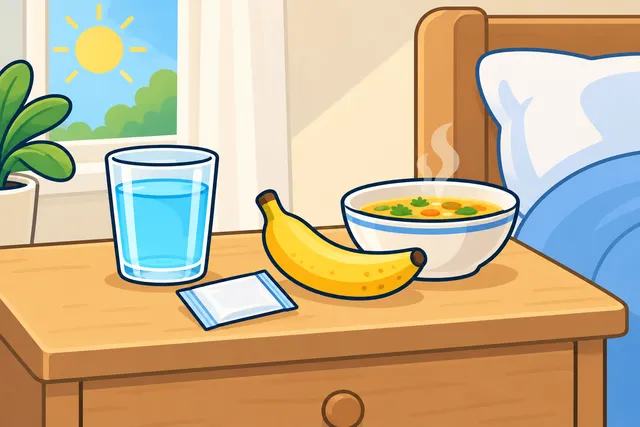
Yes, when you feel able. The NHS says it may help to avoid foods that are fatty or spicy, and the WHO tells people to keep eating nutrient-rich food during diarrhea.
How Do You Stay Hydrated When You Can’t Keep Water Down?
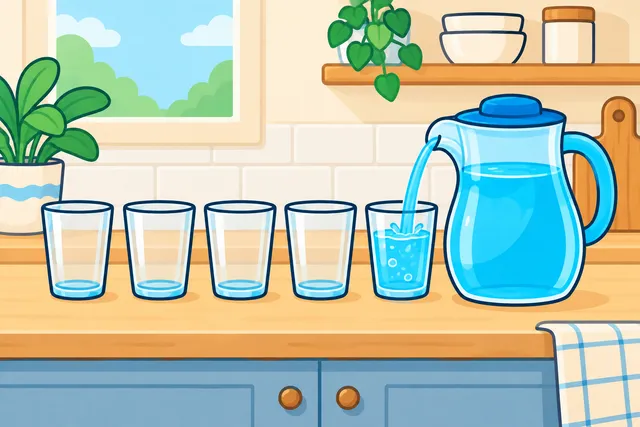
Take very small sips, a mouthful at a time, and wait a few minutes between them. Build up slowly once they stay down. If you keep being sick and cannot keep any fluid down, call your doctor or nurse line now.
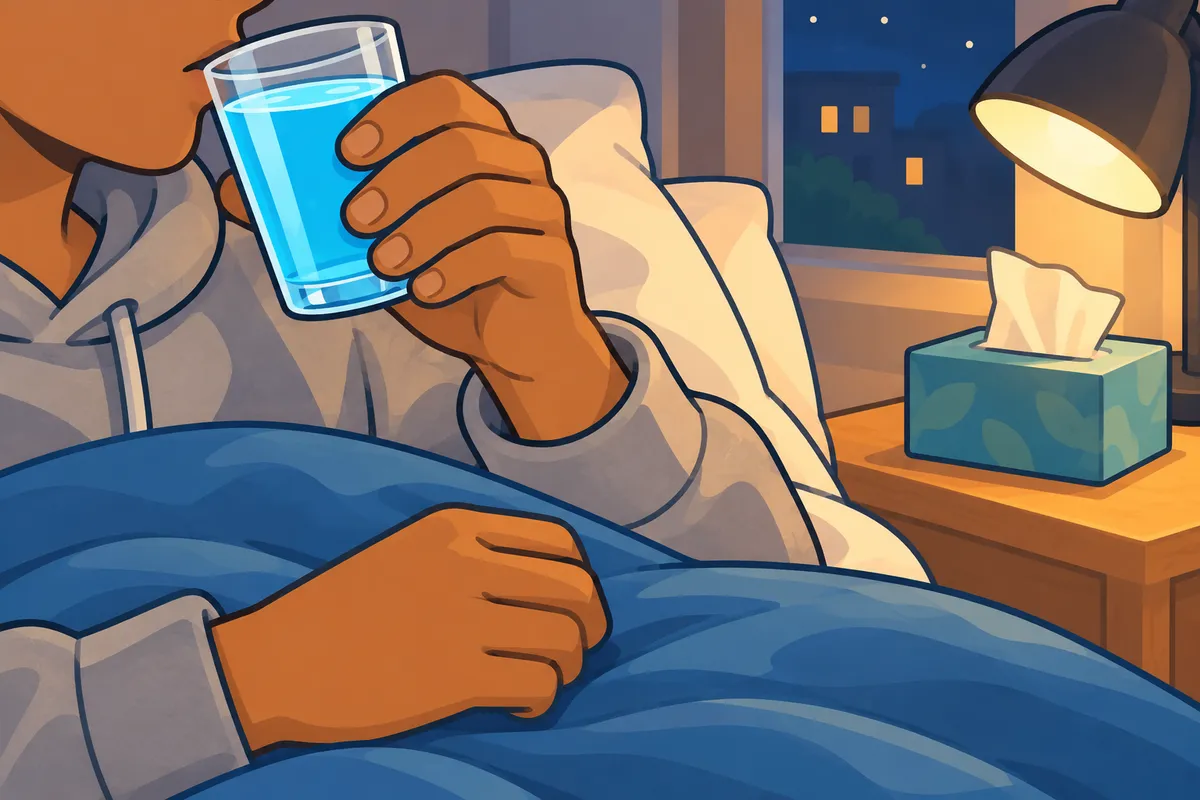
Gulping a full glass after vomiting tends to bring it back up. A sip every few minutes adds up over an hour, and your stomach has time to settle in between.
When Home Care Stops Being Enough
Is Pedialyte Better Than Water When Sick?
When you are losing fluid through vomiting or diarrhea, yes: a ready-made rehydration drink, such as a pharmacy sachet or a store-bought electrolyte solution like Pedialyte, puts back salts and sugar that water lacks. These are "most helpful for mild dehydration." For a cold or a mild fever without stomach trouble, water is enough.
The World Health Organization explains what is inside. "ORS is a mixture of clean water, salt and sugar", it says, and it "is absorbed in the small intestine and replaces the water and electrolytes lost in the faeces."
Rehydration Solution
- Water, salt and sugar in set amounts
- Puts back the salts diarrhea takes out
- Mixed with the exact water the pack says
Plain Water Alone
- No salts or sugar
- Enough for a cold or a mild fever
- Falls short when diarrhea or vomiting is heavy
Pedialyte, Sports Drink or Water?
Pedialyte is one brand of oral rehydration solution, and store versions work the same way, so a pharmacist can help you pick whichever is in stock.
A sports drink sits in the middle. It can help with mild dehydration but may miss minerals. A 2016 trial of 72 healthy, fasted men found:
- Over 4 hours a sports drink did no better than water at keeping fluid in the body.
- An oral rehydration solution scored about 1.5 against water's 1.0 at two hours.
The men were not sick and a grant from the European Hydration Institute supported the work, so it shows how drinks behave, not how fast a sick person recovers; the abstract has the details.
A home mix is not a shortcut. A ready-made solution has its salt and sugar measured for you, and too much salt or too little water defeats the point, so mix one with exactly the amount of water the pack says.
How Much Water Should You Drink When You Have a Fever?
There is no official amount for a fever. Health advice is to rest and drink fluids, with water the best choice, and the dehydration page lists a high temperature among the causes of dehydration. Use your pee as your guide: keep drinking until it is light yellow or clear.
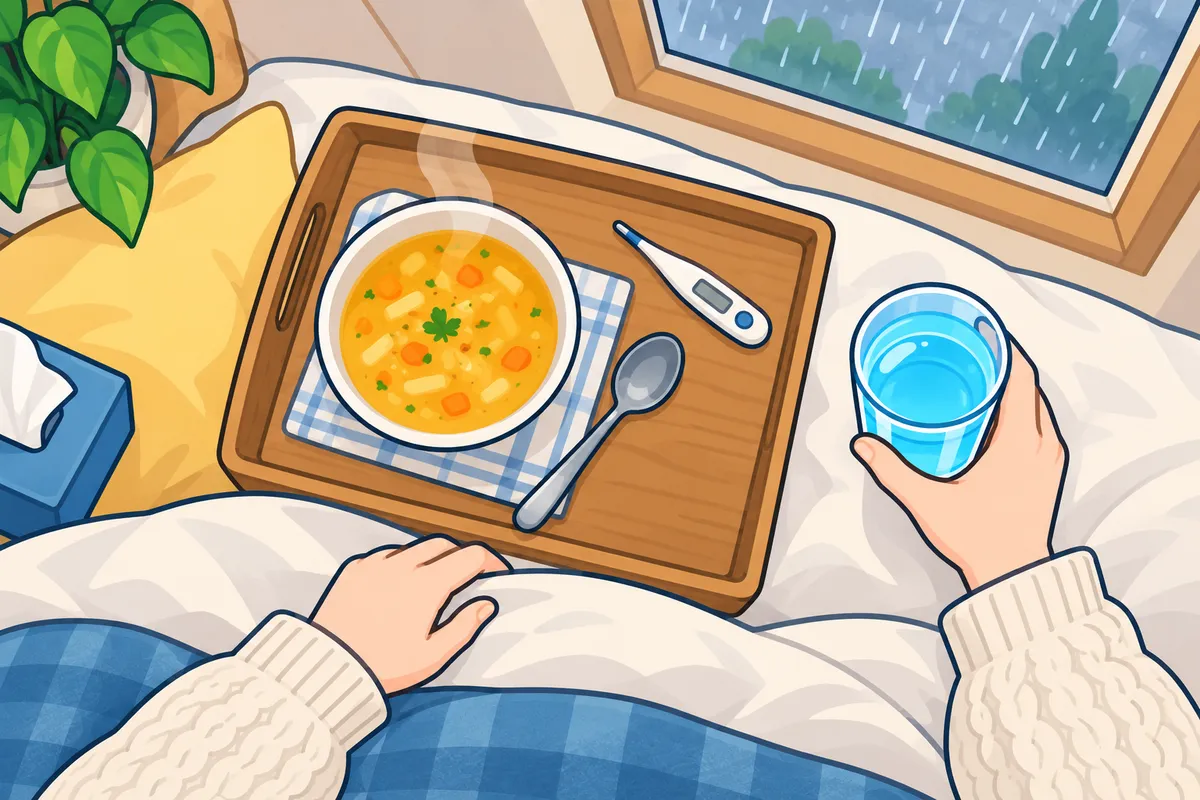
The fever page counts 38C (100.4F) or above as a high temperature. Its one urgent line for adults is a fever you have been treating at home that is "not getting better or is getting worse".
A practical floor is the amount you drink on a healthy day, plus extra whenever your pee turns darker.
What to Drink With a Cold or the Flu
For a cold, drink lots of fluid, such as water, and expect to feel better in about 1 to 2 weeks. A warm drink is fine: squeeze half a lemon into a mug of boiled water and stir in 1 to 2 teaspoons of honey, but never give honey to babies under 12 months. For flu, the advice is to drink plenty of water until your pee is light yellow or clear.
| Illness | What to drink | Get help when |
|---|---|---|
| Cold | Water all day; a warm lemon and honey drink if it soothes | A high temperature for more than 3 days, symptoms getting worse, or no improvement after 10 days |
| Flu | Plenty of water, until pee is light yellow or clear | No improvement after 7 days, you feel very unwell, or you are short of breath |
| Fever without other symptoms | Water, the best choice, until pee is light yellow and clear | The fever is not getting better or is getting worse |
Soup, fruit and other foods add water too, and on a normal day food already covers part of your water.
Who Needs Help Sooner?
Some people dry out faster or should not follow general advice alone.
Four groups who need help sooner
Babies and children under 5
Call a doctor on any sign
- Watch for fewer wet diapers
- Keep breast or bottle feeding
- Amounts from a pharmacist or doctor
Suits you if the sick person is a young child; we give no amounts for children.
Older adults
Dry out faster
- More at risk of dehydration
- Often feel less thirsty than they need
Suits you if you look after an older parent with a bug or a fever.
Heart or kidney disease
Doctor sets the amount
- Ask for your sick-day amount
Suits you if a doctor limits your fluids; that amount replaces everything here.
People with diabetes
Higher risk
- Dehydration is more likely
- Ask your care team for your sick-day plan
Suits you if you have diabetes and are vomiting or have diarrhea.
Many older adults feel less thirsty than their body needs, so on a sick day someone may need to offer them drinks.
If you have diabetes, the NIDDK asks you to check with your health care team whether to adjust your meal plan or medicines when you are sick.
When a Stomach Bug or Fever Needs a Doctor
Most stomach bugs, colds and fevers pass at home. These are the points where help comes first.
When Can You Go Back to Work or Class?
Stay home until you have gone at least 2 days without being sick or having diarrhea, the NHS says. With a fever, stay home and avoid other people until the high temperature has gone.
Flu spreads most in the first 5 days after infection, so those days are the ones to spend on the sofa with a bottle, not in the office.
Getting Back to Normal
Once you keep food and drinks down and your pee is pale again, go back to your usual amount. Check the shade of your pee each morning for a few days to check that you have caught up.
A headache that lingers after a bug is often the last of the dehydration, and water usually clears that kind of headache within a few hours.
General information for healthy adults, not medical advice. If a doctor has set your fluid amount, follow that.

More in Too Little, Too Much
Sources
- NHS. Diarrhoea and vomiting, 2023.
- NHS. Dehydration, 2026.
- CDC. How You Treat Norovirus, 2024.
- NIDDK. Managing Diabetes, 2024.
- World Health Organization. Diarrhoeal disease (fact sheet), 2024.
- NHS. High temperature (fever) in adults, 2023.
- NHS. Flu, 2026.
- NHS. Common cold, 2024.
- CDC. Signs and Symptoms of Flu, 2024.
- American Journal of Clinical Nutrition (Maughan and colleagues). A randomized trial to assess the potential of different beverages to affect hydration status: development of a beverage hydration index, 2016.
Sources checked by the Glubbo Editorial Team on Oct 19, 2026. General information, not medical advice. How we write and check our guides.

