Too Little, Too Much · Signs and Checks
Urine Color Chart for Hydration: What Each Shade of Pee Means
Every pee shade on one chart, what to drink at each, and the colors that need a doctor instead.
 By the Glubbo Editorial Team · Updated Oct 19, 2026 · 10 min read
On This Page
- What Color Should Your Pee Be?
- Urine Color Chart With 8 Shades and What to Drink
- How to Check Your Pee Color Correctly
- How Accurate Is a Urine Color Chart?
- What Does Dark Yellow Pee Mean?
- Is Dark Pee Always Dehydration?
- Why Is My Pee Clear?
- Can Vitamins Change the Color of Your Pee?
- How Much Should You Drink to Keep Your Pee Pale?
- Pee Colors That Need a Doctor
- Sources
Short answer
Pale yellow pee means you drink enough water.
- Shades 1–2 (pale yellow): keep drinking as you are. Shades 5–6: drink 2–3 glasses now.
- Vitamins, beets and some medicines change the color with no water problem.
- Blood in your pee, even once, needs a doctor soon.
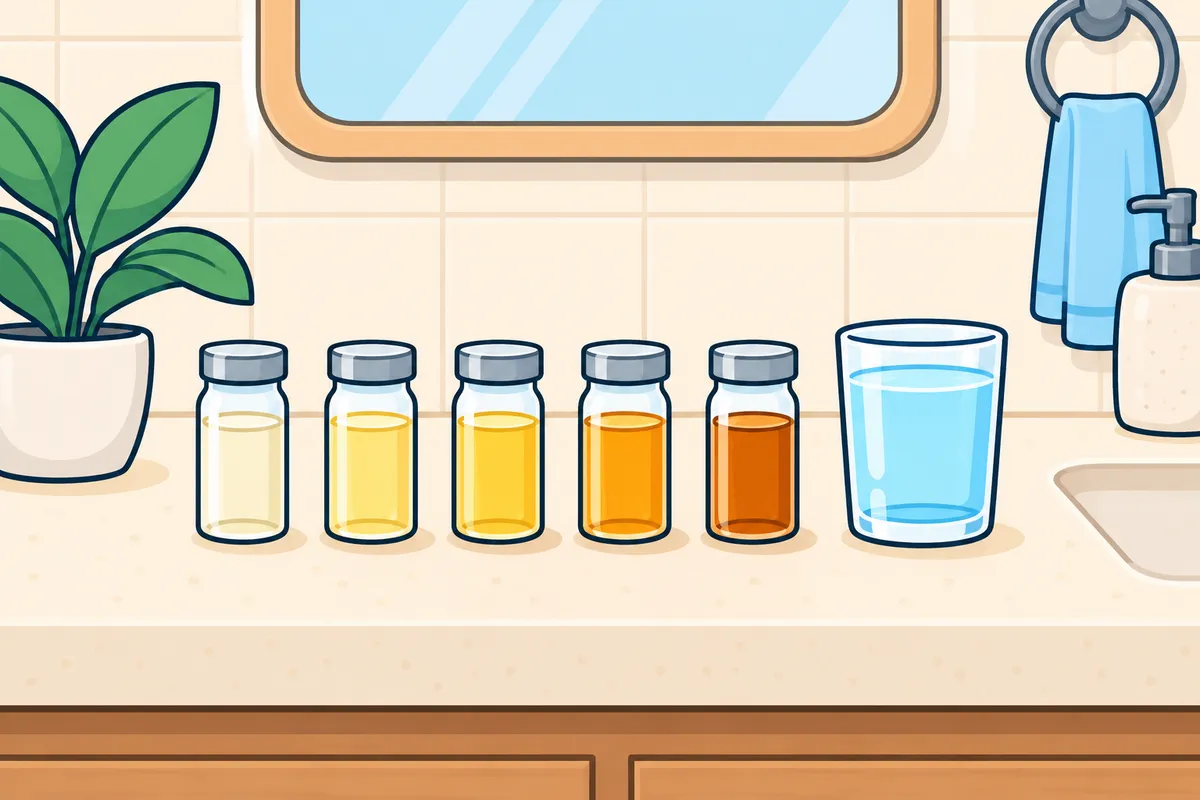
Pale yellow pee means you drink enough water. Dark yellow pee with a strong smell means you need more, and the darker it gets, the more you need. Most other colors come from food, vitamins or medicines, and a few of them need a doctor.
Pee color is one of four checks you can run at home. It works best beside thirst and how often you pee, because a vitamin or a salad of beets can change it on a day you drank plenty.
What Color Should Your Pee Be?
You want a clear, pale yellow, about the color of straw or weak lemonade. Two health bodies agree:
- The NHS says most people should drink enough that their pee is “a clear pale yellow colour”.
- The CDC says light yellow or clear "usually means you are drinking enough water."
The shade follows how much pee your kidneys make. Drink more and they make more, so the same waste is spread through more water and the color thins out. Drink less and they hold water back, so the color deepens.
Urine Color Chart With 8 Shades and What to Drink
The hydration chart that Australian health services hand out has 8 numbered shades in four pairs, each with a drink action. The other colors below it are not on the hydration scale: water does not change them, so they need their own check.
Urine color chart, from hydrated to "see a doctor"
- Clear You drank a lot recently. Fine after a big drink; if you force water to a target, you can ease off.
- Shades 1–2, pale yellow Hydrated. Keep drinking at the same rate.
- Shades 3–4, yellow Mildly dehydrated. Drink a glass of water now.
- Shades 5–6, dark yellow Dehydrated. Drink 2–3 glasses of water now.
- Shades 7–8, amber, strong smell, small amounts Very dehydrated. Drink a large bottle of water now.
- Orange or neon yellow Often B vitamins, carotene, a recent laxative or a medicine. Not a water sign.
- Pink, red or light brown Beets, blackberries, food dyes or a medicine, or blood. Blood needs a doctor.
- Dark brown but clear Liver trouble, muscle breakdown or severe dehydration. See a doctor.
- Green or blue Dyes in food or medicine, some medicines, or an infection.
- Cloudy or milky Most often a urinary tract infection; crystals or other cells can do it too.
Only the shades from clear to amber are about water. If your pee sits at shade 1 or 2 most of the day, you have nothing to fix, and an extra glass just leaves at your next trip to the toilet.
What Shades 3 to 8 Ask You to Do
Take a glass as about 8 oz (250 ml) and a large bottle as 25 to 34 oz (750 ml to 1 liter).
- Drink it over the next hour in sips and check again at your next pee.
- One dark sample after a long meeting needs less than a whole day of dark pee.
- If a doctor has limited your fluids, follow that limit instead of these actions.
Two more cases need a different step:
- If you lost a lot of water through sweat or a stomach bug, plain water at these amounts will not cover it, and you need to put back more, with some salt.
- The NHS lists dark yellow pee, or peeing less than normal, among the reasons to get urgent advice the same day.
Why Cloudy Pee Points Elsewhere
Cloudy pee points more to infection than to water. The NHS lists "pee that looks cloudy" among the symptoms of a UTI, together with pain when you pee and needing to go more often than usual. Drinking more will not clear an infection, so a cloudy sample with any of those needs a doctor or a pharmacist.
How to Check Your Pee Color Correctly
Look at pee in a clear cup against a white background, in daylight, and never judge from the toilet bowl. Toilet water thins the color, which is why researchers at Arizona State University built a separate chart for the bowl that goes by how many seconds you pee.
A fair urine color check
- Catch a little pee in a clear cup or a white container
- Hold it against white paper in daylight, not under a bright bulb
- Skip the first pee of the morning; use the second
- Note any vitamin, beets or new medicine from the last day
- Compare two or three pees, not one
Light changes what you see. In the 2021 test of two charts, the authors warned that their small tubes under bright LED light, about 1,650 lux, probably made people score 1 to 2 shades lighter than they would in other light.
How Accurate Is a Urine Color Chart?
Fairly accurate, as a rough check. In a 2021 study of 189 athletes, coaches and army cadets, people who scored their own pee with an 8-shade chart matched a lab concentration test about 77 % of the time. A newer 7-shade chart did about as well, at 76.7 %.
- 189
- people scored their own pee
- 77 %
- matched the lab test
- 95 %
- of concentrated samples flagged
- 56 %
- of fine samples read as fine
The 8-shade chart catches almost every concentrated sample, but it also calls many fine samples dark. So if your pee looks dark and you feel well, the chart errs toward "drink a glass". The US National Academies put the limit plainly: there is "no precise relationship between urine color and hydration level", though color is "a good educational tool".
What Does Dark Yellow Pee Mean?
Usually it means you are short of water, so your kidneys hold water back and make less, darker pee. Dark yellow, strong-smelling pee is one of the first dehydration signs, beside thirst and peeing less often. Vitamins and some medicines can turn pee dark yellow or orange too, so think about those first.

The UTI advice adds a useful detail: your pee "may also be dark or smell", and "if this is your only symptom, it might be because you've not been drinking enough water." Dark pee with a burning feeling or a fever is a different matter and needs a doctor.
Why Is My First Pee of the Day Dark?
Your kidneys keep making pee for the seven or eight hours you sleep without a drink, so the first pee of the morning holds a whole night's waste in a small amount of water. Almost everyone's morning pee is darker than the rest of the day.
Judge your hydration by the pees after it. A dark first pee that turns pale by mid-morning is normal; one that stays shade 5 or darker after breakfast and a drink means you started the day short.
Is Dark Pee Always Dehydration?
No. Dark yellow or orange pee can come from B vitamins, carotene, a recent laxative or a medicine, says MedlinePlus, and dark brown pee can come from the liver or from muscle breakdown. Thirst and how often you pee tell you which one you are looking at.
Clear, dark-brown pee, or dark pee with yellow skin or eyes, needs a doctor. MedlinePlus ties clear, dark-brown urine to liver trouble and to muscle breakdown, and lists it among the colors to see a provider about.
Why Is My Pee Clear?
Most often because you drank a lot recently. The CDC counts clear pee as a sign you drink enough, and UK flu advice says pee "should be light yellow or clear". Clear pee all day with constant thirst, or with far more trips to the toilet than usual, needs a doctor.
The National Academies explain why: "the color of urine darkens or lightens with low or high output levels". After a big drink, urine output can rise for a short time to about 600 to 1,000 ml (20 to 34 oz) an hour, so the color can all but disappear.
Clear After a Big Drink
- Your kidneys pass water you do not need
- If you drink to a set amount, you can ease off
Clear All Day, With Other Signs
- Thirsty all the time, or far more trips than usual
- Losing weight without trying
- Ask for a doctor's appointment soon
When Clear Pee Means You Can Drink Less
If your pee is clear every time and you are trying to drink a set amount, you can probably ease off. Your body is telling you it has plenty. Forcing water far past that, especially fast, is how people get into trouble with low blood sodium.
When Clear Pee Needs a Doctor
Clear pee is a concern when it comes with other signs. The NHS diabetes page lists three signs, and says anyone with symptoms of diabetes should get an urgent appointment:
- "feeling thirsty all the time"
- "peeing more than usual"
- "losing weight without trying"
If you simply pee a lot after a big drink, that is your kidneys passing water you do not need, a sign they work well.
Can Vitamins Change the Color of Your Pee?
Yes. B complex vitamins and carotene are among the causes of dark yellow or orange urine, and a multivitamin with B vitamins can turn pee a neon, highlighter yellow on a day you drank plenty. On those days, judge your water by thirst and toilet trips instead of color.
Medicines do it too. MedlinePlus names these among the medicines that change urine color, and some can turn pee red or brown:
- phenazopyridine (a bladder pain medicine)
- rifampin
- warfarin
- methylene blue
The leaflet in the box usually says so; if it does not, ask your pharmacist before you worry.
How Much Should You Drink to Keep Your Pee Pale?
There is no single number. The NHS suggests 6 to 8 cups or glasses of fluid a day, and more when you are pregnant or breastfeeding, in a hot place, active for long periods, or ill. Pale pee tells you that the amount you drink right now suits you.

If you are sick with vomiting or diarrhea, color matters even more while you sip your way through the bug. People who have had a kidney stone are often told to keep their pee pale all day, and their daily amount is higher than most people's.
A schedule helps when you forget. Spread your drinks from waking to early evening, and your pee stays in the pale range without a big catch-up glass at night.
Pee Colors That Need a Doctor
Most color changes pass within a day once you drink more or stop the food or vitamin that caused them. A few need a doctor soon, and blood in your pee always does.
Babies and children follow their doctor's advice, never adult numbers. Fewer wet diapers than usual is a sign of dehydration in a baby, and it needs a call to your doctor that day.
General information for healthy adults, not medical advice. If a doctor has set your fluid amount, follow that.

More in Too Little, Too Much


Sources
- NHS. Water, drinks and hydration, 2023.
- healthdirect (Australian Government). Urine colour chart, 2024.
- NHS. Dehydration, 2026.
- CDC. About Heat and Your Health, 2026.
- MedlinePlus (US National Library of Medicine). Urine - abnormal color, 2025.
- International Journal of Environmental Research and Public Health. Athletes' Self-Assessment of Urine Color Using Two Color Charts to Determine Urine Concentration (Wardenaar et al.), 2021.
- Arizona State University. New urine color chart makes self-assessing hydration easier, 2021.
- NHS. Blood in urine, 2026.
- NHS. Urinary tract infections (UTIs), 2025.
- NHS. Diabetes, 2025.
- National Academies of Sciences. Dietary Reference Intakes, Chapter 4: Water, 2005.
Sources checked by the Glubbo Editorial Team on Oct 19, 2026. General information, not medical advice. How we write and check our guides.

