Too Little, Too Much · Signs and Checks
Why Is My Pee Bright Yellow? Vitamins, Water and When to Worry
Why riboflavin glows in your pee, how to tell it from dark yellow, and the colors that do need a doctor.
 By the Glubbo Editorial Team · Updated Oct 19, 2026 · 8 min read
On This Page
- Does Vitamin B2 Turn Urine Yellow?
- How Much Riboflavin Do You Need?
- Is Neon Yellow Pee a Sign of Dehydration?
- How Long Does Bright Yellow Pee Last After Vitamins?
- Is Bright Yellow Pee a Sign of Taking Too Many Vitamins?
- Which Medicines Turn Pee Yellow or Orange?
- When Is Yellow Pee a Reason to See a Doctor?
- Before You Worry About Bright Pee
- Sources
Short answer
Usually vitamin B2 from a supplement, and harmless.
- Riboflavin is yellow and fluorescent; your body passes what it cannot use in urine (NIH).
- Adults need only 1.1 to 1.3 mg a day; little is absorbed from a single dose above 27 mg.
- Dark yellow with thirst means drink; yellow skin or eyes means see a doctor.
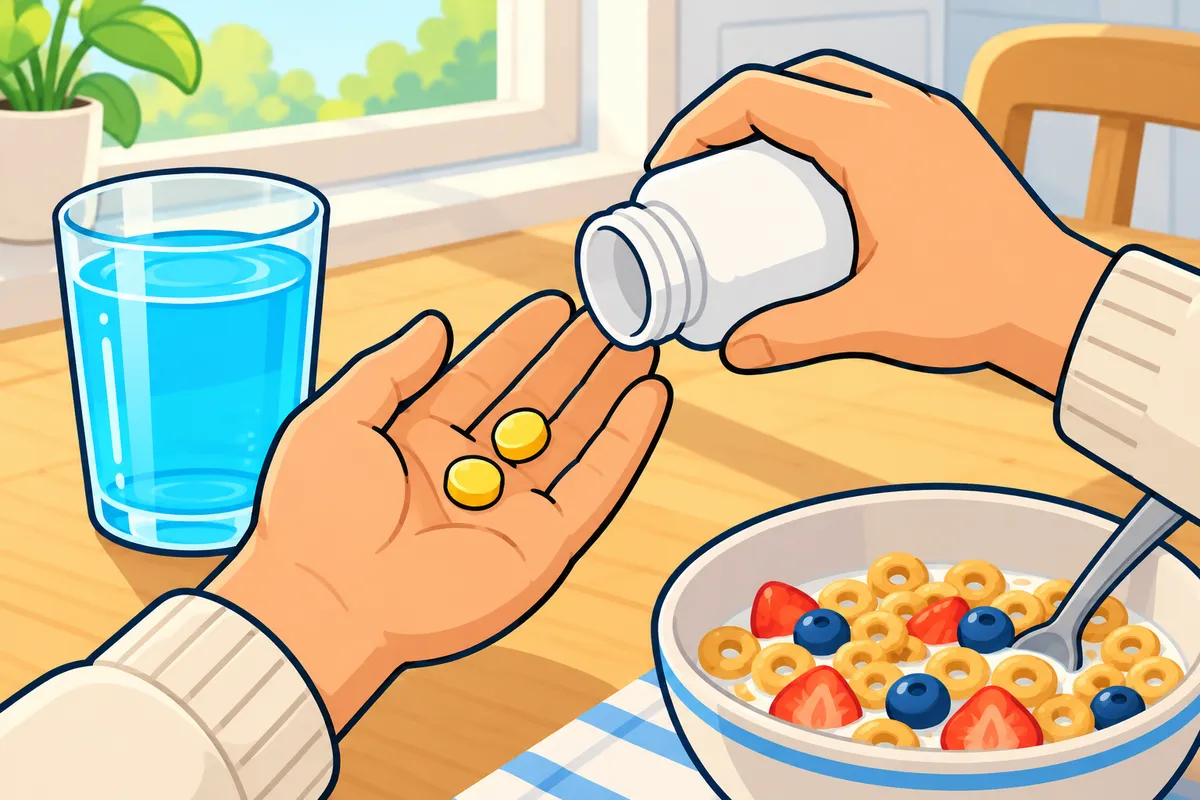
Bright, almost neon yellow pee usually comes from riboflavin (vitamin B2) in a multivitamin, a B-complex or a fortified drink. It says nothing about how much water you drank, so on those days you judge your water by thirst and toilet trips.
The usual story: you take a vitamin with breakfast, and a few hours later the toilet bowl looks like a highlighter pen. It is startling the first time, and the label on the bottle usually explains it.
Does Vitamin B2 Turn Urine Yellow?
Yes. Riboflavin is "yellow and naturally fluorescent when exposed to ultraviolet light", says the NIH Office of Dietary Supplements, and when you take in more than your body can use, the small part it absorbs leaves in your urine. That gives pee its neon, slightly green-yellow tint.
MedlinePlus lists the same cause from the other side. Among the reasons for dark yellow or orange urine, its page on abnormal urine color names "B complex vitamins or carotene" first.
Why the Body Lets It Go
Your body keeps very little riboflavin:
- The NIH says it stores only small amounts in the liver, heart and kidneys, and absorbs little from any single dose above 27 mg.
- The NHS adds that riboflavin "cannot be stored in the body, so you need it in your diet every day".
So a pill with more than you need does not build up. The extra either passes through your gut unabsorbed or travels through your blood to your kidneys and out, and that is the part you see.
How Much Riboflavin Do You Need?
About 1.1 to 1.3 mg a day for adults, far less than many supplements hold. The NIH sets the recommended amount at 1.3 mg for men and 1.1 mg for women, 1.4 mg in pregnancy and 1.6 mg while breastfeeding, and the food label's Daily Value is 1.3 mg.
Food covers it for most people. Fewer than 6 % of people in the United States fall short of the average requirement, the NIH reports, and a cup of milk or a bowl of fortified cereal goes a long way.
Riboflavin by Age and Life Stage
Needs rise through childhood and peak while breastfeeding. These are the NIH's recommended amounts, the level that covers nearly all healthy people in each group.
| Age | Male | Female | Pregnancy | Breastfeeding |
|---|---|---|---|---|
| 1 to 3 years | 0.5 mg | 0.5 mg | ||
| 4 to 8 years | 0.6 mg | 0.6 mg | ||
| 9 to 13 years | 0.9 mg | 0.9 mg | ||
| 14 to 18 years | 1.3 mg | 1.0 mg | 1.4 mg | 1.6 mg |
| 19 to 50 years | 1.3 mg | 1.1 mg | 1.4 mg | 1.6 mg |
| 51 years and older | 1.3 mg | 1.1 mg |
Source: NIH Office of Dietary Supplements, Table 1. Ask a doctor before giving a child any supplement.
None of these turns your pee neon. The bright color comes from the jump a supplement gives you, many times what one meal holds.
Is Neon Yellow Pee a Sign of Dehydration?
No. Neon yellow from a vitamin can appear on a day you drank plenty, and it stays bright even when your pee is otherwise pale and frequent. Dehydration darkens pee toward amber instead, and the NHS lists dark yellow, strong-smelling pee among its signs, with thirst, a dry mouth and peeing less often.
On a vitamin day, color stops being a good water check. Use the other signals: whether you feel thirsty, how often you go, and whether your mouth is dry; the four checks you can do at home still work when the color does not.
| What you notice | Bright yellow from vitamins | Dark yellow, low on water |
|---|---|---|
| When it shows up | Hours after a multivitamin or B-complex | After heat, exercise or a long gap without drinks |
| What it looks like | Vivid, almost glowing yellow-green | Deep yellow to amber |
| After two glasses of water | Still bright | Lighter |
| Other signs | None | Thirst, dry mouth, peeing less, headache (NHS) |
| What to do | Nothing; check water by thirst and trips | Drink until pee is pale |
Sources: NIH ODS, MedlinePlus, NHS Dehydration.
How Long Does Bright Yellow Pee Last After Vitamins?
As long as you keep taking the vitamin. Your body stores little riboflavin and passes the excess, so the color follows your doses: it appears in the hours after the day's pill and fades once you stop.
If it is still neon a week after you stopped every product with B vitamins on its label, the vitamin is not the cause. MedlinePlus asks you to see a provider for an abnormal color that "cannot be explained and does not go away".
Is Bright Yellow Pee a Sign of Taking Too Many Vitamins?
It shows that you took more riboflavin than you needed, which is not the same as too much. What the sources say:
- No harm has been reported from high intakes, even 400 mg a day for at least 3 months, so US experts set no upper limit.
- They still urge caution with very large amounts.
- The NHS says 40 mg a day or less from supplements is unlikely to cause any harm.
What a Label Dose Means Next to Your Need
The bigger the dose, the more of it ends up in the toilet. The table puts common label amounts beside the 1.3 mg Daily Value and the 27 mg point above which the NIH says your body takes up little more from a single dose.
| Riboflavin on the label | Times the Daily Value | Above 27 mg single dose? |
|---|---|---|
| 1.3 mg (a typical multivitamin) | 1 × | No |
| 10 mg | about 8 × | No |
| 25 mg | about 19 × | No |
| 50 mg | about 38 × | Yes: much of the dose passes through |
| 100 mg | about 77 × | Yes |
| 400 mg (no harm reported at this daily amount for at least 3 months, NIH) | about 308 × | Yes |
Sources: Daily Value, 27 mg point and the 400 mg finding from the NIH ODS; multiples rounded. Nobody has measured how bright pee turns at each dose; past your need, more pill means more yellow pigment for your kidneys to pass.
If a doctor has put you on a high dose of riboflavin, expect bright pee every day.
Riboflavin is not known to have any clinically relevant interactions with medicines.
Which Products Contain Riboflavin?
More than people expect:
- Multivitamins commonly hold 1.3 mg, 100 % of the Daily Value.
- A serving of fully fortified cereal holds another 1.3 mg.
- Riboflavin-only or B-complex tablets often hold many times that.
Look for "riboflavin" or "vitamin B2" on the label of every vitamin, drink or powder you took that day, and add the amounts.
Two products at breakfast can double or triple your dose without you noticing. A 50 mg B-complex beside a multivitamin is already far past the 27 mg point, so most of it leaves in your pee.
Which Medicines Turn Pee Yellow or Orange?
Several, and the leaflet usually says so. MedlinePlus names these among the causes of dark yellow or orange urine:
- Phenazopyridine, a medicine for urinary tract infections
- Rifampin and warfarin
- Recent laxative use
Carotene, the orange pigment in carrots and sweet potatoes, sits on the same MedlinePlus list next to B vitamins. If you started a medicine and your pee changed color, read the leaflet or ask the pharmacist before you worry; pink, green or brown pee has causes of its own.
Cloudy pee with a bad smell is a different signal: MedlinePlus links it to a urinary tract infection, and drinking enough during and after a UTI helps alongside the treatment your doctor gives.
When Is Yellow Pee a Reason to See a Doctor?
When the color comes with yellow skin or eyes, or when dark urine has no explanation. The NHS says yellowing of the skin or the whites of the eyes needs an urgent appointment, and it can come with itchy skin, darker pee and paler poo.
Bright yellow on its own, with no other change, is not on any of these lists. It is the one urine color you can usually explain by reading a supplement label.
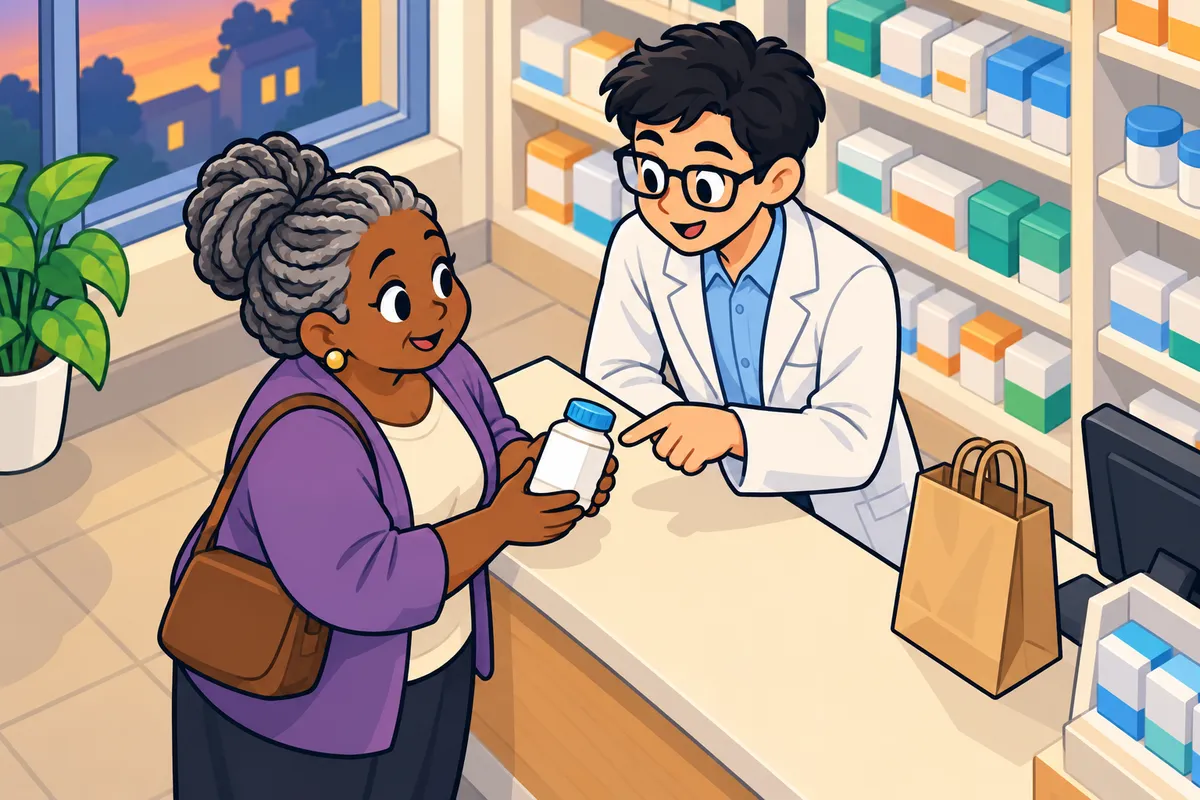
Bring the bottle, or a photo of its label, and say when the color started and what else changed in the same days; a riboflavin amount far above 1.3 mg on that label usually settles the question.
The urine color chart lines up the hydration shades from pale straw to amber, with a drink action for each; it works again on the days you skip the vitamin.
Before You Worry About Bright Pee
Five Questions to Ask Yourself
5 items- Did I take a multivitamin, a B-complex or anything with riboflavin on its label today?
- Am I thirsty, or is my mouth dry? If not, my water is probably fine
- Does the color fade on days I skip the supplement?
- Did I start a new medicine? Check its leaflet
- Are my skin or eyes yellow, or my poo pale? See a doctor
General information for healthy adults, not medical advice. If a doctor has set your fluid amount, follow that.

More in Too Little, Too Much



Sources
- NIH Office of Dietary Supplements. Riboflavin: Fact Sheet for Health Professionals, 2022.
- MedlinePlus (US National Library of Medicine). Urine - abnormal color, 2025.
- NHS. Vitamins and minerals: B vitamins and folic acid, checked 2026.
- NHS. Dehydration, 2026.
- NHS. Jaundice, 2024.
Sources checked by the Glubbo Editorial Team on Oct 19, 2026. General information, not medical advice. How we write and check our guides.

