Too Little, Too Much · Rehydrating and Too Much Water
Why Do I Pee So Much When I Drink Water? What Counts as Normal
What your kidneys do with a big drink, how many trips you can call normal, and when to see a doctor.
 By the Glubbo Editorial Team · Updated Oct 19, 2026 · 8 min read
On This Page
Short answer
Your kidneys pass the water you do not need.
- Most healthy adults pee 4 to 7 times in 24 hours, the NHS says.
- A big drink can raise your output to 600 to 1,000 ml an hour for a short time.
- Frequent trips with constant thirst, or with burning or cloudy pee, need a doctor.
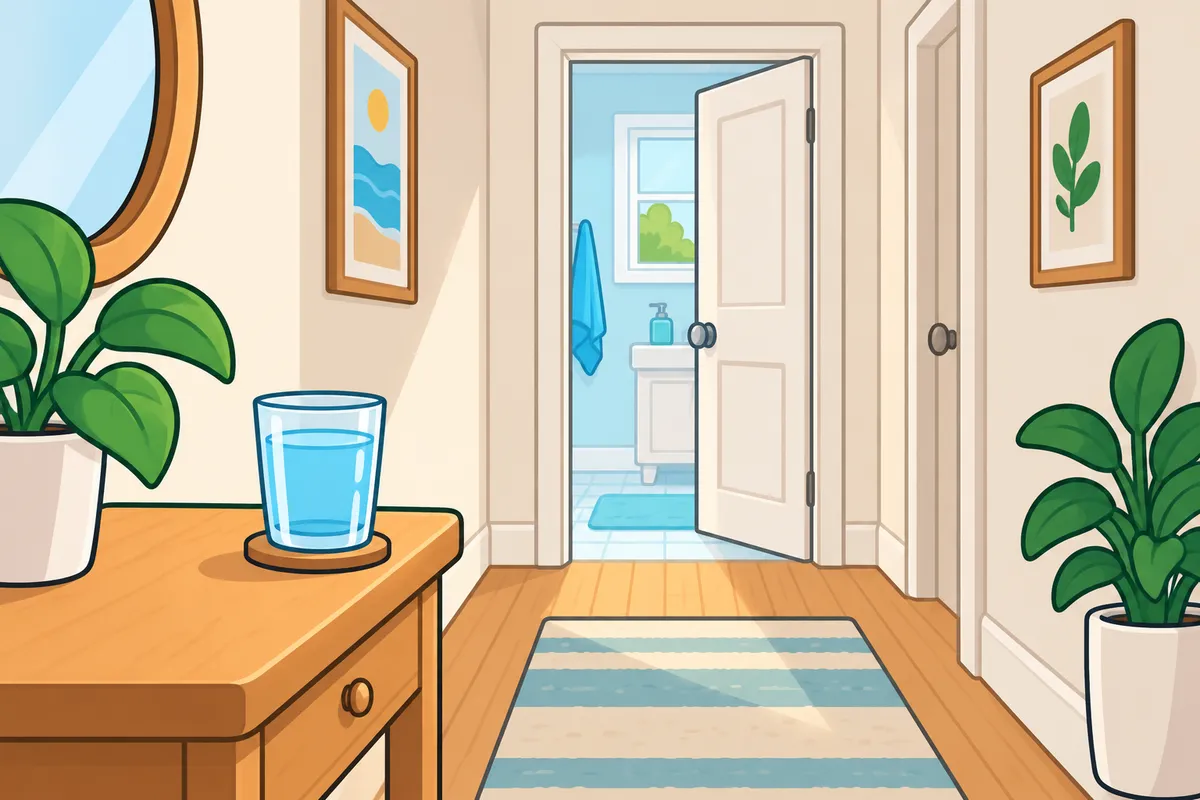
You pee more when you drink more because your kidneys keep the water in your body at a steady level. Whatever you drink beyond what you need goes out within hours. That is your kidneys working well.
Counting those trips is also one of four quick checks on whether you drink enough.
Why Do I Pee So Much When I Drink Water?
Because your kidneys pass the water your body does not need. Urine output averages 1 to 2 liters a day, the US National Academies say, but it "can reach 20 L/day in those consuming large quantities of fluid". Drink a liter more than usual and most of that liter leaves as pee the same day.
Your kidneys filter a lot more than you might think, the NIDDK says:
- They filter "about 150 quarts of blood" a day.
- "Only 1 to 2 quarts become urine." The rest goes back into your blood.
How much they keep back depends on the hormone vasopressin.
When you are short of water, it "reduces free water loss and urine volume", the National Academies' water report explains. When you have plenty, your body makes less of it, and more water flows through to your bladder.
What Your Kidneys Do With a Big Drink
They speed up, within limits. The same report says urine output "can transiently increase to approximately 600 to 1,000 mL/hour with water loading". That ceiling matters: healthy kidneys clear at most about 0.7 to 1.0 liter an hour, and drinking much faster than that is how water poisoning starts.
They also run the other way. When you drink very little, your kidneys can get by on "approximately 500 mL/day" of urine, and the pee turns dark.
Coffee, Tea and Alcohol
Caffeine and alcohol add to the trips. "Alcohol and caffeine can also make you pee a lot," Cleveland Clinic notes.

The effect is smaller than many people think. The National Academies found two things:
- Caffeine above 180 mg a day can raise urine output, "perhaps transiently".
- Alcohol raises it in the first 3 hours but "would not result in appreciable fluid losses over a 24-hour period."
In one study they cite, a very large dose, 642 mg of caffeine, raised 24-hour urine by 0.75 liters after 5 days without caffeine. The panel concluded that caffeinated drinks appear to count toward your daily water much like other drinks.
Why Do I Pee Right After Drinking Water?
Usually because you drank a lot at once, and your kidneys pass the extra fast, up to about 600 to 1,000 ml an hour for a short time. A liter in 30 minutes is a rate of 2 liters an hour, twice the top of that range, so some of it has to wait in your bladder or leave in a rush of trips. Sipping the same amount spreads the trips out.
A 2016 trial in the American Journal of Clinical Nutrition had 72 healthy, fasted men who were already well hydrated drink 1 liter over 30 minutes and collected their urine for the next 4 hours, so their bodies had no use for the extra water. A grant from the European Hydration Institute paid for it. When you are short of water, after a hot day or a long run, your body keeps more of what you drink.
One Liter Over the Morning
- A glass every hour or so
- Your kidneys keep pace without a rush
- Trips spread across the day
One Liter in 30 Minutes
- Output can jump to 600–1,000 ml an hour
- Two or three trips close together
- Little of it stays when you were already hydrated
The urge to go also depends on your bladder and your habits. If you pee small amounts very often even when you drink little, or it burns, that is a different story, covered under the warning signs below.
How Many Times a Day Should You Pee?
Most healthy adults pee 4 to 7 times in 24 hours, according to the NHS. The Cleveland Clinic page on frequent urination gives an average of 7 to 8 times a day and notes that more can still be normal if you drink a lot. One of its urologists says more than 10 times in 24 hours "may be too much".
- 4–7
- times in 24 hours for most healthy adults
- 7–8
- times a day on average
- 10+
- times in 24 hours "may be too much", says a urologist
The range for 4 to 7 comes from the diabetes insipidus page. The clinic adds a fair point about all these numbers: what matters most is what is typical for you. A change from your own normal says more than any average.
Count Your Own Trips
The clinic's urologist suggests a simple diary for a few days. Write down what you drink and when, what you eat, any diuretics, and how often and how long you pee.
What to write in a bladder diary
5 items- What you drink, and at what time
- Foods that day, since some are rich in water
- Diuretics: caffeine, alcohol and water pills
- How often you pee, and how long each trip takes
- Whether the trips come mostly at night or all day
A week of notes shows whether the trips follow your drinks, which is normal, or happen no matter how little you drink, which is the pattern to bring to a doctor.
Am I Drinking Too Much Water?
Possibly, if your pee is clear every time and you are forcing down a set amount without being thirsty. Ease off and let thirst and meals lead for a few days. Real water poisoning is rare and comes from drinking a lot very fast, not from a few extra trips.
People chasing a gallon a day often notice the trips first, and most of them gain nothing from that much. If your trips are normal but you stay thirsty, the cause usually lies elsewhere.
When Is Peeing a Lot a Sign of a Problem?
When it comes without drinking more, or with other symptoms. Peeing more than usual together with constant thirst, tiredness or weight loss can be diabetes, which needs an urgent doctor visit. Burning, cloudy pee or a sudden urge point to a urinary tract infection.
Two causes to rule out:
- UTIs are "the most common cause of frequent urination". The UTI page lists "needing to pee more often than usual", pain or burning when you pee, and "pee that looks cloudy" among the symptoms.
- Diabetes is the other. The diabetes page lists "feeling thirsty all the time", "peeing more than usual", "feeling very tired" and "losing weight without trying".
Other Common Causes
The clinic lists several more reasons you might go often:
Three more common causes
Pregnancy
Common
- Frequent urination "is common"
Suits you if you are pregnant and the trips rose with it.
Medicines
Check your prescriptions
- Water pills (diuretics)
- Lithium, some antidepressants
Suits you if the trips started with a new medicine; ask before you stop it.
Bladder or pelvic conditions
Urge without much pee
- An overactive bladder
- Other bladder or pelvic conditions
Suits you if you go often even on days you drink little.
Waking at Night to Pee
Doctors call waking to pee at least twice a night nocturia, Cleveland Clinic explains, and it is "very common", especially after 50. Drinking a lot before bed, above all alcohol, fizzy drinks or caffeine, is one cause, and the clinic's urologist suggests stopping fluids about 2 hours before bedtime.
A Drink Schedule That Stops 2 Hours Before Bed
- 7:30 AM
- 9:30 AM
- 11:30 AM
- 1:30 PM
- 3:30 PM
- 5:30 PM
- 7:30 PM
Drink Steadily, Pee Steadily
The easiest way to keep the trips predictable is to drink at an even pace instead of in big catch-up rounds.
The water drinking schedule spaces your own goal across your waking hours, and the trips spread out with it.
If a doctor has told you to drink more to prevent kidney stones, more trips are part of the plan, because the aim there is plenty of pee every day.
After a stomach bug or a hot day, you may notice the opposite: few trips and dark pee. That is the time to drink back what you lost, a little at a time.
General information for healthy adults, not medical advice. If a doctor has set your fluid amount, follow that.
More in Too Little, Too Much
Sources
- National Academies of Sciences. Dietary Reference Intakes, Chapter 4: Water, 2005.
- NIDDK. Your Kidneys and How They Work, checked 2026.
- NHS. Diabetes insipidus, 2022.
- Cleveland Clinic. Frequent Urination, checked 2026.
- Cleveland Clinic. How To Stop Frequent Urination at Night, checked 2026.
- Cleveland Clinic. Nocturia, checked 2026.
- NHS. Diabetes, 2025.
- NHS. Urinary tract infections (UTIs), 2025.
- American Journal of Clinical Nutrition (Maughan and colleagues). A randomized trial to assess the potential of different beverages to affect hydration status: development of a beverage hydration index, 2016.
Sources checked by the Glubbo Editorial Team on Oct 19, 2026. General information, not medical advice. How we write and check our guides.

