Too Little, Too Much · Rehydrating and Too Much Water
Can You Drink Too Much Water? Symptoms and Safe Limits per Hour
The hourly limit your kidneys set, the symptoms of low blood sodium, and how you tell it from dehydration.
 By the Glubbo Editorial Team · Updated Oct 19, 2026 · 8 min read
On This Page
- Can You Drink Too Much Water?
- How Much Water Is Too Much in a Day?
- What Are the Symptoms of Drinking Too Much Water?
- What Is the Difference Between Dehydration and Overhydration?
- What Did the Boston Marathon Study Find?
- Which Situations Lead to Water Intoxication?
- How Is Low Blood Sodium Treated?
- How to Drink Plenty Without Overdoing It
- Sources
Short answer
Yes, but it is rare in healthy people.
- Healthy kidneys clear about 0.7 to 1.0 L (24 to 34 oz) of water an hour.
- In the heat, NIOSH says to keep fluid under 6 cups (about 1.4 L) an hour.
- Never catch up on a whole day of water in one sitting; spread your goal across the day.
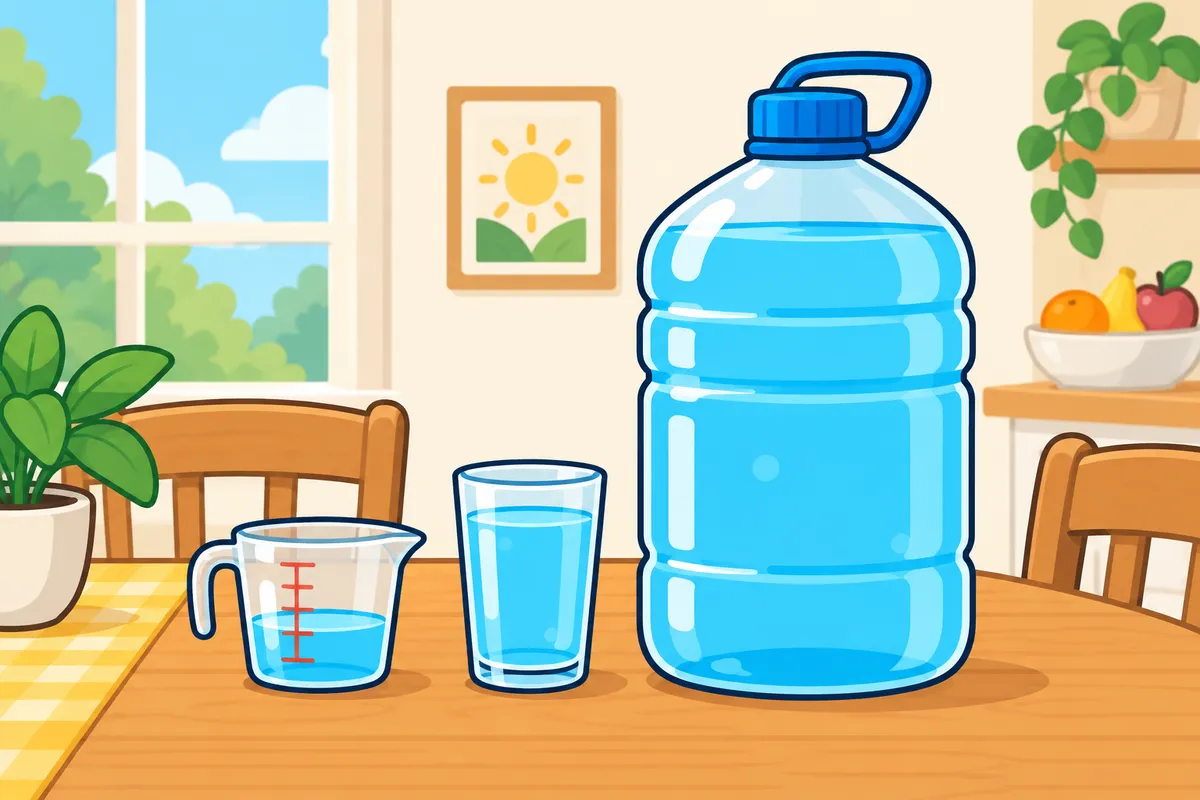
Yes, you can drink too much water, but only by drinking much faster than your kidneys can clear it: about 0.7 to 1.0 L (24 to 34 oz) an hour for healthy adults. The danger is speed more than the total, and it is rare.
Most people worry about drinking too little. A smaller group, often the most careful drinkers, slips the other way: a gallon jug emptied by bedtime, a cup grabbed at every mile of a marathon. Healthy kidneys can handle a gallon spread over a whole day.
Can You Drink Too Much Water?
Yes, though it seldom happens to healthy people. When you drink much faster than your kidneys can pass water, the extra water dilutes the sodium in your blood. The US National Academies write that water intoxication "can lead to hyponatremia, which can be life threatening", and that it is rare in healthy people eating a normal diet.
Hyponatremia means low blood sodium. The US panel's water chapter gives two numbers:
- It defines hyponatremia as a level under 135 mmol/L.
- It says symptoms usually do not appear until the level falls below 130.
A normal diet keeps sodium coming in: the average American eats about 3,400 mg a day, more than twice the 1,500 mg adults need.
Speed matters as much as amount. The same chapter says the signs depend on how quickly sodium falls, which is why a big drink in a short time is the classic route in.
How Much Water Is Too Much in a Day?
The US panel set no daily upper limit for healthy people; the limit that matters is per hour. Two hourly numbers frame it:
- Healthy kidneys clear at most about 0.7 to 1.0 L (24 to 34 oz) an hour.
- NIOSH tells workers in the heat to keep fluid under 6 cups (48 oz, about 1.4 L) an hour.
The panel left out a daily cap for a reason: healthy people can "self-regulate excessive consumption of water", and it found no data on harm from habitually high intakes. The danger comes from bursts.
Your Drinking Pace Against Your Kidneys
A big day is not the problem: 3.4 L (115 oz) spread over 16 waking hours is about 210 ml an hour. The same liter inside an hour is.
The last row is the one that gets people into trouble. If you are a liter behind at 9 pm, let it go, and spread tomorrow's goal over your waking hours so the evening never has to make up for the morning.
Why the Work Limit Sits Higher
NIOSH allows up to 6 cups an hour for workers in the heat, who sweat some of that water out again. Its everyday pace for moderate work under 2 hours is lower: 1 cup (8 oz) every 15 to 20 minutes.

Athletes get a rule rather than a number. NATA says you should not drink more than your exercise weight loss, and should never finish a session heavier than you started.
What Are the Symptoms of Drinking Too Much Water?
Low blood sodium can cause muscle cramps or weakness, nausea and vomiting, extreme low energy, a headache, confusion and, in severe cases, seizures. In athletes, NATA names headache, dizziness, exhaustion, muscle twitching and nausea as early signs. If these follow a lot of drinking, stop drinking and get help.
Symptoms of Low Blood Sodium
6 items- Muscle cramps or weakness
- Nausea and vomiting
- Lethargy, or extreme low energy
- Headache
- Confusion or other mental changes
- Seizures
NATA adds the later, severe signs seen in athletes: disorientation, confusion, seizures and coma. When low sodium builds up slowly, it can show as tiredness or difficulty thinking.
What Is the Difference Between Dehydration and Overhydration?
Dehydration means your body is short of water. Overhydration means you hold more water than your sodium can balance. They share headache, dizziness and nausea, so your story tells them apart better than the feeling: how much you drank, how fast, and whether you weigh less or more than before.
The early signs of low sodium in athletes are "all of which are also symptoms of hypohydration", NATA notes, which is its word for being short of water.
| Dehydration | Too much water (low sodium) | |
|---|---|---|
| The usual story | Too little to drink, heat, sweating or illness | A lot drunk fast, or hours of drinking past what you sweat |
| Signs both can share | Headache, feeling dizzy or light-headed, tiredness | Headache, dizziness, low energy, nausea |
| Other signs listed | Thirst, dry mouth, lips and tongue, sunken eyes, dark yellow pee, peeing less | Vomiting, muscle cramps or twitching, confusion, seizures |
| Body weight after exercise | Lower than before | The same or higher than before |
| What helps | Fluids in small sips, building up | Stop drinking and get your sodium checked |
| Source | NHS | Cleveland Clinic, NATA |
If the story points to too little, sip your way back with steady drinks and some salt. If it points to too much, more water makes it worse.
What Did the Boston Marathon Study Find?
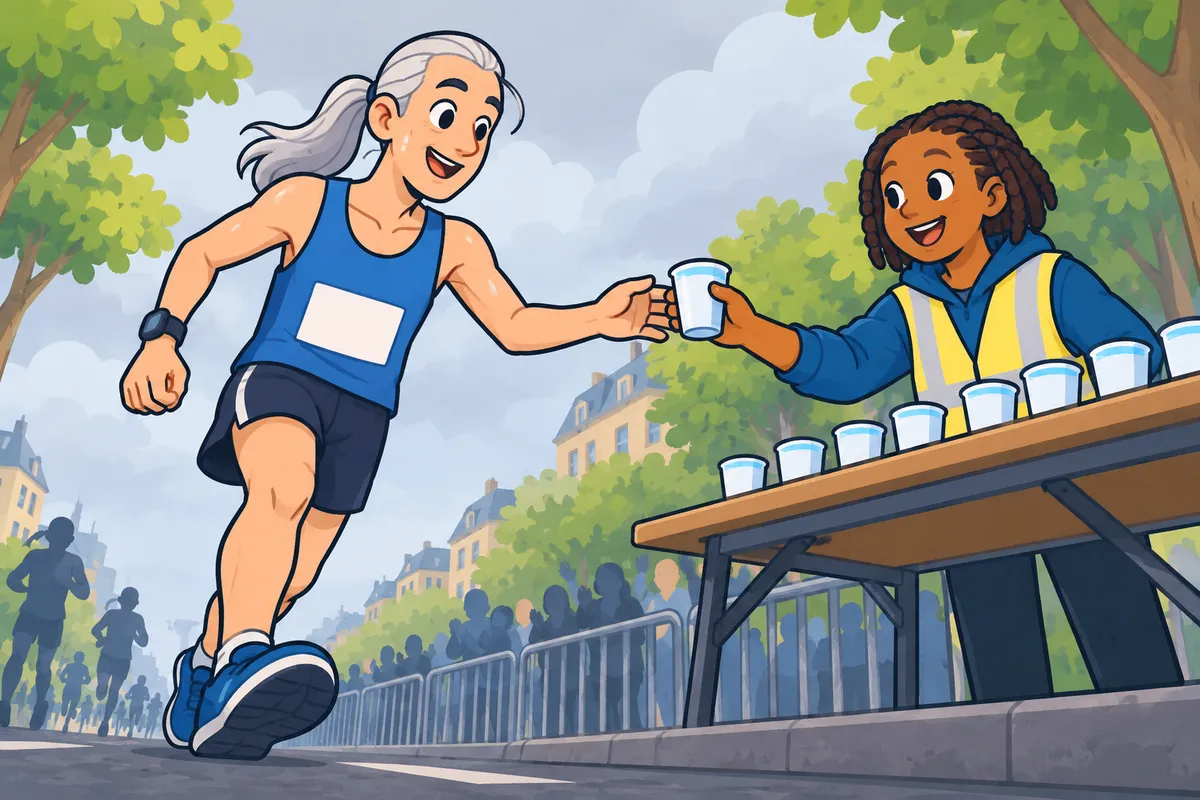
About one finisher in eight had low blood sodium, when researchers took blood from runners at the finish of the 2002 Boston Marathon.
- 488
- runners gave blood at the finish
- 13 %
- had hyponatremia, at 135 mmol/L or less
- 0.6 %
- had the critical form, at 120 or less: about three runners
Researchers looked for what those runners had in common, as the New England Journal of Medicine report describes.
- Weight gain during the race. Runners who finished heavier than they started had about 4 times the odds of hyponatremia.
- A finishing time over 4 hours, compared with under 3 hours 30.
- A body-mass index at either extreme, very low or very high.
- In the first, simpler analysis, drinking more than 3 liters during the race and drinking at every mile.
Three things made no difference once the rest was counted: whether the runner was a man or a woman, what they drank, and whether they took anti-inflammatory painkillers. Choosing sports drinks over water did not lower the risk.
The lesson fits the US panel's own finding that symptomatic hyponatremia from exercise usually comes after more than 6 hours of hard effort. A slow runner spends longer on the course and passes more drink stations.
Which Situations Lead to Water Intoxication?
Long endurance events lead the list, followed by some mental health conditions, some medicines and drugs, and babies given too much water. The US panel's press release names "some athletes who engage in strenuous activity and some individuals with certain psychiatric disorders", and adds that such cases are "highly unusual."
The water chapter and a clinic overview fill in the rest:
Five routes to water intoxication
Long endurance events
Hours of drinking
- Marathons and military training
- Finish no heavier than you started
Suits you if you race or train for many hours with drink stations.
Psychogenic polydipsia
Very large amounts
- Some long-term psychiatric illness
Suits you if someone you care for drinks water far past thirst.
Infants
Seen most often
- The US panel says it is seen most often in infants
- Ask before giving a baby water
Suits you if you feed a baby; ask your doctor or health visitor.
Some medicines and drugs
Lower sodium
- Diuretics (water pills), SSRIs
- MDMA (ecstasy)
Suits you if you take one of these and drink large amounts.
Heart, kidney or liver failure
Doctor sets the amount
- Heart failure, kidney failure, cirrhosis
Suits you if you have one of these; follow your doctor's fluid amount.
Size plays a part too. The US panel notes that smaller people, such as women and children, are more susceptible.
Excessive thirst is on the clinic's list of causes too. If you feel thirsty all the time however much you drink, tell your doctor, because thirst that never settles can have a medical cause.
How Is Low Blood Sodium Treated?
A doctor treats it in several ways:
- Cutting back the water you take in.
- Adjusting medicines that lower sodium.
- Giving fluids through a vein.
- Sometimes adding medicines that raise sodium.
- Treating any condition behind it.
Cleveland Clinic adds that sodium has to come back up slowly, because correcting it too fast can damage the brain.
So the home plan is short: stop drinking more water, and get seen quickly if the emergency signs above show up. The clinic advises seeing a provider right away if you suspect it.
How to Drink Plenty Without Overdoing It
You can drink a generous amount every day and stay far from the limit. The rules are about pace:
Drink plenty, at a safe pace
- Spread your goal across the day. Most people need a lot less than a gallon
- Let thirst lead on ordinary days. Drinking to thirst also stops you before you overdo it
- In long events, weigh yourself before and after training runs, and plan to finish no heavier than you started
- Never catch up on a whole day's water in one sitting
Your own starting number begins with the daily totals health bodies set for adults. If a doctor has set a fluid limit for you, that limit comes first.
General information for healthy adults, not medical advice. If a doctor has set your fluid amount, follow that.
More in Too Little, Too Much


Sources
- National Academies of Sciences. Dietary Reference Intakes for Water, Potassium, Sodium, Chloride, and Sulfate: Chapter 4, Water, 2005.
- National Academies of Sciences. Report sets dietary intake levels for water, salt, and potassium (press release), 2004.
- Cleveland Clinic. Hyponatremia, 2024.
- CDC NIOSH. Workplace Recommendations, 2026.
- National Athletic Trainers' Association. Position Statement: Fluid Replacement for the Physically Active, 2017.
- New England Journal of Medicine (Almond and colleagues). Hyponatremia among runners in the Boston Marathon, 2005.
- NHS. Dehydration, 2026.
Sources checked by the Glubbo Editorial Team on Oct 19, 2026. General information, not medical advice. How we write and check our guides.

