Every Age · Babies and Children
What Drinks Are Safe for Toddlers? Water, Milk and Little Else
Which drinks a toddler needs, milk by age, where juice and plant milks fit, and the drinks to leave on the shelf.
 By the Glubbo Editorial Team · Updated Oct 19, 2026 · 9 min read
On This Page
Short answer
Plain water and plain milk; everything else is optional.
- Ages 1 to 2: about 2 to 3 cups (16 to 24 oz) of whole milk a day, plus water.
- 100 % juice is never needed; if you give it, no more than 4 oz a day under age 4.
- Skip toddler milk, flavored milk, sweet drinks, diet drinks and anything with caffeine.
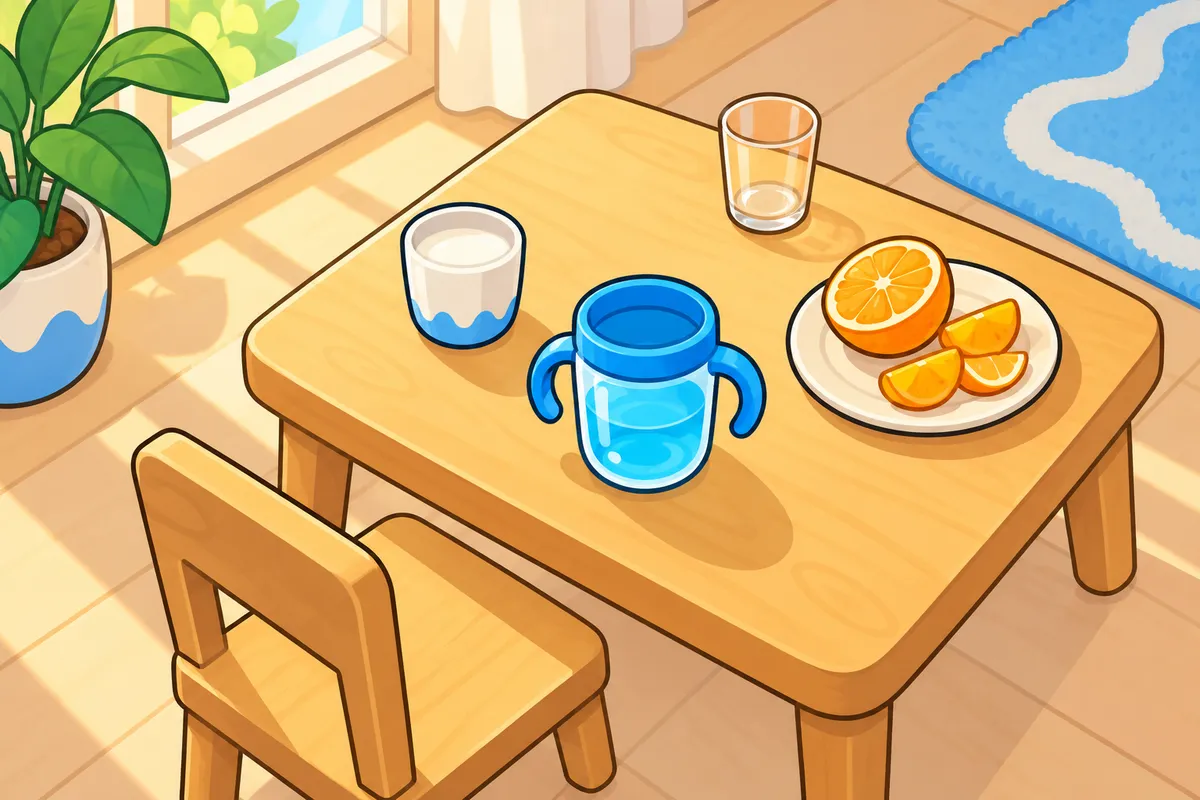
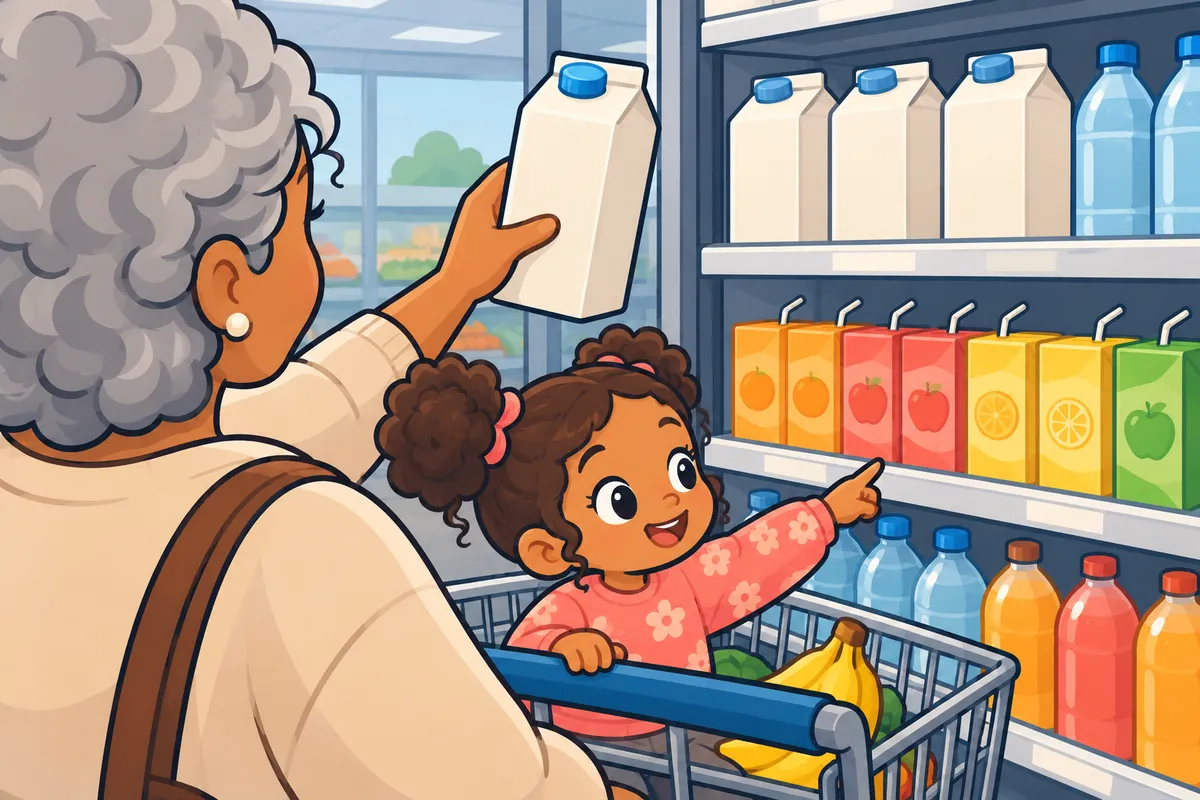
A toddler needs two drinks: plain water and plain milk. Everything else on the shelf, from growing-up milks to juice boxes with cartoon labels and oat and almond drinks, is optional or best skipped, and neither of the two has a cartoon on it.
Four US groups agreed on that list in 2019: the American Academy of Pediatrics, the American Heart Association, the Academy of Nutrition and Dietetics and the American Academy of Pediatric Dentistry. Their table for ages 1 to 5 sets every amount on this page.
What Drinks Are Safe for Toddlers?
Plain water and plain pasteurized milk. The 2019 consensus lists those two as the drinks recommended as part of a healthy diet for children aged 1 to 5, puts 100 % juice in a "limit" group, and places plant milks with the drinks it does not recommend, unless there is a medical reason or a vegan diet.
Every toddler drink, as the 2019 consensus sorts it
Plain water
Recommended
- 1 to 4 cups a day at ages 1 to 3
- Between meals and with them
Suits you if your toddler is thirsty at any time of day.
Plain milk
Recommended
- Whole milk from 12 to 24 months
- Skim or 1 % from age 2
Suits you if it is a meal or snack and milk is on the plan.
100 % juice
Limit
- No more than 4 oz a day, ages 1 to 3
- Whole fruit preferred
Suits you if your toddler will not eat enough whole fruit.
Plant milk
Not recommended
- Only for allergy, intolerance or a vegan diet
- Plan it with your pediatrician
Suits you if your child cannot or will not have cow's milk.
Toddler, flavored and sweet drinks
Not recommended
- Toddler milk, chocolate milk, soda
- Diet drinks and caffeine too
Suits you if never; the panel recommends none of them from birth to age 5.
The Full Table by Age
The panel set amounts for each age band. Water ranges are wide on purpose: where your child falls depends on how much milk and other drinks they have that day.
| Drink | 12 to 24 months | 2 to 3 years | 4 to 5 years |
|---|---|---|---|
| Plain water | 1 to 4 cups (8 to 32 oz) | 1 to 4 cups (8 to 32 oz) | 1.5 to 5 cups (12 to 40 oz) |
| Plain milk | 2 to 3 cups (16 to 24 oz), whole | Up to 2 cups (16 oz), skim or 1 % | Up to 2.5 cups (20 oz), skim or 1 % |
| 100 % juice (upper limit) | No more than 4 oz | No more than 4 oz | 4 to 6 oz |
| Plant milk | Only when medically needed or for a vegan diet | Same | Same |
| Flavored milk, toddler milk, sweet, diet or caffeinated drinks | Not recommended | Not recommended | Not recommended |
One cup is 8 fl oz. The AAP's habits for getting a toddler to drink water, such as a cup they pick and a parent who drinks too, work from the first birthday on.
Before the first birthday the rules are different: no cow's milk, no juice, and water only from about 6 months in small amounts. Water in the first year has its own page.
How Much Milk Should a Toddler Drink?
About 2 to 3 cups (16 to 24 oz) of whole milk a day from 12 to 24 months, then up to 2 cups of skim or 1 % milk at ages 2 to 3. The AAP's parent site, HealthyChildren.org, gives 16 oz (2 cups) a day for the 12 to 24 month band, the bottom of the consensus range.
More is not better. The consensus says the total amount of milk at 12 to 24 months "will depend on how much solid food is being eaten," so a toddler who drinks milk all day often eats less at meals.
Why Two AAP Sources Give Different Milk Numbers
The parent site HealthyChildren.org and the 2019 panel the AAP joined differ on milk, because the AAP updated the site in 2023 and the panel published in 2019. The biggest gap is a 2- or 3-year-old: 16 to 24 oz on the parent site, up to 16 oz in the panel's table. Water and juice match.
Where they differ, ask your pediatrician which fits your child, especially if your toddler eats little at meals.
| Time | Drink | Amount |
|---|---|---|
| Breakfast | Whole milk | 6 oz |
| Mid-morning | Water, open cup | 4 oz |
| Lunch | Whole milk | 5 oz |
| After the nap | Water | 4 oz |
| Dinner | Whole milk | 5 oz |
| Evening snack | Water | 8 oz |
| Day total | 16 oz milk + 16 oz water | 32 oz |
When Can a Toddler Switch to Low-Fat Milk?
At age 2, for most children. The consensus lists skim or 1 % milk from age 2, and the AAP says the same on HealthyChildren.org. Between 12 and 24 months, the panel says 2 % or 1 % milk "may be considered in consultation with a pediatrician," mainly when weight gain is high or the family has a history of obesity or heart disease.
- 12 to 24 months: whole milk; 2 % or 1 % only after a talk with your pediatrician
- From the second birthday: skim (fat-free) or 1 % milk, up to 2 cups a day at ages 2 to 3
From 12 months, the CDC also lists "fortified, unsweetened dairy alternatives" beside plain whole cow's milk. That brings in the next question.
Can Toddlers Drink Juice?
They can, but they do not need it. The consensus caps 100 % juice at 4 oz (half a cup) a day from 12 months to age 3 and 4 to 6 oz at ages 4 to 5, and calls those amounts upper limits, "not minimum requirements," for days when whole fruit is not enough.
Whole fruit wins for a reason the AAP spells out: young children who get sweet drinks early develop a strong preference for them. How milk and other drinks count toward a child's daily total sits on the page for cups by age.
Are Plant Milks OK for Toddlers?
Only for a reason, and soy is the exception. The consensus does not recommend plant milks in place of dairy milk at 12 to 24 months unless there is a medical reason, such as a cow's milk allergy or intolerance, or a dietary choice such as a vegan diet. Plan a full switch with a health care provider, so your child still gets the nutrients dairy milk provides.
The AAP is more specific: "most plant-based milks are not nutritionally-equivalent to cow's milk," but "Soy milk is nutritionally equivalent to cow's milk and is an acceptable alternative."
Fortified Soy Milk
- Nutritionally equivalent to cow's milk (AAP)
- An acceptable alternative for an allergy or a vegan diet
Most Other Plant Milks
- Not nutritionally equivalent to cow's milk (AAP)
- Not a stand-in for dairy at 12 to 24 months without a medical or diet reason
Is Toddler Milk Necessary?
No. The AAP calls toddler milk unnecessary for most children, and the consensus says these products "offer no unique nutritional value beyond what a nutritionally adequate diet provides." They may also add sugar to a toddler's diet and, the panel notes, can undermine breastfeeding that is still going.
Read the label of any "growing-up" or "follow-on" drink before you buy it. If the first ingredients are milk powder and sugar, plain whole milk does the same job for less.
What Drinks Should Toddlers Avoid?
Anything sweetened, flavored or caffeinated. The consensus lists flavored milk, toddler milk, sugar-sweetened drinks, drinks with low-calorie sweeteners and caffeinated drinks as not recommended at any age from birth to 5.
The sugar-sweetened drinks the 2019 panel names
6 items- soft drinks/soda
- fruit drinks, fruit-flavored drinks, fruit-ades
- sports drinks
- energy drinks
- sweetened waters
- sweetened coffee and tea beverages
Diet drinks are on the list too. The panel advises against drinks with low-calorie sweeteners for young children, on expert opinion, because evidence on their long-term effects at this age is lacking; the AAP says it is best to avoid sweetened drinks, "even if they are calorie-free."
Sugary drinks also raise the risk of cavities, the AAP adds, while fluoridated tap water "will also help prevent future tooth decay."
Can Toddlers Have Tea, Soda or Other Caffeine Drinks?
No. The AAP says "all caffeine-containing beverages are best avoided" for young children, and links caffeine to poor sleep, irritability, nervousness, headaches and trouble concentrating. That covers iced tea, cola and chocolate drinks as well as coffee, and it is why caffeine sits in the panel's not-recommended group at every age from birth to 5.
What Do Toddlers Drink in the UK?
The UK health service agrees that water and plain milk are the main drinks but differs on four points. Skimmed and 1 % milk wait until age 5 instead of age 2, unsweetened fortified soya, oat or almond drinks are fine from 12 months, juice is allowed undiluted only from age 5, and rice drinks are off the list under 5 because of arsenic.
US consensus (AAP, AHA, AND, AAPD)
- Skim or 1 % milk from age 2
- Plant milk only for allergy, intolerance or a vegan diet
- Up to 4 oz of 100 % juice from 12 months
- Water 1 to 4 cups a day at ages 1 to 3
NHS (UK)
- Skimmed and 1 % milk not as a main drink under 5
- Unsweetened fortified soya, oat or almond from age 1
- Undiluted juice from age 5, no more than 150 ml with meals
- Water with meals, rice drinks not under 5
If you follow UK advice, the NHS page on drinks for babies and young children is the one to use; if you live elsewhere, your own pediatrician's guidance beats both. Squash, fizzy drinks and flavored milk are off both lists, and the NHS adds that even low-calorie and no-added-sugar drinks can encourage a sweet tooth. It also says to avoid slush ice drinks for children aged 4 and under.
Count One Ordinary Day
Pick tonight's milk and water cups before bedtime. Put the open cup of water where your toddler can reach it between meals, and keep milk for the three meals in the day, as in Ava's table. Check the label of any "toddler milk" in the cupboard against the line above before the next shop.
Then add up one ordinary day for three days running, in ounces, and compare it with Ava's 32 oz. If juice, flavored milk or a bottle at bedtime shows up in the total, those are the first swaps: water or plain milk goes in their place.
General information for healthy adults, not medical advice. If a doctor has set your fluid amount, follow that.

More in Every Age

Sources
- Healthy Eating Research (AAP, AHA, Academy of Nutrition and Dietetics, AAPD), via the AAPD Reference Manual. Healthy Beverage Consumption in Early Childhood, 2019.
- American Academy of Pediatrics, HealthyChildren.org (Natalie D. Muth). Recommended Drinks for Children Age 5 & Younger, 2023.
- US Centers for Disease Control and Prevention. Foods and Drinks to Encourage, 2024.
- NHS. Drinks and cups for babies and young children, 2022.
Sources checked by the Glubbo Editorial Team on Oct 19, 2026. General information, not medical advice. How we write and check our guides.

