Every Age · Pregnancy and Later Life
How Much Water Should Older Adults Drink When Thirst Fades?
Your daily amount after 65, the two official numbers side by side, why thirst fades, and a drink routine for every day.
 By the Glubbo Editorial Team · Updated Oct 19, 2026 · 7 min read
On This Page
- How Much Water Should Older Adults Drink?
- Why Do Older Adults Get Dehydrated More Easily?
- What Are the Signs of Dehydration in Older Adults?
- How Can Older Adults Drink Enough if They Rarely Feel Thirsty?
- What if Drinking Means More Trips to the Toilet?
- How Much Should Older Adults Drink in Hot Weather?
- The Jug and the Eight Glasses
- Sources
Short answer
At least 1.6 L for women, 2.0 L for men.
- Floor: 1.6 L (54 oz) for women, 2.0 L (68 oz) for men, drinks only (ESPEN).
- Typical healthy intake: 2.2 L (9 cups) for women, 3.0 L (13 cups) for men.
- Tie a glass to waking, each meal, your pills and an afternoon show.
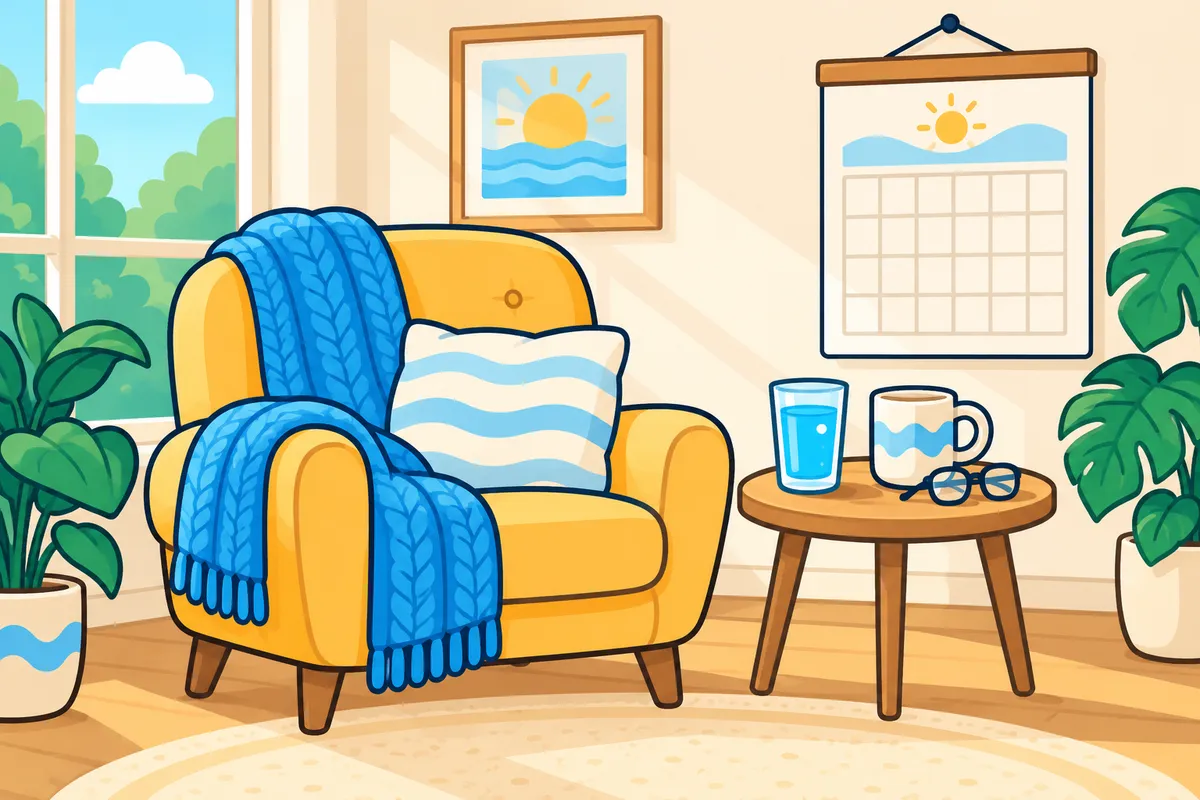
Older adults should drink at least 1.6 L (54 oz, 7 cups) a day if they are women and 2.0 L (68 oz, 8.5 cups) if they are men, according to the European geriatric nutrition guideline. Healthy older adults in the US typically drink more: about 9 cups for women and 13 for men, the same as at 30.
What changes after 70 is the signal. Thirst comes later and weaker, so the drinks have to come from a routine.
How Much Water Should Older Adults Drink?
Two official numbers apply, and they answer different questions. The US National Academies give what healthy adults of every age typically drink. ESPEN, Europe's society for clinical nutrition, gives a minimum for older people: 2.0 L for men and 1.6 L for women, as a 2020 review reports.
| Who sets it | Women, drinks | Men, drinks | What the number is |
|---|---|---|---|
| ESPEN geriatric guideline | at least 1.6 L (54 oz) | at least 2.0 L (68 oz) | A minimum for older adults |
| US National Academies | 2.2 L (74 oz, 9 cups) | 3.0 L (101 oz, 13 cups) | Typical healthy intake, ages 51 to 70 and over 70 |
| EFSA, food included | 2.0 L total | 2.5 L total | All water, drinks and food, from age 18 |
The gap is smaller than it looks. If about 20 % of water comes from food, EFSA's totals leave 1.6 L of drinks for women and 2.0 L for men, which is ESPEN's minimum exactly. The US panel adds food on top for totals of 2.7 L and 3.7 L.
Use ESPEN's number as the floor and the US figure as the usual day. If a doctor has given you a fluid limit, for heart or kidney disease or because you take water pills, that limit comes first. Every number on this page is for healthy older adults.
Why Do Older Adults Get Dehydrated More Easily?
Because thirst weakens with age while the need stays the same. The US panel says several studies confirm a long-held clinical observation: older people feel less thirst and drink less. Older kidneys also hold back less water, and heat, medicines and illness add to the gap.
Four reasons the gap opens after 65
Thirst
Late and weak
- Drinks come late without a prompt
Suits you if you wait to feel thirsty before you drink.
Kidneys
Hold back less
- Weaker urine concentration
Suits you if you have a dry or busy day.
Heat
Harder to adjust
- Some medicines affect sweating
Suits you if a heat wave is coming.
Illness and memory
Thirst drops further
- Someone else sets the cup down
Suits you if you look after a frail relative.
Thirst Comes Late
In a 1984 study, researchers kept 7 healthy men aged 67 to 75 and 7 men aged 20 to 31 without water for 24 hours. The older men's blood grew more concentrated, yet they felt less thirsty and drank less afterwards. The authors concluded that "there is a deficit in thirst and water intake in healthy elderly men."
The study was small, but later work found the same, and the US panel cites it among several. The panel also notes many apparently healthy older people who reported no thirst even when their blood ran well above the normal concentration. If you wait for thirst after 70, you start drinking late.
Kidneys Hold Back Less
"Healthy older individuals, however, cannot concentrate urine as well as young individuals," the US panel writes. Your kidneys save water by making darker, stronger urine; when they do that less well, more water leaves you on a dry day.
Heat Hits Harder
The CDC gives three reasons people over 65 struggle in the heat:
- They "do not adjust as well as young people to sudden changes in temperature".
- They are more likely to have a long-term condition that changes how the body responds to heat.
- They more often take medicines that affect sweating or temperature control.
Illness and Memory
The panel links systemic illness and dementia in many frail older people to a risk of "severe water deficiency". Here the drinks depend on whoever sets the cup down.
What Are the Signs of Dehydration in Older Adults?
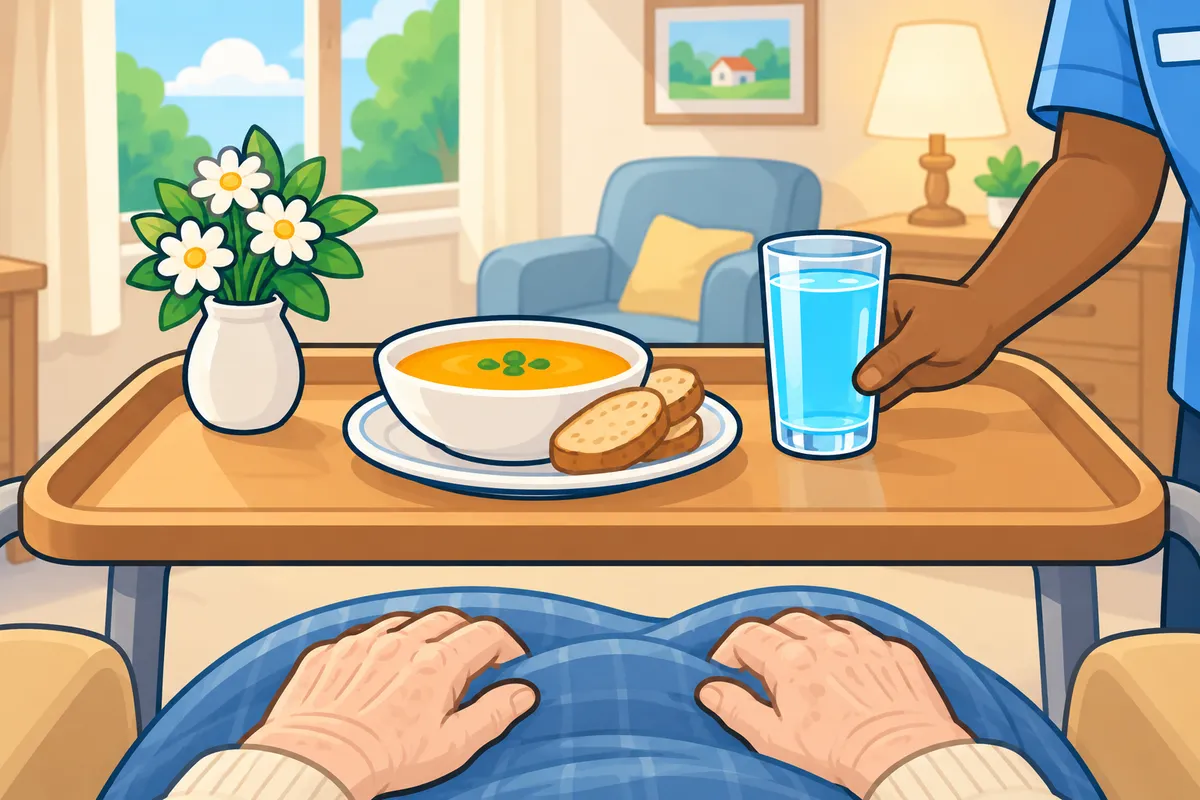
Tiredness, dizziness on standing, dark yellow pee and peeing less often. These are the first signs on the NHS dehydration page, which also names older adults among the groups at higher risk and lists relying on others to get drinks as a cause.
Because thirst is a poor alarm after 70, a carer or family member is better placed to notice the rest: a person who seems unusually tired, is dizzy when standing and it does not pass, is breathing quickly or has a fast heart rate needs a call to the doctor the same day. Confusion, dizziness, headache or nausea in hot weather could be a heat-related illness, according to the National Institute on Aging, and needs a doctor or emergency room.
How Can Older Adults Drink Enough if They Rarely Feel Thirsty?
Drink by the clock and by habit, not by feel. Tie a glass to things you do every day anyway, such as meals, morning pills and an afternoon show, and keep a full glass within reach.
Waiting for Thirst
- Thirst comes late after 65
- Long gaps between drinks
- A big catch-up glass in the evening
- Long gaps on busy or hot days
A Glass at Set Times
- Drinks spread over waking hours
- Each glass tied to a meal, pill or show
- Most drinks finished by early evening
- Easy for a family member to check
Eight 200 ml glasses (6.8 oz each) make 1.6 L, ESPEN's floor for women; ten make 2.0 L, the floor for men. Space them from waking to early evening:
Eight glasses from waking to evening
- 7 AM
- 8 AM
- 10 AM
- 12:30 PM
- 3 PM
- 4:30 PM
- 6 PM
- 7 PM
For a different amount, a schedule between waking and an hour before bed does the sums. Small changes carry the rest:
- A mug you like, with a big handle, easy to lift when your hands are stiff.
- A full jug on the side table each morning; when it is empty, you are done.
- Soup, fruit and milk at meals, which add water as well as food.
- A phone or speaker reminder that repeats at the same times every day.
What if Drinking Means More Trips to the Toilet?
Move your drinks earlier in the day instead of cutting the total. The NHS says that drinking too much or too little can make incontinence worse, and that cutting back on caffeine, found in tea, coffee and cola, can help.
Front-load the glasses: most of the day's drinks before early evening, then small sips. Timing drinks around bedtime is covered on its own page. Tell your doctor about leaks or night trips, because bladder training, which usually runs at least 6 weeks, is one treatment to ask about.
How Much Should Older Adults Drink in Hot Weather?
More than usual, before you feel thirsty. The CDC tells adults over 65 to "drink more water than usual and don't wait until you're thirsty to drink." If your doctor limits your fluids or has you on water pills, ask them how much to drink in hot weather.
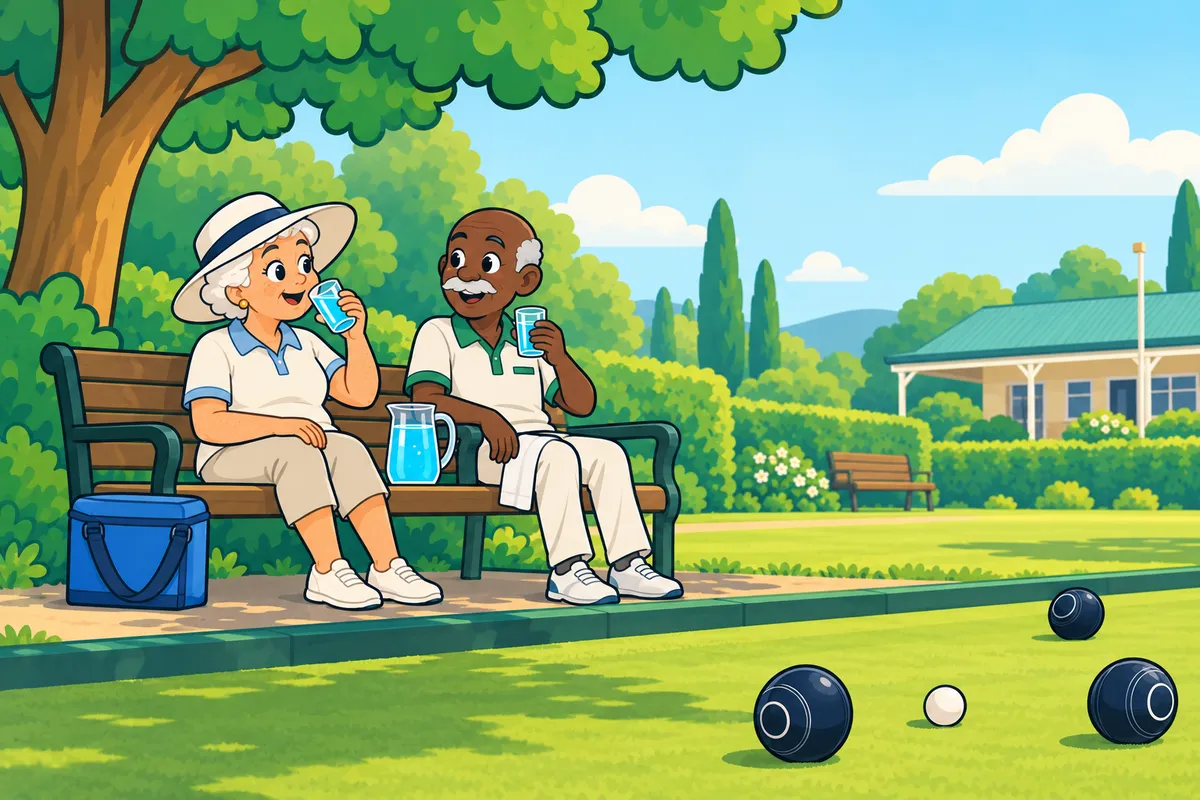
The National Institute on Aging suggests water, fruit or vegetable juices, or drinks that contain electrolytes, and asks you to avoid alcohol and caffeinated drinks on very hot days. In a heat wave, drinking more also has an hourly limit worth knowing.
Heat exhaustion comes first in many cases: feeling thirsty, dizzy, weak, uncoordinated and nauseated, sometimes with heavy sweating and cold, clammy skin. The NIA says to rest in a cool place and get plenty of fluids, and to get medical care if you do not feel better soon.
The Jug and the Eight Glasses
- Fill a jug with tomorrow's amount before bed and put it on the side table: 1.6 L for a woman or 2.0 L for a man, unless your doctor has set a different limit.
- Pour from it at the eight times above, and when it is empty the day's minimum is done.
- Ask your doctor at the next visit whether any of your medicines or conditions change how much you should drink, and plan extra drinks and fewer cups of coffee or glasses of wine before the next hot spell.
General information for healthy adults, not medical advice. If a doctor has set your fluid amount, follow that.
More in Every Age
Sources
- National Academies of Sciences. Dietary Reference Intakes for Water, Potassium, Sodium, Chloride, and Sulfate: Chapter 4, Water, 2005.
- Nutrients (critical review of fluid intake over 65). Fluid Intake Recommendation Considering the Physiological Adaptations of Adults Over 65 Years, 2020.
- New England Journal of Medicine (Phillips et al.). Reduced thirst after water deprivation in healthy elderly men, 1984.
- CDC. Heat and Older Adults (Aged 65+), 2024.
- National Institute on Aging. Hot Weather Safety for Older Adults, 2022.
- NHS. Dehydration, 2026.
- NHS. Urinary incontinence, treatment, 2026.
- European Food Safety Authority (EFSA). Dietary Reference Values finder, water, 2010.
Sources checked by the Glubbo Editorial Team on Oct 19, 2026. General information, not medical advice. How we write and check our guides.

