Every Age · Babies and Children
How Much Water Should Kids Drink During Sports? A Practice Plan
What your child drinks before, during and after play, when a sports drink helps, and a tournament-day plan.
 By the Glubbo Editorial Team · Updated Oct 19, 2026 · 9 min read
On This Page
- How Much Water Should Kids Drink During Sports?
- How Much Water Should a Child Drink Before a Game?
- A Practice Day and a Tournament Day
- Do Kids Need Sports Drinks?
- Are Energy Drinks Safe for Kids?
- What Should Kids Drink After Sports?
- How Can You Tell Your Child Is Drinking Enough Across a Season?
- Can a Child Drink Too Much During Sports?
- Breaks, Heat and the Coach's Role
- Signs a Young Athlete Needs to Stop
- Mark the Bottle and Talk to the Coach
- Sources
Short answer
About 3 to 4 oz of water every 15 minutes of play.
- Before: 8 to 10 oz 2 to 3 hours ahead for a 70-pound child, 12 to 20 oz for a teen.
- Teens in hard, sweaty practice need about 34 to 50 oz (1.0 to 1.5 L) an hour.
- Water is enough under an hour; refill with water or milk within an hour after.
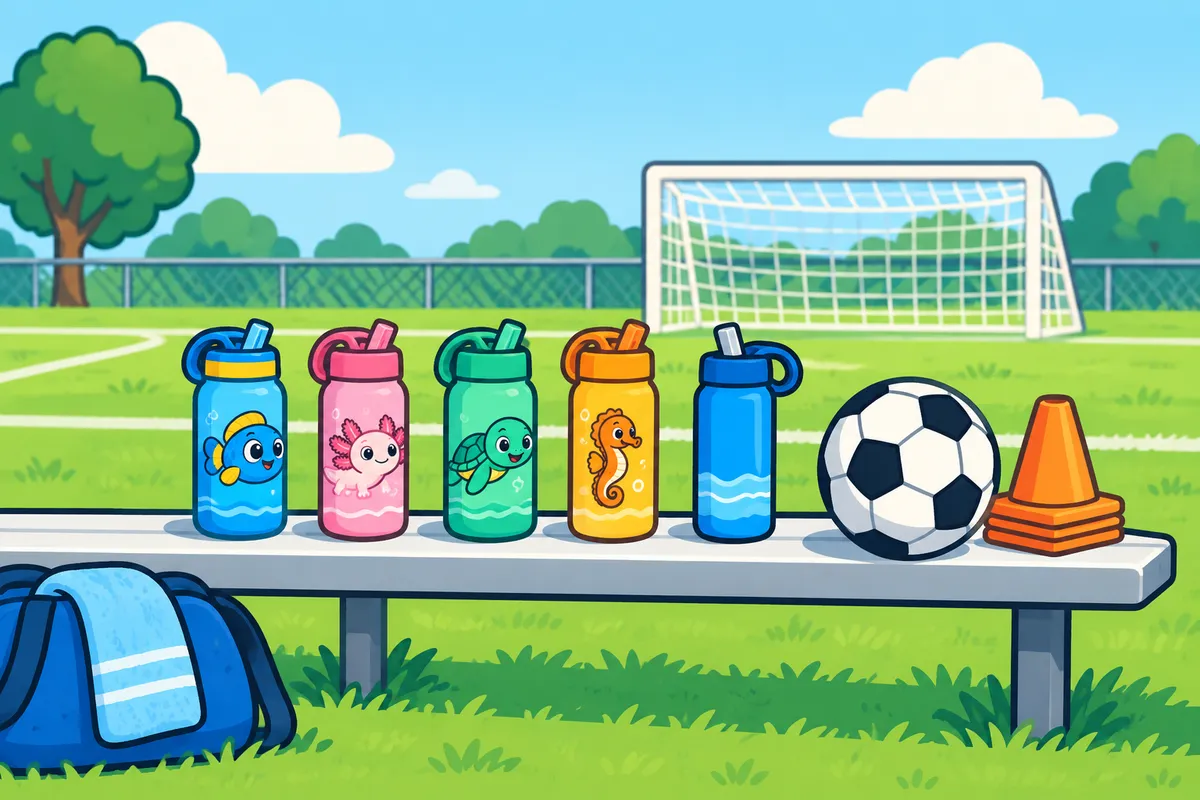
A child at practice needs small drinks often: about 3 to 4 oz (90 to 120 ml) every 15 minutes, plus a drink a few hours before and a refill within an hour after. Teens in hard, sweaty sessions need much more, up to 1.5 L an hour.
These are per-session amounts from the American Academy of Pediatrics (AAP), on top of the daily water every child needs for their age.
How Much Water Should Kids Drink During Sports?
About 3 to 4 oz (90 to 120 ml) every 15 minutes, according to the AAP's sports nutrition guide. That is 12 to 16 oz (355 to 475 ml) for an hour of play. For sessions under an hour, plain water is all your child needs.
The AAP's amounts for one session
Before play
2 to 3 hours ahead
- 70-pound child: 8 to 10 oz
- Teen: 12 to 20 oz, then 6 to 8 oz
Suits you if practice starts after school and lunch was hours ago.
During play, under 12
Small and often
- 3 to 4 oz every 15 minutes
- Ages 9 to 12: 3 to 8 oz every 20 minutes
Suits you if your child plays soccer, swimming or tennis.
During play, teens
Hard practice
- About 34 to 50 oz an hour
- Risk grows in hot weather
Suits you if your teen trains hard in heavy gear or heat.
After play
30 to 60 minutes
- Water or milk to refill
- Chocolate milk is a recovery drink
Suits you if there is another game or practice tomorrow.
Children Under 12
Small and frequent beats one big gulp at half-time. A 3 to 4 oz drink is a few mouthfuls from a sports bottle, about what fits in a paper cup at a water break.
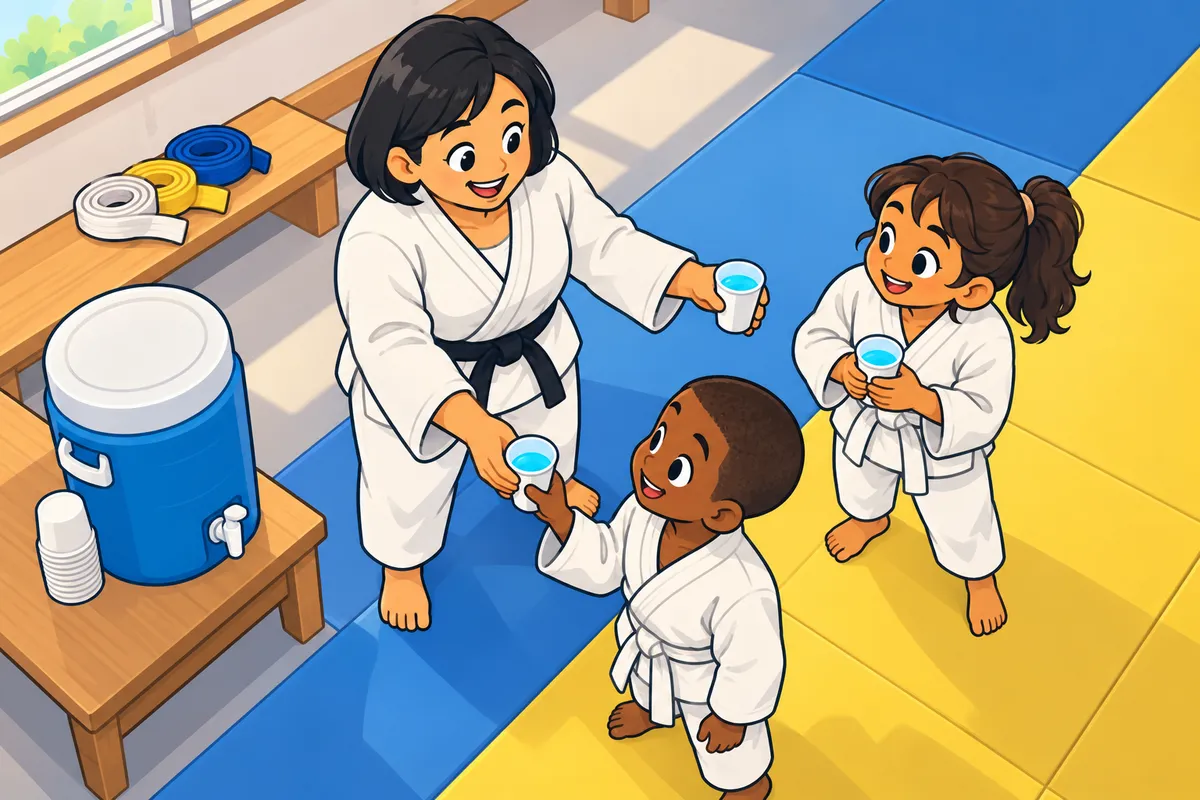
The AAP's hydration page gives a second range for ages 9 to 12: about 3 to 8 oz every 20 minutes. Over an hour that runs from 9 to 24 oz (270 to 710 ml), so a child who sweats a lot on a warm evening sits near the top of it.
Teens
Teens in high-intensity workouts or heavy team practices need about 34 to 50 oz (1.0 to 1.5 L) an hour, the AAP's hydration page says. It adds that dehydration "is a big risk" at this age and that the risk "becomes even greater in hot weather".
Why Adult Sports Plans Do Not Fit
Children sweat less and need their own plan. The National Athletic Trainers' Association position statement says "whole-body sweat losses in children are less than in adults, and children require different rehydration plans than adults".
So the adult tools stay with the adults:
- The weigh-before-and-after sweat test.
- The adult workout targets.
- Glubbo's habit formula, which starts from an adult's body weight.
Children are not fragile in the heat either. The AAP's 2011 heat policy statement found that young athletes handle heat as well as adults "when adequate hydration is maintained", which makes the water breaks the part you control.
How Much Water Should a Child Drink Before a Game?
The AAP gives these amounts of water before play:
| Who | How much water | When |
|---|---|---|
| A 70-pound (32 kg) child | about 8 to 10 oz (240 to 300 ml) | 2 to 3 hours before play |
| A teen | 12 to 20 oz (350 to 590 ml) | In that same window |
| Anyone | Another 6 to 8 oz (180 to 240 ml) | Right before the start |
Many young athletes start behind. The NATA statement says more than half of athletes, high school and youth sports included, "arrive at workouts hypohydrated". A small study shows how it happens.
A Practice Day and a Tournament Day
Two plans, built from the AAP numbers above. Change the bottle sizes to the ones your child carries.
A tournament is harder, because games come back to back with little rest. Cormac, 15, plays three one-hour games at 9:00, 12:00 and 3:00 on a July Saturday.
Cormac's Tournament Day
- 6:45 AM
- 8:50 AM
- 10:30 AM
- 11:50 AM
- 1:30 PM
- 2:50 PM
- 4:30 PM
| When | What Cormac drinks | About |
|---|---|---|
| Breakfast, 2 to 3 hours before game 1 | Water | 12 to 20 oz (350 to 590 ml) |
| Right before each game | Water | 6 to 8 oz (180 to 240 ml) |
| During each one-hour game | Water, or a sports drink in the heat | 34 to 50 oz (1.0 to 1.5 L) |
| Within an hour after each game | Water, milk or chocolate milk | Enough to refill before the next |
During a game, 34 to 50 oz is two 750 ml bottles at the top end, so Cormac packs a cooler with spares. To plan the cooler around a different bottle, enter the amount in ml.
Do Kids Need Sports Drinks?
Usually not: for play under an hour, water is enough, the AAP's sports nutrition guide says. Once activity runs longer than 1 to 2 hours, or the day is very hot, a sports drink "can help replenish carbohydrates and electrolytes". Its hydration page adds that drinks with electrolytes may be needed when vigorous exercise goes past 1 hour in a day.
Water
- Enough for play under an hour
- No sugar and no calories
- With milk, the everyday drink at meals
Sports drink
- Can help past 1 to 2 hours, or in strong heat
- Brings back carbohydrate and electrolytes
The worry is the everyday bottle. The AAP's 2011 clinical report says frequent or excessive intake of caloric sports drinks "can substantially increase the risk for overweight or obesity in children and adolescents". Keep them for long or hot sessions, not the school lunch box.
Are Energy Drinks Safe for Kids?
No. The AAP's 2011 clinical report says the caffeine and other stimulants in energy drinks "have no place in the diet of children and adolescents". Its sports nutrition guide says it plainly: "Energy drinks are not recommended."
Packaging blurs the line, so read the label. The same report says sports drinks and energy drinks are "significantly different products" and that the names should not be swapped. If the label lists caffeine or another stimulant, treat it as an energy drink, whatever the shelf says.
What Should Kids Drink After Sports?
Water or milk, within 30 to 60 minutes of the end. The AAP's sports nutrition guide says that is when to replace the fluid your child lost, and it calls chocolate milk "an excellent example of a recovery drink". Then back to milk and water as the main drinks.
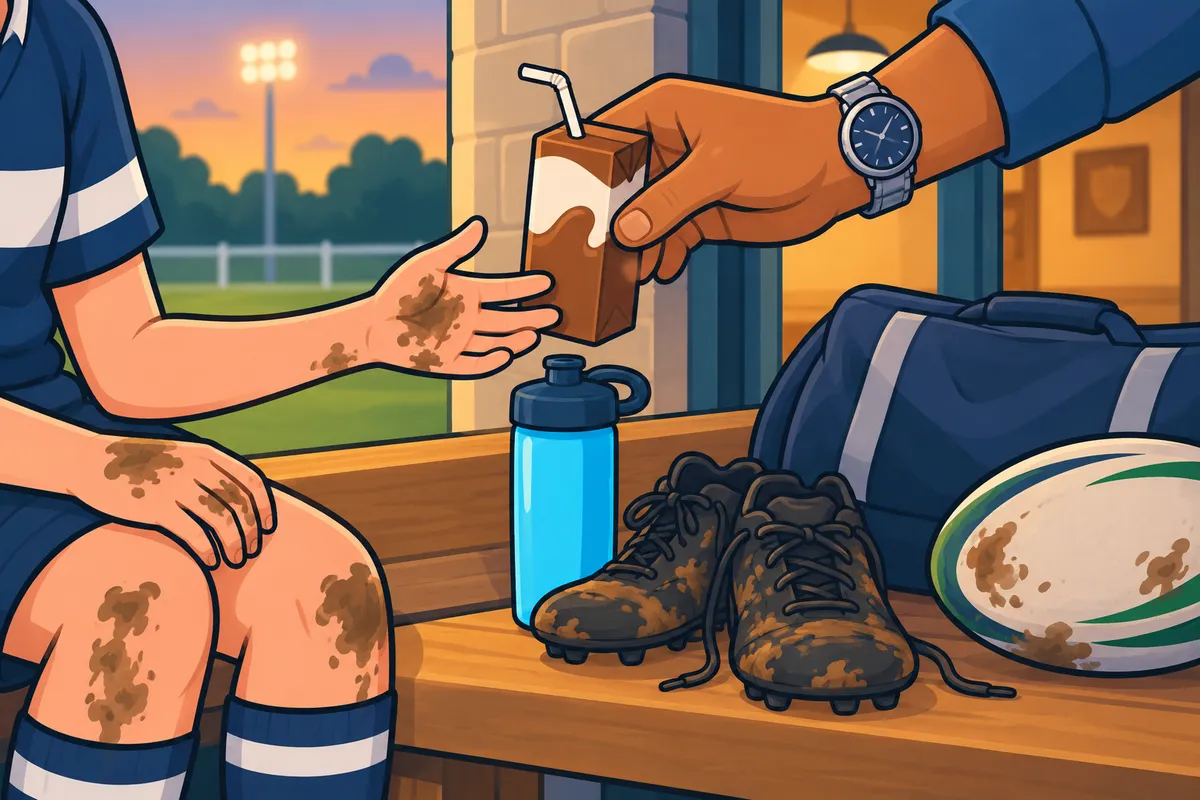
A few things help the refill happen:
- Hand over a full bottle in the car, before the screens come out.
- Serve a snack with water-rich fruit such as watermelon or strawberries.
- Start the refill in the first minutes after the whistle, while the 30 to 60 minute window is wide open.
Between game days, cups, flavors and a routine keep the bottle in use.
How Can You Tell Your Child Is Drinking Enough Across a Season?
Check the first pee of the morning. The athletic trainers' position statement describes urine color as a noninvasive, reliable way for athletes to judge their own fluid status, and calls first-morning samples the most stable. A pale first pee on practice days says your child started the day with enough.
Dark first pee two days running is the cue to move more of the day's drinks earlier, as in the soccer study where most players woke up already low on fluid. It is not a reason to force a big drink at the start of practice.
Can a Child Drink Too Much During Sports?
That is one more reason to follow the per-break amounts and let thirst and the clock set the pace. A child who has finished a cup at each water break has met the plan; a bottle emptied in one go before practice has not.
Breaks, Heat and the Coach's Role
Teens were the largest age group in the CDC's count of sport heat illness in the US, with football and exercise the most common activities. Between 2001 and 2009, the CDC counted emergency department visits for heat illness from sports and recreation:
- 5,946
- visits a year on average
- 35.6 %
- were 15 to 19 years old
- 72.5 %
- were male
- 66.4 %
- came between July and September
The fixes sit with the adults running practice. The CDC asks coaches to schedule frequent rest breaks, encourage drinking, and raise the length and intensity of practice gradually so players get used to the heat.
The AAP's heat policy names what raises the risk, and each can be changed:
- Pushing too hard for the conditions.
- Too little recovery between sessions or games on the same day.
- Uniforms and protective gear that hold heat in.
On the hottest days, the CDC's heat advice for athletes suggests practice earlier or later, when it is cooler.
Signs a Young Athlete Needs to Stop
Muscle cramps can be an early sign of heat illness, the CDC says, and a player who feels faint or weak should stop and get to a cool place. The AAP adds dry lips, dark urine, sleepiness and flushed skin as signs that a child needs more to drink.
Heat exhaustion and heat stroke look different and need different action, so learn to tell the two apart before the season starts.
Mark the Bottle and Talk to the Coach
- Write the per-break amount on your child's bottle with a marker: 3 to 4 oz is 90 to 120 ml, about a third of a 355 ml (12 oz) bottle.
- Ask the coach how often practice stops for water; every 15 to 20 minutes fits the AAP numbers.
- Look at tomorrow morning's first pee after the first hot practice of the season.
General information for healthy adults, not medical advice. If a doctor has set your fluid amount, follow that.
More in Every Age

Sources
- American Academy of Pediatrics (HealthyChildren.org). Sports Nutrition for Busy Families and Busy Lifestyles, 2017.
- American Academy of Pediatrics (HealthyChildren.org). Choose Water for Healthy Hydration, 2024.
- American Academy of Pediatrics, Pediatrics. Sports Drinks and Energy Drinks for Children and Adolescents: Are They Appropriate?, 2011.
- American Academy of Pediatrics, Pediatrics. Policy Statement: Climatic Heat Stress and Exercising Children and Adolescents, 2011.
- Journal of Athletic Training (National Athletic Trainers' Association). National Athletic Trainers' Association Position Statement: Fluid Replacement for the Physically Active, 2017.
- CDC, Morbidity and Mortality Weekly Report. Nonfatal Sports and Recreation Heat Illness Treated in Hospital Emergency Departments, United States, 2001–2009, 2011.
- CDC. Heat and Athletes, 2024.
- Journal of Sports Science and Medicine. Hydration Status and Fluid Balance of Elite European Youth Soccer Players during Consecutive Training Sessions, 2014.
Sources checked by the Glubbo Editorial Team on Oct 19, 2026. General information, not medical advice. How we write and check our guides.

