Every Age · Babies and Children
Signs of Dehydration in Children: What to Look For and What to Do
The signs to watch in children and teens, what to do at home during a stomach bug or a hot game, and when to call.
 By the Glubbo Editorial Team · Updated Oct 19, 2026 · 9 min read
On This Page
- What Are the Signs of Dehydration in Children?
- How Do Dehydration Signs Change From Toddler to Teen?
- How Long Without Peeing Is Too Long for a Child?
- Is My Child Mildly or Seriously Dehydrated?
- What Should I Do If My Child Is Dehydrated?
- What Are the Signs of Dehydration in a Child Playing Sport?
- When Should I Call a Doctor or 911 for a Dehydrated Child?
- Set Up Before the Next Stomach Bug
- Sources
Short answer
Thirst, dark pee, peeing less and a dry mouth come first.
- Add headache, dizziness, tiredness and sunken eyes for children.
- Small, regular sips; no fruit juice or fizzy drinks during a stomach bug.
- Drowsy, breathing fast or few tears: call the doctor; blotchy skin or confusion: 911.
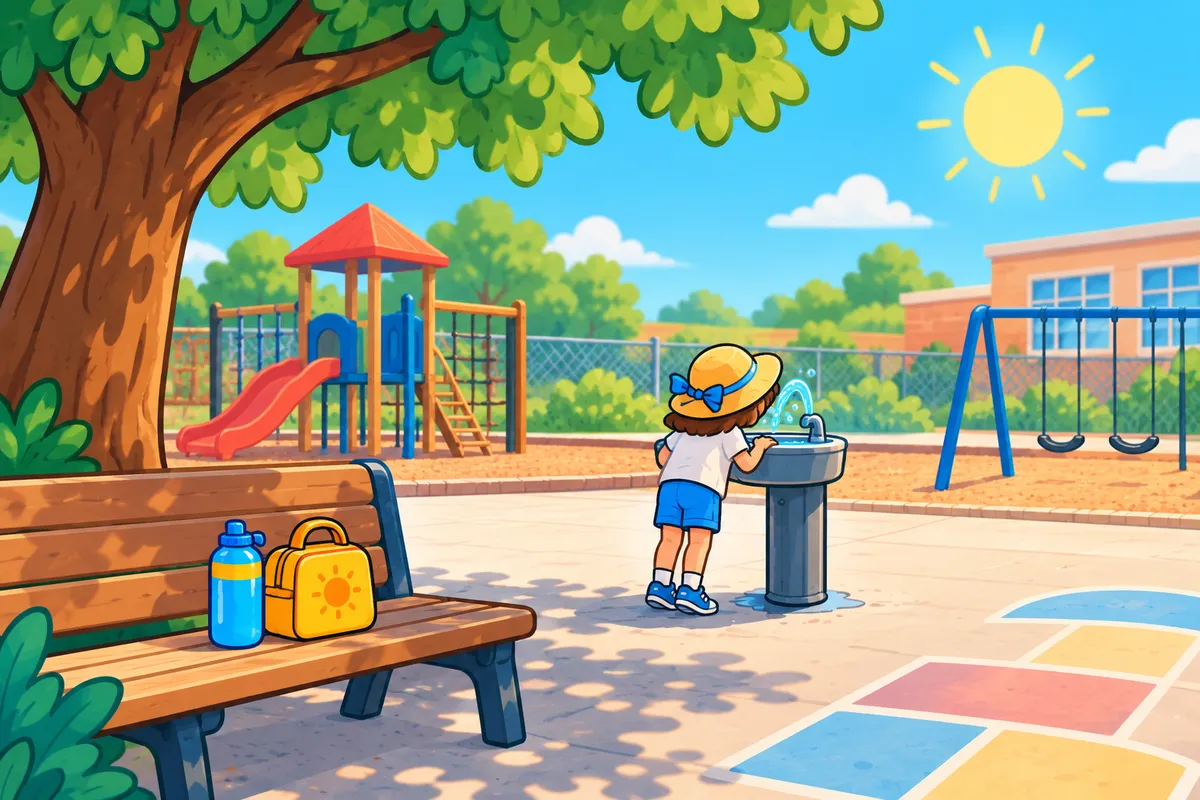
Thirst, dark yellow pee, peeing less often and a dry mouth are the first signs of dehydration in a child. A child who is suddenly tired, cranky or turning down a drink is giving you the same message, even if the word "thirsty" never comes out.
A seven-year-old with a stomach bug will not say "dehydrated". He says he feels tired and would like to lie on the sofa.
Older children and teens can say they are thirsty, but a hot afternoon of football can get ahead of them fast, so watch the same three things at every age: the pee, the mouth and the energy.
What Are the Signs of Dehydration in Children?
The NHS gives one list for adults and children, and it starts with thirst and dark pee. For a child it adds few or no tears when crying and being drowsy or irritable. It also says babies, children and older adults are more at risk than other people.
Symptoms of dehydration in adults and children
8 items- feeling thirsty
- headache and feeling light-headed
- dark yellow, strong-smelling pee
- peeing less often than usual
- feeling dizzy or lightheaded
- feeling tired
- a dry mouth, lips and tongue
- sunken eyes
The American Academy of Pediatrics adds one sign parents spot before any of these: a child who plays less than usual. Its advice is short: tell the pediatrician immediately if any warning sign develops.
A baby or toddler shows it differently, through fewer wet diapers, no tears and a sunken soft spot on the head. Everything below is about children from age 1 up to teenagers.
How Do Dehydration Signs Change From Toddler to Teen?
The signs stay the same; what changes is who notices them. A four-year-old cannot judge their own pee or explain a headache, so the parent watches. A teenager can, but often keeps going until dizzy.
| Age | What you can see | What they can tell you | Watch for |
|---|---|---|---|
| 1 to 4 | Fewer pees, no tears, dry lips, playing less | Little: "tired", "no" to food | Sunken eyes, unusual sleepiness (AAP) |
| 5 to 11 | Dark pee in the toilet, dry mouth, quiet | Thirst, stomachache, headache | Dizziness when standing |
| 12 to 18 | Fewer bathroom trips, playing worse than usual | Thirst, headache, dizziness, tiredness | Cramps, faintness in heat (Children's Colorado) |
For a child too young to read their own body, the toilet tells you most: how often, and what color. A child who usually goes every few hours and has not been since breakfast is worth a closer look.
How Long Without Peeing Is Too Long for a Child?
When to call, by how little a child pees:
- Older child: eight hours with no pee is the point to call the doctor, according to Cleveland Clinic.
- Baby: the line is fewer than six wet diapers in a day.
- Severe sign: the AAP lists a child who pees only once or twice a day.
Color is the quicker check. Cleveland Clinic says a child's pee should be clear or light yellow, and golden or darker pee means it is time to offer more fluids. A color chart for pee shows the shades side by side.
Dark pee after a hot game should lighten after a few drinks, and pee that stays dark is a reason to call. During a stomach bug, the NHS says to call now if a child under 5 has any sign of dehydration, such as fewer wet diapers.
Is My Child Mildly or Seriously Dehydrated?
The AAP sorts the signs into mild to moderate and severe. The split shows how far dehydration has gone, but both lists carry the same instruction: tell the pediatrician immediately if any sign develops.
Mild to Moderate (AAP)
- Plays less than usual
- Urinates less frequently
- Parched, dry mouth
- Fewer tears when crying
Severe (AAP)
- Very fussy
- Excessively sleepy
- Sunken eyes
- Cool, discolored hands and feet
- Wrinkled skin
- Urinates only one to two times per day
The AAP also notes stool changes: loose stools when diarrhea is the cause, and fewer bowel movements when vomiting or not drinking enough is the cause. Vomiting and diarrhea together drain fluid fastest, and a stomach bug is the usual cause.
What Usually Dehydrates a Child
Illness and heat. Dehydration happens more easily after being sick or having diarrhea, after too long in the sun or a hot place, after sweating a lot from exercise, with a high temperature, and in people with diabetes. Cleveland Clinic calls vomiting the biggest red flag in a child who has been playing in the heat.
What Should I Do If My Child Is Dehydrated?
Give small, regular sips, keep food going, and ask a pharmacist about an oral rehydration solution. The NHS asks parents to give regular small sips of rehydration solution to replace lost fluids and to keep small children on their usual diet. It also warns against fruit juice and fizzy drinks.
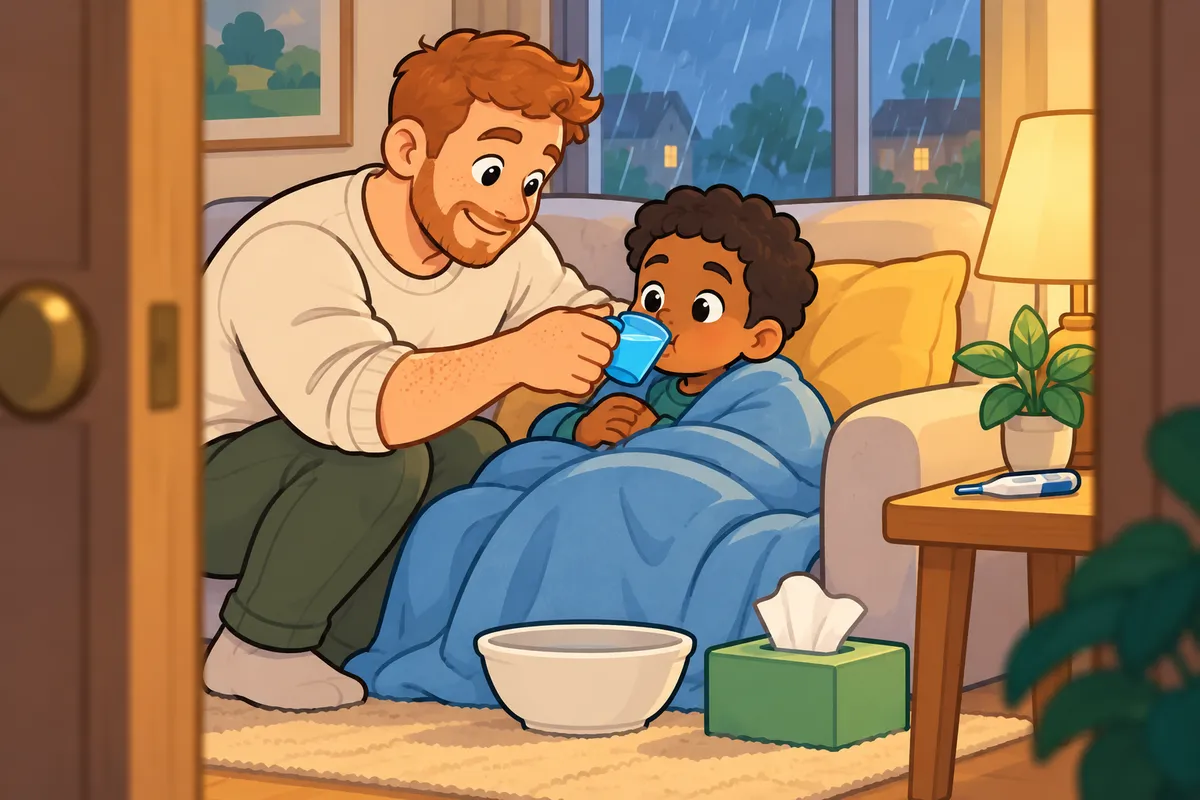
A sick day at home, step by step
- Offer small sips every few minutes, not a full glass at once
- Ask a pharmacist for an oral rehydration solution and follow the pack for your child's age
- Keep offering their usual food once they can eat
- No fruit juice or fizzy drinks: they can make diarrhea or vomiting worse
- Write down each pee and each bout of sickness, with the time
The right volume of rehydration solution depends on your child's age and weight and on how much they have lost, so it comes from the pack, your pharmacist or your doctor.
Can My Child Have a Sports Drink or Pedialyte?
During a stomach bug, the diarrhea and vomiting guidance says a pharmacist can recommend an oral rehydration solution, and not to have fruit juice or fizzy drinks. Sports drinks have a narrower job. Cleveland Clinic says teens can drink them to replace electrolytes after heavy sweating and about an hour of vigorous exercise.
Water is enough for an ordinary game or a short practice. Cleveland Clinic also says sugary drinks and caffeine can increase urination, which works against what you are trying to do.
When Can My Child Go Back to School After a Stomach Bug?
After 2 full days without being sick or having diarrhea. The NHS says to stay off school until there has been no sickness or diarrhea for at least 2 days, and to keep out of swimming pools until 48 hours after symptoms stop. Your school may set its own rule, so ask it.
- 5–7 days
- until diarrhea usually stops, in adults and children
- 1–2 days
- until vomiting usually stops
- 2 days
- clear of sickness and diarrhea before school
Diarrhea that lasts more than 7 days, vomiting for more than 2, or blood in the diarrhea is a reason to call the doctor.
What Are the Signs of Dehydration in a Child Playing Sport?
Dark or strong-smelling pee, faintness or dizziness, muscle cramps and playing worse than usual. Children's Hospital Colorado lists these for young athletes, together with a dry mouth, nausea and a rapid but weak heartbeat, and calls thirst the best in-the-moment sign that a child needs to drink.
The CDC's heat advice for athletes says to drink more water than usual and not wait until you are thirsty, and that muscle cramping may be an early sign of heat illness. If a player feels faint or weak, the CDC says to stop all activity and get to a cool place.
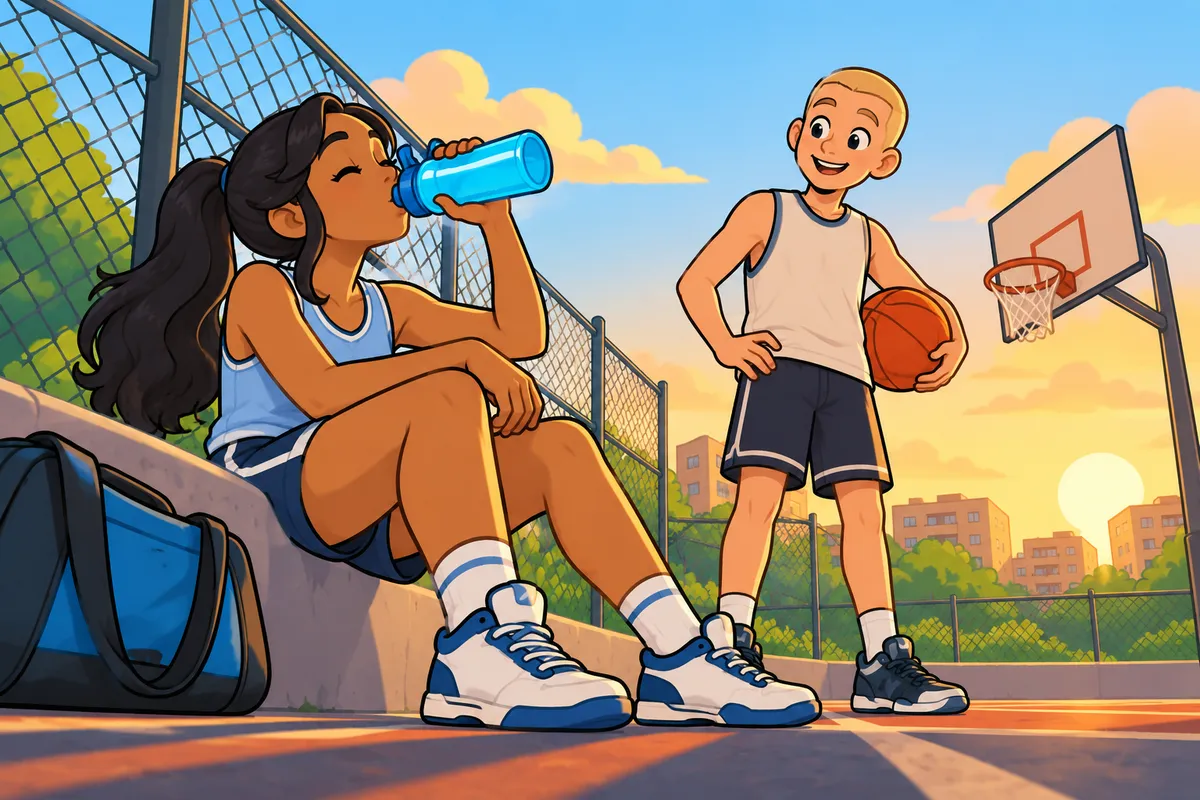
A 14-year-old who is cramping and dizzy at the end of a tournament day needs to stop, cool down and drink rather than finish the match.
Drinking Through a Long Game Day
Children's Hospital Colorado suggests starting to drink about 4 hours before practice, rehydrating every 15 to 30 minutes during it where possible, and drinking an extra 8 ounces after events.
How much a young player needs before, during and after practice depends on age, size and the length of the session, and the drinking plan for practices and games sets that out sport by sport.
When Should I Call a Doctor or 911 for a Dehydrated Child?
Call your child's doctor or nurse line the same day when a child seems drowsy, breathes fast or has few tears. Call 911 or your local emergency number for signs of shock such as blotchy skin or confusion. The NHS gives both lists.
Set Up Before the Next Stomach Bug
Ask your pharmacist now which oral rehydration solution suits your child's age and keep a box in the cupboard. A stomach bug at 2 am is a bad time to start the search, and the advice is regular small sips of it.
Write your pediatrician's after-hours number on the fridge, and keep a pen by the toilet for the pee log: the time of each pee and each bout of sickness is the first thing a nurse will ask.
General information for healthy adults, not medical advice. If a doctor has set your fluid amount, follow that.

More in Every Age

Sources
- NHS. Dehydration, 2026.
- NHS. Diarrhoea and vomiting, 2026.
- American Academy of Pediatrics, HealthyChildren.org. Dehydration, 2019.
- Cleveland Clinic. Signs of Dehydration in Kids, 2024.
- US Centers for Disease Control and Prevention. Heat and Athletes, 2024.
- Children's Hospital Colorado. Preventing and Treating Heat Illness in Young Athletes, 2024.
Sources checked by the Glubbo Editorial Team on Oct 19, 2026. General information, not medical advice. How we write and check our guides.

