Every Age · Babies and Children
When Can Babies Drink Water? From 6 Months, in Small Sips
Which cup to use, how much from 6 months, what to do on hot days, and how to mix your baby's formula safely.
 By the Glubbo Editorial Team · Updated Oct 19, 2026 · 8 min read
On This Page
- When Can Babies Drink Water?
- Can a Newborn Drink Water?
- Why Is Water Dangerous for Babies Under 6 Months?
- Can I Give My Baby Water in Hot Weather?
- How Much Water Can a 6-Month-Old Have?
- Can Babies Drink Tap or Bottled Water?
- What Water Should You Use for Baby Formula?
- Signs Your Baby Needs More to Drink
- Before the Six-Month Visit
- Sources
Short answer
Around 6 months, in small sips from a cup.
- Under 6 months: breast milk or formula only; ask your pediatrician before any water.
- From 6 to 12 months: about 4 to 8 oz (120 to 240 ml) of water a day, at meals.
- Mix formula exactly as the label says, and never add extra water.
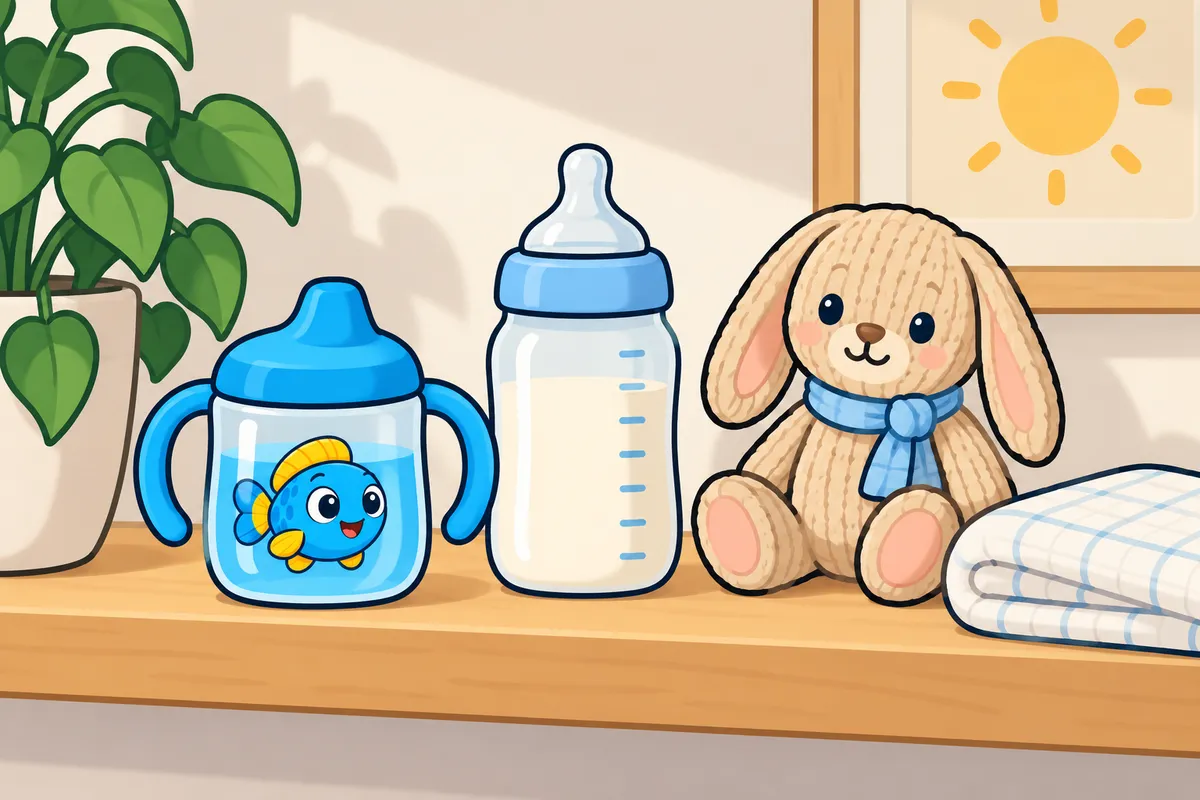
Your baby can start drinking a little water around 6 months, when solid food begins. Before that, breast milk or formula is the only drink a baby needs, even on a warm day.
When Can Babies Drink Water?
Around 6 months, alongside the first solid foods. The American Academy of Pediatrics (AAP) says to start offering "a little bit of water" around that age, and about 4 to 8 oz (120 to 240 ml) a day is enough until the first birthday. Breast milk or formula still brings most of your baby's fluid.
The first water is practice. The AAP's guide to recommended drinks for young children says a cup of water at this age "helps develop cup drinking skills and familiarity with water", and that the water is unlikely to replace much milk.
Starting Water Around 6 Months
- Wait until your baby starts solid food, usually around 6 months
- Put the milk they already drink in a cup first, so the cup feels familiar
- Swap in plain water at mealtimes, a few sips at a time
- Keep breast milk or formula as the main drink until age 1
Which Cup to Use
An open cup, a sippy cup or a cup with a straw all work, the AAP says. The NHS prefers an open cup or a free-flow cup without a valve, because it "will help your baby learn to sip" and is better for teeth.
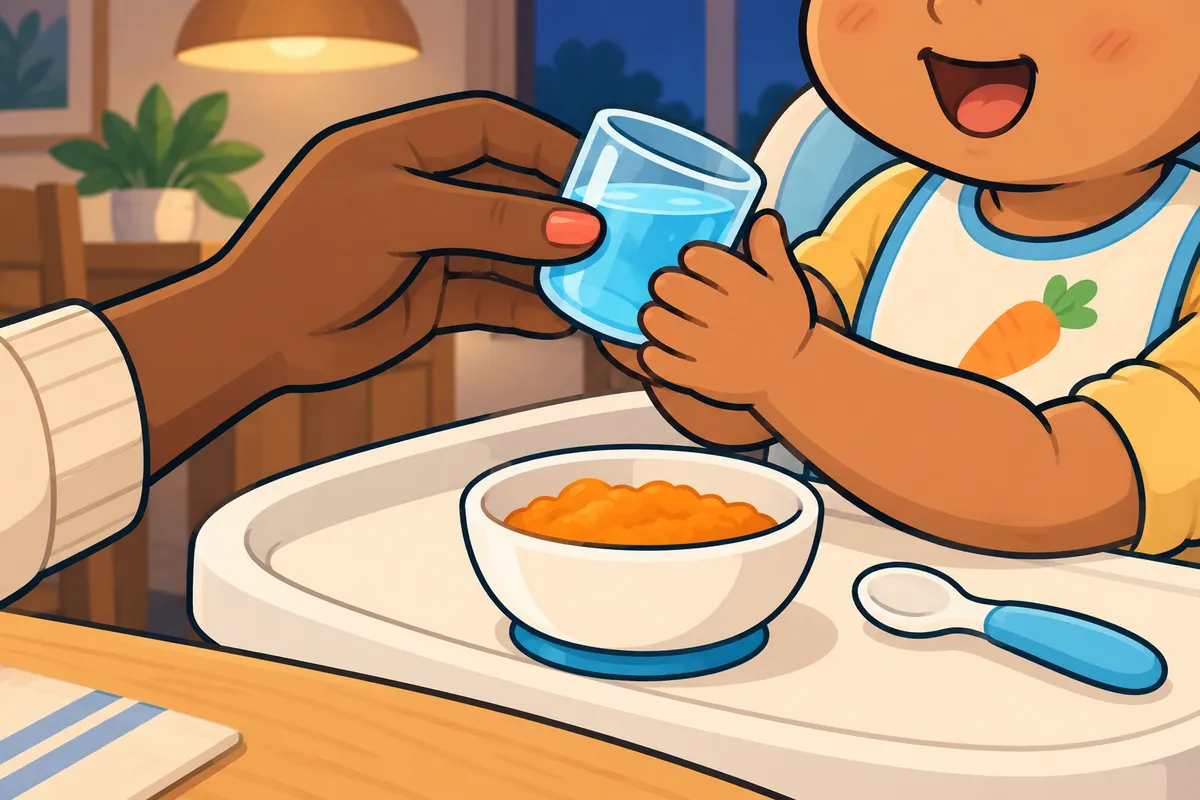
Sippy cups are a bridge. The AAP's guide from bottle to cup wants them used only while your child learns, filled with plain fluoridated water, and an open cup by about age 2.
Three first cups, from about 6 months
Open cup
NHS first choice
- Helps your baby learn to sip
- The cup to reach by about age 2
Suits you if you can sit with your baby while they practice.
Free-flow cup
NHS also prefers it
- No valve in the lid
- Also helps your baby learn to sip
Suits you if you want fewer spills than an open cup.
Sippy cup
A bridge only
- Only while your child learns
- Plain water only, never juice
Suits you if you need a spill-proof cup for a short while.
Does the Water Need Boiling?
Not after 6 months. UK advice says drinking water for babies over 6 months does not need to be boiled first. Water for mixing formula follows its own rules, set out further down.
Can a Newborn Drink Water?
No: the AAP and the UK health service both say so.
- The AAP says babies under 6 months "should only be drinking breast milk or formula" and that extra water "is not recommended at this age". Its formula guide adds that babies in their first 6 months need no water or juice unless your pediatrician tells you otherwise.
- The UK health service says the same for breastfed babies: they "do not need any water until they've started eating solid foods".
Breast milk or formula covers their fluid. If you breastfeed, the drinks to plan are yours, because your own need rises while you feed.
Why Is Water Dangerous for Babies Under 6 Months?
Water takes the place of milk, and a young baby needs every feed for food. The AAP's guide to preparing formula with water says extra water in formula, or juice, cuts the nutrients your baby receives, and that "can slow growth and development".
Too much water also upsets the salts in a small body, and the AAP names three ways it goes wrong:
- Water in place of milk cuts the nutrients a baby gets.
- It "disturbs electrolyte and mineral balances such as calcium, sodium and potassium".
- That can lead to seizures, a condition called water intoxication.
Can I Give My Baby Water in Hot Weather?
From 6 months, yes, a few extra sips from a cup. Under 6 months, ask your pediatrician first: the AAP says no extra water unless your pediatrician advises it, while UK advice allows small sips of cooled boiled water for formula-fed babies in hot weather. Breastfed babies get their extra from the breast.
| Baby | AAP (US) | UK advice |
|---|---|---|
| Breastfed, under 6 months | Breast milk only | Breast milk only; offer the breast more often |
| Formula-fed, under 6 months | Formula only, unless your pediatrician says otherwise | Formula, and "small sips of cooled boiled water" in hot weather |
| 6 to 12 months | Water from a cup, about 4 to 8 oz a day | Sips of water from a cup with meals |
On hot days, breastfed babies "may want to breastfeed more than usual", the UK advice says. Follow that lead and feed on demand. The adults carrying the bag need more on a hot day too.
How Much Water Can a 6-Month-Old Have?
About 4 to 8 oz (120 to 240 ml) a day, which is half a cup to a cup, until the first birthday. Both the AAP and the CDC give that range for babies aged 6 to 12 months, next to breast milk or formula. More than that is not the goal: the cup is there to teach sipping.
| Age | Water a day (AAP) | Main drink |
|---|---|---|
| Birth to 6 months | None | Breast milk or formula |
| 6 to 12 months | 4 to 8 oz (120 to 240 ml) | Breast milk or formula |
| 12 to 24 months | 8 to 32 oz (1 to 4 cups) | Water and whole milk |
Spreading It Over the Day
Tie the water to meals so it never pushes out a milk feed. Three small servings with three meals is the easiest pattern to keep.
After the First Birthday
At 12 months, whole cow's milk can join water as a main drink, the AAP says, and its table moves water up to 1 to 4 cups a day. From here the amounts go up with each birthday.
Measure your toddler's cup once, then see how many cups make the AAP amount.
Can Babies Drink Tap or Bottled Water?
Tap water is fine for a baby over 6 months, and fluoridated tap water is the AAP's usual choice. It says fluoridated tap water helps prevent future tooth decay, and its formula guide recommends it most of the time, with non-fluoridated bottled water now and then.
What Water Should You Use for Baby Formula?
Safe tap water, mixed exactly as the label says. The AAP says you can use tap water for powder or concentrate unless your local supply has a known problem, and boiled water for babies younger than 2 months. Never add water to ready-to-feed formula, which already holds the right amount.
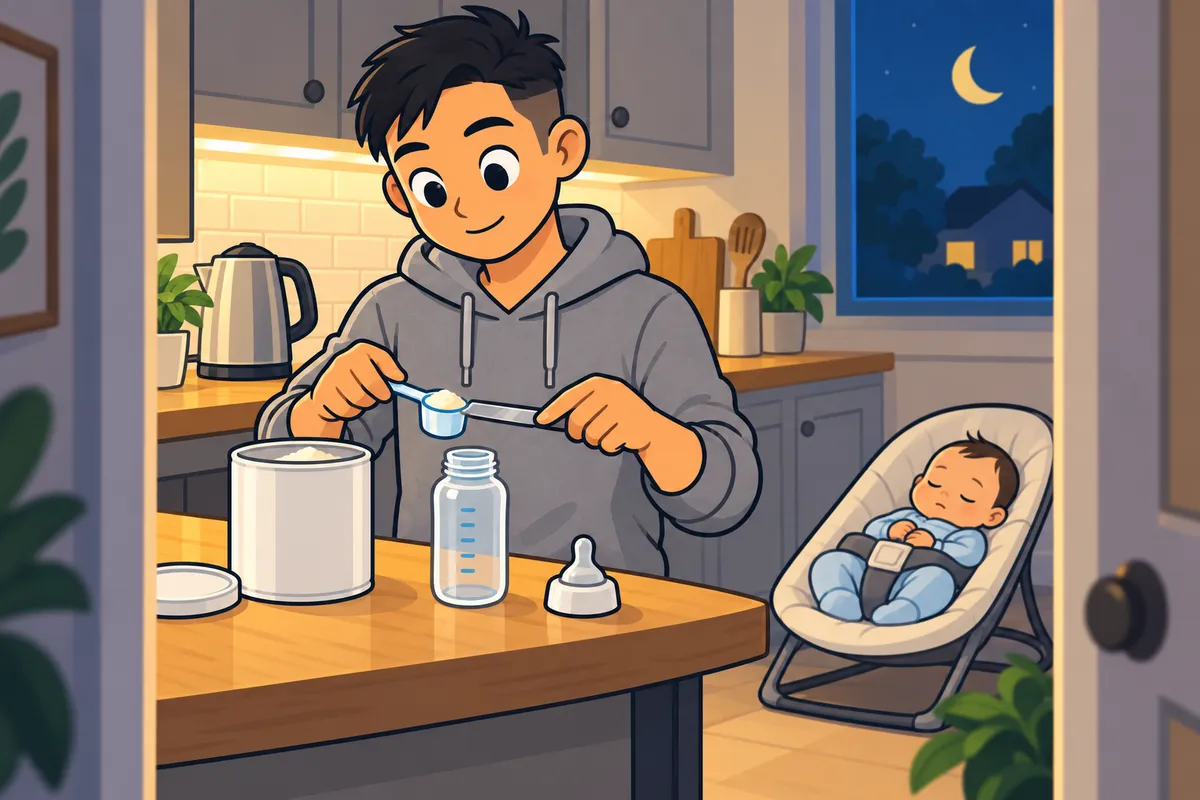
US and UK Advice on Boiling
The two health services differ on the details, so follow the one where you live and the instructions on your tin.
AAP (US)
- Under 2 months: boil the water and let it cool for about 5 minutes
- Safe tap water for powder or concentrate
- Fluoridated tap water most of the time, some non-fluoridated bottled water now and then
NHS (UK)
- Freshly boiled tap water for every feed
- No more than 30 minutes in the kettle, so it is still at least 70 °C
- Bottled water "not usually recommended": not sterile, may hold too much salt or sulphate
Water at 70 °C or more will kill any harmful bacteria, the formula guide says, and a formula machine whose water comes out under 70 °C is one to stop using in favor of hand-made feeds.
Mixing Powder and Concentrate
Use the scoop that came with the tin and level it. The NHS formula guide warns against extra powder, which can cause constipation or dehydration, and against extra water, because too little powder "may not give your baby enough nourishment".
Signs Your Baby Needs More to Drink
Few wet diapers, no tears, drowsiness and a sunken soft spot are the signs to watch, and the full list for babies, with how to count diapers on a sick day, has its own page. The AAP puts the usual count at 6 to 8 wet diapers a day.
While your baby is unwell, the NHS advice on dehydration is to keep breastfeeding or giving formula in small amounts more often, give small sips of extra water only to a baby already on formula or solid food, and never make formula weaker.
Before the Six-Month Visit
Before the checkup near the sixth month:
- Ask your pediatrician whether your baby is ready for sips.
- Write down how your formula tin says to mix a bottle.
- Buy one open or valve-free cup first, since an open cup is the one to reach by about age 2.
Once your baby is walking, the next job is building the habit, starting with a cup they chose themselves.
General information for healthy adults, not medical advice. If a doctor has set your fluid amount, follow that.
More in Every Age


Sources
- American Academy of Pediatrics (HealthyChildren.org). Choose Water for Healthy Hydration, 2024.
- American Academy of Pediatrics (HealthyChildren.org). Recommended Drinks for Children Age 5 & Younger, 2023.
- American Academy of Pediatrics (HealthyChildren.org). How to Safely Prepare Baby Formula With Water, 2026.
- American Academy of Pediatrics (HealthyChildren.org). From Bottle to Cup: Helping Your Child Make a Healthy Transition, 2023.
- CDC. Foods and Drinks to Encourage, 2024.
- NHS. Drinks and cups for babies and young children, 2022.
- NHS. How to make up baby formula, 2026.
- NHS. Dehydration, 2026.
Sources checked by the Glubbo Editorial Team on Oct 19, 2026. General information, not medical advice. How we write and check our guides.

