Is Boiled Water Safe for a Neti Pot? The Four Waters That Are
Which water the FDA and CDC accept for a sinus rinse, how long to boil it, and why plain tap water is the one to skip.
 By the Glubbo Editorial Team · Updated Oct 19, 2026 · 9 min read
On This Page
- Is Boiled Water Safe for a Neti Pot?
- Is Distilled Water Safe for a Neti Pot?
- Is Bottled Water Safe for a Nasal Rinse?
- Is Filtered Water Safe for a Neti Pot?
- Why Is Tap Water Not Safe for a Neti Pot?
- Can You Get a Brain-Eating Amoeba From a Neti Pot?
- Rinsing at Altitude or in a Hotel Room
- What Salt Should You Use in a Neti Pot?
- A Nightly Rinse Schedule
- Sources
Short answer
Yes, once it has boiled and cooled to lukewarm.
- The FDA says boil tap water 3 to 5 minutes; the CDC's minimum is 1 minute.
- Keep boiled water in a clean, closed container and use it within 24 hours.
- Distilled, sterile or 1-micron filtered water works too; plain tap does not.
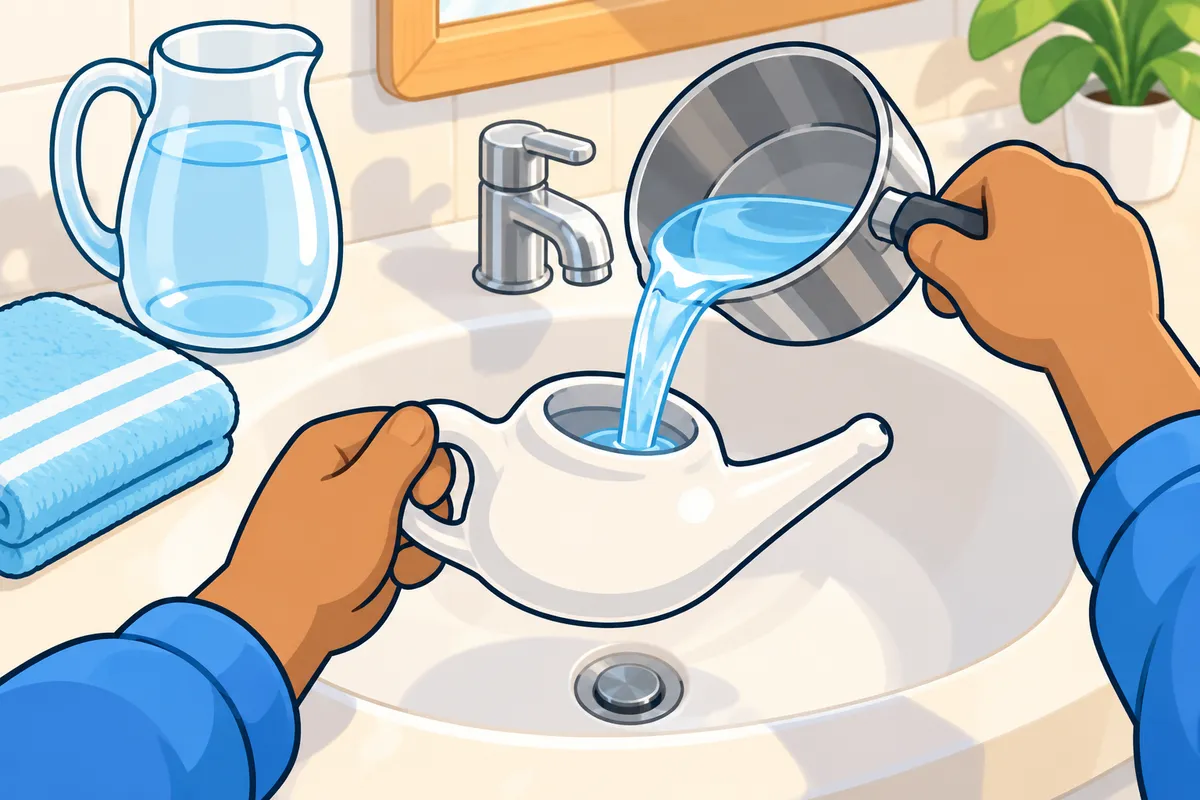
Yes. Boiled tap water is safe for a neti pot once it has cooled to lukewarm, and so are store-bought distilled water, sterile water and water from a filter built to trap germs. Plain tap water is the one to skip: your stomach acid kills most tiny organisms in it, but the lining of your nose does not.
That is why the label on every neti pot box asks for a certain kind of water. Four kinds pass, and each needs one small step from you.
Four Waters That Are Safe in a Neti Pot
Boiled tap water
Cheapest
- FDA: boil 3 to 5 minutes
- Cool it to lukewarm first
- Use within 24 hours
Suits you if you rinse at home and can wait for the pot to cool.
Distilled water
Ready to pour
- The label must say distilled
- Sold by the gallon in shops
Suits you if you rinse often and want no waiting.
Sterile water
For travel
- The label must say sterile
- Small sealed bottles pack well
Suits you if you rinse away from home or cannot boil.
Filtered water
Needs the right filter
- Absolute pore size 1 micron or less
- Or NSF 53 or 58 on the label
Suits you if you already own a filter rated to trap amebas.
Is Boiled Water Safe for a Neti Pot?
Yes, once it has boiled and cooled. The FDA lists boiled and cooled tap water as one of three safe kinds for a nasal rinse, next to distilled or sterile water and water from a filter designed to trap germs. Cool it until it is lukewarm, because hot water hurts the inside of your nose.
Boiling works because heat kills the amebas, bacteria and other organisms that can live in tap water. It changes nothing else about the water, which is fine here: your nose needs germ-free water, not mineral-free water.
How Long Do You Boil Water for a Neti Pot?
Two agencies give a time, and both are right:
- The FDA asks for 3 to 5 minutes at a boil.
- The CDC's sinus rinsing page sets a minimum of a 1-minute rolling boil, or 3 minutes at elevations above 6,500 feet, the same time it gives for drinking water.
The two agencies are not in conflict. One minute is the floor, and the FDA's longer time adds margin for a device that goes straight into your nose. If you live high up, 5 minutes covers both rules at once.
If the tap water looks cloudy, the CDC says to filter it first through a clean cloth, paper towel or coffee filter, or let it settle, and then boil it.
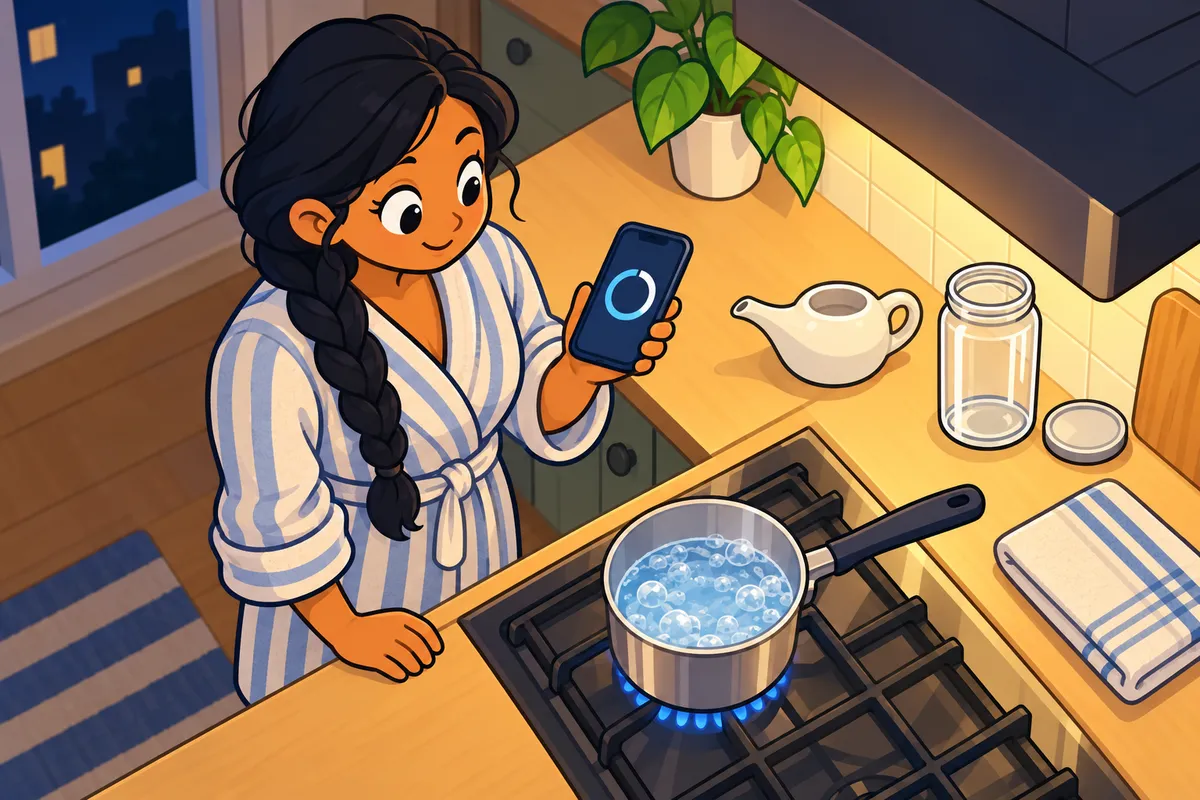
How Long Can You Keep Boiled Water for a Sinus Rinse?
Up to 24 hours, in a clean, closed container, the FDA says. After that, boil a fresh batch.
The CDC asks for sanitized containers with tight covers. A jar you washed in hot soapy water and dried works; an open glass on the bathroom counter does not, because it collects whatever lands in it overnight.
Is Distilled Water Safe for a Neti Pot?
Yes, if you buy it with "distilled" printed on the label. The FDA and the CDC both name store-bought water labeled distilled or sterile as ready to use, with no boiling. It is the easiest choice if you rinse every day.
Water you distill yourself is a different case. A home still can grow bacteria on its cooling coils while it sits unused, the CDC notes about home distillers, and the jug you collect into can carry germs too. For your nose, boil home-made distillate as you would tap water, or use the pot-and-lid method for drinking water only.

Is Bottled Water Safe for a Nasal Rinse?
Only when the label says distilled or sterile. Spring water, mineral water and most bottled drinking water are not on the FDA's or the CDC's list, because those labels promise water safe to drink, not water free of every organism that can live in a nose.
Read the label for one of two words, distilled or sterile, and nothing else counts.
Federal rules set what the words spring, purified and distilled promise on a bottle, and the difference between spring and purified water matters for taste and minerals, not for your nose.
Is Filtered Water Safe for a Neti Pot?
Only from a filter built to trap amebas and other parasites. A 2015 CDC sheet on safe nasal rinsing names labels that read NSF 53 or NSF 58, or an absolute pore size of 1 micron or smaller. Most pitcher and fridge filters do not qualify.
The word "absolute" carries the claim. The CDC's filter guide explains that an absolute 1-micron filter has every pore 1 micron or smaller, while a "mean" 1-micron filter only averages that size, so some pores are larger and a germ can slip through.
| Water | Safe for a neti pot? | What to check |
|---|---|---|
| Tap water from the faucet | No | Boil it first |
| Boiled and cooled tap water | Yes | 3 to 5 minutes (FDA); use within 24 hours |
| Store-bought distilled | Yes | The word distilled on the label |
| Store-bought sterile | Yes | The word sterile on the label |
| Spring or bottled drinking water | Not as sold | Boil it, like tap water |
| Pitcher or fridge filter | Usually no | Absolute 1 micron, NSF 53 or NSF 58 |
| Under-sink reverse osmosis | Yes, if certified | NSF 58 on the system |
A carbon pitcher is a fine thing to drink from. Its makers designed it for taste and, if certified, lead, and whether a pitcher makes water safe to drink is a separate question from whether it is clean enough for your sinuses.
Why Is Tap Water Not Safe for a Neti Pot?
Because utilities treat it to be safe to swallow, not to go up your nose. The FDA explains that tap water "isn't safe for use as a nasal rinse because it's not adequately filtered or treated", and that low levels of organisms such as amebas, harmless in your stomach, can survive in your nasal passages and cause serious infections.
This is true even of tap water that passes every test. A water report that shows no violations is a report about drinking water, so the same glass you drink can still be the wrong rinse.
Can You Get a Brain-Eating Amoeba From a Neti Pot?
It is possible but very rare. Naegleria fowleri infects people when water carrying it goes up the nose, and the CDC says a few infections followed sinus rinsing with tap water that contained it. You cannot catch it by swallowing water.
- 167
- US cases reported from 1962 to 2024
- 4
- of those people survived
- < 10
- US infections in a typical year
The ameba has been found in tap water, the CDC's Naegleria page says, though most infections come from swimming or diving in warm fresh water in summer. The odds are tiny, but more than 97 % of people who get the infection have died. That is why both agencies keep the rule simple: never plain tap water in your nose.
Keep the Pot Itself Clean
The FDA asks you to wash the device and dry the inside with a paper towel, or let it air dry, between uses. Check that it is clean and completely dry before the next rinse.
Rinsing at Altitude or in a Hotel Room
Two places make boiling awkward: high ground, where the boil time grows, and a room with no stove. In both, a labeled bottle does the job.
During a boil water advisory, the rule for your neti pot does not change: boiled, distilled or sterile water only, exactly as on any other day.
What Salt Should You Use in a Neti Pot?
Use the pre-measured salt packet that came with the device, or USP-grade sodium chloride with no additives. The FDA says to use distilled, sterile or boiled water and to follow the device's instructions, which include a saline mix. Table salt with iodine or anti-caking agents can sting and irritate the lining, so check the label for "sodium chloride" and nothing else.
Three things set how the rinse feels:
- The amount: a standard isotonic mix is about a quarter teaspoon of salt per 8 oz, roughly matching the salt in your body's own fluids.
- Too little or too much: too little salt stings more than plain water because the solution is hypotonic, and too much dries the lining. If the rinse burns, adjust the salt before you blame the water.
- Baking soda: it softens the mix. Many pre-measured packets contain both sodium chloride and sodium bicarbonate, and the FDA's instructions page names both. A pinch per cup of water, about one eighth of a teaspoon, brings the pH closer to your body's.
A Nightly Rinse Schedule
Boiled water keeps for 24 hours, so a once-a-day rinser can boil a fresh jar each evening and never carry old water into the next night.
| Time | What you do |
|---|---|
| 8:30 PM | Boil tap water for 3 to 5 minutes from the rolling boil |
| 8:40 PM | Pour it into a clean jar, close the lid, let it cool to lukewarm |
| 9:30 PM | Rinse with the cooled water; discard what is left in the pot |
| 9:40 PM | Wash the pot, dry the inside, leave it open to air dry |
| Next evening | Pour out any water left in the jar and boil a fresh batch |
When you are not sure about a water, a jug labeled distilled settles it.
General information for healthy adults, not medical advice. If a doctor has set your fluid amount, follow that.

More in Water at Home
Sources
- US Food and Drug Administration. Is Rinsing Your Sinuses With Neti Pots Safe?, 2025.
- US Centers for Disease Control and Prevention. How to Safely Rinse Sinuses, 2025.
- US Centers for Disease Control and Prevention. About Naegleria fowleri Infections, 2025.
- US Centers for Disease Control and Prevention. Safe Ritual Nasal Rinsing, 2015.
- US Centers for Disease Control and Prevention. About Choosing Home Water Filters, 2024.
- US Centers for Disease Control and Prevention. About Home Water Treatment Systems, 2024.
Sources checked by the Glubbo Editorial Team on Oct 19, 2026. General information, not medical advice. How we write and check our guides.

